The
Drowned Children
You see,
they have no judgment.
So it is
natural that they should drown,
first
the ice taking them in
and
then, all winter, their wool scarves
floating
behind them as they sink
until at
last they are quiet.
And the
pond lifts them in its manifold dark arms.
But
death must come to them differently,
so close
to the beginning.
As
though they had always been
blind
and weightless. Therefore
the rest
is dreamed, the lamp,
the good
white cloth that covered the table,
their
bodies.
And yet
they hear the names they used
like
lures slipping over the pond:
What are you waiting for
come home, come home, lost
in the waters, blue and permanent.
Mock
Orange
It is
not the moon, I tell you.
It is
these flowers
lighting
the yard.
I hate
them.
I hate
them as I hate sex,
the
man’s mouth
sealing
my mouth, the man’s
paralyzing
body—
and the
cry that always escapes,
the low,
humiliating
premise
of union—
In my
mind tonight
I hear
the question and pursuing answer
fused in
one sound
that
mounts and mounts and then
is split
into the old selves,
the
tired antagonisms. Do you see?
We were
made fools of.
And the
scent of mock orange
drifts
through the window.
How can
I rest?
How can
I be content
when
there is still
that
odor in the world?
The Pond
Night
covers the pond with its wing.
Under
the ringed moon I can make out
your
face swimming among minnows and the small
echoing
stars. In the night air
the
surface of the pond is metal.
Within,
your eyes are open. They contain
a memory
I recognize, as though
we had
been children together. Our ponies
grazed
on the hill, they were gray
with
white markings. Now they graze
with the
dead who wait
like
children under their granite breastplates,
lucid
and helpless:
The
hills are far away. They rise up
blacker
than childhood.
What do
you think of, lying so quietly
by the
water? When you look that way I want
to touch
you, but do not, seeing
as in
another life we were of the same blood.
The Fear
of Burial
In the
empty field, in the morning,
the body
waits to be claimed.
The
spirit sits beside it, on a small rock--
nothing
comes to give it form again.
Think of
the body's loneliness.
At night
pacing the sheared field,
its
shadow buckled tightly around.
Such a
long journey.
And
already the remote, trembling lights of the village
not
pausing for it as they scan the rows.
How far
away they seem,
the
wooden doors, the bread and milk
laid
like weights on the table.
Lamentations
1. The
Logos
They
were both still,
the
woman mournful, the man
branching
into her body.
But God
was watching.
They
felt his gold eye
projecting
flowers on the landscape.
Who knew
what He wanted?
He was
God, and a monster.
So they
waited. And the world
filled
with His radiance,
as
though He wanted to be understood.
Far
away, in the void that He had shaped,
he
turned to his angels.
2.
Nocturne
A forest
rose from the earth.
O
pitiful, so needing
God’s
furious love—
Together
they were beasts.
They lay
in the fixed
dusk of
His negligence;
from the
hills, wolves came, mechanically
drawn to
their human warmth,
their
panic.
Then the
angels saw
how He
divided them:
the man,
the woman, and the woman’s body.
Above
the churned reeds, the leaves let go
a slow
moan of silver.
3. The
Covenant
Out of
fear, they built a dwelling place.
But a
child grew between them
as they
slept, as they tried
to feed
themselves.
They set
it on a pile of leaves,
the
small discarded body
wrapped
in the clean skin
of an
animal. Against the black sky
they saw
the massive argument of light.
Sometimes
it woke. As it reached its hands
they
understood they were the mother and father,
there
was no authority above them.
4. The
Clearing
Gradually,
over many years,
the fur
disappeared from their bodies
until
they stood in the bright light
strange
to one another.
Nothing
was as before.
Their
hands trembled, seeking
the
familiar.
Nor
could they keep their eyes
from the
white flesh
on which
wounds would show clearly
like
words on a page.
And from
the meaningless browns and greens
at last
God arose, His great shadow
darkening
the sleeping bodies of His children,
and
leapt into heaven.
How
beautiful it must have been,
the
earth, that first time
seen
from the air.
Siren
I became
a criminal when I fell in love.
Before
that I was a waitress.
I didn't
want to go to Chicago with you.
I wanted
to marry you, I wanted
Your
wife to suffer.
I wanted
her life to be like a play
In which
all the parts are sad parts.
Does a
good person
Think
this way? I deserve
Credit
for my courage--
I sat in
the dark on your front porch.
Everything
was clear to me:
If your
wife wouldn't let you go
That
proved she didn't love you.
If she
loved you
Wouldn't
she want you to be happy?
I think
now
If I
felt less I would be
A better
person. I was
A good
waitress.
I could
carry eight drinks.
I used
to tell you my dreams.
Last
night I saw a woman sitting in a dark bus--
In the
dream, she's weeping, the bus she's on
Is
moving away. With one hand
She's
waving; the other strokes
An egg
carton full of babies.
The
dream doesn't rescue the maiden.
Celestial
Music
I have a
friend who still believes in heaven.
Not a
stupid person, yet with all she knows, she literally talks to God.
She
thinks someone listens in heaven.
On earth
she's unusually competent.
Brave
too, able to face unpleasantness.
We found
a caterpillar dying in the dirt, greedy ants crawling over it.
I'm
always moved by disaster, always eager to oppose vitality
But
timid also, quick to shut my eyes.
Whereas
my friend was able to watch, to let events play out
According
to nature. For my sake she intervened
Brushing
a few ants off the torn thing, and set it down
Across
the road.
My
friend says I shut my eyes to God, that nothing else explains
My
aversion to reality. She says I'm like the child who
Buries
her head in the pillow
So as
not to see, the child who tells herself
That
light causes sadness-
My
friend is like the mother. Patient, urging me
To wake
up an adult like herself, a courageous person-
In my
dreams, my friend reproaches me. We're walking
On the
same road, except it's winter now;
She's
telling me that when you love the world you hear celestial music:
Look up,
she says. When I look up, nothing.
Only
clouds, snow, a white business in the trees
Like
brides leaping to a great height-
Then I'm
afraid for her; I see her
Caught
in a net deliberately cast over the earth-
In
reality, we sit by the side of the road, watching the sun set;
From
time to time, the silence pierced by a birdcall.
It's
this moment we're trying to explain, the fact
That
we're at ease with death, with solitude.
My friend
draws a circle in the dirt; inside, the caterpillar doesn't move.
She's
always trying to make something whole, something beautiful, an image
Capable
of life apart from her.
We're
very quiet. It's peaceful sitting here, not speaking, The composition
Fixed,
the road turning suddenly dark, the air
Going
cool, here and there the rocks shining and glittering-
It's
this stillness we both love.
The love
of form is a love of endings.
End of
Winter
Over the
still world, a bird calls
waking
solitary among black boughs.
You
wanted to be born; I let you be born.
When has
my grief ever gotten
in the
way of your pleasure?
Plunging
ahead
into the
dark and light at the same time
eager
for sensation
as
though you were some new thing, wanting
to
express yourselves
all
brilliance, all vivacity
never
thinking
this
would cost you anything,
never
imagining the sound of my voice
as
anything but part of you—
you
won't hear it in the other world,
not
clearly again,
not in
birdcall or human cry,
not the
clear sound, only
persistent
echoing
in all
sound that means good-bye, good-bye—
the one
continuous line
that
binds us to each other.
Vespers
[In your extended absence, you permit me]
In your
extended absence, you permit me
use of
earth, anticipating
some
return on investment. I must report
failure
in my assignment, principally
regarding
the tomato plants.
I think
I should not be encouraged to grow
tomatoes.
Or, if I am, you should withhold
the
heavy rains, the cold nights that come
so often
here, while other regions get
twelve
weeks of summer. All this
belongs
to you: on the other hand,
I
planted the seeds, I watched the first shoots
like
wings tearing the soil, and it was my heart
broken by
the blight, the black spot so quickly
multiplying
in the rows. I doubt
you have
a heart, in our understanding of
that
term. You who do not discriminate
between
the dead and the living, who are, in consequence,
immune
to foreshadowing, you may not know
how much
terror we bear, the spotted leaf,
the red
leaves of the maple falling
even in
August, in early darkness: I am responsible
for
these vines.
The Wild
Iris
At the
end of my suffering
there
was a door.
Hear me
out: that which you call death
I
remember.
Overhead,
noises, branches of the pine shifting.
Then
nothing. The weak sun
flickered
over the dry surface.
It is
terrible to survive
as
consciousness
buried
in the dark earth.
Then it
was over: that which you fear, being
a soul
and unable
to
speak, ending abruptly, the stiff earth
bending
a little. And what I took to be
birds
darting in low shrubs.
You who
do not remember
passage
from the other world
I tell
you I could speak again: whatever
returns
from oblivion returns
to find
a voice:
from the
center of my life came
a great
fountain, deep blue
shadows
on azure sea water.
Anniversary
I said
you could snuggle. That doesn’t mean
your
cold feet all over my dick.
Someone
should teach you how to act in bed.
What I
think is you should
keep
your extremities to yourself.
Look
what you did—
you made
the cat move.
But I didn’t want your hand there.
I wanted your hand here.
You should pay attention to my
feet.
You should picture them
the next time you see a hot fifteen
year old.
Because there’s a lot more where
those feet come from.
Parable
of the Swans
On a
small lake off
the map
of the world, two
swans
lived. As swans,
they
spent eighty percent of the day studying
themselves
in the attentive water and
twenty
percent ministering to the beloved
other.
Thus
their
fame as lovers stems
chiefly
from narcissism, which leaves
so
little leisure for
more
general cruising. But
fate had
other plans: after ten years, they hit
slimy
water; whatever the filth was, it
clung to
the male’s plumage, which turned
instantly
gray; simultaneously,
the true
purpose of his neck’s
flexible
design revealed itself. So much
action
on the flat lake, so much
he’s
missed! Sooner or later in a long
life
together, every couple encounters
some
emergency like this, some
drama
which results
in harm.
This
occurs
for a reason: to test
love and
to demand
fresh
articulation of its complex terms.
So it
came to light that the male and female
flew
under different banners: whereas
the male
believed that love
was what
one felt in one’s heart
the
female believed
love was
what one did. But this is not
a little
story about the male’s
inherent
corruption, using as evidence the swan’s
sleazy
definition of purity. It is
a story
of guile and innocence. For ten years
the
female studied the male; she dallied
when he
slept or when he was
conveniently
absorbed in the water,
while
the spontaneous male
acted
casually, on
the whim
of the moment. On the muddy water
they
bickered awhile, in the fading light,
until
the bickering grew
slowly
abstract, becoming
part of
their song
after a
little longer.
Vita
Nova
You
saved me, you should remember me.
The
spring of the year; young men buying tickets for the ferryboats.
Laughter,
because the air is full of apple blossoms.
When I
woke up, I realized I was capable of the same feeling.
I
remember sounds like that from my childhood,
laughter
for no cause, simply because the world is beautiful,
something
like that.
Lugano.
Tables under the apple trees.
Deckhands
raising and lowering the colored flags.
And by
the lake’s edge, a young man throws his hat into the water;
perhaps
his sweetheart has accepted him.
Crucial
sounds
or gestures like
a track
laid down before the larger themes
and then
unused, buried.
Islands
in the distance. My mother
holding
out a plate of little cakes—
as far
as I remember, changed
in no
detail, the moment
vivid,
intact, having never been
exposed
to light, so that I woke elated, at my age
hungry
for life, utterly confident—
By the
tables, patches of new grass, the pale green
pieced
into the dark existing ground.
Surely
spring has been returned to me, this time
not as a
lover but a messenger of death, yet
it is
still spring, it is still meant tenderly.
The
Empty Glass
I asked
for much; I received much.
I asked
for much; I received little, I received
next to
nothing.
And
between? A few umbrellas opened indoors.
A pair
of shoes by mistake on the kitchen table.
O wrong,
wrong—it was my nature. I was
hard-hearted,
remote. I was
selfish,
rigid to the point of tyranny.
But I
was always that person, even in early childhood.
Small,
dark-haired, dreaded by the other children.
I never
changed. Inside the glass, the abstract
tide of
fortune turned
from
high to low overnight.
Was it
the sea? Responding, maybe,
to
celestial force? To be safe,
I
prayed. I tried to be a better person.
Soon it
seemed to me that what began as terror
and
matured into moral narcissism
might
have become in fact
actual
human growth. Maybe
this is
what my friends meant, taking my hand,
telling
me they understood
the
abuse, the incredible shit I accepted,
implying
(so I once thought) I was a little sick
to give
so much for so little.
Whereas
they meant I was good (clasping my
hand intensely)—
a good
friend and person, not a creature of pathos.
I was
not pathetic! I was writ large,
like a
queen or a saint.
Well, it
all makes for interesting conjecture.
And it
occurs to me that what is crucial is to believe
in
effort, to believe some good will come of simply trying,
a good
completely untainted by the corrupt initiating impulse
to
persuade or seduce—
What are
we without this?
Whirling
in the dark universe,
alone,
afraid, unable to influence fate—
What do
we have really?
Sad
tricks with ladders and shoes,
tricks
with salt, impurely motivated recurring
attempts
to build character.
What do
we have to appease the great forces?
And I
think in the end this was the question
that
destroyed Agamemnon, there on the beach,
the
Greek ships at the ready, the sea
invisible
beyond the serene harbor, the future
lethal,
unstable: he was a fool, thinking
it could
be controlled. He should have said
I have nothing, I am at your mercy.
Mother
and Child
We’re
all dreamers; we don’t know who we are.
Some
machine made us; machine of the world, the constricting family.
Then
back to the world, polished by soft whips.
We
dream; we don’t remember.
Machine
of the family: dark fur, forests of the mother’s body.
Machine
of the mother: white city inside her.
And
before that: earth and water.
Moss
between rocks, pieces of leaves and grass.
And
before, cells in a great darkness.
And
before that, the veiled world.
This is
why you were born: to silence me.
Cells of
my mother and father, it is your turn
to be
pivotal, to be the masterpiece.
I
improvised; I never remembered.
Now it’s
your turn to be driven;
you’re
the one who demands to know:
Why do I
suffer? Why am I ignorant?
Cells in
a great darkness. Some machine made us;
it is
your turn to address it, to go back asking
what am
I for? What am I for?
A Village
Life
The
death and uncertainty that await me
as they
await all men, the shadows evaluating me
because
it can take time to destroy a human being,
the
element of suspense
needs to
be preserved—
On
Sundays I walk my neighbor’s dog
so she
can go to church to pray for her sick mother.
The dog
waits for me in the doorway. Summer and winter
we walk
the same road, early morning, at the base of the escarpment.
Sometimes
the dog gets away from me—for a moment or two,
I can’t
see him behind some trees. He’s very proud of this,
this
trick he brings out occasionally, and gives up again
as a
favor to me—
Afterward,
I go back to my house to gather firewood.
I keep
in my mind images from each walk:
monarda
growing by the roadside;
in early
spring, the dog chasing the little gray mice
so for a
while it seems possible
not to
think of the hold of the body weakening, the ratio
of the
body to the void shifting,
and the
prayers becoming prayers for the dead.
Midday,
the church bells finished. Light in excess:
still,
fog blankets the meadow, so you can’t see
the
mountain in the distance, covered with snow and ice.
When it
appears again, my neighbor thinks
her
prayers are answered. So much light she can’t control her happiness—
it has
to burst out in language. Hello, she yells, as though
that is
her best translation.
She
believes in the Virgin the way I believe in the mountain,
though
in one case the fog never lifts.
But each
person stores his hope in a different place.
I make
my soup, I pour my glass of wine.
I’m
tense, like a child approaching adolescence.
Soon it
will be decided for certain what you are,
one
thing, a boy or girl. Not both any longer.
And the
child thinks: I want to have a say in what happens.
But the
child has no say whatsoever.
When I
was a child, I did not foresee this.
Later,
the sun sets, the shadows gather,
rustling
the low bushes like animals just awake for the night.
Inside,
there’s only firelight. It fades slowly;
now only
the heaviest wood’s still
flickering
across the shelves of instruments.
I hear
music coming from them sometimes,
even
locked in their cases.
When I
was a bird, I believed I would be a man.
That’s
the flute. And the horn answers,
When I
was a man, I cried out to be a bird.
Then the
music vanishes. And the secret it confides in me
vanishes
also.
In the
window, the moon is hanging over the earth,
meaningless
but full of messages.
It’s dead,
it’s always been dead,
but it
pretends to be something else,
burning
like a star, and convincingly, so that you feel sometimes
it could
actually make something grow on earth.
If
there’s an image of the soul, I think that’s what it is.
I move
through the dark as though it were natural to me,
as
though I were already a factor in it.
Tranquil
and still, the day dawns.
On
market day, I go to the market with my lettuces.
A
Sharply Worded Silence
Let me
tell you something, said the old woman.
We were
sitting, facing each other,
in the
park at ___, a city famous for its wooden toys.
At the
time, I had run away from a sad love affair,
and as a
kind of penance or self punishment, I was working
at a
factory, carving by hand the tiny hands and feet.
The park
was my consolation, particularly in the quiet hours
after
sunset, when it was often abandoned,
But on
this evening, when I entered what was called the Contessa’s Garden,
I saw
that someone had preceded me. It strikes me now
I could
have gone ahead, but I had been
set on
this destination; all day I had been thinking of the cherry trees
with
which the glade was planted, whose time of blossoming had nearly ended.
We sat
in silence. Dusk was falling,
and with
it came a feeling of enclosure
as in a
train cabin.
When I
was young, she said, I liked walking the garden path at twilight
and if
the path was long enough I would see the moon rise.
That was
for me the great pleasure: not sex, not food, not worldly amusement.
I
preferred the moon’s rising, and sometimes I would hear,
at the
same moment, the sublime notes of the final ensemble
of The
Marriage of Figaro. Where did the music come from?
I never
knew.
Because
it is the nature of garden paths
to be
circular, each night, after my wanderings,
I would
find myself at my front door, staring at it,
barely
able to make out, in darkness, the glittering knob.
It was,
she said, a great discovery, albeit my real life.
But
certain nights, she said, the moon was barely visible through the clouds
and the
music never started. A night of pure discouragement.
And
still the next night I would begin again, and often all would be well.
I could
think of nothing to say. This story, so pointless as I write it out,
was in
fact interrupted at every stage with trance-like pauses
and
prolonged intermissions, so that by this time night had started.
Ah the
capacious night, the night
so eager
to accommodate strange perceptions. I felt that some important secret
was
about to be entrusted to me, as a torch is passed
from one
hand to another in a relay.
My
sincere apologies, she said.
I had
mistaken you for one of my friends.
And she
gestured toward the statues we sat among,
heroic
men, self-sacrificing saintly women
holding
granite babies to their breasts.
Not
changeable, she said, like human beings.
I gave
up on them, she said.
But I
never lost my taste for circular voyages.
Correct
me if I’m wrong.
Above
our heads, the cherry blossoms had begun
to
loosen in the night sky, or maybe the stars were drifting,
drifting
and falling apart, and where they landed
new
worlds would form.
Soon
afterward I returned to my native city
and was
reunited with my former lover.
And yet
increasingly my mind returned to this incident,
studying
it from all perspectives, each year more intensely convinced,
despite
the absence of evidence, that it contained some secret.
I
concluded finally that whatever message there might have been
was not
contained in speech—so, I realized, my mother used to speak to me,
her
sharply worded silences cautioning me and chastizing me—
and it
seemed to me I had not only returned to my lover
but was
now returning to the Contessa’s Garden
in which
the cherry trees were still blooming
like a
pilgrim seeking expiation and forgiveness,
so I
assumed there would be, at some point,
a door
with a glittering knob,
but when
this would happen and where I had no idea.
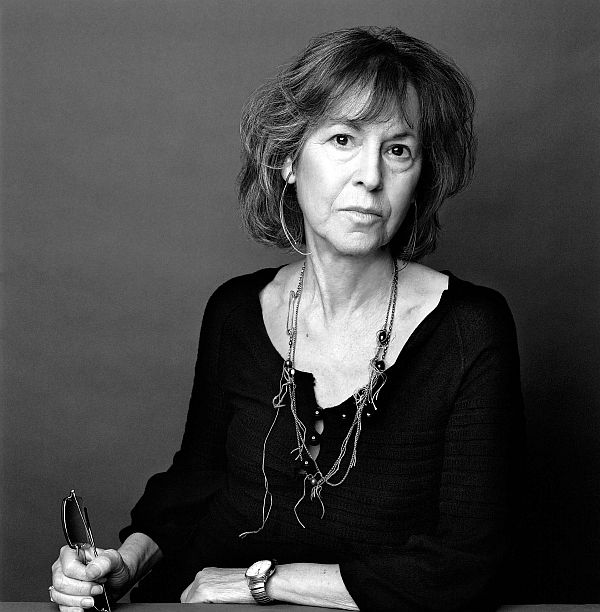
more information on Louise Glück :
Louise
Glück, a former Poet Laureate of the United States, is the author of over a
dozen books of poetry including Faithful and Virtuous Night (winner of the
National Book Award for Poetry) and her recent anthology, Poems: 1962-2012.
Pulitzer Prize winner Robert Hass has called her “one of the purest and most
accomplished lyric poets now writing.”
Glück
taught at Williams College for 20 years and is currently Rosenkranz
writer-in-residence at Yale University. She is a member of the American Academy
of Arts and Letters, and in 1999 was elected a Chancellor of the Academy of
American Poets. Her numerous books of poetry include A Village Life (2009), The
Seven Ages (2001), and The Wild Iris (1992), for which she received the
Pulitzer Prize. Louise Glück says of writing, “[It] is not decanting of
personality. The truth, on the page, need not have been lived. It is, instead,
all that can be envisioned.”
Louise
Glück with Peter Streckfus, Conversation.
Recorded at the Lensic Theater in Santa Fe, New Mexico on May 11, 2016. This
was a Lannan Literary event.
Louise Glück,
is introduced by Peter Streckfus and
then read from her work.
Acquainted
With the Dark. By Peter Campion. New York Times , September 26, 2014