Showing posts with label South Africa. Show all posts

28/05/2021

Jacqueline Rose on Violence and on Violence Against Women


It is a truism to say that everyone knows violence when they see it, but if one thing has become clear in the past decade, it is that the most prevalent, insidious forms of violence are those that cannot be seen. Consider, for example, a photograph from January 2017. A group of identical-looking white men in dark suits looked on as their president signed an executive order banning US state funding to groups anywhere in the world offering abortion or abortion counselling.

 
The passing of the “global gag rule” effectively launched the Trump presidency. (It was scrapped by Joe Biden soon after his inauguaration a few weeks ago.) The ruling meant an increase in deaths by illegal abortion for thousands of women throughout the developing world. Its effects have been as cruel as they are precise. No non-governmental organisation (NGO) in receipt of US funds could henceforth accept non-US support, or lobby governments across the world, on behalf of the right to abortion. A run of abortion bans followed in conservative Republican-held US states. In November 2019, Ohio introduced to the state legislature a bill which included the requirement that in cases of ectopic pregnancy, doctors must reimplant the embryo into the woman’s uterus or face a charge of “abortion murder”. (Ectopic pregnancy can be fatal to the mother and no such procedure exists in medical science.)
 
At a talk in London in June 2019, Kate Gilmore, the UN deputy commissioner for human rights, described US policy on abortion as a form of extremist hate that amounts to the torture of women. “We have not called it out in the same way we have other forms of extremist hate,” she stated, “but this is gender-based violence against women, no question.”
 
The resurgence of hate-fuelled populism has become commonplace in the 21st century. But it is perhaps less common to hear extremist hate, notably against women, being named so openly as the driver of the supreme legal machinery of the west.
 
It is a characteristic of such mostly male violence – “violence regnant”, as it might be termed, since it represents and is borne by the apparatus of state – that it always presents itself as defending the rights of the innocent. These men are killers. But their murderousness is invisible – to the world (illegal abortions belong to the backstreets) and to themselves. Not even in their wildest dreams, I would imagine, does it cross their minds that their decisions might be fuelled by the desire to inflict pain. Neither the nature nor the consequences of their actions is a reality they need trouble themselves about.
 
With their hands lightly clasped or hanging loose by their sides, what they convey is vacuous ease. Above all, they brook no argument. Their identikit posture allows no sliver of dissent (not among themselves, not inside their own heads). Such violence in our time thrives on a form of mental blindness. Like a hothouse plant, it flourishes under the heady steam of its own unstoppable conviction.


This moment stands as one of the clearest illustrations of the rift between act and understanding, between impulse and self-knowledge, which for me lies at the core of so much violence. We can name this male violence against women, as the UN commissioner did without reserve, but men are not the only human subjects capable of embodying it. Women throughout history have cloaked themselves in state power. And men are also the victims of violence – the most prolific serial rapist in UK history, sentenced to life in January 2020, had preyed consistently upon vulnerable young, heterosexual men.
 
But in response to the increasing visibility of gender-based violence, I want to focus on one deadly mix in particular: the link between the ability to inflict untold damage and a willed distortion – whether conscious or unconscious – in the field of vision. Violence is a form of entitlement. Unlike privilege – which can be checked with a mere gesture, as in “check your privilege”, and then left at the door – entitlement goes deeper and at the same time is more slippery to grasp. As if hovering in the ether, it relies for its persistence on a refusal to acknowledge that it is even there.
 
To take another iconic moment of the last few years: Prince Andrew’s BBC television interview of November 2019, when he tried to explain that his visit to the home of child trafficker and abuser Jeffrey Epstein in 2010, barely months after Epstein’s conviction for sexual assault, arose from his tendency to be too “honourable” (staying with a convicted sex offender was the “honourable” thing to do). He was floundering in the dark. His denials that he had ever met or had sex with Virginia Giuffre, formerly Roberts, who states that she was coerced into sex with him when she was 17, were met with ridicule. It was an extraordinary display of blindness: to the young female victims, trafficked by Epstein – allegedly with the support of Ghislaine Maxwell, who is now awaiting trial – not one of whom got a single mention; to the self-defeating farce of his own case (unlike Oedipus, his blindness was atoning for nothing).
 
But he was also revealing a chilling truth, which I suspect played its part in the speed with which he was summoned by the Queen and dismissed from his royal duties without ceremony, despite the fact that he is reputed to be her favourite child. Honour, here in its royal incarnation, revealed its true colours as the right to violence with impunity. (In the UK any investigation into Epstein has been summarily dropped.) For that very reason Virginia Woolf warned women in the 30s not to be tempted by the panoply of power and the trappings of national honour – which would suck them into war. But the shiftiness is not an afterthought. It is hardwired into the whole process, the chief means whereby entitlement boasts its invincibility and hides its true nature from itself.
 
In one of his best-known formulas, Freud wrote of “His Majesty the Baby”, by which he meant the will to perfection and the burden of adoration that parents invest in their child. Narcissism starts with the belief that the whole world is at your feet, there solely for you to manipulate. Beautifully self-serving, its legacy is potentially fatal – as in the myth of Narcissus, who drowned in his own reflection in a pool – since it makes it wellnigh impossible for the human subject to see or love anyone other than themselves.
 
Aggressivity is therefore its consequence, as the child struggles with the mother, or whoever takes her place, against the dawning recognition that they are as helpless as they are dependent on others to survive. “Every injury to our almighty and autocratic ego,” Freud writes in his essays on war and death, “is at bottom a crime of lèse-majesté”. (In the unconscious, we are all royalty.)
 
But for those at the top of the social pecking order, narcissism mutates, not into loss, not into something you have at least partly to relinquish, but into an accursed gift, one that too easily leads to violence. No human, however powerful, is spared confrontation with the limits of their own power, with those realms, in the words of Hannah Arendt, “in which man cannot change and cannot act and in which, therefore, he has a distinct tendency to destroy”.
 
Arendt was writing in the 50s about the forms of murderous totalitarianism that had spread over the Earth, but her prescient words are no less relevant now, when dictatorships are on the rise, we face the destruction of the planet, black men are being shot on the streets of the US, and the rates of death from austerity, rampant inequality and impoverishment are increasing by the day. When the pandemic started to break across the globe at the end of 2019, it soon became clear that one of its most striking features would be the way it accentuates the racial and economic fault lines of the world – from the fact that black, Asian and minority ethnic citizens in the UK are four times more likely than white people to die of Covid-19, to the killing of George Floyd which, mid-pandemic, repeated and underscored a historic context of violence. Nor did it seem to occur to any of the (mainly) men in power that the mantra to stay home and save lives in fact threatened the lives of women subject to domestic violence who were now trapped inside their homes; under lockdown the rate of such violence has soared.
 
Who decides what is called out as violence? Who determines the forms of violence we are allowed, and permit ourselves, to see? Not naming violence – its often undercover path of destruction, its random disposal of the bodies it needs and does not need – is one of the ways that capitalism has always preserved and perpetuated itself.


In one of her sharpest insights and most trenchant ripostes, socialist revolutionary Rosa Luxemburg cautioned against the charge that the 1905 Russian Revolution had spilt blood by pointing out that the level of suffering was nothing compared with the indiscriminate, mostly unremarked, cutting down of lives by the brute machinery of capital that had flourished up to then. “Abroad the picture created of the Russian Revolution is that of an enormous blood-bath, with all the unspeakable suffering of the people without a single ray of light,” she stated at a rally in Mannheim in 1906. “The suffering during the revolution is a mere nothing compared to what the Russian people had to put up with before the revolution under so-called quiet conditions.”
 
She then listed hunger, scurvy and the thousands of workers killed in the factories without attracting the attention of the statisticians. “Quiet conditions” is a key phrase – she is referring to the skill with which capital cloaks its crimes.
 
In January 2019, Conservative ministers in the UK recommended that grant allocations to local authorities no longer be weighted to reflect the higher costs of deprivation and poverty, with the result that money could be redirected to the more affluent Tory shires (a move variously described as a “brutal political stitch-up” and “an act of war”). These moments of violence move silently, as do the women today who are so often the most affected: threatened by Brexit with the loss of equality and human rights protection, including employment rights and funding for women’s services (notably in relation to sexual violence, where the number of rapes reported to police in England and Wales doubled between 2013 and 2018, while prosecutions fell), or forced into sex work as a result of the universal credit system, part of a Conservative overhaul of benefits for people on low household income that is now acknowledged as catastrophic for the most socially vulnerable.
 
When Iain Duncan Smith, the architect of the policy, was knighted in the 2020 new year honours list, 237,000 people signed a petition objecting to the award for a man “responsible for some of the cruellest, most extreme welfare reforms this country has ever seen”. The Department for Work and Pensions denies any link between the new credit system and survival sex, dismissing the tales of women as anecdotal.
 
It is generally recognised that the spending “free-for-all” inaugurated by Boris Johnson after his 2019 election victory was intended to secure a further electoral term, but will have no effect on the basic gulf between the rich and the dispossessed (the moneys released for the NHS are a fraction of what is needed). Nor is there any confidence that the flurry of NHS spending brought on a year later by the pandemic will be significantly sustained. To general outcry, the promised NHS pay rise for nurses has turned out to be a derisory 1%.
 
Male violence is the standout feature of the day, but it is also central to my argument that the masculinity enjoined on all men, and paraded by so many, is a fraud. On this, I take my distance from radical feminism, notably that of the influential school of Catharine MacKinnon and Andrea Dworkin, which sees violence as the unadulterated and never-failing expression of male sexuality and power – a self-defeating argument if ever there was one (if true, then men will rule the world for ever). Instead, it is crucial for me that, even while calling out masculinity in its worst guise, we allow to individual men the potential gap between maleness and the infinite complexity of the human mind.
 
How can we as feminists make that gap the beating heart of women’s fight against oppression, against the stultifying ideology of what women are meant to be, and not allow the same internal breathing space to men? Surely our chance of a better world relies on the ability of all of us to stop, think and reject the most deadly “requisite” behaviours? No man comfortably possesses masculinity (any more than, other than by killing, one person is in total possession of anyone else). Indeed, such mastery is the very delusion that underpins the deranged and most highly prized version of masculinity on offer. Prowess is a lie, as every inch of mortal flesh bears witness. But like all lies, in order to be believed, it has to be endlessly repeated.

One of the most striking aspects of the saga of Hollywood producer and sexual abuser Harvey Weinstein, as told by Jodi Kantor and Megan Twohey who broke the story in the New York Times, is that he seems to have been at least as keen on the slow burn of coercion and resistance, which would sometimes go on for hours, as on any act of so-called consummation.


Rowena Chiu, for example, describes how, shortly after being hired as his assistant, she endured four hours of threats, cajoling and bribes. At the end, “He parted her legs, and told her that with one single thrust it would all be over”. She managed to get out of the room. (What exactly, we might ask, was in it for him?) Clearly, for Weinstein, the revulsion he provoked was a core component of his pleasure, which is not to say that he did not also wish to get his way with these women. “If he heard the word ‘no’,” commented one of the key witnesses in the February 2020 New York rape trial, who chose not to be named, “it was like a trigger.” For Zelda Perkins, another assistant who was subjected to his assaults, he was “pathologically” addicted: “It was what got him out of bed in the morning.”
 
If sexual violence always tends to spiral out of control, it is because the agent of that violence must know deep down he is on a losing wicket. Weinstein’s physical collapse after his arrest can therefore be read not just as a staged plea for sympathy – a day after photos were released showing him using a walking frame on his way into court in December 2019, he was seen walking around a supermarket unaided – but also as an inadvertent display of the fragility and eventual bitter truth of the human body, a truth his predatory behaviour was designed to conceal from the women he abused, from the world, and from himself.
 
This suggests to me that one reason why he got away with it for so long, why so many people in the profession chose to turn a blind eye, was not just brute negligence towards women, nor fear of the career-destroying consequences for anyone who dared to speak out; it was also because no one wanted to open the Pandora’s box of a man like Weinstein’s inner world, to look too closely at his greatest fears – any more than they wanted to recognise what, given half a chance, such a man might be capable of.
 
This puts anyone seeking to combat these forms of violence in something of a double bind, or at least imposes on us the need for special vigilance. If sexual violence arises from a form of tunnel vision, and from burying those aspects of the inner life that are most difficult to acknowledge or see, it is also the case that raising violence to the surface of public consciousness is not always transformative in the ways we would want it to be.
 
Perhaps nowhere so much as in the field of sexual oppression does the adage apply that recognising an injustice, and bringing it to the world’s attention, is no guarantee that the offence will be obliterated and justice prevail.
 
Weinstein’s February 2020 conviction for criminal sexual assault in the first degree and rape in the third degree, along with his jail sentence of 23 years the following month, are a victory for women. He was, however, cleared on the two most serious charges of predatory sexual assault, which means that one of the women – the actor Annabella Sciorra, who had been the first woman to testify against him in a criminal court – was not believed.
 
The suggestion by Weinstein’s lawyer, Donna Rotunno, that she would be an “excellent witness” as she had spent her whole life “acting for a living” appears to have been effective – as if only liars make acting their career. The idea that this trial dismantled once and for all the image of the “perfect” rape victim – someone unknown to the assailant, certainly not in a relationship with him that continued after the rape, able to recover and recount her experience with perfect clarity almost from the moment it happened – might also have been premature. There is also the risk that the fame that put him under the spotlight might turn out to have served as a distraction from the perennial, “mundane” nature of sexual crime.
 
In this case, revulsion against a sexual felon – the revulsion that also appears to have fuelled his own desire – and the law were on the same side. But time and again we see the legal struggle for redress against sexual assault brought up against the most stubborn forms of resistance and sidelining. This seems to be due, at least in part, to the fact that human subjects can be roused by what disgusts them; that licentiousness, even in the political order that is meant to tame and subdue it, can be a draw. This certainly seems to have played a part in the 2016 election of Donald Trump, when his ugly misogyny was either dismissed as mere masculine playfulness, or else championed, and positively fired up his base, as it continues to do to this day.
 
Chelsea Clinton has described such misogyny as “the gateway drug”, a soporific that lulls the senses and opens the door to greater nastiness to come. Permission is granted to a vicarious frisson of erotic pleasure and rage, so often directed towards women, which no one is in a hurry to admit to.


By common assent, Trump is a law-breaker: two rape accusations, one made and then withdrawn by his first wife, Ivana, and one from the journalist E Jean Carroll, who has sued Trump for defamation on the grounds of his denials and aspersions; multiple cases of sexual harassment, by his own boastful acknowledgment; numerous exploitative hiring and financial practices swept under the carpet or settled out of court, but still publicly known; not to mention the grounds for his impeachment in 2019 – abuse of power for political gain (passed by the House of Representatives and then blocked in the Senate).
 
Likewise Boris Johnson. There is evidence that in 1990, he agreed to provide the address of a journalist to a friend who wanted to arrange for the journalist to have his ribs cracked as revenge for investigating his activities.
 
In the case of Trump’s first impeachment, it was not that his supporters even necessarily agreed with him that the charges were a “hoax”, as he repeatedly claimed in the face of mounting evidence against him, or even that he could do no wrong. Rather, it was that he was adulated in direct proportion to the wrong that he clearly could do. It is because he was transgressive – because, in the words of US TV host Rachel Maddow, he could be relied upon to do something “shocking, wrong or unbelievably disruptive” – that it became “a rational newsworthy assessment to put a camera on him at all times”.
 
If violence is so rousing, it would seem to be in direct proportion to its power to suspend anything vaguely resembling thought, to release the rush of blood that gives you no time to pause. It allows no introspection, even though – or because – violence plunges so deeply into who we are. A law-breaker at the summit of politics is enticing. Arendt wrote of the danger to the social fabric posed by a world in which state authority and its laws have degenerated to the point where civil order and democracy, or even mere decency, come to be felt as treacherous: “Evil in the Third Reich had lost the quality by which most people recognise it – the quality of temptation.” A lawless regime relies on the hidden guilt of human subjects, drawing them into the illicit, dissolute world to which everybody already at least partly belongs in the unconscious (no one is fully innocent in their dreams; forbidden thoughts are the property of everyone). Or, in the words of a southern Baptist woman, asked on BBC television how she could vote for Trump given his moral failings: “We are all sinners.”
 
“Why”, asked German columnist Hatice Akyün in the newspaper Der Tagesspiegel, after the murder in June 2019 of Walter Lübcke, a member of Angela Merkel’s Christian Democratic Union party (CDU), “are the people of my country not flooding to the streets in disgust?” Lübcke had been killed by a neo-Nazi as revenge for his sympathetic stance on migration. In October 2019, a video was released by a pro-Trump group with connections to the White House, which depicted Trump killing opponents and political journalists (in one sequence, the faces of all those shot, stabbed and punched were covered with the logo of CNN). When challenged, the organiser of the website insisted that the video was merely “satirical”: “Hate-speech is a made-up word. You can’t cause violence with words.”
 
There is a poison in the air, and it is spreading. This world of sanctioned violence, violence elevated to the level of licensed pleasure, is by no means exclusive to Trump and Johnson – even if, by general recognition, they similarly combine the qualities of self-serving autocrat and clown. The glow of attraction between them rivalled that of Reagan and Thatcher, whose belligerent neoliberalism in the 80s prepared the ground for so much of the destructive global order that has followed. But the rise of dictators across the world who boast of their prowess and nurse their distastes – in Hungary, Turkey, Poland, Brazil, India – suggests that we are living, or may be on the verge of living once more, what Arendt described as temptation gone awry.
 
In Brazil, President Jair Bolsonaro has proclaimed that he will finish the task of the military regime that ruled Brazil from 1964 to 1985. In 2003, he told Maria do Rosário, a fellow member of congress, that he would never rape her because “you do not deserve it”. Perhaps most telling of all, he once quipped that only a “moment of weakness” can explain why one of his five children “came out a woman”. The formulation “came out a woman” is the real giveaway, as if an infant’s sexual destiny as woman were fixed from the beginning and she has no right to any other ideas. His words resonate with potential sexual violence, not just because he clearly holds all women in such brazen contempt. Ensuring that women will be women and nothing else, pinning them down as women, can be seen as one of the core motives of rape, which is why all rapes, not only those targeted at lesbian women, should be defined as “corrective” (In Brazil, a woman is the victim of physical violence every 7.2 seconds.)
 
Trans experience, also the target of violence, belongs here, too, as it clearly binds the issue of sexuality to that of political struggle – freedom achieved and withheld. Despite being far more widely accepted than ever before, transgender people are still being killed for daring to present the world with the mostly unwelcome truth that sexual identity is not all it is cut out to be. Not everyone comfortably belongs on the side of the inaugurating sexual divide where they originally started, or to which they were first assigned.
 
Some cross from one side to the other, some see themselves as belonging on neither side, others on both (these options are by no means exhaustive). Sexuality creates havoc. Kicking it back into place – a doomed project – is one way in which an oppressive culture tries and fails to lay down the law. Bolsonaro has explicitly stated that removing “gender theory” from the university curriculum is a chief objective of his educational reforms.

Repeatedly, we see what intimate companions political and sexual coercion can be. In Spain, the ultra-right Vox party made huge gains in the country’s 2019 elections, entering congress for the first time. Visiting Madrid in April that year, I was handed one of its flyers, which specifically targeted “supremacist feminism”, “radical animal rights activists” and the LGBTQ lobby. “Supremacist feminism” is the sister term to “feminazis”, coined by the late US rightwing radio host Rush Limbaugh to describe radical feminists – who, he claimed, “want to see as many abortions as possible”.

 In fact, the rise of Vox in Spain was propelled by the increased visibility of feminist protest against sexual violence, notably the nationwide demonstrations that followed the infamous “wolf-pack” rape of a young woman in Pamplona in 2016, and the trial that took place two years later. When two of the judges ruled that the men were not guilty of rape as there had been no violent coercion, and a third absolved the defendants completely of the charge, thousands of protesters filled the streets. A year later, in September 2019, protesters in more than 250 towns and cities across Spain declared a “feminist emergency” after a series of high-profile rape cases and a summer in which 19 women were murdered by current or former partners (the worst figures for more than a decade).


This is the context in which Vox agitates for the repeal of laws tackling gender-based violence, for the removal of all gender reassignment and abortion procedures from public health services, and for the dissolution of all federally funded feminist organisations. They have also called for the abolition of the Law of Historical Memory, which was designed to ensure that the legacy of Franco is not forgotten, to be replaced by a ministry to protect the rights of the “natural family” as an institution prior to the state, and for the building of a frontier wall to halt illegal immigration “encouraged by globalist oligarchies” – child migrants were presented as a special menace. Each one of these is an unabashed incitement to violence – against women, migrants, and against historical memory, which is being wiped off the page.

 Far-right parties do not all hold the levers of power, but they stalk its corridors, releasing their ugly permissions into the mental and social atmosphere. “We’re only saying what everyone is thinking” is the common justification and refrain. They wrap themselves in the mantle of redemption, as if they were saving the world from burning injustice (righteousness raised to the pitch of frenzy is the particular skill of the far right). “Hate can exist without any particular individuals,” comments the narrator of Edouard Louis’s bestselling 2016 novel History of Violence, which narrates the story of his rape after a casual encounter on the Paris city streets. “All it needs is a place where it can come back to life.”

 It is a paradox of human subjectivity that knowing you are capable of violence – recognising it as your problem, instead of blithely assigning it to someone else (of another race, class, nation or sex) – reduces the chances of making it happen. The idea of crushing violence – stamping it out or eradicating it from the Earth – simply increases the quotient of violence we have to face. We have seen this before, at the centre of 20th-century Europe, in the belief that the first world war would be the war to end all wars, a delusion that allowed that same war and its aftermath to carry on silently laying the groundwork for the next.

 We are all subjects of violence, not least because we are embedded in a violent social world. There is always a point in any ethical position or turn – the struggle against injustice, the fight for a better, less violent order – where it starts and stutters, trips and breaks, before setting out on its path once more. At the beginning of The Human Condition, Hannah Arendt writes: “What I propose, therefore, is very simple: it is nothing more than to think about what we are doing.”

 If there is one thing of which writing about violence has convinced me, it is that if we do not make time for thought – which must include the equivocations of our inner lives – we will do nothing to end violence in the world, while we will surely be doing violence to ourselves.

 An edited extract from On Violence and On Violence Against Women by Jacqueline Rose, published by Faber , 2021.

 Damage: the silent forms of violence against women. By Jacqueline Rose. The Guardian, March 30, 2021.


Kate Wolf and Medaya Ocher are joined by feminist critic Jacqueline Rose to discuss her new book, On Violence  and On Violence Against Women. Rose addresses the prevalence and persistence of violence through the analytical lenses of feminism, history, psychoanalysis, politics, and literature. She argues that violence in our time thrives on a kind of mental blindness, and elucidates its relationship to the rise of politicians like Bolsonaro and Trump.  Los Angeles Review of Books,  May 14, 2021.


Jacqueline Rose joins PTO to talk about her new book, On Violence and on Violence against Women. We discussed how psychoanalysis can help us grasp the mental states that make male violence possible, where Jacqueline parts company with the radical feminist perspectives of Catharine MacKinnon and Andrea Dworkin, and how the experience of trans women illuminates more broadly the nature of male violence against women. Finally, we talked about the violent history of South Africa - from the the colonial and apartheid eras up to the present day. Politics Theory OtherMay 21, 2021.


What a pair they made: Marcel Proust and his Papa.
 
Adrien Proust was the renowned epidemiologist who pioneered the use of the cordon sanitaire to sequester infectious disease — the 19th century’s version of social distancing. He was a man who boasted about how well he washed his hands.
 
His son, meanwhile, became the laureate of licentious trespass (on the page, at least), the great interloper of consciousness. No other writer has dedicated himself so exuberantly to “the porousness of boundaries between self and other, both as pleasure and as danger,” the critic Jacqueline Rose has written.
 
Proust is totemic to Rose. See, too, her fondness for the words “cobweb” and “tangle,” and her deep suspicion toward anything touted as “natural” or “sanitized.” Rose has written widely: on psychoanalysis, motherhood, the cult of celebrity, Sylvia Plath, Israel and Peter Pan. Every one of her books could be subtitled “In Praise of Shadows” — cribbing from Junichiro Tanizaki, another writer important to her.
 
“Rather than the idea of light triumphing over darkness,” she wrote in “Women in Dark Times,” “confronting dark with dark might be the more creative path.” She champions a “scandalous feminism,” an embrace of all the shameful, derided aspects of our nature, a refusal to fear or shun our own thoughts. Without it, we will continue to outsource our anxieties and aggression onto other people, onto entire other populations (today’s chief targets, she argues, include mothers, migrants, trans people, Palestinians).
 
Rose’s new book “On Violence and On Violence Against Women” arrives at a moment marked by a “visible increase” in violence against women in countries like India, Brazil and South Africa. The Covid lockdowns have also unleashed a “shadow pandemic” of domestic violence and femicide according to the United Nations. Rose asks how violence first takes root in the mind; what problems does it seem to solve?
 
Can we even recognize it? Rose begins her book with a photograph. “A group of identical-looking white men in dark suits” flank President Trump as he signs an executive order: the “Global Gag Rule,” which banned American funding to any organization in the world offering abortion or abortion counseling. The men look distracted, a bit bored. “These men are killers,” Rose writes. Their actions would increase illegal abortions by thousands. “But their murderousness is invisible — to the world (illegal abortions belong to the back streets) and to themselves.”
 
It is on this point that her book turns: how elaborately we conceal our violence from ourselves; how efficiently violence flourishes in those blind spots.
 
Rose has written about the “Global Gag Rule” photograph before, in “Mothers.” From book to book, she revives certain themes — testing, twisting, dilating them. She thinks alongside Proust always, as well as Rosa Luxemburg; Hannah Arendt; Toni Morrison; Freud, inescapably; Marilyn Monroe, somewhat unusually. Through Luxemburg she again explores the violence that goes unseen — the “quiet conditions” of suffering, which testify, Rose writes, “to the skill with which capital cloaks its crimes.”
 
Rose also examines here the relationship between violence and blindness that she has narrated before in her own story. Her grandmother’s family was killed in the Chelmno concentration camp. She was raised in an environment with a strict cordon sanitaire of its own — a “defensive form of Jewishness closed in on itself,” she has said. What does such defensiveness occlude, she asked in “Proust Among the Nations,” her analysis of the Israel-Palestine conflict — what “makes it perhaps uniquely hard for Israel as a nation to see itself ever as the agent of the violence of its own history”?
 
“Victimhood is something that happens, but when you turn it into an identity you’re psychically and politically finished,” she has said.
 
Rose roves widely in this book. She considers sexual harassment, Harvey Weinstein, student protests in South Africa, depictions of violence in contemporary fiction. Her centerpiece essay, on the murder trial of Oscar Pistorius, weaves in disability politics, South African gun culture, apartheid-era architecture, the shower scene in “Psycho” and, again, the price others must pay for our belief in our own innocence. (“Expelling dirt is as self-defeating as it is murderous. Someone — a race, a sex — has to take the rap.”) She returns frequently to violence’s encroachment on the inner life of the victim. “Harassment is always a sexual demand, but it also carries a more sinister and pathetic injunction: ‘You will think about me,’” she writes. In a close reading of Anna Burns’s Booker Prize-winning novel, “Milkman,” Rose quotes the protagonist, who is being stalked by an older man. “My inner world had gone away,” the girl says.


It is an incalculable loss, this theft of mental freedom. Rose cites the psychoanalyst Melanie Klein’s beautiful concept of “epistemophilia.” The infant’s strongest impulse, our native impulse, is to know.
 
For all that Rose reveals, her book might be most intriguing in its strictures and refusals. She will not, for example, list examples of atrocities — “feminism is not served by turning violence into a litany” — or add to the spectacle. She shies away from cheap pathos and struggles to avoid turning victims into figures of timeless suffering and “raw pity,” thereby obfuscating “human agency, the historical choices and willful political decisions.” What does it mean to report on violence, she asks, when it only “itches” the consciences, offers titillation or, worse, spurs support for the perpetrator? Donald Trump, Rose writes, “was adulated in direct proportion to the wrong which he clearly could do.”
 
These questions aren’t purely ethical. Rose searches for the modes that allow us to think more clearly and creatively. Literature becomes critical: “It is for me one of the chief means through which the experience of violence can be told in ways that defy both the discourse of politicians and the defenses of thought.” Unspeakable violations force new words and forms into being: Toni Morrison’s concept of “rememory”; what Burns in “Milkman” calls “numbance”; the broken, nursery rhyme horror-patter of Eimear McBride’s novel “A Girl Is a Half-Formed Thing.”
 
For all her attraction to unruliness, Rose’s own sentences are cool, almost enameled in their polish and control. It’s in the movement of her prose, the way she seizes and furiously unravels ideas from her previous books, that we see the vigor and precision of her mind, the work of thinking, of forging new pathways that she holds up as rejoinder to the muteness of violence.
 
Despite drawing on Luxemburg’s “quiet conditions” of violence, Rose primarily attends to individuals, not systems. It’s a disposition that can invite charges of solipsism — thus sailing past her entire point. Where Proust dedicated himself to the “the porousness of boundaries between self and other,” Rose examines the porousness of the self and the state. She points out that the French technical term for the forcible repatriation of migrants is “refoulement” — “pushing back” or “repulsing” — the very word used for the concept of psychological repression.
 
“Reckoning with the violence of the heart and fighting violence in the world are inseparable,” she writes. To read Rose is to understand that there is no border between us and the world; it is an invitation to a radical kind of responsibility.
 
A New Book Thinks Clearly and Creatively About Violence Against Women.  By Parul Sehgal. The New York Times,  May 12, 2021


In Women in Dark Times (2014), the British literary and cultural critic Jacqueline Rose proposed that one reason for misogyny is women’s “ability to force to the surface of the everyday parts of the inner life—its visceral reality, its stubborn unruliness—which in the normal course of our exchanges we like to think we have subdued.” Unearthing those unruly, visceral realities is the project of psychoanalysis. It is also Rose’s project as a feminist. “Psychoanalysis is not a recommendation for a patriarchal society, but an analysis of one,” wrote Juliet Mitchell in 1973, in the canonical Psychoanalysis and Feminism. Along with Mitchell and a distinguished roster including Dorothy Dinnerstein, Jane Gallop, and Judith Butler, Rose is a seminal force in recuperating Freud for feminism and enriching Freudian theory with feminism.
 
Among the things that psychoanalysis and feminism share are the objects to which they return: sexuality and violence. Freud posited these as antagonistic instincts, sex and death. In her thirteenth book, On Violence and On Violence Against Women, Rose extrapolates from these two terms, and then flips the Freudian axiom on its head: behind sexual violence, she says, lies compulsory sexual difference. They are “blood brothers.”
 
To arrive at this provocative and generative thesis, Rose begins with some commonplaces of non-essentialist feminism, Lacanian feminism, critical race and masculinity studies, and radical queer and trans theory. The enactment of violence, particularly sexual violence, is gendered. Men commit most of it, and women and femmes are most often its victims. But violence has no innate gender—it is no more male than victimhood is written on the XX chromosome. Like Butler, Adrienne Rich, Monique Wittig, bell hooks, or, for that matter, your average nonbinary-identifying teenager, Rose presents gender itself as violence—a mass “frogmarch” in two straight, separate lines.
 
Of course, the penalties of gender are not equally distributed. The classic feminist reading of Freudian castration focuses on the girl, who is forced to renounce the wild, open promise of childhood to “mature” into femininity, which is then enforced by a world of social restrictions. But, says Rose, psychic self-mutilation is not only for girls. Paradoxically, to assume the mantle of masculine power, the boy must amputate the frailty that makes us human, and human to each other. Seen this way, castration is “the axe that must fall for both boy and girl” on the way to gender “normality” and compulsory heterosexuality.
 
If femininity is an open wound, masculinity is chronic vertigo. As Lacanian feminists tell us, the lowly penis can never do the job of the all-powerful phallus. Rose adopts Arendt’s phrase “the impotence of bigness,” an apt descriptor for men in the #MeToo era, teetering between residual self-adulation and women’s ridicule, between enduring societal dominance and fear of professional demotion and social irrelevance. Enter the “blood brothers” violence and gender difference. “If sexual abuse is designed to remind the girl or woman of what she is,” writes Rose, “it is also intended to confer on the mostly male agents who carry it out a similarly fraudulent authority about a masculinity no less unsteady and unconvinced by itself.”
 
Those who can’t or won’t march in a gender-designated line are punished. Rose reports on the disproportionately high rates of sexual assault and murder of trans and nonbinary people, particularly among the most marginalized—people of color, street youth, sex workers, and prisoners. But there is no true “cis” gender, no perfect ease in one’s originally sexed skin. Trans is reviled not for its deviance, but because it speaks the anxious, repressed truth of “normality.” “For psychoanalysis, it is axiomatic, however clear you may be in your own mind that you are a man or a woman, that the unconscious knows better,” writes Rose. She quotes the trans writer and provocateur Kate Bornstein: “Everyone has to work at being a man or a woman. Transgender people are probably more aware of doing the work.”
 
If some of these ideas seem familiar, On Violence gives them intriguing new life. As always, Rose recombines the philosophical DNA of her greatest influences. For example, she teases out the Freudian and the feminist in Arendt, who famously snubbed both affiliations, and finds the “radical streak” in Freud. In this book she opens herself, born in 1949, to the challenges of the youngest activists, such as American and British student anti-rape feminists and the still-unfree “born-free” generation of Black South Africans. Although her moral position is unwavering, her psychoanalytic gaze prohibits the political pieties of the feminist, anti-racist, and anticolonial left, the expectation of virtue in the downtrodden and stunned silence in the traumatized. In some of its finest chapters, On Violence introduces a global shelf of novelists—including the Naga Indian Temsula Ao and the Irish Eimear McBride—who invent a language of violence in which, as McBride puts it, “pure is indivisible from its reverse.” Theirs is a kind of rejoinder to the feminist certainty that innocence lies a safe distance from guilt. “Violence,” says Rose, “is part of the psyche”—everyone’s psyche.
 
The carnage perpetrated by masculinity in hysterical self-defense is compounded by the anxiety of waning white supremacy. If you add the hidden injuries of ableism to this mix, you have the ingredients of the 2014 trial of South African Paralympic runner Oscar Pistorius for the murder of his girlfriend, law student and model Reeva Steenkamp. The trial exemplifies the thesis of On Violence and makes for a tour de force of Rosean psycho-political analysis.
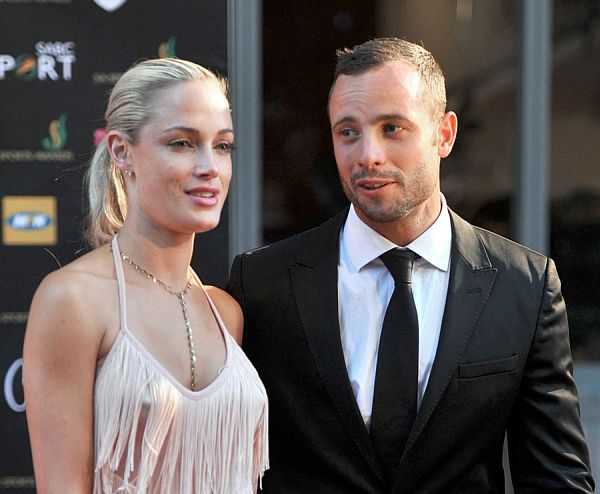


At issue in the trial was not whether Pistorius’s acts resulted in Steenkamp’s death. He confessed that he shot four bullets through the bathroom door of his home; the bullets struck and killed Steenkamp behind it. In dispute were Pistorius’s thoughts and feelings—his motive, if he had one at all. Around these questions slithered phantasms of gender and race. Pistorius, dubbed the “Blade Runner,” is revered for his physical prowess, courage, and discipline and rendered an image of heroic masculinity. Yet, in the trial, his defense feminized him to attempt to showcase him, preposterously, as the victim. Neighbors reported hearing a woman’s screams; Pistorius’s lawyers argued that they were his screams, their pitch heightened by fear. Evidence also suggested that the runner abused Steenkamp. However, the defense made the case that his disability, and the lifetime of indignities it attracted, made him psychologically an abused woman who finally snapped. Here is a man, writes Rose, “going to the furthest lengths he can go, including sacrificing the image of himself as a man, to make absolutely sure that no one hears the voice of a woman crying out in fear for her life.”
 
There was also another voice that remained unheard, both in Pistorius’s exculpatory narrative and in the rationale of the judge (a Black, disabled woman) in deciding he was guilty, but not of premeditated murder. The defendant claimed that he fired the gun (which he kept under the bed) in unthinking terror when he was awakened by the sound of what he thought was an intruder in the bathroom. But who was this intruder?
 
Rose focuses on the scene of the crime: the bathroom, “a place of purity and danger,” where the excrement of Black and white bodies in apartheid South Africa was obsessively kept from mingling. The judge dropped the charge of dolus eventualis, the determination that a “reasonable person” would and should have known that his act would cause injury. Of course, when Pistorius shot a nine-millimeter handgun at close range through a permeable door, he must have intended to kill the (presumably Black) intruder. “In the white racist imagination” the only Black African allowed in a white bathroom is a dead one. But Pistorius was indicted for the murder of Steenkamp; and, according to the judge, if he did not know that he was killing her, there was no malice aforethought. The Black body “slip[ped] syntactically under the bathroom door,” writes Rose.
 
 
In a companion chapter on South Africa, the inheritance of trauma, the imperative of remembering, and the role of justice in the “interminable” process of healing, Rose writes that she learned that “political and psychic struggle can be one and the same thing.”
 
Of course, she already knew this—it defines her work. But the political and the psychic, the concrete and the unconscious, can also struggle against one another, even when they share a goal. The core tension in On Violence and On Violence Against Women is between masculine violence on the ground, “a crime to be detested and cast off,” and psychic violence, which is genderless and must be considered tenderly.
 
“The best way for feminism to counter violence against women . . . is to speak of, to stay and reckon with, the extraordinary, often painful and mostly overlooked range of what the human mind is capable of,” writes Rose. Yet to cast off the crime is to risk perverting that psychological reckoning. When feminism “repudiates, renders unthinkable, shuns beyond the remit of the human. . . [it] finds itself replicating that part of the mind which cannot tolerate its own complexity. It thereby becomes complicit with the psychic processes which lead to the enactment of violence itself.”
 
This dilemma for feminism is also a dilemma for Rose. In her humanist vision, “the mind” includes the minds of men, who are also prisoners of gender and its potential resisters. But what if the man in question might be the perpetrator of sexual harm?
 
On Violence begins with a chapter probing the controversies over procedures to investigate sexual assault allegations on U.S. college campuses as an obligation of the Civil Rights Act’s Title IX. For facts and context, Rose relies almost entirely on one source: Blurred Lines: Rethinking Sex, Power, and Consent on Campus, by journalist Vanessa Grigoriadis. To demonstrate “sexual harassment in close-up,” the chapter’s title, Rose also adopts a touchstone of Blurred Lines, the case of Emma Sulkowicz, the Columbia University student who accused fellow student Paul Nungesser of anal rape, then in protest of the university’s failure to find him guilty carried a mattress around campus in a performance that gained international renown. In Grigoriadis’s telling, Nungesser doesn’t get a break. He was “plotting,” hiring a “wily” lawyer and creating “quite a lovely profile” to show he was not a rapist. On the other hand, the accuser (about whom the author wrote glowingly in New York in 2014) was unimpeachable. For instance, Grigoriadis finds it “highly possible” that Sulkowicz’s text “fuck me in the butt” actually meant “Oh my god, i’m so annoyed,” as she claimed.
 
How do we know the truth? “Evidence is always key,” Rose writes. But in this sexually, politically, and racially biased terrain, it “is not neutral.” Of course it isn’t. That’s why diligent reporters, such as Cathy Young and Robby Soave in Reason and The Daily Beast, further investigated the case—and returned more skeptical, nuanced verdicts. Their skepticism is echoed by respected feminist attorney-journalists  and legal scholars, such as Harvard Law professor Janet Halley, who document the overreach, denial of due process, and steep biases against the accused in what Halley’s colleagues, Jeannie Suk Gersen and Jacob E. Gersen, call the “sex bureaucracy.” In the Harvard Law Review, Halley warns of the perils of “governance feminists”—“advocates [who] turn their rhetorical tools and social-movement protest into institutional government,” like the Title IX bureaucracies. Prejudices about diverse cultural mores, drinking and drugs, and marginalized sexual practices reinforce ideologies about gendered sexual power and agency, resulting in the imposition of “serious moral stigma and life-altering penalties on men who may well be innocent”—and, I’d add, excessive penalties on those who are guilty, too.
 
Rose consults none of these critics. Instead, she states that cases like the one at Columbia transpire in “the murky world of sexuality where all bets are off, where desire and a change of heart can persist in one and the same breath.” “Someone has to decide” who is telling the truth—but it won’t be Rose. She simply states that Grigoriadis believes Sulkowicz’s version of the story, even though the accused man challenged it “down to every last detail.”
 
After swimming in the maelstrom of interpreting conflicting evidence of an offense that usually takes place out of sight, Rose reiterates the indisputable: if a woman says or shows she doesn’t want sex, it is rape. But what if the signals or the circumstances are inconclusive? This question lies at the vortex of feminist debates about rape. The courts say acquit. Much anti-rape politics says convict, or at least discipline or expel from college.
 
An increasing number of queer and trans activists and feminists of color who have experienced the ravages of criminal “justice” refuse this either/or approach. To confront interpersonal violence, they eschew policing and caging yet demand accountability and repair. In a brief passage, Rose links prison abolitionist activism to critiques of the Title IX bureaucracy that acknowledge racial bias, concluding that “no struggle for emancipation can afford to be co-opted by discriminatory and death-dealing state power.”
 
In South Africa Rose finds the roots of individual and state violence in the deluded belief that some people—Black men in particular—are predatory beasts. Carceral anti-rape feminism proceeds from a kindred belief: that men in general—and, not far from the surface, Black men in particular—are naturally, incorrigibly bestial. Rose rejects that essentialism. However, her enthusiasm for the U.S. anti-rape movement on college campuses works to minimize its carceral impulses and suggests that racist state institutions might be reformed to be less discriminatory. “Sexuality collides with the law. The only available options, at least to date, seem to be too much legal intervention or not enough,” Rose concludes without concluding.


In the United States, when sexuality collides with the law, the crash is fiery and sometimes fatal. In Unwanted Advances: Sexual Paranoia Comes to Campus, Northwestern University media professor Laura Kipnis writes about Daniel DePew, a man lured to a hotel room by police, who egged him on to indulge in the fantasy of a snuff film involving the kidnapping and killing of a child. DePew was sentenced to thirty-three years for “a crime that never happened,” says Kipnis. Rose scoffs: “It sounded more to me as if he had been caught making a plan.”
 
In other words, Emma Sulkowicz might have entertained a fantasy of anal sex that she had no wish to fulfill in the flesh. But DePew’s fantasy—this monstrous specter that might appear in anyone’s unconscious, especially when aroused by an insistent interlocutor—is rational, intentional: “a plan.” It’s as if Rose has decided abruptly to toss out the delicate tools with which she sorts the vagaries of unconscious violence and reach for her gun.
 
Rose spends an inordinate amount of space rebutting Kipnis. It’s a weird choice of principle antagonist, since Unwanted Advances, like all of Kipnis’s polemics, is bent on outrage and impervious to inconvenient realities, such as the sexual abuse of power. She wins little respect even from feminists who basically agree with her. Nevertheless, instead of returning fire, two years after the publication of Unwanted Advances and soon after DePew’s release from prison, Kipnis, perhaps unwittingly, tipped her hat to Rose. In a detailed (and to me persuasive) account of the sting for The New York Review of Books, Kipnis describes DePew as “someone who’d always felt like a failure at masculinity, which loomed, grail-like and unattainable, in his psyche”—a strikingly close rendering of Rose’s wellspring of male violence, and also of those violent and universal human fantasies that will never be realized. DePew did realize them—consensually. The gay son of a homophobic father, he grew up to pursue adults-only S&M, in which he liked to play bottom. Federal agents dragged him into their scheme, without evidence of pedophilia, to build a conspiracy case against someone else. DePew served twenty-nine years, and then, a month later, died of a blood clot that had gone untreated in prison.
 
Perhaps, because she is British, Rose is unacquainted with the costly, baroque, and unremitting tactics with which the enforcers of U.S. sex law recruit otherwise law-abiding deviant thinkers into compromising, illegal positions. She may not know that child pornography convictions, with or without real children, carry longer sentences than physical child abuse. Of DePew’s three-decade incarceration, Rose states no opinion. As for unloosing the repressed in order to face down sexual violence, this is unwise in the United States, where every psychotherapist is a mandated reporter. If a patient divulges fantasies of harming a child, even to try to prevent realizing those fantasies, the therapist must construe them as “a plan” and report the patient to the police. College professors on most campuses are mandated reporters, too, who must inform the Title IX office of suspected sexual misconduct even if it is disclosed in confidence.
 
The Buddhist psychoanalyst and writer Mark Epstein has written that psychoanalysis is a methodology of understanding unhappiness, whereas Buddhism is a practice of attaining happiness. The same could be said of psychoanalysis and politics. One draws puzzles, the other works to solve them; one reflects, the other acts. Consonant with Rose’s gifts, On Violence and On Violence Against Women is more about how to think and feel about violence than it is about what should be done. If the sinuous thread of her argument gnarls when she moves from the consulting room to the street, well, she is not alone. Feminists, psychologists, educators, families, clergy members, and community organizers have been trying to figure out what to do about sexual violence forever, and so far no one has solved the problem. Perhaps because violence slides between the unconscious and the real, it will always be a subject of what the late, great feminist public intellectual Ann Snitow called “the feminism of uncertainty.”
 
It is possible that where I see a caesura between the psychoanalytical and the realpolitikal, where I imagine Rose retreating to the “murky” unconscious to avoid taking a stand, she is simply expressing political opinions with which I disagree—say, in the Sulkawicz-Nungesser case, where she proposes that history and ongoing inequality demand that the accuser be given more benefit of the doubt than the accused.
 
Still, On Violence and on Violence Against Women is a work of intellectual virtuosity and moral vigor. We would be wise to heed Rose’s exhortation “to hold on to two insights” at once: that “sexual abuse is real,” and also that “sexuality is aberrant. It is no man’s servant.” It can be no woman’s either. 
 
 
Violence Has No Gender. By Judith Levine. Boston Review, May 21, 2021. 


In one of the first scenes of the recent Oscar-nominated British film Promising Young Woman, Cassandra (Carey Mulligan) appears drunk to the point of incapacitation. Slumped in her seat in the corner of a nightclub, her head drooping, she is bundled into a taxi by an apparently concerned male stranger. He takes her to his flat, lies her on the bed, and begins assaulting her while she murmurs repeatedly: “What are you doing?” Once he has removed her underwear, her eyes snap open, and she sits up straight. “Hey,” she says, with perfect clarity. “I said, what are you doing?”
 
The revelation of Cassandra’s sobriety, and the immediate change of power dynamics in the scene, make for a satisfyingly pulpy twist. But, in a film marketed as a rape-revenge thriller, it’s also curiously moderate retribution. Cassandra does not challenge, punish or humiliate the multiple would-be rapists who take advantage of her beyond asking them this single direct question: “What are you doing?”
 
For Jacqueline Rose, though, this question is of paramount importance. In her new book, On Violence and On Violence Against Women, the literary critic and psychoanalytic thinker argues that “violence against women is a crime of the deepest thoughtlessness”; one that can only be combated by deliberately naming it, confronting it and thinking about it. She urges her readers to “stare straight in the eye of the perpetrator still at large who knows, but takes no responsibility for, what he has done”, but also to look inward and reckon with the violent impulses that live within all of us. Her title echoes Hannah Arendt’s On Violence (1970), and a quote from Arendt acts as a guiding principle for Rose’s book: “What I propose, therefore, is very simple: it is nothing more than to think about what we are doing.”
 
The inside cover proclaims this book “a formidable call to action”; actually, it’s a call to thought. Over the course of nine standalone chapters, Rose makes the case that reaching a clearer understanding of violence as our own responsibility – not viewing it as a problem that only exists in the lives of others, glimpsed in gruesome news stories and global statistics, but an impulse that lurks inside us all – might help us to prevent it. The book aims to encourage her readers to “struggle against” violence and to understand it as an “inner force”.
 
Rose opens by describing a photograph of Donald Trump – surrounded by other “white men in dark suits” – signing an executive order to block US foreign aid for international groups that offer abortions, abortion counselling, or advocate for the right to seek abortions. “These men are killers,” Rose observes plainly. But not even “in their wildest dreams, I would imagine, does it occur to them that their decisions might be fuelled by the desire to inflict pain”. Because they refuse to see it, their own violence remains invisible to them; and so they are able to inflict it.
 
Rose sees male violence as motivated by men’s insecurity and fear of fragility: it is an “act through which a man aims to convince his target… that he is the one with the power”, behaviour she describes – quoting Arendt again – as symptomatic of “the impotence of bigness”. She persuasively argues that a delusional belief in absolute power and a shattering fear of its limitations are central to the worst tropes of masculinity displayed by figures such as Donald Trump, Harvey Weinstein and Oscar Pistorius.
 
But she also sees this masculinity as fraudulent, a “stultifying ideology” that tells us what men should be, not what they are. “It is crucial”, she writes, that just as feminists reject the stereotypes of femininity foisted upon women, so too must feminists permit “individual men the potential gap between maleness and the infinite complexity of the human mind”, allowing them “the same internal breathing space”.
 
Many of these chapters began life as essays in the London Review of Books. Rose has drawn on an intimidatingly wide range of references and themes in her previous works, which have taken Sylvia Plath, Zionism, Peter Pan, Proust and, most recently, motherhood as their subjects. Here, Rose considers a diverse range of topics including sexual harassment on campus, the #MeToo movement, transphobic misogyny, the killing of the South African model Reeva Steenkamp by Pistorius in 2013, and the struggles facing migrant women.
 
In an essay on literary fiction, she rightly identifies the Irish novelists Eimear McBride and Anna Burns as today’s foremost writers of sexual violence. Another chapter compares sexual harassment, which she sees as a patriarchal tool used to reinforce the gender binary, with trans existence, which rebels against that binary. She is a daring thinker, willing to make bold statements and take imaginative leaps.
 
These disparate topics are linked by her belief that feminism can only counter violence if it is willing “to speak of, to stay with, and reckon with” the most vicious impulses of the human mind. Violence cannot be stopped as long as it “continues to be something which people turn away from, blot from their minds, prefer – at least as far as they personally are concerned – not to talk or think about”. For Rose, thought can be its own form of action: “political and psychic struggle can be one and the same.”
 
Here, Rose is specifically referring to psychoanalysis: if violence is enacted out of blind fear and shame, then analytic thought is its inverse, bringing “mental life, however troubled, out of its dark shameful corners and into the light”. The book’s bright red cover is unadorned except for a dramatic black diagonal slash – the stroke of a knife, or the annotator’s strike-through? – while her prose is cool and surgically precise, as she dissects masculinity with her own sharp blade. Throughout, the book’s most radical suggestion is that psychoanalytic concepts of the unconscious might play a useful political role in the day-to-day struggle for gender equality.


It’s a proposition that Rose makes very persuasively; and it’s true that a psychoanalytic framework can provide useful tools for approaching male violence. (I am reminded of the feminist psychoanalyst Harriet Lerner – mother of the novelist Ben – who responded to obscene, misogynistic phone calls by saying politely, “I’m so sorry, I can’t hear you. Could you say that again, and speak a little louder?” The callers, embarrassed by their own words, would eventually hang up.)
 
But there are limits to how far it might help women suffering the effects of male violence, both in an immediate, practical sense and in terms of broader structural solutions. We do not really expect the stuttering, defensive young men in Promising Young Woman to be fundamentally changed by the question “What are you doing?”

Rose at times acknowledges this. In one of three chapters on South Africa, at a conference at Stellenbosch University, where apartheid survivors and perpetrators gathered together to discuss the painful legacy of apartheid, she observes how it quickly became apparent that, in order for the country to begin to recover from these atrocities, “thinking was not enough”. Thought, and even genuine remorse, cannot enforce accountability or justice – only legislation and collective action can.
 
In chapters on campus rape and the trial of Pistorius, Rose is refreshingly alert to the problems of relying on flawed (not to mention racist and sexist) legal systems. She is alive to the hypocritical voyeurism of much writing on sexual assault: just as lingering shots in Promising Young Woman and the crime drama The Fall can be seen as complicit in the violence they depict, so too in critical writing is there “always a risk… of turning sexual violence into the crime we love to hate”. She also pays painstaking attention to the pitfalls of modern feminism: for example, the ignorance of those who alienate trans women.
 
But I longed to see her unique mix of bracing scepticism and intellectual curiosity applied to large-scale political or structural possibilities. At times, in the face of so much pain and trauma, the gains can feel dispiritingly small: when Rose locates “hope” in the consulting room, or in the world of literary fiction, it is hard not to wonder where the marginalised women experiencing violence here and now might find theirs.
 
These are not questions any one book can answer. Instead, Rose offers a lucid and fresh approach to a problem that has no straightforward solutions. “Violence is not a subject,” she writes, “about which anyone can believe, other than in a state of delusion, that everything has been said and done.”
 
  
Reconsidering violence against women. By Anna Leszkiewicz. New Statesman , May 26, 2021.


20/05/2020

JM Coetzee : The Jesus Trilogy, Growing Up with The Children's Encyclopedia, Photographs from Boyhood


Men and their desires. Do we really need more on the subject? It is ground that has been plowed so often, by Roth, Updike, and others who came of age during the sexual revolution and its aftermath. These writers practically exhausted the English language exploring every aspect of their desire: David Foster Wallace, back in 1997, famously described Updike as “a penis with a thesaurus.” Yet our understanding of male desire has changed since the heyday of the Great Male Narcissists, as Wallace called them. It is something more malevolent than we once thought and hence more mysterious, too—lying at the root of Harvey Weinstein’s crimes, to name a specific example, and of “toxic masculinity” more broadly. The pernicious influence of desire is now understood to be so widespread that Wallace himself has entered the pantheon of Great Male Narcissists.

Since the publication in 1999 of his novel Disgrace, desire has been an abiding preoccupation of the South African Nobel laureate J.M. Coetzee. Disgrace combines Coetzee’s earlier focus on apartheid, often filtered through the lens of dystopian allegory, with the story of a middle-aged professor in Cape Town who is shunned for preying on one of his students. The novels that followed increasingly revolved around a recurring figure: a reserved, pedantic man who is also full of hidden passion; a philosopher enslaved by his emotions. Sometimes the figure is purely fictional: The main character in Slow Man (2006) is an amputee who develops an “unsuitable passion” for his physical therapist, a married mother of three. Other times the figure is based on Coetzee himself: Youth (2002), the second in Coetzee’s trilogy of autobiographical novels, features a young Coetzee in search of the muse who will unleash the torrent of feelings dammed up within him; Summertime (2009), the third in the trilogy, is partly told from the fictionalized perspectives of the former objects of Coetzee’s desire, who return his affections by describing him as a “cold fish,” a “eunuch,” a “célibataire.”

Now in his late career, the 80-year-old Coetzee has completed another trilogy: The Childhood of Jesus (2013), The Schooldays of Jesus (2016), and the newly released The Death of Jesus. These elliptical, ruminative novels follow the adventures, such as they are, of a boy named David and his middle-aged caretaker, Simón, “a placid man, placid to a fault,” whose soul nevertheless secretly “aches with longing for it knows not what.” Over the course of three books, Simón mulls the great existential questions—about life and death, truth and fiction, right and wrong—but it is desire that is his intellectual lodestone, the riddle that might explain his restlessness, his unhappiness, his condition.

It might also offer him redemption. As the titles of these books suggest, Coetzee is working within a more spiritual dimension, concerned less with temporal matters than the judgment we might levy on our lives. In Coetzee’s moral matrix, desire is of a piece with our fallen nature, equal parts good and evil. It is the source from which so many of our instincts spring: to have and to hold; to love and to cherish; to wound, to dominate, to destroy.

The world in which the Jesus trilogy is set is a hazy, dreamlike version of our own. Its inhabitants arrive there by boat, across a sea that washes the past clean. The borders of this foreign country are unclear, its landscape arid. There are cities, but they feel etiolated, empty. There is a language (Spanish), but no overarching culture. There is a bureaucracy, too—fresh off the boat, David and Simón register with a relocation center in the city of Novilla—but where its authority comes from is a mystery. David and Simón have no memories of life before the crossing. The boy, who is only five, has lost his mother, about whom he recalls nothing. Simón has agreed to help him find her.

Is this the afterlife? A parallel universe? The future? The precise nature of this world is ambiguous, as is the identity of the two main characters. They are refugees of a kind, having left behind, as all emigrants do, the people they were in the old country. They also resemble survivors of some obliterating trauma, among the chosen few who have made the arduous journey to the promised land. Or they might be reincarnated souls, nagged by the feeling, as tantalizing as a phantom itch, that they were someone else in a previous life.

Though Novilla is a bleak and barren place, it is not inhospitable to these new arrivals. They find lodging in an apartment complex called the Blocks. Simón quickly finds work as a stevedore, hauling sacks of grain. The food is cheap and plentiful, even if it is bland, monotonous, mostly bread. The people are helpful and kind, even if they are a bit dull, a bit bloodless. No one goes hungry, no one lacks for shelter, no refugee is ever rejected, but something is missing, a certain spark. Is this a utopia or a dystopia? Coetzee appears to be suggesting that there is a fine line between the two.

The principal difference between this new world and the old, Simón learns, is that the people in Novilla have lost their interest in sex. “I don’t like it,” one woman tells Simón. “I don’t have an appetite for it.” Simón, who still carries the ways of the old world with him, is baffled. He still feels himself to be a man, with a man’s desires. “What are our appetites for if not to tell us what we need?” he asks. “If we had no appetites, no desires, how would we live?”

The thematic premise of the Jesus trilogy is actually outlined in a previous Coetzee book. Paul Rayment, the character in Slow Man who has lost a leg, has a reverie while lamenting the diminishment of his manhood: “A phrase from catechism class a half-century ago floats into his mind: There shall be no more man and woman, but … But what—what shall we be when we are beyond man and woman?” In the Christian afterlife, Rayment remembers, love will be pure, unblemished by sin. Is this a love we would recognize? Is this a love we would admire, a love that is shorn of earthly desire, that finds its expression in the beatific smile of the blessed?

Something like love plays a decisive role in Simón’s quest to find David’s mother. Like the other episodes in The Childhood of Jesus, the discovery of the mother happens suddenly and improbably; the narrative, like a bad dream, is composed of a string of non sequiturs. They see her on a tennis court, all dressed in white. Simón feels that she is dimly familiar, that he has met her before. She is Inés, a “thirty-year-old virgin.” Simón tells Inés that she is David’s mother. Though mother and child do not recognize each other, she agrees to take care of him. One of Simón’s neighbors in the Blocks is appalled that he would entrust David to a stranger’s care. “The moment I saw Inés, I knew,” Simón says, defending himself. “If we don’t trust the voice that speaks inside us, saying, This is the one! then there is nothing left to trust.”

This is the type of delusional thinking, his neighbor retorts, that results in “calamitous love affairs.… She is just a random woman on whom you have projected some private obsession of yours.” Whether our feelings are delusions or the sacred location where truth resides is a question that runs throughout these novels. David’s favorite book is a children’s version of Don Quixote, featuring the knight of the doleful countenance fighting the windmills he believes are giants. As Simón explains to David, Don Quixote “presents the world to us through two pairs of eyes”: the addled perspective of the knight and the sober perspective of his sidekick, Sancho Panza. Through this juxtaposition, we know that the old knight is crazy. Yet is Don Quixote any less noble, any less courageous, any less a knight, for being a fool? Love is like that: a hallucination that is overwhelmingly real.

Whatever feelings Simón might have for Inés, they are not reciprocated. (“What is the one theme that keeps recurring from book to book?” asks one of the women in Summertime. “It is that the woman doesn’t fall in love with the man.”) She is regally aloof, quick to irritation, and jealous of her son’s affections.

But the three of them end up becoming a family of sorts. There are heavy-handed hints that David is different from the other children, that he is special. He makes cryptic statements—“Yo soy la verdad, I am the truth”—that suggest he is indeed a Jesus-like figure, perhaps even the reincarnation of the savior himself. He is also, at times, utterly ordinary: a willful, dictatorial brat. The hope that one’s child is destined for greatness, the regular reminders that he is a child like any other—this dynamic is the alpha and omega of parenting. In David’s case, his willfulness gets him in trouble at school, and the authorities insist that he be transferred to an institution for wayward children. To rescue David from this awful fate, Inés and Simón abscond with the boy to another city, Estrella, the setting for the second book, The Schooldays of Jesus.

It is here that we witness the dark side of desire. David is enrolled in a school headed by a husband-and-wife team who teach their students the “dance of the universe,” a kind of numerological philosophy. The wife, Ana Magdalena, is beautiful, so beautiful that she inspires worship, as if she were a goddess. Simón admits that “he could spend hours gazing at her, rapt in admiration at the perfection she represents of a certain kind of creaturely form.” Yet it is not Simón’s role to play the lovesick suitor; that falls to Dmitri, a poor, disheveled man who hangs around the school. When the perfect body of Ana Magdalena is found strangled to death, it turns out that Dmitri was the killer—and also that he had been Ana Magdalena’s secret lover.

Unlike the other people in this universe, Dmitri and Ana Magdalena had a passion for each other. The murder is a crime of passion, a malignant outgrowth of Dmitri’s desire. “It came from his heart, where it had been lurking for a long time, waiting to strike like a snake,” Simón tells David. For his part, Dmitri says he was motivated by an impulse to “Show her who is master. Show her what love is really like.” He is contrite about the crime he has committed, but he is also unyielding in his belief in the truth of his emotions: “When it comes to life’s greatest choices, I follow my heart,” he says. “Why? Because the heart is always right and the head is always wrong.”

Simón is presented as Dmitri’s foil: cool to the point of coldness; rational to the point of sterility. He shares an affinity with Bolívar, the family’s aging dog: “Certainly he is in the latter phase of his life, the phase of decline. He has begun to put on weight; though he is an intact male, he seems to have lost interest in bitches.” Simón is horrified by Dmitri’s behavior but is also in awe of the depth of his feeling; in awe, too, of his openness to love and its life-upending torments. Dmitri says, “There is no escaping it, is there, Simón? No escaping the thunderbolt.” Simón doesn’t know how to respond: “When was he last hit by a thunderbolt? Not in this life.”

Dmitri returns to torture Simón further in The Death of Jesus, in which David, now 10 years old, comes down with a mysterious illness that confines him to a hospital bed. Dmitri says he is a reformed man, a Paul-like figure who has had his own road-to-Damascus conversion. He now claims to be David’s disciple, the leader of a group of acolytes who develop a cult around David and spread rumors of the supposed miracles he has performed. But Dmitri still preaches the gospel of passion, which Simón imagines going something like this: “Blessed be the passionate, for the record of their crimes shall be wiped clean.”

Lest we forget the nature of those crimes, there is one disturbing incident involving Bolívar that reveals the grisly consequences of a life ruled solely by animal desire. David insists that his parents bring him a pet lamb from the school to keep him company in the hospital. Bolívar wants to eat it, but David’s will prevails and the lamb is allowed to stay in a cage. While watching David, Inés falls asleep, and that’s when Bolívar strikes: “When she awakes at first light the cage is lying on its side and nothing is left of the lamb save its head and a bloody tangle of hide and limbs on the once clean floor.” (The idea that Simón and Bolívar are connected is strengthened by the fact that their names, put together, invoke the Simón Bolívar who liberated much of Latin America from the Spanish empire. Compared to their namesake, Coetzee’s Simón and Bolívar are rather apathetic, the point perhaps being that history in this nonhistorical world repeats itself as farce.)

Yet the passionless life, though safer, offers only a different, slower kind of death. As David deteriorates, Simón and Inés grow closer, but they remain fundamentally estranged:

‘’There are no easy words for what their relation has been: certainly not man and wife, nor brother and sister. Compañeros may come closest: as if, from their common purpose and common labour, there had grown up between the two of them a bond not of love but of duty and habit.’’

Simón, who has been careful not to let the flames of passion leap too high, ends the book alone: no child, no partner, not even the dog.

Where Coetzee comes down on the divide between passion and reason is difficult to say. He is both a roiling cauldron of emotion and the analytical, unblinking eye trained upon it. One senses a deep shame on his part, almost a revulsion at the way desire betrays what is exalted within us. In his conception, desire entails men behaving disgracefully, sometimes monstrously. And even when its effect is more benign, it involves a humiliating loss of autonomy. As one of the women in Summertime says, “Well, that is what you risk when you fall in love. You risk losing your dignity.”

But desire has a dignity of its own. It is our natural response to beauty, a beauty that is often invisible to the outside world. Who other people choose to love often surprises us: What does she see in him? we ask. Desire is not just a vehicle for lust but for tenderness, gratitude, and admiration. Simón is not in search of anything so crass as a liaison but a vessel “to pour whatever it is that pours out of me, sometimes as mere talk, sometimes as tears, sometimes in the form that I persist in calling loving care.” It is a moving thought, that we might have such a lot of care to give.

Perhaps, Coetzee suggests, desire is really the expression of some original lack, a bedrock dissatisfaction with the world. “Something is missing,” Simón says. “I know it should not be so, but it is. The life I have is not enough for me.” It is no coincidence that Simón and David are migrants, condemned to wander the earth forever as foreigners. What is missing from their lives, as well as from our own, was lost at some point in the passage to the present moment. “This place wrenches my heart,” says the Coetzee of Summertime, looking out as the sun sets over the karoo, an arid, desertlike region in South Africa. “It wrenched my heart when I was a child, and I have never been right since.”

Can another person fill the hole in our lives? In the books of J.M. Coetzee, as in the real world, desire usually leads to complications, disasters. There are few happy endings and a lot of pain, loneliness, frustration. If there is solace to be had, it lies in higher pursuits—in writing, for example, in the sublimating act that lifts even the lowest desires into the rarefied echelon of art. But what would we have to write about were it not for feelings like desire? Coetzee’s early work was so immersed in the political, but in the dusk of his career he has reoriented himself toward a more elemental subject: the longing for happiness, for wholeness, for life itself. Desire is the proof that we are alive; that we are, in both the best and worst senses of the word, human.


The Unsuitable Passions of J.M. Coetzee. By Ryu Spaeth.  The New Republic,   May 18, 2020


During a 1992 interview with Nobel Prize-winning novelist J.M. Coetzee, critic Richard Begam surfaced the well-worn issue of the death of the novel, positing that literature had “fallen into a debilitating narcissism” which produces works “of interest only to the academic” before asking after Coetzee’s thoughts. Notoriously taciturn in public and thoughtful in interviews, Coetzee suggested that the tightening bond between writers and the academy has indeed led to more esoteric forms of the novel, and with regard to himself: “Yes, I may indeed be cutting myself off, at least from today’s readers; nevertheless, what I am engaged in doing is more important than maintaining that contact.” Since the 1990s, it is tempting to see a correlation between increased academic interest in Coetzee’s works and his decreasing engagement with, and from, the public. Coetzee’s Nobel Prize in 2003 largely recognized him as the preeminent writer of the South African experience, for example, as we see in the powerful apartheid allegory Waiting for the Barbarians (1980). Disgrace (1999) grappled with the country’s uneasy transition to a post-apartheid state by reflecting on the career and disgrace of a middle-aged academic. The truth, however, is that by 2003 South Africa had receded into the rearview mirror and Coetzee’s new work, Elizabeth Costello, was positioned firmly on academic soil. This philosophical novel, featuring an eponymous academic protagonist touring the world delivering lectures on topics such as animal rights and renaissance humanism, set the tone for Coetzee’s writings in the 2000s, including the Jesus trilogy and its culminating installment, The Death of Jesus.

Elizabeth Costello anticipates the theological themes of the Jesus trilogy, especially in its final section, which features a quasi-allegorical (Elizabeth finds it “Kafkaesque”) rendition of purgatory, outside of recognizable time and space. Several of Coetzee’s later works insist on this engagement with the theological, especially as an antithesis to the rational ordering of life definitive of Enlightenment modernity (an ordering that Coetzee suggests cannot help but be exclusionary—of the animal, of the colonized, of the other). The Jesus novels perpetuate this theme but, even more so than the earlier works, resist the inclination to explain themselves. For instance, they never explain why the young Jesus figure is in fact called David. Critics have speculated that the trilogy is loosely based on the apocryphal gospels and their account of a reckless and petulant God-king in his nascent years, yet Coetzee’s abstraction fails to deliver a key that would unlock them. Indeed, if Elizabeth Costello was more explicitly a roman-à-clef—with the middle-aged Australian Elizabeth serving as avatar for the recently relocated Coetzee (who now resides in Adelaide)—the Jesus novels also play with the ideas of allegories and keys.

The trilogy takes place in a fictionalized Latin America where everyone speaks Spanish. In the first novel, The Childhood of Jesus, David arrives via boat at this purgatorial landscape with his adopted father, Simon. Simon, whose perspective is welded to the third-person narrator (we are constantly reminded of this in the second and third novels by the formulation “he, Simon,” which prevents the reader from being lured in by the neutral, omniscient voice), arranges their accommodation and registration in their new home Novilla (No-town). When asking for access to his room he makes the mistake, in Spanish (which fits incongruently into the English prose, breaking the illusion that what we are reading is a transliteration of the Spanish the characters must themselves be speaking), of asking for a llave universal, a universal key, instead of a Llave maestra. The benign but bemused bureaucrat responds: “Llave maestra. There is no such thing as a llave universal. If we had a llave universal all our troubles would be over.”

These troubles continue through the subsequent novels, which take place in Estrella (Star). From the range of critical responses to the The Death of Jesus, it seems fair to suggest that many had hoped for more by the time of this final installment, and Coetzee’s continued withholding of meaning right to the end has provoked a sense that this new novel of ideas might be lacking in novel ideas. By the time of The Death of Jesus, David is ten, and an accomplished dancer. At the start of the novel, we meet the forthright Dr. Julio Fabricante, the head of a local orphanage, who is keen to recruit David onto his football team. This sparks a continued engagement with the figure of the orphan (an oblique reference to David’s virgin birth, perhaps), a figure that fascinates the young boy’s adventurous and romantic imagination (his hero is that great adventurer/illusionist, Don Quixote). Whereas Simon “lives in the present like an ox,” the precocious David increasingly becomes prophet-like, drawing hordes of young acolytes to hear him tell stories. He tells of the adventures of Don Quixote, which feature enticing allusions, such as an episode with a burning bush that speaks to the Don. “Things don’t have to be true to be true,” David blurts out at one point.

Like The Childhood of Jesus’s universal key, David feels himself to be a “universal exception,” despite Simon’s protestations. “A universal exception is a contradiction in terms,” Simon asserts. “It makes no sense.” When David flees his adopted parents to join Fabricante’s troop of orphaned boys, a wider theme of exceptionality emerges: the figure of the orphan as precisely that of a universal exception in society (and, located outside the town, the orphanage as a site of exception). David takes on a sense of duty toward the orphans, marking another parallel with Coetzee’s interest in lost causes and forgotten others (the dying dogs in Disgrace are a prime example, and at a certain point David refuses to continue to eat meat). David’s illness is also exceptional, and it is never made clear precisely what ails him. While in the hospital, he is reacquainted with his devout follower, Dmitri, a convicted murderer who in the previous novel—The Schooldays of Jesus—committed the crime passionnel of killing Ana Magdalena, David’s lead instructor at the Academy of Dance. Simon is mortified but can do nothing. Dmitri assumes charge over the boy’s body when he dies, and purports to be the bearer of David’s final “message.” Toward the end, he writes to Simon: “I am sure you are aware how unimportant names are. I could just as well have been named Simon, you could just as well have been named Dmitri. And as for David, who cares now what his real name was.” Instead of nominative determinism Dmitri proposes a numerical determinism: “Number rules the universe—that, I can now divulge, was part of David’s message (but only part).” An orphan is thus one without a number, and indeed Simon takes pains to make sure David is not registered on the state census. This makes David exceptional, atypical because he is uncounted. But for Dmitri (and David himself) numbers are not circumscribed by the laws of logical sequence. On the one hand, David is uncounted, on the other hand, David is uncountable. All three novels are delicately poised on the pivot point between these two propositions.

Naming and numbering—and more broadly David’s education as a whole—trickle intricately in the form of the novel itself. The Death of Jesus is the shortest book in the trilogy, and the economy and simplicity of the overall plot (there are few turning points, denouements, and significant events) is incongruously juxtaposed by a precision at the level of the sentence. This is most marked by Simon’s occasional over-weighty parenting. Despite David’s peevishness, Simon’s corrections appear needlessly pedantic (a bit like David Lurie’s obsession with grammatical tense in Disgrace). As with the previous novels, there is something peculiarly moving about the affectless or neutral presentation of the lengthy dialogue scenes. By exploring the ontology of the question Coetzee invites a slow approach to reading:

      “But I don’t want to be this boy, Simon! In the next life I want to be me but I don’t want to be this boy. Can I do that?”

     “The rule says you do not have a choice. The rule says you have to be the one you are and no one else. But you have never obeyed rules, have you? So in the next life I am sure you will manage to be who you want to be. You just have to be strong and decisive about it. Who exactly is this boy whom you do not want to be?”

     “This boy.” He gestures toward his body, with its wasted legs.

By resisting excessive description and remaining at an arm’s length from his characters, Coetzee’s Kafka-like narration remains compelling; its failure to solicit a conventional emotional response that we associate with the novel genre is part of the drive. This distance not only fosters the philosophical tone of the dialogue but is key to the ideas and themes in the work—indeed, to the overall meaning of the novel itself. How seriously are we to take the seriousness Coetzee affords to his craft, the seriousness he affords to words, when these words never quite deliver? By refusing to add up to some take-home “message,” or some isolatable truth, the novels perform the very question that animates them: What does life add up to, in the end? What is the value of an individual life? And how do we measure it?

The two answers the trilogy presents lie in the difference between Simon and David, who, taken together, constitute the twin sides of Coetzee’s own authorship. Simon is coolly rational, recalling Coetzee’s origins as a computer programmer. David is an arch anti-rationalist following in the spirit of Elizabeth Costello and Coetzee’s many protagonists who choose the heart over the head. David represents that side of the author for whom reason is a self-enclosed system whose outputs merely imitate those biased and all-too-human inputs that determine any calculation. In The Death of Jesus, the work’s content, the story itself, seems to favor this latter model: We too ought to embrace David’s philosophy of life and disdain for arithmetic. The novel’s form, however, holds back and swaddles this option in a blanket of irony. “True reading,” Simon tells David, “means hearing what the book has to say and pondering it,” not merely turning printed signs into sounds and making up fantasies as we like. But what does this dialogical account of reading mean for us; that we ought to look beyond the referential, the literal, or that, as Simon asserts, we ought to register “the world as it really is”? Toward the end, Simon is gathering David’s things and finds the boy’s copy of Don Quixote, which contains a library slip in its back cover. The slip is addressed to the book’s young readers (but also to us, Coetzee’s readers), and asks: “What is the message of this book? What will you most of all remember of it?” David’s handwriting is absent from the list of responses. The novel hereby closes, leaving the choice between Simon’s reality and David’s fantasy held in abeyance.

All three Jesus novels are concerned with the life after death, but none more so than this final work. This life is one’s legacy, and it feels that by posing the problem of how to value, how to read, an individual’s life, Coetzee is also allegorizing once again the author’s life and the legacy that a writer, a storyteller, may leave behind. David ultimately fails to transcend the world, but the Jesus fictions maintain the idea that transcendence need not be a flight away from reality but something more like an uncountable, or unreadable, change within reality. After the boy’s death Simon poignantly tells Ines, David’s adopted mother: “The world may be as it was before, but it is also different. We must hold tight to that difference, you and I.” Holding tight to the difference is perhaps what Coetzee means by doing something more important than maintaining contact with “today’s readers.” Far from offering consolation or meaning, these works constitute a powerful allegory of a world bereft of meaning; of a world in mourning. This world is ours. One is reminded of Georges Bataille’s comment on the mendacity of the world: “Moreover, it is time in any case to oppose this mendacious world with the resources of an irony, a shrewdness, a serenity without illusions. If the world insists on blowing up, we may be the only ones to grant it the right to do so, while giving ourselves the right to have spoken in vain.” If the Jesus novels are vain, then they are triumphantly and defiantly so.

In some respects Coetzee’s Jesus enterprise is like the particle-spinning Large Hadron Collider. The novels are the product of a supreme intelligence, located far away from civilization and unencumbered by the petite histoires of life in the twenty-first century. They are made of elements whose genius remains invisible to the naked eye and whose conjunctions and combinations yield cosmic results. They open on to a black hole of meaning that will defy the academic critics who will now pour in to pigeonhole these works in terms of biopolitics or postsecularism or animal studies or affect theory. In a positivist age, these philosophical novels don’t quite fit, just as David never really fits. Yet like David they burn brightly across the sky, never quite entering the celestial sphere while holding tight to the possibility of a minimal difference in our own. Far from fleeing the world in the name of an intellectual-fictional experiment, Coetzee makes the world, and the banality of its tragedies, inescapable. Unlike, for example, Cormac McCarthy’s The Road, which uses the figure of the child to embody the moral conscience of a fallen world, David functions as a looking glass for a world whose moral conscience seems bereft, platitudinous, and vapid. The novel both mocks our clumsy association of childhood and innocence as well as celebrates it; David’s ethical virtue is to present a challenge to virtue’s inevitable ossification in the form of cliché. So what does this book teach us? The importance of compassion, the power of fantasy, the illusion of neat origins and firm endings. Probably all this and more, but Coetzee’s art is in the probably.

J.M. Coetzee’s The Death of Jesus. By Marc Farrant.  Music and Literature , May 5, 2020.


The Death of Jesus, the third of JM Coetzee’s ‘Jesus’ books, continues the story of David, or at least, Simón’s story of David, some years after the second volume ends. Like its antecedents, the novel pursues various questions of ethics, life and death, the role of education and socialisation, and the purpose and consequence of storytelling.

In the first book, The Childhood of Jesus (2013), Coetzee relates the story of how a middle-aged man cares for a young boy and tries to find his mother. Simón, the man, meets David, the boy, on a ship transporting passengers from one life to another. The new life in which the pair find themselves is expressed in Spanish, which they must learn upon their arrival. The first book explores the quest for a mother for David, whom they find in Inés, a woman who is at first ambivalent about mothering the boy, but then becomes fiercely protective of him when she disagrees with the measures the bureaucratic authorities of Novilla insist on imposing on David’s education.

In The Schooldays of Jesus (2016), the elective family have relocated from Novilla to Estrella, and the question of young David’s education becomes even more central than in the first book. His exceptionalism is constantly remarked upon by the various adults who encounter the child, from the stevedores on the docks of Novilla, through the three sisters who own the farm outside Estrella, where Simón and Inés have taken refuge from government scrutiny, and even to the Arroyos, in whose academy David becomes a pupil.

The Death of Jesus (2019) picks up the story of Simón, David and Inés four years after the tragic events at the Arroyos’ academy of dance, in which one of David’s teachers was killed and he suffered the trauma of discovering her body. Now aged ten, David has become an adept player of amateur football, and because of his skill, moves from the reconstituted Arroyo academy to an institution for orphans run by an ‘Educador’, Dr Julio Fabricante.

As the title makes clear, this book tells the story of the end of David’s life in the Spanish world in which he seemed not only extraordinary, but thoroughly alien. At one point Simón reminds the boy, ‘Your mother and I have indulged you as no normal child is indulged, because we recognise that you are exceptional’, and it is perhaps this very treatment inside the elective family that may explain David’s odd behaviour. As Alyosha, the teaching assistant from the Arroyo academy, puts it, David is ‘a child with strange ideas and fantastic stories, a child who has never been schooled, never been tamed, who is afraid of no one, certainly not his teachers, who is as beautiful as a girl yet has a flair for football’. And as a cypher, with an odd, atypical relationship to numbers and language, to human relations and to the world, David becomes the focus of various hopes and aspirations among those around him.

But the reasons the various adults think David exceptional vary and are often at odds with one another. Dr Fabricante recognises David’s exceptional talent at football and, we are led to believe, wants to protect him from what he sees as abuse suffered at the hands of the people David insists are not his parents. Dmitri, the museum attendant who killed David’s dance teacher Ana Magdalena in the second book, and who has ‘come back now like a malign spirit to haunt the child’, wants some sort of spiritual connection with David to satisfy his complex scheme of punishment and forgiveness. He, Dmitri, believes ‘young David is not like us. He comes from another world, maybe even another star.’

Amid this muddle of beliefs about his exceptionality, David himself confronts those around him with profound questions, often relying on the why-regress to interrogate the insecure foundations on which the world relies for certainty in the face of questions about existence and ethics. Simón’s antagonist Dmitri expresses it best when he suggests ‘your son is not asking you to parse sentences. He is asking why he is here. For what purpose. To what end. He is demanding an answer to the great mystery that confronts us all, down to the humblest microbe.’ And, as he suggests, David ‘learned long ago that you don’t have answers to anything.’

David draws comfort from the copy of Don Quixote Simón procured from the Novilla public library, which he has brought with him to Estrella, and through all three of the ‘Jesus’ books. But now, instead of using it ‘to practise his Spanish reading, because like all of us, he had to master his Spanish ABC’, Simón tells the adults and children gathered at David’s hospital bed, ‘He read the book so many times that it sank into his memory. Don Quixote became part of him. Through his voice the book began to speak itself.’ Simón’s understanding of how the Cervantes novel has influenced David reflects the ways in which all the ‘Jesus’ books are concerned with intertextuality and storytelling.

The life of David shares resemblances with the life and death of Jesus, which echoes and mirroring Coetzee teases his readers into exploring. Are Simón and Inés in some senses like Joseph and Mary? Is Dmitri like Saul become Paul? Or are those the very sorts of projections that David himself becomes enthralled to when he conflates Quixote and Cervantes, when he struggles to separate the real from the fictional, the world from how it is imagined? There are no easy answers in The Death of Jesus, but the exploration is part of the book’s compelling beauty.

These questions are not new territory for Coetzee, who has confronted philosophical questions through his novels and across his entire body of work by exploring the relationship between fiction and philosophy. In a conversation between Simón and David in the heart of The Death of Jesus, the relationship between thought and imagination is explored explicitly when the man tells the boy: ‘Philosophy tells us when there is nothing more to say. Philosophy tells us when to sit with our mind still and our mouths shut. No more questions, no more answers.’ But of course, into that silence comes story: ‘Don Quixote is allowed to cross the seas and come here, but he has to do so in a book […] He cannot appear to us as flesh and blood.’

The prose, as always with Coetzee, is masterful, spare and beautiful, and The Death of Jesus can be read as an example of what Edward Said termed ‘late style’: work that has ‘the power to render disenchantment and pleasure without resolving the contradiction between them’. In this book Coetzee returns not only to the motifs and thematic concerns of the earlier ‘Jesus’ books, but to matters that have concerned his practice as a writer and thinker for four decades. The idea of expressing an alternate world in Spanish first occurs in In the Heart of the Country (1977). The complex relations of fatherhood and loss are touchingly and intimately examined in The Master of Petersburg (1994). Confrontations with illness, age and death will be familiar for readers of Age of Iron (1990), and how desire complicates such confrontations were explored in Slow Man (2005). Questions of guilt, complicity, implication and suffering were there in Dusklands (1974) and Waiting for the Barbarians (1980). And Coetzee’s interrogation of the nature and function, as well as the consequences, of storytelling in making sense of the world became explicit in Foe (1986) and Diary of a Bad Year (2007).

David, like his predecessor in Life & Times of Michael K (1983), is the cypher through which we are encouraged to confront ourselves with questions of ethics and morality, while simultaneously being lost in the power of story. As David himself is swept up in his reading and misreading of Don Quixote (or at least the children’s edition of Cervantes’s novel to which he has access), so we are swept up in the adventures and misadventures of Simón and Inés and David. What Simón promises David on his sick-bed—

‘’I will simply tell your story, as far as I know it, without trying to understand it, from the day I met you. I will tell about the boat that brought us here, and how you and I went looking for Inés and found her. I will tell how you went to school in Novilla, and how you were transferred to the school for delinquent children, and how you escaped, and how we all then came to Estrella. I will tell how you went to señor Arroyo’s academy and were the best of all dancers.’’

—becomes the novels in the ‘Jesus’ cycle we have read. And just as Simón suggests to David that ‘when you danced you opened people’s eyes to things they had not seen before. So your dancing qualifies as a good deed’, so Coetzee’s novels have opened our eyes, and therefore qualify as his good deed.

The Death of Jesus is a fine addition to Coetzee’s oeuvre, stimulating and beautifully written, for as Dmitri writes to Simón, ‘What we hunger for is not bread […] but the word, the fiery word that will reveal why we are here.’ In reading this book, we are reminded again of the importance of asking this question and others like it, of ourselves, and of one another.


JM Coetzee’s ‘late style’—Angelo Fick reviews The Death of Jesus, the ‘masterful, spare and beautiful’ final book of the Jesus trilogy. The Johannesburg Review of Books, April 20, 2020. 


J. M. Coetzee, one of the most critically acclaimed authors of his era, will visit the University of Chicago for an Oct. 9 talk—the former faculty member’s first return to campus since receiving the Nobel Prize in 2003.

Previously a professor in UChicago’s Committee on Social Thought, Coetzee will speak at 5 p.m. at Regenstein Library as part of a lecture series organized by the Neubauer Collegium. Coetzee will read a selection of his unpublished work during the lecture and discussion, which will be webcast live.

“I think when John was here, he found the intellectual life of this university special,” said Prof. Jonathan Lear, the John U. Nef Distinguished Service Professor in the Committee on Social Thought. “I think he was glad to be here while he was here. I do think it’s right to think of him as coming back to a place that, for a while, worked as his intellectual home.”

Added Coetzee, who taught at UChicago from 1996 to 2003: “The Committee seemed to me, at its best, to be an ideal intellectual community. During my years on the Committee, I made a number of deep and lasting friendships.”

Lear and Coetzee grew close at UChicago, where they co-taught classes on subjects such as Tolstoy’s War and Peace and Plato’s Phaedrus. The two had dinner the night before Coetzee won the Nobel, and still plan a weeklong trip together almost every summer. Last year, Coetzee was invited to a lecture series for the Neubauer Collegium, which Lear leads as the Roman Family Director.

The event represents a rare public appearance in the United States by the famously private Coetzee, a South African native who now resides in Australia.

The 78-year-old Coetzee, who was the first two-time winner of the Man Booker Prize, may be best known for the novels Waiting for the Barbarians (1980), Life & Times of Michael K (1983) and Disgrace (1999). When it awarded Coetzee the Nobel Prize, the Swedish Academy lauded him as “a scrupulous doubter, ruthless in his criticism of the cruel rationalism and cosmetic morality of Western civilization.”

“My own view is that he’s the greatest living writer of English prose,” said Robert Pippin, the Evelyn Stefansson Nef Distinguished Service Professor in the Committee on Social Thought. “He’s an intensely serious thinker and writer. Some people, I think, are surprised that there is such a quiet intensity about him.”

Pippin was responsible for bringing the author to the University more than two decades ago. As chair of the Committee on Social Thought, Pippin invited Coetzee to give a lecture before eventually convincing him to become a visiting professor in 1996. Coetzee was later named a distinguished service professor and was part of the UChicago faculty until 2003.

That partnership, Pippin said, was a fruitful one for both Coetzee and the University. Coetzee brought unique credentials not only as a writer and essayist, but also as a scholar well-versed in literature across numerous languages.

Lear remembered Coetzee as a dedicated teacher who was always diligent in providing feedback and evaluations to his students: “He wanted to talk with them about ideas and books and how writing works.”

Of Coetzee’s upcoming visit, Lear said: “We have the opportunity to share the company of one of the great thinkers, writers, novelists of our time. What I’m interested in is: Can we give John a format in which to express himself? One that will provoke others in our community to think and to engage in conversation with him?”

Nobel-winning author J. M. Coetzee to give talk at UChicago. By Jack Chan.  UChicago News, October 5, 2018.


Nobel Prize-winning author J. M. Coetzee, who served as a faculty member at the University of Chicago's Committee on Social Thought from 1998 to 2003, returned to campus to deliver a Neubauer Collegium Director's Lecture on "Growing Up with The Children's Encyclopedia."


October 31, 2018.


On January 11, on a sweltering summer afternoon in Cape Town, J.M. Coetzee gave a rare public reading in the home town he left, somewhat precipitously, fifteen years ago to take up an academic post in Adelaide, South Australia. The reading took place at the Irma Stern Museum in the city’s southern suburbs, currently hosting an exhibition of arresting Coetzee juvenilia: “Photographs from Boyhood,” a recently discovered trove that the author took in the mid-Fifties when he was a schoolboy growing up in these suburbs. In his wry and unsparing way, Coetzee projected a series of these images onto a screen and read related extracts from his 1997 fictionalized memoir Boyhood (he calls the genre “autre-biography,” because it always involves making an artifact of one’s life for an “other”).

In Boyhood and its sequels, Youth and Summertime, Coetzee uses family photographs as aides-memoire but makes no mention of his own adolescent passion for taking them. How fascinating it was, then, to see the images made in boyhood in dialogue with the words of an older man looking back, and to imagine the way the ethics and aesthetics of the former might have forged the latter; also, to consider what the image reveals that the word cannot, and vice-versa.

The author himself was no help. “It’s not my job to join up the dots,” he says, at the conclusion of an interview published on the occasion of the exhibition, which is curated by Hermann Wittenberg and Farzanah Badsha. He ended his presentation at the Irma Stern Museum at precisely thirty minutes, leaving no room for questions and an audience hankering—as happens with Coetzee—for more.

Before J.M. Coetzee was the writer who would go on to win the Booker and Nobel Prizes, he was an avid photographer: the home darkroom he set up is reconstructed in the exhibition, with its original machinery and empty canisters, and some records from his school photography club are on display. These reveal that although his entries placed second and third in a competition, he scored poorly for “neatness and general work”: eight out of twenty-five and four out of twenty-five, respectively, for his two entries. This is no surprise to anyone acquainted with the talented, disaffected anti-hero of Boyhood.

Coetzee was the owner, first, of a mail-order “spy camera” and then of a 35 mm Wega, an Italian Leica knockoff. He snuck shots of his mother sleeping and the cassocked masters at his Catholic school; he photographed hijinks in the classroom and events on the sportsfield, the people and the landscapes of his adolescence. He liked to document his own working process—as a reader, as a photographer, as a thinker, as a cricketer even—and one of the exhibition’s gifts is an itemized photograph of the library that the sixteen-year-old Coetzee created with his pocket money. “Some of these books left a mark on me,” he writes in the caption. “Eliot’s poems, War and Peace. Others I never succeeded in wading through: The Imitation of Christ. Self-improvement via Everyman’s Library and the Penguin Classics.”


Like the protagonist of Boyhood, the boy-photographer is self-conscious and earnest, although the tentative smile in one of a quartet of proto-selfies (taken with a timer or a clicker) suggests a willingness to please that is absent from the book or the author’s later public image. “Who is this person?” the adult Coetzee asks of these images of his younger self, in the accompanying caption. “First steps towards surprising and uncovering his soul.” It is as if the adult author is giving us a clue to his creativity: that his work ever since has been an endeavor to “surprise” and to “uncover” his soul.

What does it mean to surprise a soul? Most of the images are unplanned and spontaneous, in the manner of Cartier-Bresson, whom Coetzee imitated, as he says, in his attempt to be “present at the moment when truth revealed itself, a moment which one half discovered but also half created.” The young photographer is trying to surprise his subjects by catching them unawares, but also, one senses, to surprise himself with a fearlessness that is lacking in the written account of his boyhood. He was attracted to photography because it carried “considerable cultural cachet” in the Fifties, but also, he says, because it was “a manly activity, in contrast to such effeminate activities as composing poetry or playing the piano.”

Interestingly, the other photographer in Coetzee’s family—there is an image of her with her own box-brownie—was his mother, Vera, whose excessive solicitousness he describes with cool contempt in Boyhood. His feckless father, Jack, is captured being hectored by his mother’s Aunt Annie, and Coetzee gives us a passage from Boyhood as the caption: “He has never worked out the position of his father in the household. In fact, it is not obvious to him by what right his father is there at all.”

In Boyhood, he is similarly cool about his younger brother David, who is “at most a nervous, wishy-washy imitation” of the book’s protagonist. But one of the most beautiful images in the exhibition is of David riding a bicycle, very much à la Cartier-Bresson. The image was a technical experiment in low angles and shutter speed, but it seems to capture both a moment of the younger brother’s childish joy and an older brother’s capacity for empathy, despite the author of Boyhood’s later protestations to the contrary. Perhaps this is fanciful. And I wonder whether we, the viewers, are not projecting our need to humanize one of the world’s greatest authors if we find such empathy in the many images of his mother, stout in middle age by the time her son took up the camera, vulnerable rather than doughty.

In an early essay of his titled “Photographs of South Africa,” Coetzee warns us not to read old photographs this way, and he questions whether “looks have the power to communicate feelings,” chiding the white editors of a book of nineteenth-century South African photographs for interpreting the look of a black girl selling brooms as “wistful.” He concedes that “this is by no means to argue that all faces from the past must be as inscrutable as the faces of Martians,” but anyone who has read Coetzee’s fiction will know the stock he puts in inscrutability—his own and that of his characters. It is precisely in his refusal of easy empathy that he has forged the counter-intuitive ethic of his work, and we might find the roots of this in the true marvel of the exhibition: the few images he made of black South Africans, which have a sense of drama, of “surprise” and of “uncovering,” that is absent elsewhere in his photographs.

In some respects, these images suggest the path that Coetzee might have taken—in a venerable South African tradition—as a social documentarian like, for example, David Goldblatt. The quick image Coetzee captures of a policeman stopping black workers on a suburban “Paradise Road” finds its punctum in the quiet resistance of a uniformed maid’s folded arms. And there are fluid, free-wheeling images of the workers on the beloved Coetzee family farm, deep in the hinterland, which he visited every Christmas. When one looks at the image of a white child weaving easily between farmhands aiming guns and cleaning offal, one is struck by how a photograph can suggest correspondences and relationships in a manner quite different from the written word.

The critic Maya Jaggi noted in the Financial Times that “the unexpected intimacy” of these images “appears to flout the spirit of rules that came to my mind from Boyhood”: the protagonist averting his eyes when passing a “colored” maid in the passage; his mother contemplating smashing a teacup after a “colored” man has drunk from it. (In South Africa, “colored” was the apartheid designation for people of mixed race, or descendants of the Khoisan people.) Coetzee’s photographs of these people—in service to him and his family, to be sure—suggest the way the rigid lines of racial separation can be crossed with a camera; or the way, perhaps, that the camera can expose the arbitrariness of such boundaries.


But the camera is also a tool of immense power, particularly in southern Africa, where photographs were used to classify people in colonial times and then to control them: your passbook photo was a ticket to work, or to jail, depending on whether it had been endorsed. By day, the protagonist of Boyhood must avert his eyes when passing the maid in the passage, but at night, the photographer of “Photographs from Boyhood” can watch her, freely, as she dances the “tiekiedraai” (an Afrikaans folkdance) on New Year’s Eve. The Wega in his hand not only gives him permission: it renders visible the power his society actually vests in him. He can choose whether to look, or not, with or without the consent of the people he is looking at. In a white world so blinkered by apartheid, though, the wonder of these images is that this particular young man chose to look at all.

And yet, Coetzee tells us in his exhibition interview, such a project was not to his liking. He gave up photography, he says, because of a lack of empathy and curiosity: “I was never open enough to the world, particularly to other people’s experience. I was too wrapped up in myself. Which is not unusual at that age.”

In what measure was it adolescence that stifled his curiosity, and in what measure was it apartheid? At the Irma Stern Museum, while projecting a photograph of two of the farm laborers, Coetzee read the following passage about the men from Boyhood:

He burns with curiosity about the lives they live. Do they wear vests and underpants like white people? Do they each have a bed? Do they sleep naked or in their work clothes or do they have pyjamas? Do they eat proper meals, sitting at table with knives and forks?

He has no way of answering these questions, for he is discouraged from visiting their houses. It would be rude, he is told—rude because Ros and Freek would find it embarrassing.

The young photographer does not transgress this boundary with his camera, he tells us in Boyhood, because this was a limit to which he also adhered. But one must take Coetzee’s protestations of a later lack of curiosity with a pinch of salt, for one senses, looking at some these images, that he came to understand the way storytelling was driven by not being allowed across a threshold, by turning in on oneself and imagining what might lurk beyond it.

And so, in “Photographs from Boyhood” he gives us Ros and Freek, in an arresting sequence “on Strandfontein beach—their first ever sight of the sea.” The images conjure Waiting for Godot (which Coetzee would not yet, by then, have read), a Giacometti sculpture, a Steinbeck story. Here we have, at last, Coetzee the novelist rather than the documentarian, and there is glory in the way these images make fiction: the uneasy presence of two dark beings etched into the blanched landscape of sand and sea; the questions that cannot be answered. Ros and Freek lived and worked on a farm in the Karoo region, hundreds of miles away. How did they get to Cape Town, to the sea, these two middle-aged men in their ill-fitting Sunday suits, trying to light their pipes in a south-easterly gale? And what was Coetzee doing there, with them? His caption: “What they thought of it, I will never know.”

Coetzee’s Boyhood Photographs. By  Mark Gevisser.  The New York Review of Books ,  January 19, 2018.