In my
freshman year at Queens College, I had a strange awakening—strange in that the
attendant, overmastering emotion was a combination of humiliation and pleasure.
My English professor had called me to his desk and handed me the A+ paper I had
written on Orwell’s Homage to Catalonia and suggested that I make an
appointment to see him. This was no ordinary suggestion at the City University
of New York, where professors never scheduled regular office hours and only
rarely invited students to private conferences.
I was
uneasy about the meeting, though I imagined that Professor Stone wished simply
to congratulate me further, perhaps even to recommend that I join the staff of
the college literary magazine, or to enlist my assistance as a tutor. Delusions
of grandeur. Modest grandeur.
Professor
Stone’s office had been carved out of a warren of rooms in the fourth-floor
attic of the English Department building, where I was greeted with a warm
handshake and a “delighted you could come.” Though the encounter took place
almost 60 years ago, I remember everything about it—the few books scattered on
a small wooden table, the neatly combed silver hair on the professor’s head,
his amiable, ironic eyes. Most clearly I remember the surprising moment when
another professor named Magalaner was called in and stood next to Professor
Stone, both men smiling and looming ominously over me. It was then that I was
asked to describe—in a few sentences, or more, don’t hesitate—the paper I’d
written on Orwell.
Which of
course I did, picking up steam after the first few sentences of diffident
preamble, until Professor Stone asked me to stop, that’s quite enough, and then
turned to his colleague with the words “see what I mean?” and Magalaner
assented. The two men only now pulled over two chairs and sat down, close
enough that our knees almost touched, and seemed to look me over, as if taking
my measure. Both of them were smiling, so that again I speculated that I was to
be offered a prize, a summer job, or who knew what else.
“I’ve a
feeling,” Professor Stone said, “that you may be the first person in your
family to go to college.”
“It’s
true,” I replied.
“You
write very well,” he offered.
“Very
well,” said Magalaner, who had apparently also read my paper.
“But you
know,” Stone went on, edging his chair just a bit closer to mine, “I didn’t
call you here to congratulate you, but to tell you something you need to hear,
and of course I trust that you’ll listen carefully—with Professor Magalaner
here to back me up—when I tell you, very plainly, that though you are a bright
and gifted young fellow, your speech, I mean the sounds you make when you
speak, are such that no one will ever take you seriously. I repeat, no one will
ever take you seriously, if you don’t at once do something about this. Do you
understand me?”
I’ve
told this story over the years, starting on that very first night with my
teenage sister, explaining what I understood: namely, that a man I admired, who
had reason to admire me, thought that when I opened my mouth I sounded like
someone by no means admirable. It was easy to accept that no one close to me
would have mentioned this before, given that, presumably, we all shared this
grave disability, and failed to think it a disability at all. Professor Stone
didn’t sound like anyone in our family, we may have thought, simply because,
after all, he was an educated man and was not supposed to sound or think like
us.
In any
event, my teacher moved at once to extract from me a promise that I would
enroll in remedial speech courses for as long as I was in college, and not “so
much as consider giving them up, not even if you find them tedious.” The
proposal left me feeling oddly consoled, if also somewhat ashamed. Consoled by
the thought that there might be a cure for my coarse Brooklynese, as my teacher
referred to it, and that the prescription was indisputably necessary. Unsure
whether to thank my interlocutors or just stand up and slink ignominiously
away, I agreed to enroll immediately in one of those speech courses, ending the
meeting with an awkward, “Is that all?”
A former
student, hearing my story a few years ago at our dinner table, after telling
her own tale of a recent humiliation, asked, “Who the fuck did that guy think
he was?” and added that he was “lucky you didn’t just kick his teeth out.” She
was concerned, clearly, that even after so many years, my sense of self might
still be at risk, the injury still alive within me. And yet, though I’ve often
played out the whole encounter in my head, I had decided within hours of my
escape that I had been offered a gift. An insult as well, to be sure, but
delivered not with an intention to hurt but to save and uplift. It would have been
easy to be offended by the attempt to impress upon someone so young the idea
that he would undoubtedly want to become the sort of person whose class origins
would henceforth be undetectable. But I had not been programmed to be offended,
and was, in my innocent way, ambitious to be taken seriously, and though I
rapidly came to loathe the speech exercises to which I was soon subjected, I
thought it my duty and my privilege to be subjected to them. Night after night,
standing before the mirror in my parents’ bathroom, I shaped the sounds I was
taught to shape, and I imagined that one day Professor Stone would beam with
satisfaction at the impeccably beautiful grace notes I would produce.
A long
story, perhaps, for opening an essay on privilege. But the idea of privilege
has moved many people to say things both nonsensical and appalling, and it is
worth pointing out what is often ignored or willfully obscured: that privilege
is by no means easy to describe or understand. Say, if you like, that privilege
is an advantage, earned or unearned, and you will be apt to ask several
important questions. Earned according to whom? Unearned signifying shameful or
immoral? The advantage to be renounced or held onto? To what end? Whose?
Privilege, the name of an endowment without which we would all be miraculously
released from what exactly? Is there evidence, anywhere, that the attention
directed at privilege in recent years has resulted in a reduction in inequality
or a more generous public discourse? Say privilege and you may well believe you
have said something meaningful, leveled a resounding charge, when perhaps you
have not begun to think about what is entailed in so loaded a term. What may
once have been an elementary descriptor—“he has the privilege of studying the violin
with a first-rate music instructor”—is at present promiscuously and often
punitively deployed to imply a wide range of advantages or deficits against
which no one can be adequately defended.
Is
privilege at the root of the story I have told about my freshman-year
adventure? Consider that Professor Stone was himself the beneficiary of the
privilege, so-called, that allowed him to deliver a potentially devastating
message to a boy he barely knew, and with little fear of contradiction. The
protocols lately associated with what the writer Phoebe Maltz Bovy, author of
The Perils of “Privilege,” calls the “privilege turn” in contemporary culture
would demand that the professor acknowledge his privilege and proceed with
greater sensitivity to the feelings of his student. If he had been challenged
at the time, the professor would have noted that his action reflected his
concern for his student, and he would not have felt that any special privilege
had been involved in the exercise of his authority. That our positions were
unequal would have seemed to him natural but in no way problematic—in the very
nature of the teacher-student relationship—reflecting, moreover, only a
temporary arrangement, requiring of me no permanent resignation to my fate as a
subordinate, consigned for all time to yield to the whims of a master.
In
short, the very notion of privilege in his case would have seemed to him—quite
as it seems to me now—of little or no importance. Of course, if I were so
inclined, I might now level the charge at my teacher, retroactively, as it
were. After all, inequality is today often regarded as unjust or intolerable,
even criminal, even though in most situations we have no particular reason to
feel aggrieved. During a brief period when I saw a psychotherapist, I noted the
inequality built into our situation. I know nothing at all about the emotions
of my palely imperturbable therapist, I thought, whereas he is forever asking
me personal questions and drawing astounding conclusions about my so-called
motives. Our ritual meetings were designed to make me feel that our relations
were anything but reciprocal, and he had the privilege of treating everything I
said as suspect, or symptomatic, whereas I was required to treat the few things
he said as mature and reliable. The inequality was built into the situation,
and there was nothing for me to do but nurture my resentment or accept that I
enjoyed the very different privilege of placing myself in the hands of someone
who might help me.
Privilege,
then, like inequality, is not usually a simple matter. Not in the past, not at
present, not even in the domain of male privilege, with all that particular
species of entitlement and inequality entails. I suppose it fair to say that I
know as much, and as little, about my own exercise of male privilege as most
men who have enjoyed its benefits without sufficiently acknowledging them. But
I suppose, as well, what it is also fair to say: namely, that the exercise of
privilege among men is no unitary thing. My own working-class father had the
privilege, after all, of working, through the best years of his adult life, in
a Brooklyn dry goods store for six days each week, from 8 A.M. to 9 P.M., 50
weeks each year. Would he have agreed, if alerted to the fact, that he was also
the beneficiary of male privilege? I like to think that I could have persuaded
him to accept that this was so, much though the two of us would have gone on to
reflect that his “advantage,” in that respect as in many others, was almost
comically limited.
Certainly it is not a simple matter to speak
of privilege in the domain of race relations. A few years ago, I found myself
embroiled in an argument at a symposium, where one speaker had referred to
“white privilege” as a self-evident phenomenon. Was it really necessary, I
asked, to point out that there is privilege and privilege, whiteness and
whiteness? If my white colleague felt that she had a great deal to apologize
for, and thought a public symposium a suitable occasion for a display of soul
searching, that was well and good, so long as she did not also suggest that we
must all follow her lead and all feel about our own so-called privilege exactly
what she felt. Was it reasonable to suppose that whiteness confers, on everyone
who claims it, comparable experiences and privileges? Was my own background as
a working-class Jewish boy, growing up in a predominantly black community,
remotely similar to the background or disposition of a white colleague who had
never known privation, or had no contact at all with black children? Did it
matter, thinking of ourselves simply as possessors of white privilege, that one
of us had written extensively on race while the other had devoted herself to
scholarly research on metaphysical poetry? Was it not the case, I asked, that
what Claudia Rankine and Beth Loffreda call in The Racial Imaginary “the
boundaries” of our “imaginative sympathy” had been drawn in drastically
different ways? How could whiteness, or blackness, signify to us the same
things?
To
consider either of us primarily as white people, deliberately consigning to
irrelevance everything that made us different from each other—and different
from the kinds of white people who regard their whiteness as an endowment to be
proud of—was to deny what was clearly most important about each of us. Rankine
and Loffreda rightly challenge those who “argue that the imagination is or can
be somehow free of race,” and they mock white writers “who make a prize of
transcendence,” supposing that the imagination can be “ahistorical” or “postracial.”
But to insist that elementary distinctions be made, as between one experience
of race and another, would seem indispensable to a serious discussion of
privilege.
Though
whiteness was not an active or obvious factor in my encounter with Professor
Stone, it is possible that, had I been a black student in his class, he might
have resisted the impulse to call me in and inform me, in effect, that my
speech seemed to him low or disreputable. In this sense, the fact of my
whiteness would have conferred upon me the inestimable advantage of having been
chosen for the insult he directed at me. A peculiar advantage, to be sure. When
I told my story to a half-dozen student assistants recently, the two black
students at our dinner table showered me with sympathy and asserted that they
would have found the professor’s admonition offensive and perhaps “done
something about it.” Though I attempted then to explain my own sense of the
privilege afforded me, my students were by no means persuaded, and the white students
were sure only that things are different now, that today “respect” would
happily ensure that no professor would dare to do what my teacher had done.
A good
many of my students, white and black, are in thrall to the idea that they are
required to portray themselves as beautiful souls. Even those with little
feeling for polemic or posturing are ever at the ready to declare—like their
academic instructors—their good conscience and their attachment to the
indisputably correct virtues. Thus they find in the idea of privilege an ideal
vehicle. It seems at least to provide, to anyone who climbs on board, an
opportunity to arrive at a sort of moral high ground that costs nothing. The
students at our table were at one in feeling superior to my old teacher. He
had, they felt, been oblivious to his privilege, and they were secure in their
conviction that they would never be as oblivious as that. Their comfort lay in
their unambivalent commitment to a species of one-upmanship. Theirs was the
empty affirmation of an ideal they had no need to articulate with any
precision, but which amounted to the certainty that, above all things, we are
required to be and to remain perfectly guiltless. Nor did they recognize—not so
that I could tell—that their immurement in good conscience was itself a
privilege that could only be secured by finding others guilty, in one degree or
another, of privilege.
During a
panel discussion on political fiction convened at the New York State Summer
Writers Institute two years ago, a graduate student in the audience said that
she associated works in this genre mainly with male writers. In response, I
suggested that much of the best political fiction was in fact written by women,
and I named Doris Lessing, Nadine Gordimer, Ingeborg Bachmann, Pat Barker,
Anita Desai, Joyce Carol Oates, and others about whom I had written in books
and essays. At that, another graduate student raised her hand and, quivering
with indignation, asked me whether I was aware of the privilege I had exercised
in addressing the question. Privilege in what sense exactly? I asked. Your
authority, she said, your presumption, the sense of entitlement that permits
you to feel that you can pronounce on any question put to you. Not any
question, I said. Only a question about which I actually have something
potentially useful to say. But then of course, I added, I want, like you, to be
alert to my own power, when I have any, and to be able to acknowledge that each
of us, in a civilized setting like this one, is the beneficiary of several
different kinds of privilege.
Though
no further fireworks then erupted, it was clear to pretty much everyone present
on that occasion that privilege had been invoked as a noise word intended to
distract all of us from the substance of our discussion, and from the somehow
unpleasant spectacle of a male writer intoning the names of great women
writers, as if this were, in itself, a flagrant violation of a protocol. More,
the invoking of privilege was oddly intended to punish the speaker of the
offending words—my words—by making him into a representative of something he
could not possibly defend himself against.
Privilege,
then, is increasingly hauled in as a weapon, though wielded, in the main, by
persons attached still to the conviction that, whatever their own bristling
incivility and the punishing quietus they clearly intend to deliver, they
remain in full possession of their virtue. Can those who come on as
investigating magistrates really hope to regard themselves as generous and
tolerant people? The privilege turn has made the examining magistrate role
enticing to large numbers of those whose being-in-the-right is to them an
article of faith.
In a
recent interview, the novelist and essayist Zadie Smith speaks of her
friendship with the writer Darryl Pinckney, describing him as “a model of …
active ambivalence. He is as well read on African-American issues as anyone
could imagine being,” she goes on, and he “is absolutely aware that there is
such a thing as having been subjected to the experience of blackness, which
causes all kinds of consequences.” Even so, “and at the same time, he claims
the freedom of just being Darryl, in all his extreme particularity. I haven’t
met many people like that.”
No need
to observe—though I will—that the words “he claims the freedom of just being
Darryl” denotes the exercise of a privilege to which others would likewise hope
to stake a claim, or that Smith is right to note that not many are now equipped
to be “like that.” There is privilege, of course, in the refusal to accede to
someone else’s view of you, the refusal to emit the affirming noises that
declare unequivocally your willingness to be what others take you to be and
insist that you remain. It is not at all surprising that Smith has often
described what she calls the “cartoon thinness” of many of the identity images
we employ to certify who we are, or that a character in her recent novel Swing
Time calls upon his friend to reevaluate her sense of reality with the words
“you think far too much about race—did anyone ever tell you this?” Pinckney—in
spite of the great opening line of his novel High Cotton (“No one sat me down
and told me I was a Negro”)—has devoted virtually all of his writing to the
study of race, and yet he has refused to think of himself principally in terms
of race. Though he is “absolutely aware,” as Smith says, that race has marked
him, his brave determination has been to affirm his “extreme particularity.”
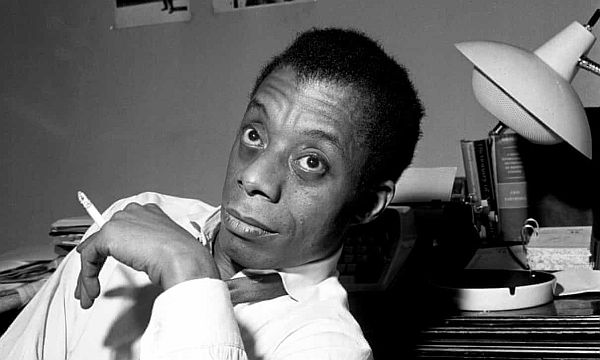
Black
writers who have challenged the standard racialist orthodoxies about color have
often come in for withering criticism from other black intellectuals. When
Ralph Ellison complained that black writers “fear to leave the uneasy sanctuary
of race,” he generated a firestorm of hostility. Even James Baldwin received
considerable criticism, much of it having to do with his efforts to have it
both ways—that is, to insist upon his estrangement from the “white centuries”
of Western culture while refusing to pretend that those centuries did not shape
and define him. Baldwin famously wrote,
‘’I know, in any case, that the most crucial
time in my own development came when I was forced to recognize that I was a
kind of bastard of the West; when I followed the line of my past I did not find
myself in Europe but in Africa … I brought to Shakespeare, Bach, Rembrandt … a
special attitude. These were not really my creations, they did not contain my
history … At the same time I had no other heritage which I could possibly hope
to use—I had certainly been unfitted for the jungle or the tribe. I would have
to appropriate these white centuries, I would have to make them mine.’’
Baldwin
wears his ambivalences and refusals with the cunning of a man who is ever in
search of what will suit him. He accords to himself, as he should, the
privilege of fashioning what he calls a “special attitude,” a “special place.”
Baldwin knew that he could not be the man he wished to be, or write the books he
had to write, unless he found a personal way to declare “appropriate”
affinities. He could not operate from a doctrinaire idea of ethnic solidarity
and thus was bound to provoke disappointment in quarters where solidarity was
regarded as an indispensable virtue.
It’s
tempting to say of Baldwin that he was, after all, a great writer, and that he
was therefore singular in ways we ought not to claim for ourselves. But the
drama he enacted, rooted in his own extreme particularity, is not so very alien
to the condition to which most of us aspire, however limited our courage and
our gifts. Rankine and Loffreda note that “we wish”—all of us—to “unsettle the
assumption that it is easy or simple to write what one ‘is.’ ” But then, they
say, when we “keep familiar things familiar,” we inevitably miss what is most
important about ourselves. Baldwin’s “special attitude” required that he
repudiate familiar assumptions about what did and did not define him, and he
accorded to himself the privilege of appropriating what he needed.
Baldwin
thought of the special place he was required to make for himself in terms
peculiar to him and his situation. And why not? Yet, when I read the words
“these were not really my creations,” I find it impossible not to think that
they apply as well to me, growing up in an inner-city apartment without books
or other cultural artifacts. I note too that the words—Baldwin’s words—“I might
search in them in vain forever for any reflection of myself,” are somewhat
misleading, in that, like myself, he would early discover reflections of
himself even in works far removed from his own family setting.
But what
burns through every page of Baldwin’s writing is the truth of his own intense
subjectivity and his contempt for provincial slogans and categories, provincial
a word notably absent from discussions of privilege, which rely upon an
impoverished idea of identity and, by extension, of what rightly belongs to
each of us. The charge of privilege, as leveled even in ostensibly
sophisticated critiques, carries with it the presumption that people are
readily intelligible, their natures and motives determined by accidents of
color or class. When I read sentences that begin with the words “white persons
think” or “whites can only know,” I feel at once the fatal absence of any
intimation of radical uncertainty. The agitation we want to feel in confronting
others—or in confronting what is opaque or impenetrable in ourselves—is denied,
banished by the impulse to define and diminish by resorting to accusations of privilege—as
if the work of understanding might thereby be accomplished.
Does
privilege exist? Of course it does. Only a fool would deny that advantage is
real and that some people have what others lack. Though advantage is unevenly
distributed in any population, or within any racial or ethnic group, it is
legitimate to assert that whiteness—like maleness—has long been an advantage,
however little some wish to acknowledge it. Just so, other kinds of privilege
often determine, unfairly, the way people live, and suffer, or thrive. But then
these are commonplaces, and if not everyone is as yet prepared to accept them,
that is hardly a good reason to employ privilege in the way it has lately been
used. The culture of grievance that has taken shape in recent years has led to
what Phoebe Maltz Bovy calls “the fetishization of powerlessness” and the not
always “polite bigotry” that makes it acceptable to target groups or persons
not because of what they have done but because of what they are.
The most
promising feature of the privilege turn was its focus not on the kinds of
privilege everyone can see for themselves—expensive private schools, 10-bedroom
vacation homes, inordinate tax breaks or deductions available only to the
wealthy—but instead on advantages unacknowledged and pernicious. For a while it
seemed a good idea to dwell upon the hypocrisies that allowed us to proceed as
if class inequities were not major factors in the system that supported our
habits and assumptions. We were moved to learn things we wanted somehow not to
learn: that housing laws designed to help returning GIs discriminated against
black veterans; that college admissions boards, even where inclined to
diversify their student bodies, continued to rely upon protocols that would
ensure acceptance mainly for the wealthy or the otherwise privileged; that
apparently trivial slights or insults might conceivably affect people in
disastrous ways, while allowing those responsible for the insults to proceed as
if nothing consequential had transpired. Rankine and Loffreda argue that
“whiteness has veiled from them their own power to wound,” and though what they
call the “recourse to innocence: I did not mean to do any harm” has rightly
been called out within the framework of “privilege,” it is surely legitimate to
ask where this initially promising thrust has taken us.
For one
thing, it has taken us to the domain of cliché and pure assertion. Nothing is
easier than to wield the charge of privilege and thereby to win instant
approval, nothing easier than to beat oneself up now and then for enjoying
privilege while pretending to solidarity with the disadvantaged. There is
comedy in the rush of the well-heeled and enlightened to affirm their virtue by
signaling their guilt and their difference from those who have not yet mastered
the rituals of self-disparagement and privilege bashing required of them. And
there is temptation, surely, in the prospect of constructing a privilege-free
profile: in my case, for example, by citing my own less-than-exalted childhood
in Bedford-Stuyvesant, my struggles in three years of remedial speech courses,
not to mention the fact that I could never have succeeded in life by virtue of
good looks or an impressively masculine baritone voice. Thus, competitively
speaking, in the precinct shaped by the privilege obsession, here I stand,
nearly virtuous, though white, to be sure, and though not completely powerless,
near enough to having been so to qualify for a modicum of sympathy.
The
absurdity inherent in all of this should not obscure the damage it has wrought:
damage in sowing confusion even about the obvious—about the difference between
what is important and less important, between doing what is injurious and being
deficient in doing what is positively good, between sponsoring injustice and
simply living more or less modestly in an imperfect world. To be unable to make
these kinds of elementary distinctions is to be radically impaired, and there
seems to me no question that the tendency to invoke privilege has exacerbated
that impairment. There was, at the heart of the privilege turn, an aspiration
to enlightenment. But the partisans committed to promoting the privilege
critique are mainly interested in drawing hard lines separating the guilty from
the saved, the serenely oblivious from the righteous, fiercely aggrieved, and
censorious.
It is
hard not to see in all of this the operation of garden-variety envy, though the
online diatribes denouncing the guilty are necessarily loath to mention that
sentiment, even where it is impossible to miss. At my own college, younger
faculty members have complained publicly about the “privilege” exhibited by
colleagues who speak at length and “with confidence” about controversial
matters. The charge carries with it the wish, sometimes the suggestion, that
those “other” faculty members find a way to be ashamed of this privilege, which
so many of their colleagues do not enjoy. Thus forthrightness and
self-assurance can be made to seem as offensive and illegitimate as the Bentley
parked ostentatiously in a well-tended driveway. Again, the rage to call out
privilege is often an expression of a simple desire to have what others have,
or to cast aspersions on those who have it. It is not at all surprising that
the most brilliant and accomplished of my colleagues should lately have
inspired criticism that cites her “relentless articulacy” and her “always
having something to say.”
One
consequence of the obsession with privilege is the growing divide within
communities otherwise united by shared principles. The emphasis upon so-called
microaggressions—that is, upon what Rankine calls “slippages,” including the
failure to acknowledge privilege—has created a climate in which many people
have withdrawn from active participation in public or political life. Many
faculty members at my college have intimated, or declared, that they will no
longer become involved in controversial debates or speak on the floor at
faculty meetings. Why get involved in efforts to raise consciousness among
students by enlisting in voter registration campaigns when some students will
likely accuse you of exploiting your power and your privilege? Why join your
local Democratic Party and work to field a slate of electable candidates in a swing
district when you are apt to be pilloried for the privilege entailed in
championing moderation and electability? After all, only someone privileged
enough (and clueless enough) to embrace a gradualist approach to politics would
counsel incrementalism. Better to stay out of politics entirely, with the
privilege charge always apt to erupt and make you feel guilty.
For that
matter, why attempt to find common ground in situations where envy for your
good fortune and resentment of your advantages are sure to make everything you
do an expression of your “identity”? For all of the intensity unleashed by
proponents of the privilege critique, they would seem to have little interest
in real politics—that is, in coalition building and respect for difference. The
tendency to think of potential allies as inevitably tainted by the habits and
perspectives of their racial, ethnic, or gender cohort is unlikely to issue in
an effectual politics. The privilege turn is part of a new fundamentalism built
on a willful refusal to accept that the most obvious features of our so-called
identity are the least reliable indicators of what may reasonably be expected
of us.
None of
this is to suggest that identity, as usually conceived, counts for nothing at
all. “I am born,” writes the Scottish philosopher Alasdair MacIntyre, “with a
past, and to try to cut myself off from that past … is to deform my present
relationships.” At the same time, he goes on, “rebellion against my identity is
always one possible mode of expressing it.” We are always, as it were, “moving
forward” from the condition and the tradition we inherit. A culture is in good
order only when its people are engaged in conducting a continual argument about
the assorted virtues—MacIntyre calls them “goods”—they hope to pursue. The
fundamentalism central to the privilege turn is predicated upon the assumption
of deficits inherent in groups and persons who are condemned to reflect those
deficits and to apologize, however inadequately, for embodying them. That
assumption is not only ungenerous. It is also simply untrue, given that
rebellion against aspects of identity is a feature of ordinary cultural
evolution. The envy and resentment that would deny to Pinckney his
particularity, or to Baldwin his wayward appropriation, or to W. E. B. Du Bois
his will to “summon Aristotle and Aurelius and what soul I will” are no less
vicious than promiscuous assertions of privilege deployed to deny the complex
particularity of others. Proponents of the privilege turn have adopted a sanctimonious
rhetoric to create an “us” an a “them” that answers not at all to the reality
of our common life.

The
American culture war continues apace, with increasingly high stakes, between
the right and left. But over the past several years, especially online and in
academia, a parallel conflict has been taking place between liberals and
progressives. Robert Boyers, the editor of the literary journal Salmagundi and
a professor of English at Skidmore College, fits neatly, although not
reflexively, within the liberal camp. In his new book, “The Tyranny of Virtue:
Identity, the Academy, and the Hunt For Political Heresies,” he reflects on
“trying to square your liberal principles with your sense that people who are
with you on most things—on the obligation to move the world as it is closer to
the world as it should be—are increasingly suspicious of dissent.” Boyers comes
to the conclusion that an unwillingness to hear non-progressive points of view,
an obsessive focus on “privilege” (a term he thinks is being used
indiscriminately), and an unwarranted concern about the idea of cultural
appropriation are occurring across the country and posing a danger to the
ideals of the academy.
I
recently spoke by phone with Boyers. During our conversation, which has been
edited for length and clarity, we discussed the difference between political
correctness and virtue signalling, why he thinks that we are too focussed on
the idea of “privilege,” and whether we are becoming more or less mature in
judging works of art.
Isaac
Chotiner :
Your
book begins by connecting the increasing focus on the concept of privilege with
the idea of virtue. Can you explain how you think the two are connected?
Robert
Boyers :
Privilege
is a term that has come more and more to be sounded in the culture, and there
is no question that it has a meaning we all know—that there is such a thing as
privilege, which has to do with advantage. The advantage can be earned or
unearned, but certainly there is such a thing as earned or unearned advantage.
What’s happened is that the term “privilege” has come to be used promiscuously,
so that it has become something of a noise word which is invoked to prevent
conversations from heading in directions that people would rather they not go
in. So that when a person is making a comment that you don’t like, you raise
your hand and you say something like, “Oh, do you realize that you’re
exercising a privilege in speaking this way?”
And, of
course, when certain epithets are attached to the word “privilege,” like “white
privilege” for example, or “male privilege,” they exacerbate or intensify the
charge, so that, in many cases, “white privilege” is a term that now is used to
signify something that all white people enjoy in the same way, simply because
it can’t be enjoyed by anyone who is not white. The problem with that, and I
think it’s fairly obvious, is that not all white people are the same. Not all
white people enjoy the same privileges. Not all white people have the same
backgrounds and experiences, and to think of white people in this sort of
indiscriminate way and to invoke the term “privilege” to talk about what they
enjoy is to be completely misleading about the lives of white people.
IC : What’s
the connection between that and virtue?
RB : Well,
if you constantly speak about people in that way, you are signalling your own
virtue by indicating that you are alert to the privilege that people enjoy,
with the implication, of course, that all of the privilege they enjoy is
unearned—even if these privileges that you’re speaking about are, in fact,
earned, or earned by people who have worked hard, people who have spent many
years in educational institutions to get where they are. And so you’re
signalling your virtue by accusing people of privilege in that way. And there
are many other ways of signalling your virtue by pointing out to people things
that they should not have said, things that they should not have thought, and,
in that sense, virtue signalling has become a common feature of life and the
culture, most especially in academic culture.
IC : I
think we are all aware of seeing someone tweet something because they want to
signal that they have some point of view. But it does seem, in a way, that the
term “virtue signalling” is a backhanded compliment, because it’s essentially
saying there is some virtue to it, or that it acknowledges an awareness of
racism or misogyny or a history of discrimination. So when you say “virtue
signalling,” are you saying that bringing up these issues in a discussion is
frustrating or annoying, even if somehow true? Or are you saying that you think
that these things are not actually accurate in some way? Or both? If that
distinction makes sense.
RB : The
distinction makes sense. I think that there’s a difference between [virtue
signalling] and pointing something out when, in fact, there is reason to do so.
If I’m in a room in which someone calls another person a horrific name, and I
say, “I’m sorry, but I can’t sit quietly by when you use a word like that to
speak to this person,” or if I say to a student, “I’m sorry, but in our
workshop we don’t speak to one another that way”—when we’re talking about
someone’s story that she’s written for this week, we don’t say, “I’m sorry, I
think that story’s stupid”—I don’t regard that as virtue signalling. It might
be virtuous for me to call the person on the thing that’s been said, but I
don’t do it to signal my virtue.
But
there’s a whole realm of discourse in which people call people out in order to
signal their own virtue, and that’s a very different sort of thing. Let me give
you an example. If someone confuses the names of two people who are black or
Asian-American, calling one by the name of the other, and you want to make a
very big deal of that instead of regarding it simply as a mistake, well, then,
it seems to me you are signalling your virtue. You’re making a great deal of
something which may simply be no more than a mistake.
I have a
whole chapter in my book about ableist language. If you make a big deal about
the use of expressions like, “We ought to learn to walk in someone else’s
shoes,” and you make a big deal about that because you’re afraid that people
who can’t walk will be offended or that their feelings will be hurt, it seems
to me you’re engaging in virtue signalling. That’s very different from calling
people out when there is actually a legitimate reason to do so.
IC :
It often
seems to me that there is too little awareness of historical injustices and
present-day injustices, and of how those injustices shape the world we live in.
It is the paradigm under which a lot of us operate, or all of us operate. But,
still, individual people should be able to talk about what they want and should
be judged on the content of what they say, not their specific experiences of
race or gender or so on.
RB : I
think you’re taking us in the direction of what I would call the distinction
between identity and identity politics, which seems to be a very important
distinction. We all know that there’s been a great deal of talk in the culture
in recent years about identity, which is an important and legitimate idea to
talk about. And it’s something that each one of us is concerned with, in our
own peculiar ways. I think about where I come from, who I am, how I got to be
the person I am, why I think the way I do, and so on. That’s entirely
understandable.
But when
we enter the realm of identity politics we’re talking about a tendency for
people of a particular race or religion or ethnicity or gender or social
orientation to form more or less exclusive political alliances and to think of
themselves as beholden in some way to that particular background experience,
set of experiences, or identity. And that’s a change to me, and legitimately
understandable for people who have been discriminated against and who have had
to live under certain burdens of oppression. Those people want to mobilize and
gather with people of a similar background and orientation and to achieve a
certain kind of power, on the basis of which they can hope to change the state
of things.
But
there are very unfortunate aspects of identity politics, which we’ve seen all
too much and which seem to me to have something to do with the question you
just put to me. There are insidious features of, or extrapolations from, this
tendency toward identity politics—most especially the notion that people of a
particular kind tend to be like-minded or to see and feel things more or less
in the same way. The worst part of this is the demand, not only the notion that
people of a particular background or experience or ethnicity tend to see and
feel things in this same way, but the demand that they continue to see and feel
things in the same way. That’s the direction we’ve been headed in, and I think
it’s both dangerous and deeply misleading.
I come
from a Jewish background. My grandfather was a rabbi, my father was a cantor.
Am I expected to think about the Israeli-Palestinian conflict as a Jew? Is it
expected of me that I will adopt a perspective that’s, shall we say, suitable
for a person of a Jewish background? Is that reasonable? In fact, I think about
the Israeli-Palestinian conflict as a person who is also a left liberal, an
intellectual, a college professor, a person who’s had a whole range of
experiences, who reads many books about the Middle East. Why would I be
expected to relate to this particular kind of conflict solely by virtue of the
fact that I went to Hebrew school and that my grandfather was a rabbi?
Obviously, all identities are plural. I am many different things. I am not just
someone who went to Hebrew school, but the demand increasingly is that I should
think about things that way.
IC : When
you talk about the “demand,” are you talking about in the academy or across
society?
RB : We
see aspects of this in the general society and the culture, but it’s
particularly important and prominent in colleges and universities, where
students are encouraged to think of themselves in narrowly identitarian ways,
or basically as avatars of particular racial backgrounds. We have in colleges
and universities ethnic-studies programs, along with black-studies programs.
Nothing wrong with studying such subjects, by any means. But I would say that
encouraging students in those programs to think of themselves primarily in
terms of their race or ethnicity is terribly misleading.
IC : To
what degree do you feel that people are being encouraged to think that way by
other people in the academy, and to what degree do you think that people feel
that society views them primarily in that way, and so that ends up being the
identity that they’re most likely to express or to want to use to push back
against what they see is the way society looks at them?
RB : I
think there’s no question that people who have a personal experience of
oppression, who have felt that, will tend clearly to self-identify along the
lines suggested by that experience. So that, for example, if you’re an Islamic
person who lives in a city where there’s a great deal of anti-Islamic
sentiment, and you find yourself being looked at in ways that are distinctly
uncomfortable, you will tend to think about yourself as a Muslim principally,
and, of course, if you’re a religious Muslim, and your religion is the most
important thing in your life, then again you will tend to think of yourself in
that way. But the demand that the rest of us, who don’t live in those
conditions, think of ourselves in that way seems to me not only unreasonable
but misleading.
IC
: In the book, you write, “Intolerance
among young people and their academic sponsors in the university is more
entrenched than it was before, and both administrators and a large proportion
of the liberal professoriate are running scared, fearful that they will be
accused of thought crimes if they speak out against even the most obvious
abuses and absurdities.” Young people are generally toward the left, but even
on the left of the Democratic Party, candidates like Bernie Sanders and
Elizabeth Warren seem to have no interest in this sort of intolerance. There’s
no left-wing Trump, obviously. Do you feel this has any political
manifestations yet?
RB :
I don’t
know if it will change, and I don’t know if these aspects of the culture will
go all the way up to the Presidential race. I doubt it. Certainly, I doubt that
we’ll see anything like that in the near future. But the thing I’m describing
is definitely intolerance on the left, intolerance in my own cohort, intolerance
among young people and their academic sponsors in the university who think of
themselves as leftists and liberals, as I do. I give many such examples of
intolerance, and these are serious. Look at the people who, in a workshop of
the New York State Summer Writers Institute the year before last, attacked a
white student who had spent a year on leave working at Bryan Stevenson’s Equal
Justice Initiative, in Alabama. They attacked him for using material that he
had come by in the course of that year, because he had illegitimately
appropriated it as a white person from the experience of black people that he
encountered in his year. [Boyers, the director of the summer institute, at
Skidmore, describes the incident in his book.] That seems to me a mark of
intolerance—that young man was shamed and chastised in his workshop by students
who regard themselves as liberals, leftists, progressives, and passionate about
racial matters.
IC :
My
general takeaway from polling on young people is that you get more support for
not allowing speech that people perceive as bigoted. And then, if you ask
people questions about whether mosques should be able to be built or athletes
should be able to kneel before a football game without getting fired, they’re
actually more tolerant than previous generations. So I don’t disagree with you
that something has changed in certain ways, but it also seems like it’s a mixed
picture. Is that not your sense?
RB : Of
course, I think in my cohort there is considerable support for Colin Kaepernick,
as there should be. He should’ve been able to kneel, and he should be able to
use his hands in the way that he wanted to, to signal his allegiance to certain
ideas. Without any question. But, meanwhile, not only in the university but in
the larger culture, you see reflections of the thing I’m describing. I’m sure
you read about the pulling of the poem at The Nation in the summer of 2018, on
the grounds, again, that the white poet had used the language of black
speech—and this was found to be illegitimate after the poem had been accepted
and published in The Nation. And I know you’re aware that, in the publishing
world, there is a considerable momentum behind the notion that authors ought
not to be publishing books or stories about or in the voices of persons who
belong to groups different from their own. There are agents, powerful agents in
New York, who will no longer send out a story by an author dealing with
characters who don’t belong to that author’s own racial or ethnic group. That’s
real. That’s happening.
IC
: You wrote a great essay years ago
about V. S. Naipaul and whether to separate the artist from the art, and I’m
curious what you think of the conversations that have arisen in the last few
years, especially around #MeToo and different works of art and how we should be
judging them now. Do you feel that that conversation has become, in some ways,
less mature or more mature?
RB : The
#MeToo movement has been an important, and, in most cases, highly beneficial
movement, and it’s done very important things for all of us and the culture. I
have misgivings about certain things that have happened under the auspices of
#MeToo. But, on the whole, it seems to me #MeToo has been extraordinarily
beneficial.
But has
the conversation about ideas, ideology, and works of art become more mature?
Decidedly not. There are large numbers of people who regard themselves as
liberals and progressives and so on who were involved in demanding that Dana
Schutz’s painting based upon the Emmett Till event be taken down from the walls
of the Whitney. There are people who mobilized last year to ask the
Metropolitan Museum to take down Balthus’s painting of “Thérèse Dreaming” from
the walls because, presumably, certain viewers of these works found them
offensive or disturbing.
That
doesn’t seem to be mature. Again, people are allowed to demand what they want
to demand and allowed to protest what they want to protest. I don’t regard
those kinds of things as mature at all. The argument against appropriation has
not, for the most part, been a mature conversation. A mature conversation would
ask the question that Zadie Smith asked about the Dana Schutz painting: namely,
does it give justice to the event—that is, the murder of Emmett Till—which it
purports to represent? That’s a mature, adult question to ask of a painting. An
immature question to ask of a painting is, “Is the person who made it white?”
IC : It
seems like the question of who’s doing the representation is an interesting
question, but it’s not the mature question about the quality of a specific
painting.
RB : The
term that Zadie Smith uses in her Harper’s essay on the question, or for the
concern with the race of the person who purports to represent an event, is
“philistine.” I agree with her entirely. She argued the Schutz painting is a
failure that doesn’t do justice to the event that it purports to represent.
That seems to me entirely legitimate. It’s a concern that we all have when we
read novels, when we look at paintings, and we ask, “Do these do justice to the
material that they handle?”
IC : Right.
It’s a mature or interesting question to ask what groups of people are doing
different types of artistic representation. If it were only white people who
were asked to cover foreign countries or to write book reviews about the
African-American experience, that would be an important thing to understand.
But I agree with you that to look at a specific review, or to look at a
specific person, and to judge their work by the color of their skin rather than
the content of the art or the journalism that they’re creating is much less
mature.
RB : I’m
entirely in accord with what you just said.
IC : I
grew up in Oakland and Berkeley in the eighties and nineties, and there were
things as a teen-ager that I found really frustrating about political
correctness. I felt people were kind of moralistic in the way they talked about
the environment. I thought the way that they talked about inclusiveness was
really good, but also could be kind of silly, and you’d roll your eyes and say,
“Oh, it’s Berkeley, whatever.” Twenty-five years later, so much of that stuff
is conventional wisdom across the whole country. People pay much more attention
to the food they eat and to the environment, and most Americans have an opinion
on gay rights and trans issues. And that makes me think that, if there are
things that I find silly now, thirty years from now I’m going to look back on
them and say, No, those actually were good things. Do you ever think this,
despite your frustrations?
RB : Well,
yeah, of course. One of the reasons that I really don’t want to talk about
political correctness in my book is because there’s a sense in which, along the
lines that you were just describing it, political correctness is obviously a
very beneficial thing. It is wonderful that most people in a society like ours
can no longer feel comfortable using epithets, disgraceful and disgusting
epithets, to describe other human beings. We can no longer say the kinds of
things that people used to say about Jews, black people, Italians, Poles, and
so on. That’s an aspect of political correctness that I think most of us who
are decent human beings applaud and you live by, and we’re glad that political
correctness has, in that sense, had its way with us. But, on the other hand,
political correctness comes in many different guises, and political correctness
may also have to do with the demand that we not say things that, in fact, are
not offensive, that some people take to be uncomfortable.
IC : So
you are drawing a distinction between political correctness and virtue
signalling, which I agree are not the same thing, but it seems like they have
some overlap, no? What is the distinction?
RB : Virtue
signalling would focus on what are sometimes called microaggressions, which are
things, first of all, that are unintentional in many cases, accidental, and
which in many cases really don’t hurt anybody’s feelings, but which people who
are virtue signalling have taken hold of in order to emphasize their own
alertness and their own virtue. That’s very different from the kinds of
political correctness you were talking about.
IC : I
think, in a way, we acknowledge this point about political correctness when we
say we don’t want to judge people from twenty or thirty years ago too harshly
by the standards of today. If we are going to acknowledge that, then it also
seems like we should acknowledge that there were people thirty years ago who
had more forward-thinking opinions, and even if they sometimes annoyed us, they
were right, and so maybe the people who seem to have opinions today we find
frustrating are onto something.
RB : They
were right in some respects. In other respects they were not. Look, we have all
paid considerable attention in recent months to controversies involving the use
of the n-word. A professor at the New School for Social Research, a woman named
Laurie Sheck, got into trouble for reading out the word in a graduate class, in
a [statement] by James Baldwin. There was an article in the New York Times
Op-Ed page by the black writer Walter Mosley about the way he received
complaints and is brought up on charges for using the word. So those kinds of
circumstances in which writers and professors and intellectuals are being
called out for doing their jobs in the classroom seem to me to be aspects of
what I’m calling virtue signalling. And, yes, they are related to political
correctness, but they are decidedly different.
The True
and False Virtues of the Left. By Isaac Chotiner. The New Yorker , October
11, 2019
In
recent years, Skidmore College, where I am a professor, has been roiled by
political incidents large and small. As at other colleges and universities,
these eruptions have ranged from sometimes violent protests designed to prevent
controversial speakers from speaking to “call-outs” and disruptions to prevent
the teaching of ostensibly offensive books or to punish people for using
ostensibly offensive language.
In an
effort to encourage dialogue, the president of Skidmore recently invited a
scholar named Fred Lawrence to give a lunchtime lecture to faculty and staff.
As author of a book called Punishing Hate and the secretary of Phi Beta Kappa,
the nation’s oldest honor society, Lawrence seemed suited to offer advice about
the troubles we’d been going through on campus. How could we better
differentiate between offenses serious enough to warrant concern, and the more
minor slips or unintentional derogations sometimes called “microaggressions”?
“To be
unable to tell the difference between kicking a dog and accidentally tripping
over one is to have little hope of successfully navigating life on a college
campus,” Lawrence said, in a talk that was mild and notably free of polemic.
The
first faculty member to raise a hand after the lecture asked Lawrence whether
he was aware of the privilege he had exercised in addressing us. She spoke with
conviction, and suggested that Lawrence had taken advantage of his august
position by daring to offer his advice. Lawrence replied with courtesy,
conceding that, like everyone else assembled, he was of course the beneficiary
of several kinds of “privilege”, and would try to be alert to them.
Though
nothing further came of this exchange, it seemed clear that “privilege” had
been invoked as a noise word to distract from the substance of Lawrence’s
remarks and from his suggestion that some of us had failed to make the
elementary distinction he had called to our attention. More, the “privilege”
charge had been leveled with the expectation that he was guilty – not because
of anything particular he had said, but because he was a white male.
It was
hard not to think that my young colleague was in fact suffering from what
Nietzsche and others called ressentiment – a feeling of inferiority redirected
on to an external agent felt somehow to be the source or cause of that painful
feeling. Rightly or wrongly, she regarded him as the embodiment of a power, or
authority, that is nowadays conventionally associated with “privilege”; that
is, with some endowment or attribute – wealth, position, conviction, erudition,
benevolence – enjoyed by some people but not others.
Of
course there really is such a thing as “privilege”, and of course it is
distributed unequally in any society. You’d have to be a fool to deny that
whiteness has long been an advantage, however little some white people believe
that their own whiteness has given them what others lack. Can anyone doubt that
privilege is a real and legitimate issue when certain groups in a society enjoy
ready access to good healthcare and schooling when others do not? There was a
time, not so long ago, when to speak of privilege was to identify forms of
injustice that decent people wished to do something about.
But
you’d also have to be a fool to deny that the idea of privilege has been
weaponized in contemporary discourse, often by people attempting to seize
rhetorical advantage. The privilege call-outs increasingly common in the
culture entail a readiness to rebuke people simply because their gender,
ethnicity or rank makes them an apt target for shaming and condemnation. The
charge of “privilege” is usually directed at its targets not with the prospect
of enlisting them in some plausible action to combat injustice but instead to
signal the accuser’s membership in the party of the virtuous. Accusations of
“privilege” have become a form of oneupsmanship, and a charge against which
there is no real defense.
The
writer and linguist John McWhorter has written of “the self-indulgent joy of
being indignant”; for many in the academy, he notes, the “existential state of
Living While White constitutes a form of racism in itself”. In fact, he argues,
the standard “White Privilege paradigm” is designed to “shunt energy from
genuine activism into – I’m sorry – a kind of performance art”.
Those
words – a kind of performance art – sharply identify what has lately happened
and explain why many of us believe it is time to retire the term “privilege”,
or at least agree to use it only when it cannot be understood to describe a
self-evident crime. Not every advantage is unearned. Not every advantage is
misused. Not every white person enjoys privilege in the way that some white
persons do. Not all black people are without advantages.
In fact,
to speak of “privilege” in the way that is now customary is to suppose that
whiteness, or blackness, or maleness, or other such attributes, must signify to
all of us the same things. It is to consider a white person primarily as a
white person, a black person primarily as a black person, and to consign to irrelevance
the many other qualities that make humans different from each other.
Our
emphasis on “privilege” has served to obscure a great many things that ought to
be obvious. We cannot have a serious discussion about privilege without first
making elementary distinctions between one experience of race or advantage and
another. Until and unless we are prepared to renounce the “performance art”
phase of our relationship to “privilege” we ought to let it go.
The term
‘privilege’ has been weaponized. It's time to retire it. By John Boyers. The Guardian. November 8, 2019.
A
leading American Liberal arts college recently set out to hire a full-time
fiction writer. Four candidates made the shortlist out of 200 applicants. Each
candidate had to give a demonstration class to some students and field
questions from faculty members sitting at the back. One candidate called some
of the questioners by their first names. Unfortunately, he confused the names
of the only two Asian-American faculty in the department. This was obviously
not deliberate, just unfortunate. At a department meeting a week later, the
department chair made it clear that as far as she was concerned the writer
would no longer be considered for the job.
Why not?
He had made a mistake, at the end of a gruelling and pressurising day. Did
anyone think that mistaking the names of two Asian-Americans, who he had never
met before, made him a racist? Maybe yes, maybe no. In a liberal arts college
in America today, it was sufficient that there might be a suspicion that he
might not be able to tell two Asian-Americans apart for him to be considered
totally unacceptable.
This is
what has happened to universities in America and this is what has led Robert
Boyers to write The Tyranny of Virtue. Boyers, the founding editor of the
cultural magazine Salmagundi and professor of English at Skidmore College,
where this incident happened, has set out to explore this new culture of
intolerance.
How
could it be that in universities, of all places, free speech and the open
debate of ideas, could have become intolerable, not just to students but to
faculty and administrators? Why are academics running for cover, refusing to
stand up for tolerance? Worse still, why have they become the “new commissars”,
“fluent with anxiety about art that offends”?
Boyers
is not some right-wing reactionary. He may be considered privileged because
he’s a white man, but he was from a Jewish working-class family in Queens. His
father worked in a dry-goods store for 13 hours a day, six days a week. He has
been on the left for more than half a century, on what his academic colleagues
would consider the right side of political debates from civil rights and
Vietnam to Iraq and Trump. He has been, he writes, “a partisan in the ongoing
culture wars for about 30 years”.
This
isn’t some cranky polemic, raging against Bernie Sanders or Alexandria
Ocasio-Cortez. From beginning to end, this is a moderate, thoughtful book,
constantly questioning the rage for “purity”, the obsession with “safe spaces”,
the longing to “drink at this well of misinformation and grievance”. It is as
if he suddenly found that people who are with him on most things are
increasingly suspicious of dissent. How have American universities become so
illiberal?
The
Tyranny of Virtue is superbly written and full of interesting anecdotes. At his
college Boyers saw a sign that said, “KEEP SKIDMORE SAFE”. Of course. Who
doesn’t want to be in a college which is safe and protected from potentially
violent intruders? Women, gay and minority students have too often been victims
of attacks on American college campuses.
But this
isn’t what the sign meant at all. It was about “ableist language”, expressions
like “stand up for”, “turn a blind eye to” and “take a walk in someone’s
shoes”. These are apparently demeaning and offensive. A professor who talks
about turning a blind eye to something is offending someone who is visually
impaired. If you speak of having to “run” to catch a train, imagine how
insensitive this must be to someone who has problems walking.
This is
typical of an academic culture obsessed with harms, protections and all manner
of offences. Nothing is innocent. Intention is irrelevant. As Boyers writes,
“Just about every conversation had become a minefield.” Not just conversations,
every lecture, every comment in a seminar or to a student in a casual
conversation.
Someone
protests against “the screening of a ‘disturbing’ 1960s Italian comedy that may
trigger, in a person with her background, traumatic memories”. Boyers thinks
that he was “courteous and sympathetic”, but then she tells him “that as a man
you’ll never understand the problem”. Game, set and match.
A
student complains to Boyers about a set text by the white South African writer
Nadine Gordimer. It was “a bad idea” for a “privileged” white woman to be
dealing with people about whose lives “she was bound to be clueless”. And were
there particular instances in the novel, Boyers asks her, where Gordimer seemed
to her “clueless” and had got things wrong? She couldn’t say. “I felt very
uncomfortable about the direction we were heading in,” she says later in the
conversation. She didn’t like “the usual Western prejudices”. This is, of
course, not open for discussion. How she felt trumped everything.
For that
student it was Gordimer. For many others it will be Saul Bellow. “Who is the
Tolstoy of the Zulus? The Proust of the Papuans? I’d be glad to read them.”
With those few words Bellow destroyed his reputation in American literature
departments for a generation. Does anyone teach Bellow any more in America?
Perhaps Philip Roth can hang on for another decade, then he will make students
feel uncomfortable. All those angry accounts of what happened to black Newark.
All those men, all those jars of liver.
Boyers
moves carefully through these issues, from identity politics and diversity to
cultural appropriation and “policing disability”. The key word here is
“policing”. The thought police have taken over. Boyers is quick to point to
what gets ruled out. There is no room for diversity, complexity and ambiguity,
what Robert Pinsky called “the virtues of ‘creole’”. There is one right way of
viewing everything: a right way and a wrong way.
Boyers
is not alone, of course. He quotes others who championed tolerance and
diversity. Susan Sontag, who wrote, “Party lines make for intellectual monotony
and bad prose.” Edward Said, who called on us all to “abandon[s] fixed
positions, all the time”. But Said died in 2003, Sontag in 2004. That already
feels a long time ago. Boyers, decent, embattled, at times sounds like the Last
of the
Mohicans.
Even his son asks him if he puts too high a value on doubt and contradiction.
There is
a crisis in American universities and in Britain too. Intolerance reigns
supreme. Boyers quotes Jonathan Freedland: “What so infuriates opponents on left
and right is the insistence that two things, usually held to be in opposition,
can both be true.” No, say the commissars. If someone is a sexist, a homophobe,
a racist, there is nothing else that we need to know about them. We are the
saved, they are the damned.
And what
if they innocently muddle up two Asian-Americans or talk of “turning a blind
eye” to something? Also damned. Or if they insist on discussing a Shakespeare
play or an Italian comedy that makes a student feel uncomfortable? Double
damned. Reasonable, sane, decent, this is the right book at the right time.
Intolerable
intolerance. By David Herman. The Critic, December 2019.
Robert
Boyers discusses his new book “The Tyranny of Virtue: Identity, the Academy,
and the Hunt For Political Heresies. The Open Mind, hosted by Alexander
Heffner. Thirteen, January 20, 2020
For
every action, there is an equal and opposite reaction. Newton’s Third Law deals
with physical objects, but does it also have something to teach us about human
behavior and the clash of forces in our fraught and turbulent society?
When it
comes to the volatile issues of race, sex, identity, privilege, rights, and
freedom, well-intentioned actions to redress genuine injuries can conflict with
equally important societal values, such as freedom of speech and the open
exchange of ideas. Are there unintended and adverse consequences that flow from
the energetic vindication of cherished rights in our society? Consequences that
have been ignored and deserve serious examination? Is there still any
legitimate place for dissent and disagreement on these fundamental issues?
In The
Tyranny of Virtue: Identity, the Academy, and the Hunt for Political Heresies,
Robert Boyers, professor of English at Skidmore College, author of 10 books,
and editor of the literary journal Salmagundi, is alarmed by the “irrationality
and anti-intellectuality” on college campuses and in the wider cultural
environment that was “unleashed by many of the most vocal proponents of the new
fundamentalism” to “silence or intimidate opponents.” He is deeply concerned
that
‘’concepts with some genuine merit — like
“privilege,” “appropriation,” and even “microaggression” — were very rapidly
weaponized, and well-intentional discussions of “identity,” “inequality,” and
“disability” became the leading edge of new efforts to label and separate the
saved and the damned, the “woke” and the benighted, the victim and the
oppressor.’’
He
regrets that “people who are with you on most things — on the obligation to
move the world as it is closer to the world as it should be — are increasingly
suspicious of dissent.”
Boyers
is asking whether in our zeal to address the consequences of racism, misogyny,
sexual violence, bigotry, and intolerance in America, are we spreading a new
intolerance, undermining cherished values of free and open discussion? The Tyranny
of Virtue prompts serious readers to take a second look at their own
assumptions as we try to navigate the troubles waters on which we so often feel
adrift.
The
force of Boyers’s book comes from the proximity of his own university
experiences to the issues he is confronting, the grounding he provides with
relevant examples to illustrate his arguments, and his bracing writing style
which consistently expresses difficult ideas in crisp and succinct language.
As
Boyers sees it, tendencies that alarmed him and others on the liberal left 25
or 30 years ago have grown more disturbing.
‘’Intolerance
among young people and their academic sponsors in the university is more
entrenched than it was before, and both administrators and a large proportion
of the liberal professoriate are running scared, fearful that they will be
accused of thought crimes if they speak out against even the most obvious
abuses and absurdities.’’
Boyers
offers a startling example.
An Ivy
League college senior in Boyers’s July 2018 New York State Summer Writers
Institute — a young white man — told Boyers he was denounced in a seminar by
several other students for writing poems based on his experience as a volunteer
in Bryan Stevenson’s Equal Justice Initiative in Alabama. “How dare he write
poems about lynching and the travails of oppressed people when it was obvious
that he has no legitimate claim to that material?” Boyers sarcastically asks,
echoing the all-too-sincere accusations leveled at the student. “Was it not
obvious,” Boyers continues, “that a ‘privileged’ white male, who could afford
to take off a year of college to work as a volunteer, really had no access to
the suffering of the people he hoped to study and evoke?”
Boyers
expands this example beyond the college setting by recounting another
controversy that unfolded in July 2018, when objections (which Boyers calls
“predictably nasty and belligerent”) were lodged against The Nation magazine
for publishing a short poem by a young white poet in which he used black
vernacular language. Within a few days the poetry editors who had reviewed and
approved the poem issued what Nation columnist Katha Pollitt called a “craven
apology” that read “like a letter from a re-education camp.” In The Atlantic,
the scholar of black English John McWhorter called the language in the poem
“true and ordinary black speech” and a “spot-on depiction of the dialect in
use.” He also noted the irony that, at a time when whites are encouraged “to
understand […] the black experience,” white artists who seek “to empathize […]
as artists” are told to cease and desist.
Boyers
is angry about what he sees going on in the institutions of higher learning to
which he has devoted his life’s work as well as in the society at large about
which he cares deeply.
‘’The revolution of moral concern, driven by
people in the grip of delusions I have attempted to anatomize throughout this
book, is clearly a bizarre phenomenon, fueled by convictions and passions that
have the appearance of benevolence but are increasingly harnessed to create a
surveillance culture in which strict adherence to irrational codes and
“principles” is demanded.’’
He sees
a “toxic environment that now permeates the liberal academy” that is
“increasingly drawn to denial and overt repression” including “speech codes and
draconian punishments for verbal indecorum or ‘presumption.’”
Unfortunately,
Boyers’s anger can get the best of him as he ascribes ugly motivations to the
targets of his denunciation. “It is decidedly not true that academics
mobilizing to punish dissident or ‘incorrect’ voices on their own campuses are
nevertheless operating with benevolent motives,” he defiantly declares. And it
is “not true than an ostensibly well-intentioned effort to prevent a young
white poet from imagining the lives of black people is an expression of genuine
concern for black people.” Why does Boyers assume the motives of those
concerned about cultural appropriation are not “benevolent” or “genuine”? For
someone so dedicated to freedom of speech and open debate, why not address the
merits of the arguments in these controversies without making groundless
assumptions and attacking the motivations of those with whom he disagrees? Isn’t
giving others the benefit of the doubt one of the liberal values Boyers is
seeking to encourage on our campuses and in society at large?
Boyers
is eager for his readers to get to know him so they don’t take him as just
another conservative critic like Dinesh D’Souza or Tucker Carlson, who do not
share his lifelong commitment to equality and justice. To that end he describes
an encounter with an English professor during his freshman year at Queens
College in the late 1950s. Having given Boyers an A+ on a paper examining
George Orwell’s Homage to Catalonia, Professor Stone suggests that Boyers
schedule an appointment to see him in his office.
When
Boyers arrives, unexpectedly a second professor is present. Professor Stone
asks Boyers to summarize his paper on Orwell. After Boyers offers only a few
sentences, Professor Stone asks him to stop and turns to his colleague. “See
what I mean?” “Totally,” the other professor responds. Turning back to Boyers,
Professor Stone guesses, “[Y]ou may be the first person in your family to go to
college.” “It’s true,” replies Boyers. “You write very well,” Professor Stone
says,
‘’But
you know, I didn’t call you here to congratulate you, but to tell you something
you need to hear[.] […] [T]hough you are a bright and gifted young fellow, your
speech, I mean the sounds you make when you speak, are such that no one will
ever take you seriously — I repeat, no one will ever take you seriously — if
you don’t at once do something about this. Do you understand me?’’
Boyers
agrees to enroll in a “remedial” speech course to “cure” what Professor Stone
calls his “Brooklynese.” Within hours of his “escape” he realizes this was “a
never-to-be-forgotten gift.” It was an insult to be sure, “but delivered not
with an intention to hurt but to save and uplift.”
Boyers
uses this formative incident in his life to introduce his discussion of white
privilege. He clearly understands that white privilege exists. It is
legitimate, he writes, to assert that “whiteness has long been an advantage,
however little some white people believe that their own whiteness has given
them what others lack.” He provides numerous examples:
“[T]hat housing laws designed to help
returning GIs discriminated against black veterans; that college admissions
boards, even where inclined to diversify their student bodies, continue to rely
on protocols that would ensure acceptance mainly for the wealthy or the
otherwise privileged; that apparently trivial slights or insults might
conceivably affect people in disastrous ways, while allowing those responsible
for the insults to proceed as if nothing consequential had transpired.’’
And he
quotes poet Claudia Rankine who argues that “whiteness has veiled from them
their own power to wound.”
But
Boyers goes deeper, in order to challenge what he sees as an absolutist
assumption that white privilege is enjoyed by everyone who is white. Is it
“reasonable to suppose,” he asks, “that whiteness confers, on all who claim it,
comparable experiences and privileges?” Alluding to his embarrassing
confrontation with Professor Stone, Boyers asks, “Was my own background as a
working-class Jewish boy, growing up in a predominantly black community,
remotely similar to the background or disposition of a white colleague who had
never know privation, or in fact had no contact at all with other black
children?”
Boyers
offers some eye-opening examples. Two years ago, at a panel discussion at a
writers institute, a graduate student complained that the entire topic of
“political fiction” was dominated by male writers. When Boyers responded by
referring to prominent women who write political fiction, such as Doris
Lessing, Nadine Gordimer, Joyce Carol Oates, Ingeborg Bachmann, Pat Barker,
Antia Desai, and others, another graduate student asked him if he was aware of
the “privilege” he had just exercised in addressing the question. “Privilege?”
he asked. “Your authority, she said, your presumption, the sense of entitlement
that permits you to feel that you can pronounce on any question put to you.” As
Boyers sees it, “privilege had been invoked as a noise word intended to
distract all of us from the substance of our discussion and from the somehow
unpleasant spectacle of a male writer intoning the names of great women
writers, as if this were, in itself, a flagrant violation of a protocol.”
Then
Boyers reports on an incident at Evergreen State in which a professor of
biology (who subsequently resigned from the faculty) criticized the
university’s “Day of Absence,” a day on which all white students were asked to
leave campus. And the Northwestern professor who was subjected to a formal
Title IX investigation by university authorities after an essay she wrote for
the Chronicle of Higher Education was said by a number of students to create “a
hostile environment” on campus. Boyers comments that in
‘’the last year or two, those wishing to
restrain real talk or, God forbid, actual debate more and more deploy terms
like “entitlement” and “subordination” to suggest that people who stir the
waters inevitably create a “hostile environment” and intimidate their
colleagues, some of whom — so it is said — are thereby made to feel powerless.’’
Boyers
enlists prominent New York Times columnist Nicholas Kristof, who in a recent
article argued that many liberals “want to be inclusive of people who don’t look
like us — so long as they think like us.” Boyers writes that “[o]n campuses
across the country, according to Kristof, academics casually admit that ‘they
would discriminate in hiring decisions’ based on ‘the ideological views of a
job applicant.’”
Boyers
sees the accusation of “privilege” as being “increasingly hauled in as a
weapon, though wielded, in the main, by persons attached still to the
conviction that, whatever their own bristling incivility and the punishing
quietus they clearly intend to deliver, they remain in full possession of their
virtue.” He argues that the “privilege craze is part of a new fundamentalism
built on a willful refusal to accept that the most obvious features of
so-called identity are the least reliable indicators of what may reasonably be
expected of us.”
But here
again Boyers overreacts. “So-called” identity? Are not those who have been
subjected to discrimination and been the brunt of bigotry on the basis of their
race or gender or sexual orientation entitled to organize and speak up on the
basis of those real, not “so-called,” identities? Although Boyers is sounding a
much-needed warning over self-righteous accusations of “privilege” which can
smother honest discussions of race, gender, and class, he again betrays his own
blind spots. He belittles unnamed “partisans” of the “privilege critique” of
“garden-variety envy.” That’s a particularly cruel epithet to hurl at
individuals and groups who are seeking to reverse the impact of centuries of
enslavement and present-day discrimination. Accusing them of “envy” for simply
seeking equality smacks of the argument during the battle for marriage equality
that the LGBTQ community was seeking “special rights.”
Boyers
accuses these “partisans” — without evidence or example — of having “little
interest in real-world politics, that is, in coalition building and respect for
difference.” Really? The movements for equality in society today are all about
“real-world politics,” including voting rights, racial justice, immigration,
equal pay for equal work, mass incarceration, and the entire panoply of rights
which have been denied to marginalized people for so long.
But let
me practice what I preach and give Boyers the benefit of the doubt, for
elsewhere in his book he exhibits a far more subtle and nuanced approach to his
subject. The following passage, listing the purposes of his book, is worth
quoting in full:
“To argue that the idea of “privilege” has
its important uses and is, at the same time, susceptible to misunderstanding
and abuse. To demonstrate that the idea of “appropriation” was an
understandable expression of legitimate and deep-seated fears held by people
with a history of oppression and subordination, but that the idea soon came to
be wielded by people ignorant of the ways of the imagination and the benefits
of the very practices they resisted. To argue that “identity” is an important
aspect of our ongoing efforts to understand ourselves, but that identity
politics is based on a deep misunderstanding of the nature of race and
ethnicity. To insist that policies like affirmative action are essential if we
are ever to achieve the kind of social justice we aspire to but that there are
costs and consequences we ought to acknowledge without pretending that those
costs are negligible or incidental.’’
Boyers
fears that the excesses of these movements for social change will prove
counterproductive, descending into a self-righteous close-minded orthodoxy that
will alienate potential supporters and feed the criticism spread by reactionary
forces which take every opportunity to ridicule and parody the movements for
equality and justice. “To challenge officially accredited views, particularly
when those views have anything to do with sensitive issues, is now regarded as
out of bounds, illegitimate, an expression of arrogance or entitlement, and
thereby hostile.”
In
addition to privilege, identity, and appropriation, Boyers devotes a chapter to
ableism and how our society deals with disabilities. He begins by describing
how recently he became agitated seeing posters saying KEEP SKIDMORE SAFE hung
all over Skidmore College, where he has been teaching for 50 years. According
to Boyers, the posters called out examples of ableist language considered
offensive to persons with disabilities and their supporters, language such as
“stand up for,” “turn a blind eye to,” and “take a walk in someone’s shoes.”
The posters encouraged students to ask their teachers to stop using such
ableist language and, failing that, to contact advisers and file an online
“bias report” naming the professor.
Boyers
doesn’t tell us what became of this call to action or whether any “bias
reports” were ever filed and, if so, what happened, but he nevertheless is
quick to attack the posters, arguing that “expressions like those cited in the
poster have nothing at all to do with any reasonable person’s notion of keeping
the campus safe.” He calls the “recommendation” that people “take offense at
the language all of us use is sufficiently bizarre.” Boyers notes that of
course it goes without saying that everyone should “speak respectfully to
persons who are disabled.” But according to him “the notion that students will
feel unsafe when I tell them I have to ‘run’ to catch a train or that I’ve long
been ‘deaf’ to certain kinds of music is a lie.” He claims that students can be
“trained” to “take offense where no offense is intended.” “But there will be a
price to pay,” he writes, “for creating a generation of young people who are
unwilling and unable to differentiate between actual offenses and casual
utterances that clearly do not rise even to the level of so-called
microaggressions.”
Is
Boyers right? Was it “bizarre” and a “lie” for persons with disabilities to be
offended by such expressions? I must admit that it came as news to me that the
examples cited in the poster were offensive, so I asked Alan Toy, a longtime
friend who has been a disability rights advocate for decades and is a fellow
member of the board of the ACLU of Southern California, if these phrases are
offensive.
“Yes,
and I am not alone in this,” Alan replied. Those phrases
“”do kind of sound very much like dog whistles
or worse to many of us in the disability cohort. There are a few more that
could come to mind, but you’ve hit upon some of the more common ones. I always
find those things jarring personally, though I do give a little bit of credit
to the cultural habituation of these phrases in our common dialogue.’’
However,
Alan added, “once informed or ‘(a)woke(n),’ I have little sympathy for their
continued use. If we can learn how to not say things like the N-word, or the
K-word, etc., etc., then we can also undo the ableist language in our lexicon.”
As for reporting these things to the “proper authorities,” Alan said he’s
‘’not big on that kind of approach, but if a
person egregiously continued to use these phrases once warned, then perhaps
further actions do need to be taken. But sometimes there are old dogs who just
cannot learn new tricks, and it is not as if those folks are using these terms
to purposefully slur or demean people with disabilities, even though that may
be the outcome for some folks.’’
I’m glad
I checked with Alan. I learned a lot. I wish Boyers had checked with persons
with disabilities too, instead of making assumptions and casting aspersions.
Here and elsewhere in his book he shows few signs of having conducted probing interviews
with the people involved in these controversies, such as the students on his
own campus who created the poster, to get their side of the story. For someone
who believes in open debate and discussion, such readily available research
would have enriched and clarified his project.
Yet,
despite its flaws, Boyers has written an important and provocative book that
acts as an alarm calling attention to the excesses of dogmatism found in some
quarters of the movements for equality. In the end, what is missing from this
discussion on both sides — or all sides, since it is multifaceted — is a
greater sense of humility, compassion, and generosity toward those, on the one
hand, who are struggling to overcome the historical legacies and present-day
realities of oppression and discrimination and those, on the other hand, like
Boyers, who share the goals of those movements but are trying simultaneously to
uphold the values of free and open debate unhindered by overreaction and
censorship.

In his
sympathetic New York Times review of Brandon Taylor’s debut novel Real Life,
playwright and author Jeremy O. Harris describes how the protagonist, Wallace,
a black gay grad student (with whom Taylor and Harris share similar
experiences), walks the “haunted halls of a white academic space” feeling an
“overwhelming dread.” Harris is struck by “the whiteness of Wallace’s
surroundings, a fact of many spaces of American higher learning, and one rarely
articulated in literature by writers of any race.” Harris writes that the “simple
truth of ‘Real Life’ is that Wallace, like myself and many others who’ve
wandered dark, white halls in search of a future, has made himself invisible by
shedding the skin of his past, and adopting a new skin unadorned with the
blemishes of history.”
In the
year 2020, the suffocation of whiteness, sexism, and other forms of bigotry,
running the gamut from insensitivity and marginalization to outright
discrimination, still plagues our campuses and beyond. We ignore it at our
peril. No one who has not experienced “shedding their skin to make themselves
invisible” can sit in supercilious judgment over those who have.
Boyers
ends his book by offering several sensible suggestions of what should not be
done. Ideas should not be promulgated “without seriousness, that is, without
any corresponding consideration of what would be entailed were they actually to
be effected.” Ideas such as privilege, appropriation, ableism, and
microaggressions should not be used “to sow hostility, persecute other members
of a community, and make meaningful conversation impossible.” The classroom and
the seminar should not be used “to indoctrinate students and thus to send them
off parroting views that they have not adequately thought through or mastered.”
An “us versus them” orientation should not be created which is “underwritten by
enemies lists, and fueled by a sense that on matters for which a consensus has
been reached no dispute may be tolerated.” And “virtue” should not be
weaponized “for what Marilynne Robinson calls ‘class advantage,’ with zealots
adept mainly at trumpeting their own superior status and making ‘a fetish … of
indignation.’”
There is
much to be learned from these suggestions. Yet even in his closing words Boyers
can’t resist using loaded terms like “indoctrinate,” “zealots,” and “fetish” to
describe those with whom he disagrees. How would he react if teachers who
promote his ideas in the classroom were labeled “zealots” who “indoctrinate”
their students and make a “fetish” of their “indignation”?
The
political thinker Michael Walzer contends that “no one on the left has
succeeded in telling a story that brings together the different values to which
we are committed and connects them to some general picture of what the modern
world is like and what our country should be like.” The Tyranny of Virtue is
not that book, but it is a thought-provoking effort in that direction which is
worthy reading for anyone who cares about the struggle of creating a more
perfect union.

In her
highly original and incisive book Mere Civility: Disagreement and the Limits of
Toleration (2017), Teresa M. Bejan, associate professor of Political Theory and
a Fellow of Oriel College at the University of Oxford, makes a persuasive case
that liberal democracies need not abandon one set of their values to preserve
another. Drawing on the teachings of Roger Williams, Thomas Hobbes, and John
Locke, Bejan argues that so long as we exhibit mere civility — “a minimal
conformity to norms of respectful behavior and decorum expected of all members
of a tolerant society as such” — without legislating civility through speech
codes and other government-imposed restraints, we can achieve the highest
ideals of an egalitarian, free, and just society. For her, democracy assumes
“ideological division, insulting invective, and sectarian splintering.”
Democracy is undermined by “conformity that delegitimizes dissent while
reinforcing the status quo,” which hardly sets the stage for groups which have
suffered oppression and discrimination to protest, speak out, and seek change.
Equality and justice are not achieved by “civilizing discourse aimed at
silencing dissent and marginalizing already marginal groups.”
Seen in
this light, open and robust debate are the friends, not the enemies, of
creating a diverse, multiracial nation dedicated to liberty and justice for
all. Despite its flaws, The Tyranny of Virtue contributes significantly to a
better understanding of the challenges we face.


