
The year Azealia Banks finally decided to give up on living in Los Angeles, the wildfires were so apocalyptic that the whole sky turned blood orange. “I remember opening my door one morning to get an Amazon package,” she tells me one night in late January, “and there was, like, soot, falling on my tongue.” Her Californian friends were puzzled by her distress. This happens all the time, they promised, optimism superseding fact. Never mind that she couldn’t breathe, or go to the weed store without getting a funny look. “I was just like, ‘I need to move to the wettest part of the fucking country,’” she says. A drought is no place for a self-styled mermaid. So, Florida. Where everyone owns guns, and so everyone minds their business.


We’re speaking in mid-December, ahead of a new single that marks Banks’s return to a major label. By extension, it’s also a return to commentary – an art form the New York City-raised rapper has mastered as much as her diamond-hard and jaw-droppingly dexterous music – if a conflicted one. “I feel like Kanye has made it so garbage to be an entertainer with any opinion,” she says, before teasing her detractors: “If anybody was ever praying for Azealia Banks to finally shut the fuck up, Kanye has provided the platform.”
But over the course of two hours on Zoom this, naturally, turns out to be far from the truth. Banks speaks, with a charming and destabilising mix of irony and earnestness, about everything from her new home in Florida, to her one-time friend and collaborator Ye, to her place in the music industry – and why she has decided to return to a major label after splitting from Universal in 2014 and independently releasing some of her best singles ever.
Those songs – among them 2018’s glamorous self-confidence anthem Anna Wintour, the simmering 2021 Galcher Lustwerk collaboration Fuck Him All Night – supercharged a gen Z-led reappraisal of Banks as an innovator and prophetic commentator who had been unfairly pilloried. They set the stage for comeback single New Bottega, a booming, stylish house track and the launch of Banks’s second round in the spotlight. She’s bullish about its prospects: “I genuinely feel like, 13 years in, New Bottega might be my Hot 100 debut,” she says, sounding sanguine. Then she adds: “Even if that bitch debuts at 99, I’mma be like ‘A-ha-ha-ha-ha, bitch!’”

In 2012, after the runaway success of her bratty and still-brilliant breakout single, 212, Banks signed to Interscope. After two years of label execs saying that her debut album in-the-making lacked hits, Banks grew “tired of talking to these white guys” and begged them to release her, and her record, from the contract. In 2014, she partnered with the label Prospect Park and released Broke With Expensive Taste to widespread critical acclaim. But the optics of leaving a major as a rising star are less than great; combined with Banks’s propensity for public fights, it seemed as if she was yet another internet success story who had burned through her talent early. Now, Banks is signed to Parlophone, because despite her recent DIY success, a major gets her closer to one specific goal: “I deserve respect,” she says, staring intensely down the camera. When not rinsing her peers or joking about haters, she is steadfast and dead serious.
Wearing a magenta T-shirt from her skincare company, CheapyXO, and a matching visor, clutching a glass of rosé, Banks explains that her reputation has outpaced her to a degree that has made life difficult. In 2019, she made headlines after being removed from a flight – an incident that Banks and other passengers said was instigated by an attendant asking if she was “going to be trouble”. In 2020, her former manager and Prospect Park head Jeff Kwatinetz sued her for extortion; Banks countersued for breach of contract, fraud and deceit, claiming Kwatinetz groomed her.
She is troubled by the idea that she is an easy target. “Even though I know that the internet is not a real place, there are enough people who take it seriously enough to feel like they can put their hands on me in real life,” she says, wearily. “They feel like they can launch frivolous lawsuits and use this villainous, stupid narrative against me. Even just trying to rent a house and have some peace, you run into these people who are like: ‘Oh, I can throw a rock at her, and if she throws a rock back, I can say look, she’s exactly as you say on the internet.’”
So Banks has stopped looking at what people say about her on the internet. The pandemic gave her a new clarity. She is speaking from a hotel room in Sydney in the midst of a contentious tour in which she and the promoter are engaged in a vicious public blame game over cancelled shows (the one topic her publicist deems off-limits) and turns her life lessons into clean aphorisms: “The same way you need to be careful about the things you eat, you have to be careful about the things that you read.” Now she wonders why she accepted criticism from “people who never knew me, never had any desire to ask me why I was always so sad, so angry. They would just write me off as a bad person.”
She says that she’s come to understand that the “selective” rules around acceptable conduct in the white media and on social media platforms will never serve her. She cites the “double standards” of Twitter, where she gets criticised for arguing with the likes of Perez Hilton but misogyny, racism and ableism run rampant. (“If I had a dollar for every Lady Gaga fan or Lana Del Rey fan that has called me a ‘nigger’ on Twitter, I might be a billionaire right now.”) In 2014, around when Black Lives Matter protests began in the US, Banks saw those double standards come into sharp relief. “All these very fucking graphic, psychologically terrorising videos of Black people being murdered circulated, pushed under the guise of being news,” she says.
Banks realised that “we don’t have any rights here in America, unless you put your fucking phone down”, so she put her phone down. Besides, she found people online tiresome. “When it gets into like, ‘sexuality is politics’, oh my fucking god,” she says. “People on Twitter are talking about sex all damn day, and no one is fucking.”
Living alone in Los Angeles in 2020, Banks says she was “going through it” – “isolating and scared”, rapping every day, focusing on CheapyXO and becoming disenchanted with the politics of a city she characterises as shallow and virtue-signalling. “Every which way I turn [in LA] there’s a Black Lives Matter sign, and then we’re watching swathes of Latino people die every day because they’re considered essential workers,” she says. “There are no Latino Lives Matter signs. That’s not to negate any of the very real issues that Black people in America face, but in a rich state like California, in a neighbourhood like Silver Lake – here’s Jenny with her fuckin’ like” – she adopts a Valley girl accent – “biodynamic wine bar and her vegan cafe. She’s got a Black Lives Matter sign in the window, but sis, did you pay attention to papi who delivered the milk? Did he get a free cup of coffee? I had to go because I can’t do this – either Covid was gonna kill me, or depression. I’m going to fucking Miami.”

Why Miami? In Florida, people “mind their fuckin’ business”, she says. Banks feels that the media lies about the oft-mocked Republican haven, and says she feels “way safer” there than in Los Angeles, where she feels that she needs a gun. Part of that, she claims, is down to the governor, Ron DeSantis, the Republican primary frontrunner whom she sees as more pragmatic than most political leaders. “He’s focused on the basic shit,” she says. “There are elderly people in our country without walkers, who don’t have the money to get a septic tooth pulled. If we’re talking about divvying up healthcare funds, those situations should take precedence to facial feminisation surgeries and stuff like that. I mean, I get it – but that’s a cosmetic surgery. Like, does your penis work? Can you pee? You’re not as in trouble as the older woman who can’t afford her dialysis. I think DeSantis is practical about a lot of things.”
Banks likes DeSantis for what she sees as some level of common decency, a quality she doesn’t see in a lot of people – least of all Ye, whom she collaborated with in 2012 on a handful of never-released songs. Banks brings him up, describing him as a “grifter”. As we speak, he’s been spouting antisemitic conspiracies and praising Hitler. Her problems with him began in earnest in 2020, when he said at a presidential campaign rally that he and then-wife Kim Kardashian had considered aborting their eldest child. “You’re a fucking idiot for basically sacrificing the mental health of your daughter,” she says.
Banks’s tone becomes one of disgust. She’s speaking from experience: she has said she comes from an abusive home and is troubled by the potential legacy of Ye’s outbursts on his children. “Just because you can’t get attention from Kim Kardashian, you turn it on your fucking daughter. Kanye, you’re an abusive asshole and you’re a pussy for picking on that little-ass girl. You are the last person we need to hear from about Black fatherhood and the Black family unit.”
Banks says she saw this cruel streak in Ye when she first worked with him, but it hit her differently a decade ago, when she revelled in being his confidante. Back then, she says, “there was a culture in hip-hop that dark-skinned women were ugly,” she says. “To meet him and hear him talk shit about Kim Kardashian” – around the time they started dating – “it gave me a little bit of glee, because you’re young, and you’re dumb, and you don’t get it yet. When you’re getting all this messaging from hip-hop that you are exactly the type of Black woman that it doesn’t want, and then you meet someone that you like, because the music is so good, and he’s like: ‘I hate this white bitch’ – you’re like: ‘Yesss!’” Later she realised how naive she had been. “As time goes on, it’s like: ‘Wait, you hated my Black ass, too! You hate all women!’”
Does she believe there’s a way back for him? “I would hope not – because you have had it very fucked up for a very long time,” she says. “Kanye, did you know that the Bible was the very book used to enslave your dumb ass? Have you ever read the Bible? I’m sure you haven’t. ‘Oh, Hitler was a good guy’ – do you think Hitler liked negroes? It’s way past shock culture and just into stupidity. You deserve to reap what you sow. In the future, when you’re walking down Times Square and you see Kanye West drinking flat Sprite out of a McDonald’s cup out of the garbage can, you can bring it all back to this moment.”
When choosing collaborators now, Banks says it’s about “who’s putting the money on the table first”. She’s realised that “this is the music industry and not the music friends”, and that she doesn’t “have any time to be part of some weak white girl’s PR campaign about how Azealia Banks is a bad person”. She’s seemingly alluding to Grimes – in 2018, she arrived at the home of Elon Musk, then Grimes’s partner, to collaborate with her, only to end up deserted and stuck there, live-blogging as Musk tweeted jokes about Tesla stock while allegedly high on acid. She and Grimes shared screenshots of their hostile DM interactions and both artists were subpoenaed in a lawsuit against Musk. (Banks later apologised for the “seriously unexpected consequences” of her actions.) I ask for clarity but Banks has already moved on: “The girls gotta get to New Bottega levels before they’re getting spoken about by the don diva, by the everlasting diva,” she says of herself, in a hammy drawl.

Despite being back on a major label, Banks is trying to avoid industry nonsense, “to preserve my own natural ability to create and be inspired by music”, she says. “What is success in music any more? Nobody knows, and for the people who do know, it means scheduling your smiles and crafting some weird character. I think it’s really unfair that people call Azealia Banks a has-been – you are a never-was, and a never-fucking-will-be. You didn’t have the courage to put yourself out there because you were afraid you were going to fail, but I’ve had success. You only have to be right one time to be considered successful, and my batting average is very fucking high.”
At this point, success, for Banks, is about “finding happiness after a long, dramatic childhood … What if I’m writing these songs as a form of redemption? That would blow an audience’s mind – you’re not doing this to entertain me?”
The past few years have been about Banks getting back to what she’s best at: tearing through beats with ferocity, wit and intense skill. She’s coy about future projects (“I’ve learned to be vague, because I’m working on 10m things”), but is excited about her new output. “People gotta catch up to New Bottega,” she says. “They’re gonna be like: ‘Oh shit, this is Azealia Banks? What has she been up to while we’ve been asleep?’” Fans are already familiar with Banks’s “ode to Italian luxury” – because she leaked it last September. It was available for less than a day and still made Pitchfork’s best songs of 2022 – “as it fucking should”, Banks says. “My music is good as shit! If you can’t get off to your own shit, then you probably should not be making music.
“I’ve done this by myself, with knives in my back, rocks thrown at me, kicked off cliffs. And I still keep coming back – you cannot get rid of me,” she says triumphantly. “Y’all have all the help in the world, y’all got writers, y’all got producers, y’all got fucking everybody! And you still sound like shit.”
‘I deserve respect’: Azealia Banks on redemption, Republicans – and Kanye. By Shaad D’Souza. The Guardian, January 20, 2023.

Somewhere between the election, the pandemic, and the looming environmental catastrophe, a reshuffling of attitudes took hold. In the past year, icons like Britney Spears have been reconsidered in a new, more empathic, context. Similarly, the open secrets of alleged bad actors like Marilyn Manson are finally sticking in the public’s consciousness. It makes sense that 2021 was also the year that the world forgot why it was so mad at Azealia Banks. The musician has never been guilty of much more than speaking her mind, often about the kind of cultural hypocrisy to which we now devote premium cable documentaries.
Which is Black music.
Yeah. But it’s not music. They’re selling ideas, lifestyles, whatever comes out of liberal academia’s ass. And it changes. It’s almost like the unwritten rules of Blackness, it’s like the unwritten rules of just how to conduct yourself. John Lennon wrote a song called “Woman Is the Nigger of the World,” and here we are years later calling it one of the best songs of all time.

It’s three in the afternoon on the first truly hot day of the year, and inside the Greenpoint photo studio the loud whistling of a fan combines with the blaring of Azealia Banks’ discography to create a feverish cacophony. Outside the floor-to-ceiling window of the studio, the heat makes a haze of the far-away Manhattan skyline, which we have been staring at for hours. “And when I step in, them bitches they know,” sings Banks on “No Problems”, the final song on the 2018 re-release of her critically lauded 2012 mixtape, Fantasea. There’s a poetic irony about listening to these lyrics while we’re on hour three of waiting for the Harlem native to step in on set, without a real word as to to her whereabouts or the reason behind the hold up.
“Ten minutes ago she said she’d be here in 40, which really means she’ll be here in an hour,” someone finally tells me, which I relay on set. I make note that once we’re close to hour four of waiting I’m going to have to leave for an appointment - information that is met with a grunt. “If she isn’t here by then could we reschedule this evening?” I ask, “I can meet her any other day.” “You can email us the questions,” replies her manager without so much as looking up from his computer. “I’d at least like to talk to her via phone so there’s a conversation,” I push back. We concede to figure something out, which isn’t much of an answer, but more of an answer than we’ve received all day long.
At this point, the music has been changed and the volume lowered. There are about nine of us in the studio, and we all look up from our phones at any sound that could indicate Banks’ arrival. The tension, combined with the heat, are palpable, and as the clock nears the four-hour mark I finally leave. Outside the building a car is parked, and as I round the corner I catch a glimpse of the passenger in the backseat - it’s Ms. Banks, looking out the window.

It takes three weeks to finally book a 25-minute conversation with Banks to talk about her highly-anticipated album, Fantasea II. “Sorry, I have the Itis. I just ate like a big fucking plate of food,” Banks says, excusing her consistent yawning throughout the interview. I’m surprised to learn the vocalist and writer is 5’3", not because I had ever particularly thought about her height, but because the self-proclaimed mermaid always seemed height-less, as if that were a feature that didn’t pertain to someone as talented as she is controversial. It’s only after speaking to her over the phone that I become curious enough to research it - her voice is big and commandeering, which, unlike her height, is unsurprising.
Azealia was only 20 years old when she released the song “212”, which became an instant classic while also cementing her place in an industry that was excited to see what the talented wunderkind had under her sleeve. A year later, she released Fantasea via Twitter, a mixtape that further showcased Banks’ talent - both in merging a slew of genres and in her vocal capacity; combining singing and rapping with an ease that leaves even some music veterans in the dust.
This amalgamation of musical references comes from her “general liking of music,” she says. “Well I guess it’s math, when you break it down... But I really like to challenge myself in that way, I like to find new feelings and I like to play with old themes and old things from the past,” she continues. “I like to find new ways to make things work and make things sound fresh to myself.” For example, she compares the vocal hook on “Moving on Up (Coco’s Song)” (from the RZA-directed movie, Love Beats Rhymes, which also marked Banks’ acting debut), to Mariah Carey, and continues to name Destiny’s Child, Lil Kim, house music, and R&B as influences she grew up listening to.
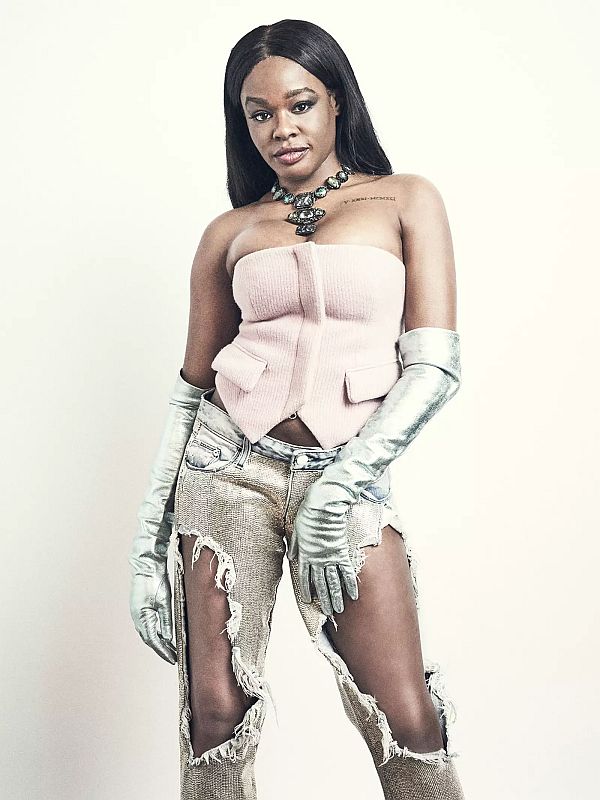
Following Fantasea, Banks announced she had begun working on her debut album, Broke With Expensive Taste, a project that suffered through years of delays, but which ultimately resulted in another round of positive reviews. In the following years, Banks became busy with other projects, including the aforementioned RZA-directed film and another mixtape, Slay-Z, released in 2016. With so much work between her debut and her latest venture, it’s interesting that her newest work takes on Fantasea, and I’m curious about the differences between that project and its upcoming second volume.
“Everything just sounds more mature, I think. Other people may disagree, other people may go back and hear some of the Fantasea tracks and think that they're better than the ones on Fantasea II,” Banks says. I ask what were the biggest differences she felt in making this album: “I've gotten more of a handle on my musical abilities. Back then I was just starting to make music in a mass quantity... So, it's kind of bittersweet revisiting my first Fantasea project, because I remember where I was in that place. I was this young girl who was just coming onto the scene. I remember that time being really colorful, but this time around I've just, I don't know how to describe it, but I guess those are the words that I can use. It's... bittersweet.”
It’s nearly impossible to talk about Banks and her career without including the controversies that have followed her from day one - they are, after all, big components towards the delays, label-changes, and general roadblocks that have oftentimes overshadowed her music. In fact, two days before our first scheduled interview, Azealia’s name was doing the cyber-rounds because of a feud with rapper cupcakKe over Banks saying she needed to get her breasts done (cupcakKe posted their DM conversations on her Twitter), and the day before we finally talk, Banks had initiated a new feud - this time with Cardi B, through criticizing the fellow New Yorker while doing an interview on The Breakfast Club. Banks’ story is replete with instances that she has both initiated and been subjected to, which leads me to ask, “Do you want to forgive those that have wronged you? Do you want to ask for forgiveness from those who you have wronged?”

“This is the thing,” she says, “It's like people get way too dramatic about things. Who cares? People do shit. People have done shit to me, I've done shit to people. It just fucking happens - you live and you learn and you move the fuck on. Honestly, I don't know what people's obsession is with me being like this. People are always like, ‘Are you a miserable person?’ Oh my fucking god. Like I'm at home hanging out with my dogs, baking cookies, writing songs, watching TV, and doing my goddamn thing. People love the drama and then they like to pretend they don't. And then they're always like, ‘Oh, how could you say that?’ And then they’re talking about it for fucking two weeks and it's like 'shit, let it go.'”
I ask, “While we're here, is there anything that you would want to clear the air on in any sort of topic or --”
“No,” she interjects. “I don't even think anyone cares. That's the truth. Aside from the fact that I don't care, I think people really don't care for this type of shit… I really, really don't. I think a lot of it disturbs people more than if it weren't such a focus of the media and the people in the media. I get that it's the media's job to report news, but somehow, somewhere, especially in the future, the media is going to have to decide what's news and what's not. Even nowadays there's so many people on the Internet being reported on; there's no kind of exclusivity over the content that a lot of these media outlets put up. There's no kind of curating in a sense. Everybody's just writing about fucking every little thing that happens on the Internet and eventually people are going to run out of employees and run out of money to pay people to write about things that happen, and in time twist these stories and do all these things to make one person the villain over the other.”
I ask if she feels a bit more in control of the perception people have of her with the release of Fantasea II, or if it feels like a second chance. “I don't know, I guess... if you look at my place in life - the Internet world - I guess so, but I think people are just going to believe what they're going to. Some people... they don't want to forgive me for things. Some people would rather not engage, and that's fine. But as far as the music goes [it’s] just so undeniable this go around that I will see a lot of that stuff kind of become what the fuck it is.”

“I'm an adult,” she continues, “I'm allowed to have my own opinion. I'm not a little girl who needs to be chastised for every fucking thing she says and thinks. And I'm not fucking around on this project. When I was a kid I used to fuck around a lot. I mean like, a fucking dork, a young dumbass, you know, enjoying the sound of her own voice. But yeah, it's time to hear some fucking music shit.”
I point out that a lot of what has been said about her in the past is that she can get in the way of her own music and talents being heard. “Do you agree with that,” I ask, “or do you think you've become the public and the media favorite villain because of, or regardless of, your talent?"
“Well, if I weren't the person that I am, I don't think I would have a semblance of the cultural relevance that I do, you know? With black women in music, it's really easy to be forgotten about when you're not really subscribing to the whole... I guess, hyper-feminine idea of what a female artist should be. When you're not being a fantasy of what society thinks the perfect woman is as a female artist, it's really easy to get cast aside, and even when you are doing that, it's still really easy to get cast aside. My voice and my opinion is in tandem with my music, [and it’s] something that makes me really special."
She continues, "I've been banned from Twitter for a lot of different reasons, I’ve probably had my Instagram follower count stifled [with] shadow banning censorship, all kinds of things like that. It's just indicative of the personal power that I have beyond being the musician. And yeah, of course, sometimes you can get a little heated and things could get a little out of hand… [but] that happens for everybody. I have the potential to do more than just music and be more than just a musician.”
We return to the topic of villains, a label that has been thrust upon Azealia for nearly the entire length of her career. I compare her being labelled to the similar ways in which other notable black female musicians, like Nina Simone and Lauryn Hill, have been - and continue to be - portrayed by the public and the media alike. “Why do you think the world needs a villain that fits that trope? That can be cast aside, and need not be heard?”
“I'm not sure, and I kinda don't really want to know. I think the answer would really scare me.”
It’s important to note that there is a dichotomy amongst the controversies that are part of the Azealia Banks story. There are the feuds, which are fodder for gossip sites and social media, and then there are the less-publicized instances during which Banks has consistently made the public and the media reflect on themselves and their unchallenged consumption of popular culture. Her first famous feud was with Australian rapper Iggy Azalea, with Banks calling out Iggy’s “blaccent” and questionable lyrics. At a time when appropriation, racism (particularly misogynoir), and the patriarchy weren’t topics of any mainstream conversation, Banks was more or less shunned and largely condescended to.

“You've always been outspoken about white patriarchal injustices before it was a mainstream thing to discuss. This is obviously something that's very much at the forefront right now, but you were ostracized for it. How do you feel about that?” I ask her.
“I mean I, myself, and the conversation… I don't know, not to sound arrogant or whatever, but I guess I've explored enough of those topics in my personal time, and in my mind I've done enough research that... I don't know. I guess when somebody has something new to say about it, then I'll be interested, but I mean, everyone finds things out in different ways. Everybody grows at their own pace."
She continues, "I went through my learning journey and it was a bit tumultuous and I think everybody else is having… I don't know what they're experiencing, but it's really shocking when things start to make sense to you. Kind of thinking that that's just the way things are; like white supremacy, patriarchy, whatever social path system we have here in America. You think that that's the way things are supposed to be. But then we grow up and you realize that those things are the way they are because of centuries-old planning. It's really freaky to think about. And I certainly don't have all the answers for everything.”
I try to diffuse the tension by asking Azealia what she has to say to all of her fans, especially those who have stuck around her through all the difficult times. “I love you guys so much. This summer is going to be great. The music's great.”
The music is great, but that’s never been the issue with Banks. From “212” to the debut single from Fantasea II, “Anna Wintour” (an anthem as diverse and as impactful as her general repertoire), her consistent delivery of experimental tracks is what keeps Azealia a fan and critic “underdog” favorite, regardless of all the controversy that comes along with her. “I think the little mermaid is growing up a bit,” she says. Whether the world will see that too remains to be seen.
No, Azealia Banks is not here to apologize. By Ana Velasco. Highsnobiety, June 15, 2018.


