Showing posts with label Andrea Long Chu. Show all posts

17/03/2024

Andrea Long Chu on Freedom Of Sex


One often hears today that gender is a social construct. The idea is sometimes credited to the book Gender Trouble, published in 1990 by a handsome young philosopher named Judith Butler. In fact, sociologists began thinking of gender as a social achievement distinct from sex as early as the 1960s. What Butler proposed was more radical: that the repeated citation of gender norms — things like wearing heels or drinking Scotch — produced the illusion of a biological sex just waiting to be infused with meaning. For Butler, gender was performative, a term they borrowed from the philosophy of language, where it referred to sentences that seem to do things: “I promise,” for instance, a phrase that literally makes a promise. Gender, too, was a kind of promise — “It’s a girl” — one that, because it was not anchored in biological sex, had to be constantly reaffirmed through performative acts, thus allowing the dominant norms to be renegotiated or even subverted. Butler’s example was drag performance, which, by exaggerating the normal rules of gender, acted as an allegory for the way everyone performed gender every day.

These ideas were tremendously influential in the formation of gender studies. But two principal criticisms of Butler soon arose. The first was that they had effectively denied the reality of biological sex; after all, there was a big difference between a drag queen and your average woman. The second was that Butler had made gender sound like something you could voluntarily opt into. Butler would spend the better part of their career trying to acknowledge the materiality of sex — even as they downplayed its relevance — while fending off the idea that gender could be assumed through a spontaneous act of will. It was not as if, they wrote, one simply “woke in the morning, perused the closet or some more open space for the gender of choice, donned that gender for the day, and then restored the garment to its place at night.”

What Butler could not have anticipated is that, some 30 years later, people really would be waking up one morning and choosing a new gender. At least this is the impression one gets from the “debate” now raging in this country over the rights of transgender youth — a rapidly accelerating campaign that has united the far right, the liberal center, and certain feminists on the left. Last year — the worst so far — Republicans introduced hundreds of bills that would ban gender-affirming health care for minors, restrict the participation of trans kids in sports, and force schools to out students to their parents. (They are increasingly turning their sights on adults.) Around half of all transgender youth — some 140,000 kids and teens — now live in a state where minors have, or may soon have, no legal access to gender-affirming care. To whom should they turn? The New York Times regularly runs stories playing up the perils of youth gender medicine; the author of Harry Potter is anxiously projecting her fears of sexual assault onto them from across the sea. The public increasingly believes that what the kids call gender is really just trouble: depression, anxiety, autism, family dysfunction, peer pressure, or social media, any of which — not to mention the universal awkwardness of puberty itself — are better explanations for why a child might question their identity.

The left must reckon with its part in this. It has hung trans rights on the thin peg of gender identity, a concept clumsily adapted from psychiatry and strongly influenced by both gender studies and the born-this-way tactics of the campaign for marriage equality. This has won us modest gains at the level of social acceptance. But we have largely failed to form a coherent moral account of why someone’s gender identity should justify the actual biological interventions that make up gender-affirming care. If gender really is an all-encompassing structure of social norms that produces the illusion of sex, critics ask, why would the affirmation of someone’s gender identity entail a change to their biology? As a result, advocates have fallen back on the clinical diagnosis of gender dysphoria, known until about a decade ago as gender identity disorder, defined as the distress felt at the incongruence of gender identity and biological sex. The idea that trans people fundamentally suffer from a mental illness has long been used by psychiatrists to decide who “qualifies” for transition-related care and who does not. By insisting on the medical validity of the diagnosis, progressives have reduced the question of justice to a question of who has the appropriate disease. In so doing, they have given the anti-trans movement a powerful tool for systematically pathologizing trans kids.

How to respond to all this? Butler’s new book, Who’s Afraid of Gender?, is one attempt, and it promises to ignite another round of public conversation about trans rights when published later this month. They write well of the global panic over “gender ideology” and acknowledge that the theory of gender performativity seems “questionable” in light of subsequent criticisms. But they continue to treat gender as the more promising terrain for political struggle. One suspects that, even after all these years, Butler is still afraid of sex. They are not alone: Many trans advocates worry that if they concede the significance of biological sex — as opponents of trans rights demand they do — this will thwart their political claims. The focus on gender, given its substantial psychic and social components, appears to be a more plausible ground for self-determination. But this fear has left a vast swath of political territory open to the anti-trans movement, which now hides its repressive goals behind the rhetoric of neutral biological fact.

It seems to me that this is a fear we can no longer afford. To confront the reality of biological sex is not, by definition, to swear fealty to that reality; no one knows this better than a child who wishes to have their biological sex changed. We must be able to defend this desire clearly, directly, and — crucially — without depending on the idea of gender. Back in the 1970s, sociologists hypothesized that the withering away of gender roles in a liberal society would lead to a decline in the number of people who wanted to change their sex. We may now say this hypothesis was wrong: An increase in gender freedom has coincided with a rise in the number of people wishing to change their sex. For these people, sex itself is becoming a site of freedom. This freedom is not unprecedented: Many Americans, though they may not realize it, already enjoy a limited version of the freedom to alter their sexual biology. What is new is the idea that this freedom can be asserted as a universal right by a group as politically disenfranchised as the young. This is why the anti-trans movement is so desperate: It is afraid of what sex might become.
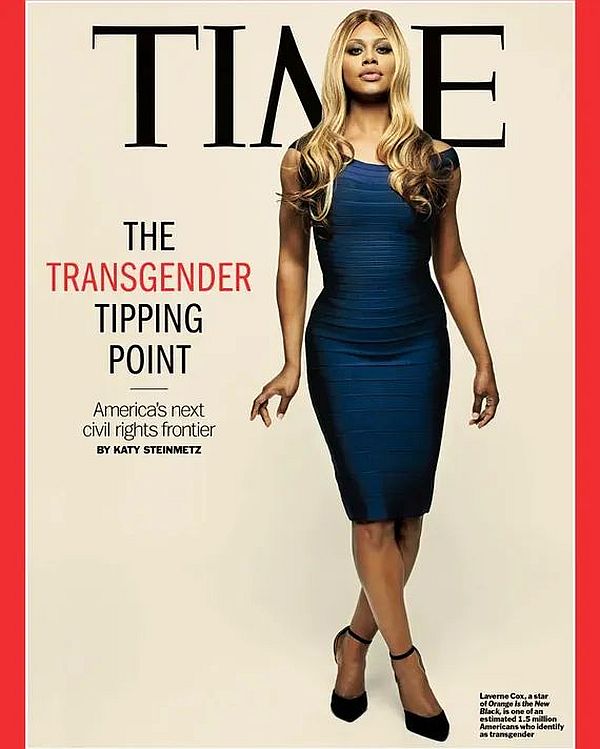


A decade ago, when Time magazine memorably declared the arrival of the “transgender tipping point,” the public was dimly prepared to accept that trans people were like gay people — that is, safe, legal, and rare. The successful corporate boycott of North Carolina over its 2016 law restricting trans people’s use of public restrooms seemed to bear this out; even candidate Trump considered bathroom bills a losing issue. But the nation’s first pangs of dutiful charity have rapidly subsided — in no small part because the focus has shifted from adults to children. In 2018, The Atlantic published a long cover story by the reporter Jesse Singal called “When Children Say They’re Trans,” focusing on the clinical disagreements over how to treat gender-questioning youth. The story provided a template for the coverage that would follow it. First, it took what was threatening to become a social issue, hence a question of rights, and turned it back into a medical issue, hence a question of evidence; it then quietly suggested that since the evidence was debatable, so were the rights. This tactic has been successful: The political center has moved significantly on trans issues. The public now appears to favor protections for trans people from discrimination in employment, housing, and public spaces in line with the Supreme Court’s 2020 ruling in Bostock v. Clayton County. But a growing majority of Americans also believe gender is determined by sex at birth, and even more (almost 70 percent) oppose puberty blockers for trans kids.

Three main tendencies compose the anti-trans bloc in America today. The first, and most obvious, is the religious right, a principally Christian movement that holds that trans people are an abomination and that “gender ideology” is part of a broader leftist conspiracy to corrupt the youth. The second tendency is also obvious, if smaller: gender-critical feminists, better known as TERFs. This group has its roots in the lesbian feminism of the ’70s; today, the polemical acronym, which originally stood for “trans-exclusionary radical feminist,” is used to describe any feminist who justifies her anti-trans views by citing women’s rights. These views include the idea that gender must be smashed rather than affirmed; that women constitute a “sex class” on the basis of their shared biology; and that the trans-rights framework exposes natal women to sexual violence at the hands of trans women, who are imagined as predatory males. (Most TERFism in the U.S. is imported: TERFs have their strongest foothold in the U.K.)

But the most insidious source of the anti-trans movement in this country is, quite simply, liberals. Butler, in their survey of the political landscape, misses the liberal faction altogether. I suspect this is because the anti-trans liberal sees himself as a concerned citizen, not an ideologue. He is neither radical nor a feminist; he is not so much trans-exclusionary as he is broadly skeptical of all social-justice movements. He is a trans-agnostic reactionary liberal — a TARL. The TARL’s primary concern, to hear him tell it, lies in protecting free speech and civil society from the illiberal forces of the woke left, which, by forcing the orthodoxy of gender down the public’s throat and viciously attacking anyone who dares to ask questions, is trafficking in censorship, intimidation, and quasi-religious fanaticism. On trans people themselves, the TARL claims to take no position other than to voice his general empathy for anyone suffering from psychological distress or civil-rights violations.

The leading voice for such ideas in the United States is the Times. In the past several years, the paper has vigorously normalized the idea that sustained public debate over the rights of trans kids is not only justified but urgent. In 2022 alone, it devoted more than 28,000 words to the topic of trans youth, including a lengthy New York Times Magazine piece by staff writer Emily Bazelon on the “unexplained rise in trans-identified teenagers.” The paper paints a consistent picture. Genuine transgender people, its reporters suggest, are a very small clinical population of adults with a verified mental illness whose persistent distress entitles them to gender-affirming care like hormone therapy and transition-related surgeries. Trans-identified youth — whose numbers, we are told, are “small but growing” — are beset by comorbidities like depression or autism spectrum disorder that stymie clear diagnosis, yet they are being rushed into life-changing treatments that many of them may later regret, as evidenced by the cautionary tales of people who detransition later in life. To make matters worse, the “overheated political moment,” inflamed by both right-wing backlash and the strident tactics of trans activists, is preventing the medical Establishment, which is trusted implicitly, from coming to a sober consensus.


At the same time, the paper consistently refuses to treat transition-related care the way it would any other health-care matter. Last year, the Times ran a story on a small Missouri gender clinic that had been overwhelmed by an “unrelenting surge in demand.” But the paper did not present this as an issue of access, as it has done with the national shortage in affordable home care or the inundation of abortion clinics with out-of-state patients post-Dobbs. Rather, the demand itself was suspect, a result of poorly explained psychological and social forces that had “bewildered” experts, whose warnings were as usual being drowned out by activists. Indeed, the average Times-reading liberal is left with the impression that, because politics obstructs the slow work of scientific consensus-building, trans people’s best shot at receiving health care is to stop asking for it.

The Times is not alone; it is one of many respectable publications, including The Atlantic and The Economist, engaged in sanitizing the ideas promoted by TARLs in the more reactionary corners of the media landscape. Here one finds journalists like Singal, Matthew Yglesias, Matt Taibbi, Andrew Sullivan, Helen Lewis, Meghan Daum, and, of course, former Times staffer Bari Weiss. Many of these writers live in self-imposed exile on Substack, the newsletter platform, where they present themselves as brave survivors of cancellation by the woke elites. But they are not a marginal force. (It was Weiss’s media company that first broke the story about the clinic in Missouri.) These writers are far more likely to be militants than their counterparts at the Times; they are especially preoccupied with the “science denial” of radical activists, who have put wokeness before rational standards of care. In the words of one TARL, “Biology has been canceled.” Of particular note here is Singal, who has often accused trans activists of mounting an Orwellian campaign to discount “the relevance of biological sex.” It would be “profoundly unfair,” he wrote last year, if a “large male” like himself were to suddenly demand that others see him as a woman. (It did not occur to him that this is precisely why trans girls, who are well aware of their biology, are asking for puberty blockers: so that they do not grow up to look like Jesse Singal.)

Trans skeptics have seized on the idea of “rapid-onset gender dysphoria,” a term proposed by the public-health researcher Lisa Littman in 2018 to describe children with no history of gender variance who suddenly developed gender dysphoria as a result of “social influences and maladaptive coping mechanisms.” The study was a sham. It surveyed parents, not kids, whom it recruited from trans-skeptical communities online, and it assumed that clusters of trans kids were proof of social contagion as opposed to, say, self-selection. The idea that children were being unduly influenced by the internet was especially rich coming from participants harvested from a private Facebook group. But the general notion that trans kids have confounding diagnoses and high rates of desistance (the natural fading of symptoms with age) has proliferated throughout the anti-trans movement.

Now, to be clear, the TARL will typically acknowledge the existence of a group of fully developed adults whose medically verified gender dysphoria is so persistent and distressing that the argument for compassionate care outweighs the Hippocratic prohibition on harming a perfectly healthy body. The basic strategy here is to create a kind of intake form with exactly two boxes on it. Every trans-identified person is either a participant in a craze or certifiably crazy. (Checking both boxes is permitted.) There is a touch of genius to this approach. It draws a bright line between the kids who say they are trans and the kids who really are while pathologizing all of them as either delusional or dysphoric. This line is as old as gender medicine itself, which for decades was careful to distinguish impersonators and fetishists from the “true transsexual.” So in most cases of gender variance, the TARL informs parents that it is perfectly healthy for boys to wear dresses and for girls to climb trees regardless of their biological sex, which need not be altered after all. He reassures them that the risk of suicide among trans-identified youth has been inflated by cynical activists trying to blackmail the public; what he means by this is that he does not think most kids are suicidal enough to be trans. In those rare instances of true misery, he advises the practice of “watchful waiting,” preferring to see the patient through the often-irreversible changes of puberty to adulthood, when her childhood experience of gender incongruence will finally acquire the weight of medical evidence. If only she had said something sooner!

This is obviously not a vision of justice; it is a response plan for an epidemic. This should not surprise us. The very simple fact is that many people believe transgender is something no one in their right mind would ever want to be. The anti-trans bloc has in general targeted children because Americans tend to imagine children both as a font of pure, unadulterated humanity and as ignorant dependents incapable of rational thought or political agency. This has allowed the movement to infantilize not just kids but all trans people, whom it only wishes to shepherd through the ravages of mental illness and the recklessness of youth. If the liberal skeptic will not assert in mixed company that there should be fewer trans people, he still expects us to agree on basic humanitarian grounds that at least there should not be more. It is quite possible, for instance, to believe that cancer patients should have access to aggressive treatments with potentially life-altering effects while also sincerely believing that, in a perfect world, no one would have cancer.

We will never be able to defend the rights of transgender kids until we understand them purely on their own terms: as full members of society who would like to change their sex. It does not matter where this desire comes from. When the TARL insinuates again and again that the sudden increase of trans-identified youth is “unexplained,” he is trying to bait us into thinking trans rights lie just on the other side of a good explanation. But any model of where trans people “come from” — any at all — is a model that by default calls into question the care of anyone who does not meet its etiological profile. This is as true of the old psychiatric hypothesis that transsexuality resulted from in utero exposure to maternal sex hormones as it is of the well-meaning but misguided search for the genes that “cause” gender incongruence. It is most certainly true of the current model of gender identity as “consistent, insistent, and persistent,” as LGBTQ+ advocates like to say. At best, these theories give us a brief respite from the hail of delegitimizing attacks; they will never save us. We must be prepared to defend the idea that, in principle, everyone should have access to sex-changing medical care, regardless of age, gender identity, social environment, or psychiatric history. This may strike you as a vertiginous task. The good news is that millions of people already believe it.


In October 1958, a young woman appeared at the UCLA department of psychiatry with an unusual complaint. Agnes, as she is known today, had supple breasts, smooth skin, and a narrow waist. She also had, much to the consternation of her boyfriend, a typical set of male genitalia. In interviews with the psychiatrist Robert J. Stoller, Agnes related how she had been raised as a boy but had always believed she was a girl — a belief confirmed at puberty, when she naturally began developing breasts. Testing showed that Agnes lacked a uterus or ovaries but that her testes were producing high levels of estrogen. Satisfied, the doctors surgically replaced her genitals with a vagina constructed from penile and scrotal tissue. Stoller, who had become quite fond of Agnes, saw evidence for his theory that the endocrine system had a strong determining role in a person’s conscious or unconscious awareness of their biological sex. (He and his colleagues in Los Angeles had taken to calling this “gender identity.”) Years later, Agnes casually divulged the truth: At age 12, disturbed by the onset of perfectly typical male puberty, she had begun taking her mother’s estrogen pills. “She is not an example of a ‘biological force’ that subtly and inevitably influences gender identity, as I had reported,” Stoller admitted in his 1967 book, Sex and Gender. “She is a transsexual.”

Agnes had simply told the doctors what they wanted to hear. But why did her mother have estrogen pills in the first place? In passing, Stoller noted that the latter had been prescribed a synthetic estrogen following a total hysterectomy that included her ovaries; in other words, she was one of the millions of 20th-century women who would be prescribed estrogen for treating symptoms of menopause. In his 1966 best seller Feminine Forever, the gynecologist Robert A. Wilson argued that menopause was basically a hormone deficiency, like diabetes, that could safely be treated through estrogen therapy. He claimed his patients were part of a new sexual revolution: They had supple breasts, smooth skin, and legs that looked good in a tennis skirt. After Wilson’s death, it would come out that he had been receiving payments from the makers of Premarin, an estrogen medication derived from the urine of pregnant mares. Nevertheless, many women really did find hormone therapy effective for a wide range of menopausal symptoms, from hot flashes to vaginal atrophy, and in 1992, Premarin was the most prescribed drug in America. “Women, after all, have the right to remain women,” Wilson had written. “They should not have to live as sexual neuters for half their lives.”

So when Agnes visited UCLA, she did not need to prove that a right to female biology existed. She was simply trying to convince the doctors that this right also applied to her. In fact, the vast majority of Americans have long believed everyone has a right to keep their biological sex. The prospect of forcible sex change is the stuff of horror movies. In 1997, the Times ran a front-page story about an anonymous man, later identified as David Reimer, who was raised as a girl after a botched circumcision destroyed his genitals. His care was overseen by controversial psychologist John Money, Stoller’s colleague, who gave Reimer estrogen to induce breast growth and allegedly had him perform sex acts with his twin brother. After learning the truth as a teenager, Reimer started testosterone, had his breasts removed, and received phalloplasty. That this was something of a small national tragedy went without saying. The Times compared his struggle to the travails of Oedipus or King Lear; when he committed suicide in 2004, the paper ran his obituary. Reimer’s story is popular in the anti-trans literature because, alongside the general depravity of the affair, it appears to prove that gender has an inescapable basis in biological sex: Reimer knew he wasn’t a girl, no matter what the doctors did to him. He told Oprah Winfrey he had never fit in as a girl, preferring to climb trees and play with trucks even as his mother tried to convince him that he was simply a “tomboy.”


This is, of course, the exact conversation many trans kids are having with their parents today. What Reimer’s story actually illustrates is that we are perfectly comfortable with sex changing when we understand it as changing back. This happens more often than one might think. The historian Jules Gill-Peterson has shown that the earliest treatments in the field of gender medicine were developed to “correct” intersex children by bringing their ambiguous biology within the range of what society considered normal. Even when these treatments were later charily extended to “transsexuals,” it was often on the assumption that some original biological sex, perhaps endocrine in nature, was being excavated. (This was why Stoller was so excited by the idea that Agnes’s testes were producing so much estrogen.) But as the medical understanding of sex ballooned to include things like gonad development and hormone activity, so did the risk of losing one’s sex as a result of age, heredity, disease, physical trauma, or the side effects of medical treatment. This was the cleverness of Agnes’s plan. She presented herself as a person who, just like her mother, needed to become female again. In fact, following the removal of her testes, she cannily discontinued her secret estrogen pills, leading to mood swings and hot flashes. The doctors promptly diagnosed her with — what else? — menopause and placed her on the same estrogen therapy that would be enjoyed by millions.

So what we today call gender-affirming care is part of a larger history of sex-affirming care governed by strong normative ideas of health, productivity, and moral worth. Many of the treatments in this field are broadly uncontroversial today: breast reconstruction following cancer, vasodilators for erectile dysfunction, antiandrogens for hair loss and hirsutism. In 2023, The New York Times Magazine ran a long, sympathetic essay on the “reassuring” evidence base for menopausal hormone therapy, which the writer called “a lost opportunity to improve women’s lives.” A few years earlier, the Times hailed the first successful transplant of a penis, scrotum, and the surrounding abdominal wall — the result of Pentagon-funded research aimed at restoring the dignity of soldiers whose genitals were damaged or destroyed by improvised explosives. (The donor’s family sent the patient a message: “We are all very proud that our loved one was able to help a young man that served this country.”) Even the recent rush on the part of the Alabama GOP to enshrine the legality of IVF treatments endangered by a surprise state supreme court ruling is an excellent reminder that many religious conservatives support significant medical interventions in biological sex — gonadotropins to stimulate follicle production, GnRH agonists to prevent the unplanned release of eggs, not to mention the whole business with the test tube — when the payoff is a human infant.

The real question is which sex can be affirmed — and why. It so happens, for instance, that GnRH agonists like those used in fertility treatments are also used to delay puberty in trans kids. This means your average Alabama Republican now ostensibly believes it should be a felony to give a child the same hormone blockers his mother may have used to conceive him. Our politician may rightly protest that the same drug is being used for very different purposes. But this is the point: It is the purpose of sex change, and not the change itself, which determines its acceptability. This is why sex-affirming care has historically entailed both the withholding of sex change from some and enforcement of it for others. Like most fields of medicine, it has a bloody underbelly of coercion: the vaginal surgeries tested on enslaved women in 1840s Alabama; the testicular transplants performed on gay men in Nazi Germany; and the surgical modification of infants with atypical genitalia, which continues today. Even Wilson was clearly preoccupied with keeping women perky and lubricated for their husbands. In Feminine Forever, he drolly recalled a man who laid his .32 automatic on the desk and declared that if the doctor could not “cure” his wife of her harridan ways, he would surely kill her himself.


Most people are not being made to change their sex at gunpoint. But it should be clear by now that when members of the anti-trans movement argue that sex cannot change, what they really mean is that sex shouldn’t change except in accordance with social norms. Butler has written a great deal on this subject; a robust theory of normativity is arguably their life’s work. For Butler, a social norm is not a belief or a cultural attitude. It is a deep structure of power that makes one’s sense of self possible. Norms precede us, form us, and act as our “constitutive constraints”; at the same time, since they depend on being constantly reiterated, they never capture us fully and can be reinterpreted. (They have called this “working the weakness in the norm.”) Butler tends to think of gender norms in terms of meaning; in fact, they often assume that gender itself is the symbolic structure through which sex comes to matter at all. This is part of their broader political strategy: to show first that something is saturated with social meaning in order to make it politically questionable.

But it is not enough to know what sex means; we will have to understand what it does. Obviously, gender norms do not issue directly from the organs. One imagines that, even after her hysterectomy, Agnes’s mother was still expected to be nurturing and emotionally available. Yet to speak only of norms is to lose sight of the role of biological sex within a larger system of material relations. It is difficult to explain why the above gender norm would exist in the first place if it were not for the actual fact of reproduction, which at this point in the descent of man still requires very specific biological conditions in order to occur, including the presence of at least one of each gamete type (sperm and ova), a well-functioning uterus, and a reasonably sound endocrine system. This is sex as biological capacity; in this sense, it is no less of a material resource than water or wheat. Every human society invested in perpetuating itself — which is to say, every society — has regulated the production, distribution, and use of biological sex. This is more than the sex-based division of labor (hunter-gatherers and all that). It is the actual division of sex.

It may sound as if I am saying sex is more real than gender — a proposition gender studies has abhorred since its inception. I do not think that sex is more real. But I am not terribly bothered by saying that the division of sex determines gender norms, so long as we remember that it never remotely finishes determining them. There is always a wide, shifting, and irregular gap between the two. One finds a brutal example of this in the antebellum South. As Hortense Spillers has written, the genteel system of southern patrimony was bluntly waived when it came to the rape of enslaved Black women by white slave owners, who could effectively produce new assets — that is, new enslaved people — in the form of their own disavowed children. Gender alone cannot explain such an arrangement; it cannot speak to how sex functions as a kind of material base, as the Marxist feminists might put it: a source of labor, wealth, and power from which the elaborate superstructure of gender continually emerges, breaks off, and reforms in unintended ways. (An old-fashioned name for such an arrangement is sex-gender system, coined by the anthropologist Gayle Rubin in 1975.)

No wonder “gender identity,” understood by well-meaning LGBTQ+ advocates as an abstract feeling, has done such a poor job of justifying sex change. If biological sex is part of a material structure of value, then society has a concrete interest in any potential gains or losses that may result, feelings be damned. Gill-Peterson tells the story of Robert Stonestreet, a 10-year-old boy who was brought to the Johns Hopkins Hospital for a rare urethral defect in 1915. When the doctors informed his father that the boy had ovaries and should be reassigned as a girl, the man refused, explaining that he already had six girls at home and his son was a great help around the family farm. Of course, Stonestreet was prepubescent. Whatever biological advantage he had over his sisters was the natural spoils of working daily on a farm. The point is that his father’s social validation of his gender was the basically incidental result of an economic calculation about his sex. Twenty-one years later, Stonestreet asked the same doctors to certify him as male so he could wed his fiancée. They refused — one suspects because a marriage with no reproductive potential struck them as dead in the water, especially with the national birth rate at an all-time low. Three days later, Stonestreet committed suicide — the victim of a society that could not make up its mind on how best to make sense of his gender while also extracting value from his sex.

This is the larger historical reason why the anti-trans movement does not want transgender people to receive sex-altering care. It is not clear how, if at all, such people will fit into the division of sex in America. The TERF does not, after all, fear being assaulted by a Y chromosome in a women’s restroom. Her paranoid fantasy is of a large testosterone-fueled body wielding a penis — an organ to which, as Butler points out, the TERF attributes almost magical powers of violence. (TERFs often seem to reject the idea that trans women are women on the basis that they are not sufficiently rapeable, when in fact trans women face much higher rates of sexual assault.) Liberals, meanwhile, object to trans girls’ participation in sports not because sperm swim faster than eggs but because trans girls, they suppose, will swim faster than their own little girls, who may then be deprived of athletic scholarships or other opportunities. Even Singal admits this is ultimately an issue of “competing rights claims,” not biological fact. Widespread discomfort at the largely fantastical idea that trans girls will always dominate in their chosen sports reflects a basic patriarchal belief that the physical advantages of being male are perfectly acceptable so long as they are possessed by men. (In this sense, sex division in sport is meant to enshrine inequality, not to mitigate it.)

The anti-trans bloc does not care about what sex is in some bloodless, positivistic sense. It cares about what sex does — or what it might not do, in the event that transition-related care becomes widely available. One of the greatest fears of the anti-trans movement concerns a shift in the population of trans kids seeking care, who by some counts are now predominantly female-assigned. (The accuracy of this claim has been disputed.) This idea was popularized by Abigail Shrier’s 2020 book, Irreversible Damage: The Transgender Craze Seducing Our Daughters, which hysterically claimed that an epidemic of anxiety and depression is leading “a generation of girls” to confuse the tribulations of female puberty with true gender dysphoria. Shrier wrote that the cost of this epidemic was “a pound of flesh,” and it was no secret which pound she meant. The book’s cover features an illustration of a girl with a physical hole — you can put your finger through it — where her uterus should be. The specter of mass infertility cannot be underestimated. I do not think it is an exaggeration to say that the anti-trans movement is driven by a deep, unconscious dread that society will not have enough working female biology to support the deteriorating nuclear family — and, with it, the entire division of sex itself.

This probably will not happen. Sex-altering care can indeed affect one’s fertility but not always irreversibly, and the trans population is still far too small to bring about that sort of demographic apocalypse. What we are witnessing is a potential reconfiguration of the division of sex — one that is highly disturbing to anyone with an instinctive loyalty to the status quo but that is no more inherently revolutionary than, say, the contraceptive Pill. The Pill was, after all, one of the most important advancements in sex-changing medicine of the 20th century. It had a dramatic effect on women’s sexual freedom and economic independence, but it did not bring about women’s liberation. On the contrary, it became an essential part of a new regime of rational management within the division of sex known as “family planning.” One can likewise imagine a marginally more benevolent society integrating hormone therapy and puberty blockers into its own division of sex without accidentally abolishing the family or smashing the patriarchy. True political change we must bring about ourselves. Sex-affirming care has always served someone’s moral vision for society. There is no reason it cannot serve ours.


What if we make freedom into the air we together breathe?” Butler asks at the end of Who’s Afraid of Gender? It is a beautiful thought. It would not mean the abolition of social norms — an impossible task — but rather a collective reimagining of them through alliances forged across our many differences. Butler argues that the struggle for trans rights cannot be merely cultural but instead must be connected to the fight for “the basic rights to housing, food, non-toxic environments, unpayable debt, and health care.” They are entirely right. But their principled commitment to coalition building can lead them toward a needlessly conciliatory position. It is hardly clear, for instance, that “trans rights to self-determination take no one else’s rights away.” This may be technically true, if one means trans people can be granted social recognition and legal equality without spoiling anyone else’s claim to the same. But if sex really is a biological resource, then there can be no remaking of the division of sex without real material losses — this would be like saying that socialism does not take away the rights of the wealthy. Such is the limitation of a social analysis like Butler’s. It imagines the anti-trans movement as consisting primarily of religious zealots and scheming politicians, and it does not consider that many might have a material interest in opposing what we should rightly call the redistribution of sex.

We need a stronger demand. Butler argues that it would be “counterproductive and wrong” to chalk up the existence of oppressive systems to biology. But why? I am of the opinion that any comprehensive movement for trans rights must be able to make political demands at the level of biology itself. This is an old radical-feminist idea, most famously found in Shulamith Firestone’s 1970 classic The Dialectic of Sex. Suppose women’s oppression really is a product of their biology, Firestone wrote. What follows? Only that feminists must work to change biological reality. The genius of this gambit was to refuse the idea that biological facts had some kind of intrinsic moral value that social or cultural facts did not. Biology could not justify the exploitation of human beings; indeed, it could not even justify biology, which was just as capable of perpetuating injustice as any society. When Firestone wrote of women as a “sex class,” she — unlike the TERFs who followed her — had in mind the Marxist dream of a classless society, something that could be achieved only by freeing humanity from the “tyranny of its biology.” For her, this meant a “revolutionary ecological programme” of fertility control, artificial reproduction, and the full automation of labor. That may sound unrealistic. But this is the point: Justice is always an attempt to change reality.

Sex is real. So is global warming. To believe in their reality is an indispensable precondition for making normative claims about them, as we know from climate activism. But the belief that we have a moral duty to accept reality just because it is real is, I think, a fine definition of nihilism. What trans kids are saying is this: The right to change sex that has been enjoyed for decades by their parents, friends, teachers, coaches, doctors, and representatives, especially if those people are white and affluent — this right belongs to them, too. We should understand this right as flowing not from a revanchist allegiance to an existing social order on the perpetual verge of collapse but from a broader ideal of biological justice, from which there also flows the right to abortion, the right to nutritious food and clean water, and, crucially, the right to health care.


I am speaking here of a universal birthright: the freedom of sex. This freedom consists of two principal rights: the right to change one’s biological sex without appealing to gender and the right to assume a gender that is not determined by one’s sexual biology. One might exercise both of these rights toward a common goal — transition, for instance — but neither can be collapsed into the other. I am put in mind of a bicameral system. Each chamber has its own prerogatives, but neither the exclusive upper chamber (sex) nor the boisterous lower one (gender) has the ultimate power to overrule the other. (Not all trans people wish to change their sex; some trans people are also gender-nonconforming.) By asserting the freedom of sex, we may stop relying on the increasingly metaphysical concept of gender identity to justify sex-changing care, as if such care were only permissible when one’s biological sex does not match the serial number engraved on one’s soul. The same goes for “sex assigned at birth,” which unhelpfully obscures the very biological processes that many people have a right to change. In general, we must rid ourselves of the idea that any necessary relationship exists between sex and gender; this prepares us to claim that the freedom to bring sex and gender into whatever relation one chooses is a basic human right.

What does this freedom look like in practice? Let anyone change their sex. Let anyone change their gender. Let anyone change their sex again. Let trans girls play sports, regardless of their sex status. If they excel, this means only that some girls are better at sports than others. Let people use the gender-segregated facilities of their choice; desegregate whenever possible. Do not out children to their parents. Do not force anyone to change their sex or their gender. Give everyone health care. The anti-trans movement has collected the public’s rising awareness of the staggering injustice of the American health-care system and directed it, like a syringe full of air, at a small population of children. The effect is to make it appear as if trans people do not want good health care or trustworthy providers, when the truth is that trans people face health disparities across the board, including higher reported rates of disability, asthma, and heart disease. No single federal program would benefit trans people more than Medicare for All. As for transition-related care itself, the right to change sex includes the right to receive counseling, to understand the risks, or to be treated for comorbidities; in fact, society has a duty to make these resources freely and widely accessible to trans kids. But these are practical options, not obligations. To make “thoughtfulness” a requirement of any universal right is to taper that right into an exclusive privilege. That trans kids’ access to care will in most cases be mediated by parents or legal guardians is an inescapable fact of the way our society regards children, rightly or not. For now, parents must learn to treat their kids as what they are: human beings capable of freedom.

The freedom of sex does not promise happiness. Nor should it. It is good and right for advocates to fight back against the liberal fixation on the health risks of sex-changing care or the looming possibility of detransition. But it is also true that where there is freedom, there will always be regret. In fact, there cannot be regret without freedom. Regret is freedom projected into the past. So it is one thing to regret the outcome of a decision, but it is a very different thing to regret the freedom to decide, which most people would not trade for the world. If we are to recognize the rights of trans kids, we will also have to accept that, like us, they have a right to the hazards of their own free will. This does not mean shooting testosterone into every toddler who looks at a football. But if children are too young to consent to puberty blockers, then they are definitely too young to consent to puberty, which is a drastic biological upheaval in its own right. Yet we let this happen every day — and not without casualties. I am not speaking of suicide; I am speaking of the many opponents of trans rights who observe with horror that they too might have transitioned given the chance, so intensely did they hate being teenage girls. I do not know if they regret their biology today. I do suspect they regret that they never got to choose it.

A choice! The thought is impossible. Yet we have no difficulty believing that 300,000 trans kids can choose to stop being trans. Freedom is easy to imagine when it is the freedom to do as you’re told. What we cannot conceive is why they are making all this gender trouble in the first place. They do not owe us an explanation. They are busy taking charge of their own creation. They may not change the world, but they will certainly change themselves. “Possibility,” Butler once wrote, “is not a luxury; it is as crucial as bread.” We have not yet begun to understand the courage of the child who says she is a girl for the first time without any biological “proof” to back this up. This is especially true if she lives in one of the many states that are working to ensure that saying so is all that trans kids like her will ever have. But still she speaks. The sentence “I am a girl” is performative speech in the classic sense: It performs an action. She is not only declaring her intent to exercise her freedom of sex in the future; she is, by uttering these words, already exercising it. She is working the weakness in the norm. She is not afraid of sex — she is against it. That is not nothing. There is, in fact, a very important population of Americans who do want trans kids to exist. I am told they are small but growing.


Freedom of Sex The moral case for letting trans kids change their bodies. By Andrea Long Chu. New York Magazine, March 11, 2024.


07/10/2022

Valerie Solanas : Radical Feminist Rage


“My only consolation’s that I’m me—vivacious, dynamic, single, and a queer,” quips Bongi Perez, the intrepid antiheroine of Valerie Solanas’s Up Your Ass. Written between 1962 and 1965, the play features a wisecracking masc lesbian panhandler and sex worker who sounds a lot like the writer herself. Notorious for shooting Andy Warhol and his associate Mario Amaya in 1968, Solanas’s best-known text is her SCUM Manifesto (1967), outlining a program of male elimination. But it was Up Your Ass, a lesser-known dramatic work, that lay at the heart of her conflict with Warhol. Until now, the bawdy and rollicking play has never been published by a major press. This month, it appears via Sternberg’s sub-imprint Montana.
 
It’s an apt time for the release of Up Your Ass, an absurdist one-act poking fun at post-Pill, pre-Roe 1960s sexual politics from all directions. Although SCUM Manifesto became a fringe classic, many feminists have debated its value as a humorous work vs. a deadly serious homicidal screed. A contrarian who alienated major figures from the women’s liberation movement, Solanas’s famous combativeness led critics to distance themselves from her work. But interest in Solanas has intensified over the last decade, due in part to new scholarship. (In 2014, for instance, Breanne Fahs published an excellently researched biography of the writer through the Feminist Press.) The US’s extreme rightward shift has also cast rageful radicals like Solanas in a more sympathetic light. As the rights of queer and trans people, sex workers, and people capable of pregnancy become further endangered, Solanas’s ribald play fascinates as a relic of taboo-busting sexual content, if not always the most cogent attack on the patriarchal status quo.
 
Up Your Ass has arguably enjoyed its widest pop-cultural visibility via Mary Harron’s 1996 biopic I Shot Andy Warhol. Starring a young Lili Taylor, the film follows the aspiring writer as she infiltrates the Pop artist’s social circle in the hopes that he will produce her play. Between first sending her script to Warhol in 1965 and shooting him three years later, Solanas wandered in and out of the Factory scene. When she was particularly hard up for cash, Warhol paid her a measly $25 to play a lesbian character in his 1967 film I, a Man. In an improvised scene in a stairwell, Solanas shifts between light flirting and sparring with Tom Baker before turning down his advances. The tension in I Shot Andy Warhol escalates as Solanas, after signing a dubious contract with publisher Maurice Girodias, enters a psychosis fueled by public humiliation and paranoia over the ownership of her works. She attempts to assassinate Warhol and his studio staff after claiming that he lost the “only” copy of her play. In the ensuing decades, there’s been a mistaken conflation between Solanas’s life and art: Up Your Ass as a forgotten dry run of the SCUM Manifesto, SCUM as a manual for deadly violence against men, and Solanas’s attack on Warhol. Like all events involving Valerie Solanas, the reality is more complicated.


Warhol did lose his copy of Solanas’s manuscript, which was later recovered in a silver-painted trunk belonging to Billy Name. It is untrue, however, that it was Solanas’s only copy. The writer had high ambitions for the play, filing multiple copyrights for the manuscript, staging small readings, and producing mimeographs of it for sale. As the radical feminist activist Roxanne Dunbar-Ortiz recalled, Solanas spoke unceasingly about the play during her psychiatric holds and incarceration following the shooting. In the early 1970s, she performed a one-woman version of it while imprisoned for first-degree assault at Matteawan State Hospital for the Criminally Insane.
 
Despite Solanas’s insistence on its artistic significance, the play was eclipsed by her strident SCUM Manifesto, published by Girodias’s Olympia Press immediately after her arrest. In fact, Up Your Ass has only been staged once by a professional company. In 2000, George Coates Performance Works mounted a version with an all-female cast in San Francisco, just blocks from the SRO where Solanas died alone, a dozen years earlier, at the age of fifty-two. In 2001, the production saw a short run at New York’s P.S. 122. “Far from being a museum piece, ‘Up Your Ass’ is a clarion call,” wrote one reviewer. The show was heralded at the time for its forward-thinking take on genderbending and homicidal frustration with male chauvinism. Today, it stands out as much for its punkish irreverence—Solanas spares no one from her main character’s acid tongue.
 
Up Your Ass follows Bongi Perez, Solanas’s stand-in, on an average day hustling in the streets of “a large American city.” (Solanas wrote an early draft while living in Berkeley, California, and revised it in New York.) Full of clapbacks and one-liners, the script celebrates the fine art of gutter-talk while offering a parodic send-up of misogyny during the swinging ’60s. Over the course of Bongi’s wanderings, she catcalls women (“You got a twat by Dior?”); shoots the breeze with two single men (Black Cat and White Cat) about pickup strategies; hustles a john for dinner before giving him a quick hand job in an alley; and engages in banter with two drag queens (“Do you know what I’d like more than anything in the world to be?” one muses. “A Lesbian. Then I could be the cake and eat it too”). Bongi then meets Ginger, a demented Helen Gurley Brown type who brings her own turd to a dinner party (“Everybody knows that men have much more respect for women who’re good at lapping up shit,” Ginger says), and her faux-intellectual colleague Russell, whom Bongi cajoles into screwing behind a bush just minutes after he declares her a “desexed monstrosity.” As an absurdist palate cleanser, Solanas shifts the scene to a Creative Homemaking class. There, an instructor advises aspiring wives to integrate fucking into domestic chores—by ramming a soaped-up bottle brush up one’s husband’s ass, recalling the play’s titular expletive. In Bongi’s final encounter, our protagonist befriends a bicurious housewife who murders her penis-obsessed toddler. The grand finale shows the pair walking off into the proverbial sunset, aggressively propositioning women together.


The manuscript’s épater la bourgeoisie sensibility, shot through with clichés about race and sexuality, places it squarely in the twentieth century. But the text also outlines a space of genderqueer possibility that wouldn’t be theorized for years, advocates for sex workers’ rights, and sketches the dark future of reproductive technology through allusions to biological determinism. A line can be traced directly from Bongi’s offhanded political musings—“Maybe being president wouldn’t be such a bad idea . . . I could eliminate the money system, and let the machines do all the work”—to SCUM’s opening sentence, which urges “civic-minded, responsible, thrill-seeking females” to “overthrow the government, eliminate the money system, institute complete automation and destroy the male sex.” Just as importantly, Bongi expresses a desire that Solanas, who claimed to be asexual, often hid in her public life. The fictional character longs for “real lowdown, funky broads, nasty, bitchy hotshots, the kind that when she enters a room it’s like a blinding flash.” Such heated, desperate attempts at communicating want—in tonally mischievous dialogue that slides between screwball comedy and apocalyptic tirade—crackle throughout Solanas’s script.
 
Up Your Ass is fascinating, but is it feminist? In Andrea Long Chu’s Females, (2019) her gender-transition-memoir-cum­-theoretical-provocation, the same question is posed, but turned inside out. Chu writes that “one could be forgiven for wondering if Solanas’s art, not unlike that of the male artists she despises (and occasionally shot), might have represented its own kind of attempt to repress the very femaleness she hoped to unleash, like a biological weapon, upon the world.” The “always selfish, always cool” vision of femaleness that Solanas laid out in SCUM simply reversed the traditional poles of misogyny. Chu, for her part, embraces Solanas as an avatar of the self-negation she argues is intrinsic to the female condition. “Everyone is female,” Chu declares, “and everyone hates it.”
 
Up Your Ass reveals Solanas as an equal-opportunity roaster, a role that places her outside of contemporary feminism’s tendency toward self-examination. Rather than shared vulnerability, this sexual comedy is shot through with a tart flavor of camp able to deflect earnest political criticisms directed at the author. Solanas takes aim at the sexual expectations of placed on “groovy,” liberated-but-docile chicks. (In SCUM, she would later damningly term these women “Daddy’s Girls.”) The reader can sense a tension in the play, Solanas knotting her rage into a tightly coiled spring, ready to release at any target that gets in her way—as it did, appallingly, at a fellow queer artist that she once viewed as her potential producer. But we also glimpse traces of Solanas that are more complex and contradictory than her manifesto, or her attempted murders, might suggest. As the old saying goes, women’s greatest fear is that men will kill them, while men’s greatest fear is that women will laugh at them. Rather than programmatic gendercide, her play offers the chance to laugh with her at the grotesqueries of a patriarchy that enmeshes and implicates us all.
 
Scum as you are : The furious comedy of Valerie Solanas / By Wendy Vogel. Artforum, August 22, 2022


Violent and corrosively humorous, Dans Ton Cul is a play written in the 1960s by Valérie Solanas. A short and powerful text by a radical author ahead of her time, to discover urgently today.
 
It is often presented for two feats of arms: the publication of SCUM Manifesto in 1967, feminist firebrand and misandre and the attempted assassination of Andy Warhol the following year. Valerie Solanas was radical feminist figure born in 1936 and died in 1988, is again highlighted through the publication in May 2022 and for the first time in France of In Your Ass. This play was translated in France by Wendy Delorme and published by Éditions Fayardin the 1001 Nights collection.
 
An opportunity to see that the anger of Valérie Solanas is still alive, that his verve still hits the mark, and that his denunciation of male domination and capitalism finds still resonates with feminists today.
 
How In Your Ass Almost Never Came to Be
 
In Your Ass (in English Up Your Ass), it is a work of around thirty pages, which Valérie Solanas took three years to write. Claimed lesbian, she then lives in New York, tries to become a writer and earns her living by prostituting herself.
 
His play almost remained lost in limbo : when in 1967, Valérie Solanas presented her manuscript to Andy Warhol and asked him to produce his play, the latter believed not in a joke, but downright in a set up. Because at that time, he was not in the odor of holiness with the authorities, as he told in his memoirs, co-written with Pat Hackett and published in the 80s: “I quickly took a look at it and it was so lewd, I thought it was working for the police and it was some kind of incitement to crime”. Andy Warhol ends up telling him that he has misplaced the manuscript and, in return, offers Valérie Solanas a role in the film. I, a Man.
 
It was not until 1999 that the text was found. Director George Coates directs it. It was only in 2014 that it was published for the first time in the United States.
 
Each dialogue is finely chiseled, rhythmic, everything hits the spot. “It’s extremely built”, tells us the author Wendy Delorme, to whom we owe in particular The time of fire will come at Cambourakis and who translated this first French edition of the play.
 
The Story of In Your Ass
 
“In your ass, it’s a fierce and hilarious pamphlet that comes in the form of boulevard theater”, summarizes Wendy Delorme.
 
The short play features the cheeky Bongi Perez, a sort of incarnation of Valérie Solanas, who like her, prostitutes herself. As they meet and interact, it highlights and denounces the norms, the patriarchal springs and the hypocrisy of the American society of the 60s with a harsh and terribly corrosive spirit.
 
“She is funny, and her humor is a weapon”, explains Wendy Delorme. “The way she brings form and content together is an example to follow, it’s a source of inspiration. One of the problems in getting the facts about sexual violence across is precisely who you talk to and how you do it. Sometimes a message does not get through, because its enunciation does not get through. Valérie Solanas, while being radical, while seeming excessive, always manages to get a message across.”
 
Radical, extreme, rabid… There is no shortage of adjectives to qualify Valérie Solanas and her provocations. ‘In Your Ass’ do not take gloves and shows all the irreverence of this author totally out of step with the times : “She is way ahead of her time”,  summarizes Wendy Delorme.
 
“She wrote Dans Ton Cul when we weren’t yet talking about gender issues. She was brilliant, off the charts, but that wasn’t a choice on her part. She went to college, but in her day, women were said to go to college to find a husband and were never given positions in research labs. Her rage comes from there too, she can’t live in that world. “
 
She is finally even too transgressive for the already very transgressive Factory, she does not fit into the codes of the studio where Andy Warhol and his clique of marginals and artists gather, in no way resembling the stars who gravitate around the artist and populate his universe.
 
After shooting Andy Warhol, she is brought to justice and sent to a psychiatric hospital, where she is diagnosed with schizophrenia. This assassination attempt makes her ironically famous.
 
The other major work of Valérie Solanas is of course SCUM Manifesto (SCUM for Society for Cutting Up Men, in other words “Society to emasculate men”), in which Valérie Solanas spits this desire to eliminate men. “Un funny and jubilant text, cathartic and humorous. It’s a big puppet that has real political power” describes the author Chloé Delaume, in an article in the World which celebrates 50 years of the work of Valérie Solanas. It was reissued in France in 2021 by Fayard with an afterword by Lauren Bastide.
 
In Your Ass also exists through a translation into French and a radio play produced by a collective TPG (Trans Pédés Gouines). It is broadcast on Station Station, the media of La Station — Gare des Mines.
 
Why you should read Dans Ton Cul, a work by Valérie Solanas as funny as it is gritty and radical. By Steven Felton. Soul Mirror One, August 7, 2022. 


Valerie Solanas’s rarely published, legendary play, Up Your Ass, explodes social and sexual mores and the hypocritical, patriarchal culture that produces them through her signature irreverence and wit, incisiveness and camp. The play, whose full title is Up Your Ass or From the Cradle to the Boat or The Big Suck or Up from the Slime, marches out a cast of screwy stereotypes: the unknowing john, the frothy career girl, the boring male narcissist, two catty drag queens, the sex-depraved housewife, and a pair of racialized pickup artists, among others. At the center is protagonist Bongi Perez—a thinly veiled Solanas—a sardonic, gender-bending hustler who escorts us through the back alleys of her street life. The fictionalized predecessor to SCUM Manifesto, the play shares the same grand, subversive, implicative language, equally spitting and winking, embracing the margins, the scum, and selling a trick along the way.
 
Sternberg Press


For a while there, I became obsessed with Valerie Solanas’s SCUM Manifesto. How can one not, with this opening line?
 
“Life in this society being, at best, an utter bore and no aspect of society being at all relevant to women, there remains to civic-minded, responsible, thrill-seeking females only to overthrow the government, eliminate the money system, institute complete automation, and destroy the male sex.”
 
This extraordinary opening sentence starts in a mood of studied nonchalance, its participle “being” introducing as a given something which may in fact require argument. It is a sentence which starts in a distinctly camp mode, conjuring a cocktail-party wit—leaning on a bar perhaps—but which, by the time it becomes declarative, swerves to a stark, deadpan seriousness. It showcases Solanas’s intense penchant for lists, here enumerating casually asserted yet wildly ambitious demands. It displays an impeccable sense of rhythm and comedic timing, the final devastating words landing with an almost shoulder-shrugging obnoxiousness. The manifesto’s egregious unreasonableness turns on the word “only” in that perfect first sentence. I laughed out loud in a library on first reading.
 
I’m not sure Solanas intended the manifesto to be funny. Jeremiah Newton, a 17-year-old boy who turned up for auditions for her play, Up Your Ass, has said that “she wasn’t a comedian by any stretch. Just the fact that she was so serious made her funny.” Seriousness and impatience are key to the manifesto. In an interview in the Village Voice in 1967, Solanas answered Robert Marmorstein, who had asked if she was “serious about the SCUM thing,” by saying “Christ! Of course I’m serious. I’m dead serious.”
 
Pressed on why peaceful revolution wasn’t possible, she said “we’re impatient”; “I’m not going to be around 100 years from now. I want a piece of a groovy world myself. That peaceful shit is for the birds.” Vivian Gornick has rightly described Solanas’s voice as a voice “beyond reason, beyond negotiation,” but in this disarming statement of desire—I want a piece of a groovy world myself—we glimpse also the longing and perhaps the deprivation that might underlie it.
 
SCUM Manifesto is tremendous, an awe-inspiring, thrilling piece of writing. It has an urgency and a rage in dialogue with a ludic enjoyment in pure language, as if Solanas has been carried on a wave of her own linguistic capacity and is having a wild ride. It baldly aims to bring forth a future that she makes sound utterly reasonable. She is perennially irritated by others’ slowness, their failure to have reached the self-evident conclusions that she has. Things are very clear for her; hallucinatorily sharp and obvious. It’s uncanny to read; it’s both objectionable and lucid, lucid to the point of being a lurid fantasy.
 
Amongst much else, she advocates membership of the “unwork force, the fuck-up force,” elaborating arguments for automation that have since flourished in left discourse; she shruggingly asserts assisted reproduction as a self-evident inevitability; she dissects what some might now call emotional labor; she anticipates the ubiquitous surveillance that we’re now in thrall to, as well as a “perpetual hardness technique” (such as Viagra).
 
And all this from the gutter, from a precarious, hand-to-mouth existence on the streets of New York, in 1967, its author hawking her mimeographed pamphlet—one of the most searing, brilliant, grandiose feminist texts ever written—around town in an increasingly desperate state.
 
*
 
Daddy Issues, my short book about fathers and daughters, emerged in part from the phenomenon of #MeToo; the anguished, rageful reckoning with violence against women that swept through the media in 2017 and 2018. #MeToo elicited plentiful metaphors of beginnings and endings, of tsunamis washing shame away, of wrongdoings being exposed to the light of day and of truth, of a cleansing and a destruction all at once.
 
Bad men—boyfriends, sexual partners, and bosses in particular—were subjected to intense scrutiny. But fathers seemed to be largely absent from the rhetoric that swirled, and from the remarkable rise in prominence of feminism in the last ten years. Was this the familiar insulation of the private realm, the family, from scrutiny? Had feminism forgotten about fathers?
 
Daddy Issues also emerged from a fascination I’d long had with that phrase—”daddy issues”; a phrase routinely, knowingly, casually thrown out about a woman’s sexual choices. It is usually invoked to mock a woman for choosing a man who can be construed as a version of her father—by virtue of his age, status, or power. It nods to the power of the father and the patriarch—but then laughs at a woman for being in thrall to these. It fleetingly sees something clearly, but then turns on the woman. It serves to deflect attention and locate in the other—the woman, the girl—dynamics that are interrelational, social, and political.
 
The phrase also takes as a given, and then scorns, the possibility that our lives and our sexual desires are profoundly shaped by our relationships to our parents or caregivers. This terrain—infantile sexuality, Oedipal desires—often induces a phobic shudder. The phrase “daddy issues” curiously acknowledges this terrain, however, only to then reject it, turning it into a source of derision, at the cost of the women, who, as its target, are asked to be accountable for their sexual and romantic choices.
 
This is a familiar dynamic: the disproportionate spotlighting of women’s responsibility for sexual relations. A dynamic which, incidentally or not, is what #MeToo was trying—often clumsily, unsteadily—to address and possibly invert. Some—not all—of the disquiet about #MeToo may come from a feeling that simply inverting this structure—turning the spotlight around and interrogating male sexuality—may not be the self-evident solution that it can be felt to be.
 
But in Daddy Issues, I wanted to explore how representations of fathers and daughters—in fiction, in film, on TV, in public families—do a tremendous amount of work, teaching us lessons in gender and in heterosexuality, while also revealing and reinscribing an enduring horror at female sexuality—particularly a girl’s emerging sexuality. What happens when we look more closely at “daughter issues”—those of fathers and of the culture more widely?
 
*
 
Daddy Issues was a flight of fancy—a format in which I could write something short and fast, without thinking too much about it. Partly this was of necessity; it was commissioned, and by the time I found time for it, I had to squeeze the writing into busy days, writing bits here and there, and not having time to get too self-conscious about it. It came from a place of anger, sadness, unresolved difficulty, but it felt joyous to write. Could I, I wondered, derive some kind of wicked pleasure from dashing off a text that simply leaned into my own hostility, in a perhaps unreasonable, deadpan way? I don’t think Daddy Issues reads at all like SCUM Manifesto, but I know it was there, hovering, with its rage and violence, in my dark little book about dads.
 
Joanne Steele, a key figure in the emerging women’s movement of the 60s and 70s, has said that SCUM Manifesto “had an important message for women to hear. Nothing else was as virulent. She was the first to say you can hate your oppressor.” This is key. Solanas embraced her feelings of hate; not just a noble feeling of anger about injustice, but a feeling of pure hatred and disgust. Not just for men, either. All women “have a fink streak about them,” she notes, that stems from “a lifetime of living amongst men.” And she is caustic about “passive, rattle-headed Daddy’s Girl, ever eager for approval, for a pat on the head, for the ‘respect’ of any passing piece of garbage, is easily reduced to Mama, mindless ministrator to physical needs, soother of the weary, apey brow, booster of the tiny, appreciator of contemptible, a hot water bottle with tits.” No one escapes Solanas’s acerbic ire.
 
When I see women posting on Father’s Day about their dads, it’s possible that I feel some envy,  but also some shame, too, about having much more mixed feelings than many of these posts convey. And yet mixed feelings—ambivalence—are the natural state of things, from the day we are born. Mothers, fathers, caregivers provide but also frustrate, and they have to, if they are to provide the conditions for their infants’ development. Aggression and hatred are an inevitable and necessary part of development for infants, and create the possibility for so much else, including love.
 
Donald Winnicott argued that the child needs to hate and defy someone, without there being a complete rupture in the relationship, in order to develop a sense of self. Adam Phillips has written of the requirement on parents to be both “sufficiently resilient and responsive” to be able to “withstand the full blast of the primitive love impulse”; the full blast that includes aggression. That’s what this little book felt like to me: a blast of aggression that it felt important, and pleasurable, for me to give voice to. Could I be ruthless, as Winnicott argues the baby needs to be in relation to its caregivers?
 
Solanas took a refusal of deference towards men to a mad, thrilling extent. Was I doing something similar, digging my heels in and refusing any concession of warmth to fathers? Could I write a book about fathers that could play with my own aggression—my need for aggression—and come out safely on the other side? I was diving in, perhaps, to my difficult feelings in the hope that really reckoning with them might be transformative. Writing Daddy Issues was, I think now, an experiment in attempting to destroy an object who could, hopefully, survive that destruction. It was an attempt, in Winnicott’s terms, to feel real.
 
 
*
 
The obvious problem with SCUM Manifesto is that Solanas made good on her promises. She shot Andy Warhol, who survived, but only just. How does one read a book about destroying the male sex when you know the author tried to kill a man and irreparably changed his life? Solanas had been on the periperhy of Warhol’s Factory, Solanas, and she had interested him—he cast her in I, A Man. But then he lost interest and also lost her play. They were both outsiders, Catholics from blue-collar immigrant families, but for Solanas, Warhol (along with her publisher Maurice Girodias) became a metaphor for deception, withholding, and profit—a figure of paranoia.
 
Yet, as Breanne Fahs argues in her book on Solanas, “Valerie exhibited a unique blend of schizophrenic paranoia and outright accuracy.” Kate Millett has said that “even people who respected Warhol and his work thought that people at the Factory were being used as cannon fodder for avant-garde art.” As Olivia Laing has written of Solanas, “just because you’re paranoid doesn’t mean they’re not out to get you.” Solanas was excluded and quite possibly ill-treated, not just by the worlds she gravitated towards in New York, but in her volatile early life too. She lived an errant and erratic life that included imprisonment and hospitalization, and died aged 52, her body having been left several days before she was found.
 
Plenty have found SCUM Manifesto more objectionable than anything else, though plenty of writers (Andrea Long Chu, Breanne Fahs, Avitall Ronell, Olivia Laing) have, like me, been enthralled and thrilled by Solanas’s writing. It feels genuinely alarming to read her, disquieting to love this “indefensible text,” as Ronell puts it. But as Ronell goes on to say, “psychosis often catches fire from a spark in the real.”
 
Solanas had a lot, still has a lot, to teach us. As for Daddy Issues, any violence there was safely contained in a long essay, steadied by the forces of sentence-making. Though I might have felt alarmed writing it, I guess it worked out fine. Everybody survived.
 
Texts
 
Andrea Long Chu: “On Liking Women,” n+1 30, Winter 2018 · Olivia Laing, The Lonely City (Picador, 2016) · Breanne Fahs, Valerie Solanas: The Defiant Life of the Woman who Wrote SCUM (and Shot Andy Warhol) (Feminist Press, 2014) · Avitall Ronell, “Deviant Payback: The Aims of Valerie Solanas,” introduction to SCUM Manifesto (Verso, 2004, 2015)
 
Katherine Angel on Valerie Solanas, Bad Dads, and the Literary Pleasures of Pure Rage. By Katherine Angel. LitHub, July 7, 2022. 


Breanne Fahs: Aileen Wuornos and Valerie Solanas are both known by many people as perpetrators of homicidal violence against men who wronged them.  Looking closely at their stories, as you do in your new book, Requiem for a Serial Killer, and as I did in my biography of Solanas, Valerie Solanas: The Defiant Life of the Woman Who Wrote SCUM (and Shot Andy Warhol), their violent rage reflected the profoundly oppressive conditions in which they lived. We can read Wuornos and Solanas as feminist characters or as aberrations of feminism. Why should they be embraced? Alternatively, are there aspects of them we should reject?
 
Phyllis Chesler: They are both feminist icons, armed Amazon figures, and, at the same time, lone, non-political actors, badasses, folk heroes, like Billy the Kid or Jesse James. They work with no one, trust no one, are literal, concrete, specific; as Solanas might say, they act, while feminists are too often women who just talk. They are also mad women, in both senses of that word. However, Solanas’s SCUM Manifesto is brilliant and daring, as well as crackpot — political theatre at its best. Wuornos does not think or write in feminist terms. Although both women have lived at the edge of the ledge, endured enormous sexual violence, and gave up babies for adoption when they were teenagers, Solanas did not become a serial killer; Wuornos did. Both women refused to be rescued by feminist leaders who came to their aid. They gave us all a right royal run for our money. I found that I was the revolutionary idealist who wanted to overthrow patriarchy and Wuornos was a petit-bourgeois capitalist, who only wanted a piece of the pie. She did not enjoy the luxury of a life of ideas.
 
BF: Tell me more about that — the tension between the life of ideas and the act of violence. Solanas’s writing straddled the edge of satire and seriousness, and until she shot Andy Warhol in June 1968, most considered her a “crazy” polemicist, using the SCUM Manifesto as (what she called) a “literary device” rather than as something serious. Yet, her publisher later admitted that if she hadn’t shot Warhol, he never would have published SCUM Manifesto. This suggests that women like Solanas and Wuornos need to “scream to be heard,” that there is no place for them to express rage in moderated, polite, or mediated ways. At the same time, I think we’d both agree that homicidal rage leaves a wake of destruction, particularly for women struggling with severe mental illness. Neither could really get the help they needed after committing this violence. Where does that leave those of us wanting to express rage, or (like Solanas) express radical ideas, while also wanting to embrace non-violence?
 
PC: I am not sure that Wuornos wanted to be “heard.” All her life she was secretive — even more so after her arrest. But once she was in jail, she became very invested in her own fame, notoriety. She was proud that she’d “made history,” zealously tried to collect all her clippings, and agonized over others being able to make money “offa” what she alone did. This behaviour is also typical for male serial killers. I do not believe that the anger you and I may feel about genocide or femicide, or what we do about it (name it, analyze it, teach it, pass legislation against it, reach out to its victims, march, even go to jail) has anything in common with individual acts of final-straw homicide. We are lucky. We are privileged — we can “de-construct” such concrete acts and try to connect with the actors. Clearly, in both Solanas’s and Wuornos’s case, they viewed the feminist do-gooders with suspicion, contempt, and perhaps hatred.
 
BF: It is a luxury to be able to think and write about these characters rather than live through their specific material conditions. You’ve just written a book about the much-misunderstood character of Aileen Wuornos. It is an astonishing portrait of Wuornos, filled with a sympathetic understanding of her righteous anger, her severe mental illness, and her drive toward violence. Can you talk about what drew you to her and why she matters, particularly in this moment of COVID-19, the Donald Trump presidency, #MeToo, and the intensification of women’s righteous rage?
 
PC: I began this book 30 years ago, set it aside, published some law review and op-ed articles about her case, forgot about the book, and then picked it up, liked the five chapters that I’d written, reconstituted my entire Wuornos archive, read everything, and then steadily worked on the book from the summer of 2019 through the summer of 2020. I was originally drawn to Wuornos’s case in 1991 and felt compelled to organize a pro bono team of experts (she wanted this) to educate her first jury about the kind of violence that so many prostituted girls and women routinely face. Her claim that she killed in self-defence was entirely believable to me, but not to anyone who has not studied prostitution, interviewed prostitutes, and who is not familiar with cases of women who have killed in self-defence and with how their cases are handled. These are burning issues that remain with us today. They are as timely now as they were in the 19th and 20th centuries. I agree with you: Wuornos may be of greater interest now than she was in her day. Women are righteously “riled up” about racial and class injustice, sexual harassment, and rape. Also, we are now watching so many movies about female assassins, women dealing with domestic violence who fight back and who kill, female detectives who carry and use guns, female counter-terrorist special agents, etc.
 
BF: I agree that images and stories of women fighting back are in ascendancy, and I also feel haunted by how many images and stories we have of women being victimized and terrorized. I can’t help but think that this impacts women’s consciousness. You and I are both feminist psychologists and have worked with many women in bad romantic, sexual, financial, workplace, and mental health situations, including many women who have been abused, beaten, dismissed, trivialized, and discarded by (more) powerful men. How does this work — grounded in the material conditions in which women often live — inform how you see Wuornos and Solanas? What do Wuornos and Solanas teach us about how women survive violence enacted by men?
 
PC: Most severely battered women and child sex abuse/rape victims rarely fully recover. They tend to repeat their original traumas, which have rendered them more, not less, vulnerable to life-long abuse. Solanas and Wuornos got guns, got even, punched up, so to speak. Wuornos took down johns who towered over her in height and outweighed her. Some had been cops and Wuornos viewed such authority as corrupt and hypocritical, just as Solanas viewed Andy Warhol and her publisher Maurice Girodias as rip-off artists who bought and owned her work for a song and planned to hold it hostage for their amusement and profit.
 
BF: Do you consider their acts of violence a rational — or even predictable — response to the conditions they lived in?
 
PC: These acts are “rational” given the abuse they suffered for so long. However, these acts are also unpredictable. Most abused women do not kill men. Their abuse has made it difficult, perhaps impossible, for them to get out of harm’s way or to defend themselves from continued harm. To kill, even in self-defence, is rare. Many battered wives have been given life sentences for finally taking the law in their own hands and killing their batterers who had vowed to kill them. Absolutely no one else stopped these batterers.
 
BF: In that sense, Wuornos and Solanas were aberrations. Both Wuornos and Solanas had complicated relationships with men. Solanas lived with several different male partners, was sexually abused by men, worked as a sex worker with men, publicly derided men, shot two men, and wrote a manifesto calling for the elimination of all men (SCUM Manifesto) — a manuscript written for, in her words, “whores, dykes, criminals, and homicidal maniacs.” Wuornos was sexually abused by both her brother and grandfather, worked as a sex worker with men, and shot seven johns after they raped (or attempted to rape) her. Both women expressed rage at men in extreme and violent ways. That said, they both had many complicated and arguably justified reasons for feeling the rage they felt. How are these representations of men, as imagined by Wuornos and Solanas, a reflection of normal versus extreme toxic masculinity? Additionally, because both of them relied on men as a means of financial survival, does that relationship of economic dependence predict rage, anger, and violence toward men? How do we draw lines between childhood abuse and later acts of rage and violence?
 
PC: The economic dependence on men alone should drive women to violence. It does not. Because, as you say, it’s “complicated.” We are (falsely) reared to see men as our protectors; Daddy will take care of us if we take care of Daddy. By and large, for many women, this “peculiar arrangement” (which is how slavery was described) works, or is acceptable. They see no other alternative. As I reveal in Requiem for a Female Serial Killer, Wuornos insisted that she did not hate men; in fact, she viewed many of her johns as “boyfriends,” and was atypically very affectionate with them. She had a series of non-john boyfriends with whom she physically fought. She did not think of herself as a “lesbian” although the only person she was able to live with for 4 1/2 years was a very butch gay woman, one whom she said she “loved.” Tyria, who took the stand against her, also said that Wuornos was not really a “lesbian.” As you’ve shown in your excellent biography of Solanas, she, too, had boyfriends — and, at the same time, in blazing prose, told us that we had to eliminate the male sex. If you read enough about who the real serial killers are (men) and if you understand the nature of battering, and prostitution (mainly driven by men for money and “pleasure,”) it is not hard to understand Solanas’s point.
 
BF: Both Wuornos and Solanas are figures of anger but also of tragedy, resilience, and victimization. You’ve written extensively about how, when anger turns inward toward the self, it appears as depression. Both Wuornos and Solanas managed to resist a deeply depressive way of relating to their conditions of abuse and degradation. Why is it so hard for many women to validate and nurture their own anger? What lessons should we learn from Wuornos and Solanas?
 
PC: Women who act as if they are men — who act out their anger — were once diagnosed as “crazy” and punished as criminals. They have not been forgiven as many men are. I am not sure that anger turned outward is a way of expressing or avoiding depression. It might not even be “anger.” Women who kill their rapists or batterers in self-defence are often given life sentences. Wuornos killed in self-defence, at least the first time. Women do or should have the right to kill in self-defence, regardless of whether they are working as prostitutes, perhaps especially if they are, because many are battered and raped by multitudes of men, not just by one man. Most women are not permitted to express anger and then to let it go. It would be better if we learn how to do so.
 
BF: What would you say, drawing on the experiences of Solanas and Wuornos, to those who claim that people can engage in sex work in a consensual manner? How do their stories complicate the notions of consent, sex work, and mental health?
 
PC: Perhaps one to two per cent of prostituted girls and women, working alone, without pimps or Madams, especially as dominatrixes, may view what is a forced (economic) choice as a free choice. Everyone else has been trafficked into hell, especially young women of colour. As I write in Requiem:
 
“As an abolitionist, I do not view prostituted women with distaste or disgust — but I do see them as human sacrifices. I understand all the forces that track 98 per cent of girls and women into the ‘working life’: Dangerously dysfunctional families; physical and sexual abuse; drug addicted, absent, or imprisoned parents; serious poverty; homelessness; being racially marginalized; tricked or kidnapped into prostitution by a trafficker; sold by one’s parents; having too little education and few marketable skills; and, having absolutely no other way to eat or to feed your children.”
 
However, I do not view prostitution as an act of feminist resistance any more than I view marriage as one. The proposed solutions (legalization, decriminalization, etc.) will not abolish sexism, racism, poverty, war, genocide, or rape. What will? Until we find that magic bullet, starving and homeless girls and women will do whatever they can in order to afford their anesthetizing drugs so they can endure their work and put food on the table. And, as Wuornos said, men will keep taking their penises out of their pants and their money out of their pockets.
 
BF: Perhaps what you’re saying most clearly here is that options are limited for how oppressed people regain power, dignity, and autonomy, and that sex work cannot serve as a panacea for taking back power and dignity. One thing that sets these two women apart is their relationship to violence, and their use of violence as a way to regain dignity and power. Aileen Wuornos and Valerie Solanas exist on the margins of feminist consciousness as women who embraced violence as a form of fighting back against patriarchal oppression. Frantz Fanon wrote, in Wretched of the Earth, of the necessity of violence for oppressed people:
 
“From birth it is clear to him that this narrow world, strewn with prohibitions, can only be called in question by absolute violence… And it is clear that in the colonial countries the peasants alone are revolutionary, for they have nothing to lose and everything to gain. The starving peasant, outside the class system is the first among the exploited to discover that only violence pays. For him there is no compromise, no possible coming to terms; colonization and decolonization is simply a question of relative strength.”
 
I wonder if we can also read Wuornos and Solanas in this way, as the question of violence as useful must be seen through the lens of both class and gender simultaneously. Do people engage in violence if they have other options? Is there a place for violence in feminism? How can we make sense of women’s violence toward men outside of the framework of crimes of passion?
 
PC: I used to teach Fanon and Freire — Memmi too —  in Women’s Studies but I’m not sure I’d do so today. Women’s position is a caste position, one that class, race, geography, education, luck, etc. does not seem to change. A girl or a woman cannot say: “No FGM for me, I believe that I’m really a boy;” “No sexual harassment my way, I’m an important scientist who is about to solve the three-body problem;” “You can’t rape me, my father is a wealthy and important man;” etc. Class and anti-colonial/anti-racism struggles have required a violent overthrow of kings and masters but have focused far less on incest, rape, woman-battering, trafficking, FGM, honour killing, femicide, etc. Legislation against sex slavery hasn’t done so, nor have conferences, brilliant books, or individual acts of sacrifice and heroism. Even vibrant feminist movements, which have named and analyzed violence against women, have failed to do so. What will? Solanas’s shot landed her in a psychiatric facility. Wuornos’s shot landed her on death row and in an execution chamber. True, if there were millions of women out there, targeting known and specific pimps, sexual harassers, pedophiles, and rapists, that would eliminate those particular fiends. But would that eliminate such practices among others and among future generations? And do we really favour vigilantism? Or mob rule?
 
BF: I know our job is not to provide answers to the provocative questions you raise, because in part your work is so valuable because it highlights the way that we are trapped within these systems and there is no easy solution. We are not creating a feminist utopia here, but rather, trying to better understand the nature of the trappings we are in. What do you want readers of your book, and those interested in Wuornos and Solanas more broadly, to understand about the particular conditions women are living in today?
 
PC: Radical feminism has been neutralized and disappeared both in the academy and in the media. Had our early 1970s work (both academic and activist) on sexual harassment and rape been continuously taught and updated, we might have had a #MeToo movement much sooner.
 
BF: That’s why we need radical critiques of sexism and misogyny, a “going to the roots” approach to why oppression exists in the first place. When we work in solidarity with each other on radical critiques of the status quo, new worlds open up.
 
Phyllis Chesler is an Emerita Professor of Psychology and Women’s Studies at the College of Staten Island (CUNY) and the author of twenty books, including Women and Madness, Woman’s Inhumanity to Woman, and A Politically Incorrect Feminist. In 1969, she co-founded the Association for Women in Psychology, and in 1974, she co-founded the National Women’s Health Network. She continues to work on political activism and legal work on behalf of women seeking political asylum.
 
Breanne Fahs is Professor of Women and Gender Studies at Arizona State University. She is the author of Performing Sex, Valerie Solanas, Out for Blood, Women, Sex, and Madness, and Firebrand Feminism, and co-editor of The Moral Panics of Sexuality, Transforming Contagion, and the newly released Burn It Down! Feminist Manifestos for the Revolution. She is the founder and director of the Feminist Research on Gender and Sexuality Group and also works as a clinical psychologist in private practice.


Interview: Phyllis Chesler on Aileen Wuornos and Valerie Solanas, icons of female violence against men. By Breanne Fahs. Feminist Current, October 9, 2020. 


Overlooked is a series of obituaries about remarkable people whose deaths, beginning in 1851, went unreported in The Times. This month we’re adding the stories of important L.G.B.T.Q. figures.
 
On June 3, 1968, Valerie Solanas walked into Andy Warhol’s studio, the Factory, with a gun and a plan to enact vengeance. What happened next came to define her life and legacy: She fired at Warhol, nearly killing him. The incident reduced her to a tabloid headline, but also drew attention to her writing, which is still read in some women’s and gender studies courses today.
 
Solanas was a radical feminist (though she would say she loathed most feminists), a pioneering queer theorist (at least according to some) and the author of “SCUM Manifesto,” in which she argued for the wholesale extermination of men.
 
The manifesto, self-published in 1967, reads as satire, though Solanas defended it as serious. Its opening line is at once absurd and a call to arms for the coalition she was forming, the Society for Cutting Up Men:
 
“Life in this society being, at best, an utter bore and no aspect of society being at all relevant to women, there remains to civic-minded, responsible, thrill-seeking females only to overthrow the government, eliminate the money system, institute complete automation and destroy the male sex.”
 
On the subject of reproduction, she wrote: “We should produce only whole, complete beings, not physical defects or deficiencies, including emotional deficiencies, such as maleness.”
 
She sold copies in leftist bookstores and on the streets of Greenwich Village for $1 ($2 if the buyer was a man).
 
The text distilled the anger and yearning that Solanas had exhibited throughout her life. In college, as a recently-out lesbian, she rallied against the idea that educated women should be defined as wives and mothers, even as she acknowledged that, in a society ruled by men, such fates were probably inevitable. Her ideas about gender and power calcified in the early 1960s, when she hitchhiked across the country and back again. She arrived in New York City in 1962 with the start of a play she was writing and several versions of “SCUM Manifesto.”
 
Then, as now, Warhol was one of the most famous artists in America, and Solanas found her way onto the fringes of his social circle. She shared with him a copy of her play, “Up Your Ass” (1965), with the hope that he would produce it. Its central character is Bongi Perez, a bantering, panhandling prostitute who is frequently homeless — much like Solanas was herself. Auditions and rehearsals took place in the basement of the Chelsea Hotel, the bohemian enclave from which Solanas was evicted on several occasions. Warhol found the manuscript objectionable and eventually misplaced it, but he did cast her in his erotic film “I, a Man” (1967). (“Up Your Ass” wouldn’t be staged until long after her death, in 2000 in San Francisco.)
 
Solanas then met with Maurice Girodias, the iconoclastic French publisher of Olympia Press who printed the first editions of “Naked Lunch” (1959), “The Story of O” (1954) and “Lolita” (1955), about a deal for a new book.
Over time, Solanas became convinced that Warhol and Girodias were conspiring to suppress, censor or steal her voice.
 
On that day in June, when she walked into Warhol’s studio, newly located at 33 Union Square West, Warhol wasn’t there. Solanas left and returned several times, until she spotted him on the sidewalk. Together they rode the building’s elevator up to the sixth floor.
 
Soon, there were gunshots. Warhol was taken to Columbus Hospital. Solanas’s bullets had punctured his stomach, liver, spleen, esophagus and lungs. At one point, the doctors pronounced him dead. (He would live for 19 more years, wearing a surgical corset to support his abdomen.)
 
That evening, Solanas turned herself in to an officer in Times Square. “He had too much control over my life,” she told the officer, referring to Warhol.
 
Valerie Jean Solanas was born on April 9, 1936, in Ventnor City, N.J., just off the Atlantic City boardwalk, one of two girls to Louis Solanas, a bartender, and Dorothy Biondo, a dental assistant. Her parents separated when Valerie was 4 and divorced in 1947; both remarried. Her father, she would later say, had sexually abused her from a young age. Still, she retained a correspondence with him for most of her life.
 
Valerie was by some accounts a precocious child, but in middle school she began to show signs of disobedience, skipping class and even assaulting a teacher. By 15 she had given birth to two children: Linda, who was raised as her sister, and David, whom she placed for adoption. At the time, it was not unusual for pregnancies to be concealed by such means.
 
In 1954, she enrolled at the University of Maryland, College Park, where she studied psychology. She then pursued a master’s degree in psychology at the University of Minnesota but dropped out after two semesters because, she said, she felt that her ideas and research were not very likely to be funded as well as men’s.
 
She spent the next decade putting her ideas to paper. She moved frequently as a result of eviction, always with her typewriter in tow.
 
In 1966, her short story “A Young Girl’s Primer” appeared in Cavalier, a Playboy-style magazine that also published Ray Bradbury, Thomas Pynchon and Stephen King. The tale centers on a woman who sells sex and conversation for the freedom to be creative. The next year, she began selling mimeographed copies of “SCUM” around the city and seeking a producer for her play.
 
The shooting, in June of 1968, brought national attention to her name and work. The story of the incident was splashed across the front pages of papers like The Daily News in New York and The New York Times, which misspelled her name as Solanis. Copies of “SCUM” quickly sold out.
 
Her attack on Warhol fractured mainstream feminist groups, including the National Organization for Women, whose members were split on whether to defend or condemn her. Those who defended her, including the writer Ti-Grace Atkinson and the lawyer Flo Kennedy, formed the bedrock of radical feminism and presented Solanas as a symbol of female rage. The shooting became wrapped up in a larger narrative on gun violence when Senator Robert F. Kennedy was shot the next day.
 
Girodias published an edition of “SCUM Manifesto” after the shooting; Solanas had unwittingly sold him the rights for $500 the previous year. Later editions were printed by AK Press and Verso.
 
During her arraignment, Solanas was charged with attempted murder, assault and possession of a dangerous weapon.
 
She was deemed unable to stand trial and was sent for a psychiatric evaluation at Elmhurst Hospital in Queens, where she received a diagnosis of paranoid schizophrenia. The evaluators also noted her intelligence-test scores, which placed her in the 98th percentile.
 
On June 13, Solanas was ruled insane by the Supreme Court of the State of New York and spent months in psychiatric hospitals. When she was released in December, she began calling Warhol, Girodias and others in a group that she referred to as “the mob” with threatening messages. They led to her arrest in January 1969.
 
Solanas was held at the Women’s House of Detention in Manhattan, then at Bellevue Hospital, before being sentenced to three years in prison in June.
 
After her release, she worked for a year and a half as an editor for Majority Report: The Women’s Liberation Newsletter, a biweekly feminist publication, and began writing a book, her name as the title. She spent her final years destitute in Phoenix and living in welfare hotels in San Francisco.
 
Toward the end of 1987, Isabelle Collin Dufresne, the Factory “superstar” better known as Ultra Violet, called Solanas to talk about Warhol, who had died that February.
 
“I keep thinking what a shame it is that she’s mad, utterly mad,” Ultra Violet wrote in her 1988 memoir, “Famous for 15 Minutes: My Years With Andy Warhol.” “For in the beginning, beyond her overheated rhetoric, she had a truly revolutionary vision of a better world run by and for the benefit of women.”
 
On April 25, 1988, Solanas was found dead in her room at the Bristol Hotel, in the gritty Tenderloin neighborhood of San Francisco. She was 52. The police report, which also misspelled her name, described the room as clean, with papers neatly stacked on a desk. Solanas was kneeling next to the bed, covered in maggots, and had apparently been dead for five days. The cited cause was pneumonia.


In 1996, her story was theatrically depicted in Mary Harron’s film “I Shot Andy Warhol.” Lili Taylor was widely praised for her leading role.
 
Solanas inspired fictional works, including an episode of “American Horror Story: Cult,” where she is played by Lena Dunham, and a 2019 novel by the Swedish author Sara Stridsberg, “Valerie,” which won the Nordic Council Literature Prize and was longlisted for the Man Booker Prize. By Stridsberg’s account, Solanas was not erratic but measured, not murderous but tender, not insane but idealistic, even admirably so.
 
But it was with the 2014 biography “Valerie Solanas: The Defiant Life of the Woman Who Wrote SCUM (and Shot Andy Warhol)” that a fuller picture of her life came to light.
 
In it, the author, Breanne Fahs, writes about an exchange between Solanas and her friend Jeremiah Newton. Newton asked Solanas if her manifesto was to be taken literally. “I don’t want to kill all men,” she replied. But, using an expletive, she added: “I think males should be neutered or castrated so they can’t mess up any more women’s lives.”
 
 
Overlooked No More: Valerie Solanas, Radical Feminist Who Shot Andy Warhol. By Bonnie Wertheim. The New York Times, June 26, 2020. 


Breanne Fah’s remarkable collection of manifestos, Burn It Down, chronicles 250 years of feminist “rage and dreams.” It includes more than 75 vivid treatises from around the world, each a “bleeding edge of rage and defiance” where a visionary future was born. We talked, in a series of email exchanges, about these manifestos and the enduring radical promise of feminism.
 
 
Soraya Chemaly: Who do you think will read this book? Who do you think should read this book?
 
Breanne Fahs: Like all of my books, I like to think about writing and editing books that I personally want to read and that I wish existed. This is a book designed to tap into not only the cultural zeitgeist moment that we are in, particularly in terms of the painful betrayal of women happening in such a blatant way in the US, but also to recognize the transformative power of anger more broadly. So much of the academic work I read—especially outside of feminist circles—is stripped of its emotional resonance and made it to comply with “standards” that do not serve the needs of broader audiences, nor the needs of those who feel precarious or in imminent danger. In essence, this book is for those who feel enraged, fed up, overwhelmed, lonely, marginalized, betrayed, without voice, uneasy, and feral. One need not even know what a manifesto is to appreciate this particular collection. This work is about the emotional experience of transformative anger as communicated through feminist manifestoes throughout the last 150 years.
 
One of my favorite lines by Valerie Solanas is when she straight up says that her writing is for “whores, dykes, criminals, and homicidal maniacs.” I think there is absolutely value in making books that are for the marginalized without trying to make everyone else feel comfortable about that. I want this book to tell women that they are not alone, and more importantly, that they have never been alone in their sense of rage against patriarchy. I also think this book shows that we can feel intense solidarity with people who are raging out about issues different from our own. It is the anger itself that unites us.
 
And what a dream it would be, to answer your second question, if people read this book in order to better understand women’s anger, or to understand their own role in producing women’s anger. It is so difficult to talk about and within the language of anger without trying to make people feel more comfortable or at ease with it. Your work is of such immense value in how you take anger seriously without reducing its complexity.
 
This book is definitely also a book that does not want to put people at ease, as comfort and safety are not part of this project. (I personally think that James Baldwin was correct in describing the clinging to the value of safety as a losing proposition.) But to me, when I hear or read people telling the truth in a radical way, I feel like I can deal with reality differently and better, even if it’s painful to hear. Even as a therapist I see this. We have to know what’s real in order to really understand the depths of a problem. I believe that the more that we, as a nation, culture, and world, continue to neglect taking seriously the anger of women, the more heavy of a price we will pay for that. It may not be now or imminently in the future, but we will pay for ignoring women’s anger.
 
SC: What do you feel is missing in conversations about anger, women, and feminism today?
 
BF: It seems that there has been an unfortunate push for feminism to present itself as likable, “for everybody,” anemic, capitalistic, and smiling. This has in part happened for understandable reasons, because it’s difficult to delineate boundaries and margins with something as complex as feminism. It’s difficult and provocative to draw lines in the sand or form coalitions around specific goals. There is a role within feminism for inclusion and humor and individual transformations. But there has also been a very intense and tragic gutting of feminism’s radical history and its radical politics.
 
By this, I mean the goal of seeking out the root structures of patriarchy and fighting against those within broad, angry coalitions. This gutting has happened both within and outside of academia. This has resulted, among other things, in the smoothing out of feminism’s edges, the disregard for those on the margins, the flattening of the emotional range of feminism, and amnesia about the origins and roots of feminism both within this country and throughout the world. Without a return to both the anger within feminism, and the radical roots, activisms, and fury of the less “polite” feminisms, we are in trouble.
 
SC: I loved that you included manifestos from around the globe. As you collected these manifestos did you find central themes that united them or that were persistent and recurring? Was there an underlying ethos?
 
BF: I was really struck by how many of the manifestoes deeply connected to worries and concerns about economic vulnerability as connected to violence (or the potential for violence). In the same way that global warming will far more severely impact the countries around the world that are more vulnerable, women also bear a different, and often more severe, burden around the world than do men. Decisions made about reproductive rights, for example, are felt most keenly by women.
 
Queer and trans people bear the weight of a culture’s hatred and violence in different ways than those with more privilege. All of these manifestoes in this collection are connected by a recognition of the ways in which certain bodies and identities—especially women, people of color, poor people, and queer people—pay a heavier price than others. You can feel the anguish of that in their words. And so much of the time this anguish is forgotten, ignored, and disregarded. We as feminists sometimes forget how little most people care about the suffering of women, especially when we are looking at our own limitations.
 
I also think there is a general ethos in this book of the value of the fight itself. I included a lot of voices in this collection who don’t have much power in their daily lives. They aren’t famous. Many are not formally educated. Some were considered criminals or “deviant” during their time. Many, in fact, endured hard deaths. Some wrote as collectives in order to obscure their individual identities. They are all, however, connected through the notion that the fight itself matters, and that angry words matter. The impulse to fight for one’s freedom and dignity is within all of us, even if more or less dormant in some of us. Maybe these manifestoes can wake us up.
 
For me, the collection also points to that teetering edge between sanity and madness, and it shows what happens when we are driven to the edge. I like to see these pieces as testament that madness is also a great truth-teller. It shows us things that we can’t otherwise see, or that we won’t otherwise see. Maybe in some ways this text is a call for us to stop running away from madness, and to stop diminishing its transformative power.
 
SC: Has the topic of anger, which seems intrinsic to manifestos, always been of interest to you? (If you’d asked me twenty years ago, I would have never imagined that I’d write a book about this.) What made you want to publish this book and now?
 
BF: There are many levels within which I am interested in thinking deeply about anger. I’m sure my interest in women’s anger pre-dates my interest in manifestoes and radical writings more broadly, but they do seem deeply connected to each other in my own personal and scholarly history. It’s not just that I believe in the notion of an emotional language of resistance, but I also see the ways in which patriarchy exerts itself onto women through a tight control over how they express all of their emotions, particularly discontentment, anger, and rage. In the same way that people throughout the ages have conceptualized freedom struggles, I also believe that the ability to express anger for oppressed people, both individually and collectively, is one of the only things that will lead to transformative social change.
 
More and more, anger seems like a supremely important and necessary subject of inquiry. The fact that this book coincides with one of the more painful recent periods of US political history will hopefully make reading angry writing more enjoyable and urgent than it might’ve been before.
 
I was recently in South Africa and I saw a poster there made for South African women’s day over 50 years ago. It read: “Now you have touched the women. You have struck a rock; you have dislodged a boulder; you will be crushed.“ I found that very moving and inspiring. The more I have learned about the various roles that women have played in using anger for political change, the more I recognize women’s anger as a largely under-documented entity. It is there, and has been there, but often is left out of the official historical record.
 
SC: I recently saw Manifesto: Art x Agency, a group exhibition examining the impact of 20th-century artist manifestos. It was a fascinating way to interpret the words, but, in fact, the words ended up seeming almost meaningless. As you worked, did you think about art or images that would be ideal pairings for these texts?  As you worked, did you think about art or images that would be ideal pairings for these texts?
 
BF: You’re absolutely correct that the history of manifestoes is largely connected to the history of art. I don’t think that’s an accident! Art is typically on the absolute cutting edge, and often is first in line to see the kinds of changes that are necessary in any particular time period. That said, I think the dominance of scholarly work on manifestoes connected to art have falsely presented manifestoes as only connected to the art world. There is a very rich history in these manifestoes that exists without visual representation. This is not to say that there aren’t a number of very interesting visuals that go with these manifestoes.
 
I love the manifestoes that are hand-written, furiously scribbled onto something, typed up with intentional typos or strange spacing, or presented with stencils of bombs on them. I have included some of these more visually interesting manifestoes in their original forms here. Ideally, though, I hope that these manifestoes inspire readers to think about art, imagery, and the whole language of resistance that is possible through the the act of creation.
 
SC: Do you have a favorite piece or a particular expression or sentiment from the book?
 
BF: I spent about ten years working on the biography of Valerie Solanas, in large part because I find her endlessly fascinating and provocative. She is such a difficult character, and such an important one to the history of feminism. One could also argue that she is crucial to the history of women’s anger. I absolutely adore the SCUM Manifesto for its provocations, unresolved complexities, laugh-out-loud humor, truth-tellings, freshness, fury, and unsettling imaginations about the world. But I also love the way that she imagines a world where women are free to prioritize friendship, art, brashness, and laughter on their own terms. This manifesto gets to the bottom of what this collection is trying to show: when we feel more free, so much more is possible for us.
 
Breanne Fahs is Professor of Women and Gender Studies at Arizona State University. She is the author of Performing Sex, Valerie Solanas, Out for Blood, and Firebrand Feminism, and co-editor of The Moral Panics of Sexuality and Transforming Contagion. She is the Founder and Director of the Feminist Research on Gender and Sexuality Group at Arizona State University, and also works as a Clinical Psychologist.


Can Feminist Manifestoes of the Past Wake Us Up Today? Breanne Fahs on the Lasting Lessons of Women's Anger. By Soraya Chemaly. LitHub , March 24, 2020. 


Best known for attempting to shoot Andy Warhol, Valerie Solanas’ SCUM manifesto became a rallying cry for a generation of feminist thinkers. Valerie was a vagrant working as a panhandler, full service sex worker and provocateur. From this position of presumed powerlessness, Solonas saw through the thin veil of civility in society and called bullshit on patriarchal power. An old pro with nothing to lose and no fucks to give.
 
Ceyenne Doroshow joins host Kaytlin Bailey in this week’s episode about addiction, desperation, and radical feminism. After deconstructing their attraction to people with substance use disorders, both women take a deep dive into the life and work of an unrepentant hustler, author and attempted murderer Valerie Solanas.
 
Valerie Solanas, The Oldest Profession Podcast, May 2018


“Life in this society being, at best, an utter bore and no aspect of society being at all relevant to women, there remains to civic-minded, responsible, thrill-seeking females only to overthrow the government, eliminate the money system, institute complete automation and destroy the male sex.”
 
These are the famous opening words of 1968’s SCUM Manifesto, issued from a brilliant, damaged mind. Over the years, the document and its author, Valerie Solanas, have been celebrated and debated, discovered and disowned. Both have been variously described as satirical, scatalogical, disturbing, prescient, gender-essentialist, hateful, radical, and transphobic — and indeed, they are all that and more. Breanne Fahs’s The Defiant Life of the Woman Who Wrote SCUM (and Shot Andy Warhol) is the first biography of Solanas, an attempt to piece together her controversial life in the context of the radical 1960s and ’70s, when the women’s liberation movement was splintering as quickly as it was flowering.
 
It becomes apparent throughout the book how dogged Fahs was in her quest to put all the pieces of her subject’s itinerant life in some kind of order. “Isolation followed Valerie,” she writes. This became a research problem, as many of Solanas’s contemporaries refused to be interviewed. Some said that recalling memories of her would unsettle their lives; others, like longtime radical feminist Jo Freeman, simply argued that “Valerie should be forgotten.” A few seem downright haunted by her memory. Among those is her son, David Blackwell, one of two children Solanas had and gave up as a teenager. Blackwell is the only one of the book’s interviewees who wants desperately to remain associated with Solanas, appealing to Fahs to recognize his mother’s intensity in him (“Listen, let me tell you, when you’re talking to me, you’re talking to Valerie”) — it’s both touching and troubling. Luckily, some of her more reasonable associates show up. Second-wave feminist thinkers like Roxanne Dunbar-Ortiz and Vivian Gornick, street comrades like Ben Morea of the anarchist gang Up Against the Wall, Motherfuckers, and Solanas’s longtime boyfriend Louis Zwiren bring nuance and dimension to a public image that has long verged on caricature.
 
The book does a solid job of setting the stage for Solanas’s troubled life, with cobbled-together descriptions of a childhood marked by divorce, a heavy-drinking father who may or may not have sexually abused her, and a personality that simply did not mesh with what was expected of young ladies in the 1940s and ’50s. But the centerpiece of Fahs’s tale is the protagonist’s life in New York City’s East Village — the panhandling, trick-turning days that honed the needling dialogue in her first play, Up Your Ass; the start of her uncompromising attempts to get her work published; and the dark blooming of her fixation on Andy Warhol.
 
Mary Harron’s 1996 film I Shot Andy Warhol offered some backstory to Solanas’s gripe with — and eventual assassination attempt on — the celebrated artist, but Fahs goes deeper, by explaining how much influence Warhol’s Factory and its superstars (or, as Solanas called them, “stupidstars”) wielded in New York’s art scene at the time. “Andy created women as offshoots of the male imagination, something Valerie could never (and would never want to) live up to. She was a dangerously real product of a world hell-bent on treating women as mirrored distortions of the male ego,” writes Fahs, and indeed, within the Factory’s silver-lined walls Solanas was given about as much consideration as a stray wad of chewed gum. And yet, marginality was everything to Solanas. Why was she attracted to Warhol and the Factory scene in the first place? Fahs attempts to puzzle that out, surmising that Andy, who hardly treated Solanas well, nevertheless “stood in for a variety of emotionally charged, missing, or distorted figures” in her life. But, though Warhol may or may not have agreed to turn Up Your Ass and the SCUM Manifesto into movies (as Solanas believed he did), his interest in status and surface glamour was fundamentally at odds with both her voice and her goals. As Harron puts it, “She was a revolutionary, whereas Warhol had no desire to change the status quo.”
 
The book’s most interesting parts come with Fahs’s exploration of the conundrum Solanas posed to the burgeoning women’s liberation movement. In the wake of her attempt on Warhol’s life, Solanas became the catalyst for seismic fractures within the National Organization for Women. New York chapter president Ti-Grace Atkinson and powerhouse lawyer Florynce Kennedy acted as her advisors and pro bono counsel; as part of NOW’s radical faction, they believed that every woman deserved their support, and that Solanas was a symbol of the victimization of women everywhere. As Atkinson wrote her recollection: “finally some woman had done something that was appropriate to the feelings we were having.”
 
But Betty Friedan, president of NOW, along with her fellow liberal feminists, argued that supporting a would-be assasin with clear mental health issues — not to mention a lesbian — would harm the women’s liberation movement’s legitimacy, and subsequently blocked all efforts to help her. For the frustrated radicals of NOW, this underscored that the organization’s reactive, classist leanings were ossifying into irrelevance. Within a short time, both Atkinson and Kennedy would leave to form new orgnizations (the October 17th Movement and the Feminist Party, respectively).
 
Not that any of this really mattered to the woman who accelerated this dissatisfaction: Solanas herself had as many issues with organized feminism as she did with any other institution. In the years following the shooting, as she was diagnosed with paranoid schizophrenia and shuttled between various mental hospitals and correctional facilities, Solanas regularly lashed out and threatened feminists she believed had appropriated her work, sending barbed missives accusing Atkinson, Kennedy, and others who advocated on her behalf of being “professional parasites” who had committed the sin of “interpreting me & explaining me & expounding on my motives to the public.” It’s this section of the book that had me wondering what Solanas, had she lived, would make of the vast, varied, and very often contentious landscape of feminism that exists now. Despite her uncompromising stance on women's liberation and her scorn for the “daddy’s girls” who populated liberal feminism, Solanas is actually a perfect example of what these days is known as “choice” feminism. Simply put, she believed that her behavior was liberation because she had chosen it. She was a lesbian who slept with men both companionably and vocationally; she was an anticapitalist who plied the world’s oldest profession; she was an antiauthoritarian who sought out big names to legitimize her work. To her, these weren’t compromises, but markers of freedom.
 
Certainly, current feminism has little interest in Solanas’s politics. In the context of today’s big-tent approach, her essentalist beliefs in the superiority of women and the uselessness of anyone with a Y chromosome comes across as transphobic bigotry. (In fact, a vocal group of transgender activists and allies protested a 2013 San Francisco event planned to mark the 25th anniversary of Solanas’s death; the event was ultimately canceled.) Solanas’s writing in both Up Your Ass and the SCUM Manifesto was so prescient that there’s no doubt that she would want at least partial credit for everything from the rise of Queer Studies to the wry lampooning of handwringing articles about whether women can really have it all. But everything she hated about organized feminism is still in evidence today — its insufficient radicalism, its co-optation by capitalism, and especially its habit of anointing its own superstars to speak for the whole of the movement. And yet, her belief in her own exceptionalism mirrors much of contemporary culture, in which everyone from tech company founders to megachurch pastors believes that they alone have the calling and the power to change the world.
 
Ultimately, Solanas’s belief in a one-woman revolution was untenable, in no small part because full-blown mental illness had convinced her that a nefarious entity called The Mob (“money men” who called the shots in publishing) was monitoring and conspiring to destroy her. It’s interesting that Fahs’s account of those final years—self-mutilating on the street in Phoenix and dying a lonely death in a San Francisco welfare hotel—are so viscerally presented, given the spotty biographical information available. There’s no question that Solanas’s belief in the necessaity of theorizing “from the gutter” would have her denouncing today’s inclusive, increasingly professional landscape of feminism. But perhaps she can rest easier (if not in peace) knowing that Fahs has painted a sympathetic portrait of her uncompromising life that — for better and worse — wears its powerful ugliness on its sleeve.
 
A One Woman Army. By Andi Zeisler. Los Angeles Review of Books, April 12, 2014.  


The counterculture revolution of the 1960s received Valerie Solanas as a radical feminist icon, a trailblazing queer figure, and a great writer—minus the complimentary spin. Some of the less complimentary descriptions of Solanas included “the Robespierre of feminism,” “a glitch,” “a woman who looked as though she had walked through a tear in space and time.” Valerie identified herself as a writer, and she left two masterpieces—the gender-bending play Up Your Ass, still as enigmatically ahead of its time in performances today, and the polarizing, poisonous, wickedly funny SCUM Manifesto (never S.C.U.M.), which Valerie obsessively revised throughout her life. It proposes the obliteration of men while deploring women who pander for “Daddy’s” approval instead of having a SCUM mindset: “Unhampered by propriety, niceness, discretion, public opinion, ‘morals,’ the ‘respect’ of assholes, always funky… SCUM’s still in the gutter of our ‘society.”‘ Valerie’s biggest regret after shooting Andy Warhol in 1968 came from the realization that her persona would remain permanently stunted, forever boxed into this mythical would-be assassin of the outrageously famous Pop artist. On the other hand, Valerie’s extreme social agenda gained national attention after this same assassination attempt, and the feminists of the liberally-leaning National Organization for Women [NOW] broke apart over the question of supporting Valerie, sending a shockwave through feminist history that is still felt today.
 
In the grip of schizophrenia-induced paranoia at the end of her life, Valerie vowed that she would write her own definitive, self-titled autobiography, which she predicted would sell at least 20 million copies. This autobiography would never be written (though some of Valerie’s predictions, including a Viagra-like pill and in vitro fertilization, did come true). Instead, sex researcher, therapist, and associate professor of Women and Gender Studies at Arizona State University, Dr. Breanne Fahs, spent a decade researching, interviewing, traveling, and collecting leftover zines like Holy Titclamps and DWAN, news clippings, DIY art mags, blurred photos, and half-recorded answering machine messages to write the biography Valerie Solanas: The Defiant Life of the Woman Who Wrote SCUM (And Shot Andy Warhol).
 
Solanas was a knot of contradictions. She referred to men as “walking dildos,” despised patriarchal oppression, prided herself on her lesbian identity, and proselytized about locking men away in pens. When she found herself homeless, she often would asked male passerby for a dollar in exchange for a dirty word, which was always, gleefully, “Men.” Yet she engaged in hetero sex and relationships, was quite fond of several male friends, and maintained a sporadic but affectionate epistolary relationship with her father, who sexually abused her as a child. Her friendships were similarly hopeless. She rejected everyone close to her, lashing out angrily with threats of violence. In spite of this, she would continue to ask for generous favors. “I think it’s a really lonely place to be generally when you’re trying to break free of social traditions and norms and trying to do something new. Really, when you’re trying to live outside of your time, that’s lonely in and of itself,” Dr. Fahs says. “For Valerie, it was worse than even most radicals because she constantly rejected people who wanted to support her or wanted to align with her. And she identified as a writer. People who identify as writers are haunted by loneliness in lots of ways.”
 
Until she drifted off to the West Coast later in life, Valerie’s unshakeable, brazen confidence remained her most formidable asset, one that fueled her experience of life from the offensive side. Valerie Solnas: The Defiant Life of the Woman Who Wrote SCUM (And Shot Andy Warhol) quotes Valerie’s close male friend, Jeremiah Newton, who says, “She was so sure one day the world would discover her and she would have the fame she so richly deserved.” Incidentally, Solanas wrote a version of the preface to Up Your Ass—the play for which Warhol took a bullet by refusing to produce—in an almost 21st century-style affirmation: “I dedicate this play to ME, a continuous source of strength and guidance, and without whose unflinching loyalty, devotion, and faith this play would never have been written.”
 
Over the phone, we spoke to Dr. Fahs about Valerie’s endlessly fascinating story, touching on radical feminist grannies, the scent of trauma, unexplained prison breaks, and inevitably, Andy Warhol.
 
HANNAH GHORASHI: What was your first experience of Valerie, and what was your reaction when you first read the SCUM Manifesto?
 
BREANNE FAHS: I remember really vividly the first time I read the SCUM Manifesto because I felt these incredibly deep, deep levels of humor in it, and I remember just laughing to myself really, really loudly, almost in this inappropriate way. I thought, “This isn’t a laughter of pure comedy, or the kind of laughter you have at comedy. It’s a laughter of that weird line that straddles between the absurd and the truth coming out.” Even at the time, I had never read anything like it, and I had never heard a voice that spoke like that and it really, really had a huge impression on me. I also think most women are—I still am, of course—still grappling with what you do with their own anger, or what you do with your anger at the way women are treated. I was a Women’s Studies major in college, so at the time I was really struck with trying to grapple with that too.
 
GHORASHI: Was that the first time you had heard of her?
 
FAHS: I had definitely never heard of her before; my first introduction to her was just diving straight into the SCUM Manifesto, so I had no other context. I think that actually shows in the way I approached this biography: I really think the SCUM Manifesto comes first, and Andy Warhol and all of the things that happened with Andy Warhol are secondary.
 
GHORASHI: You managed to track down a lot of people that she interacted with in her life—how was that whole process, and were people generally more hostile or receptive to the idea of you writing her biography?
 
FAHS: Valerie brings the most interesting, eccentric, hostile, and sometimes frankly crazy people into her orbit. I suppose one could even imagine a book about writing the book, because it was so absurd at times, and I had so many experiences that were just bizarre and full of anger. I encountered levels of anger that I’ve never encountered, ever. People screaming at me on the phone would be a common occurrence. And, of course, I interviewed a lot of radical feminists, and they were just amazingly inspiring and interesting. Here you are talking to all these women in their 70s and 80s, in the grandparent cohort, yet they are as radical as anyone I’ve ever met. These women are 80 years old with their cats and their soup, telling you, “I’m going to break it down for you here.”  I don’t think I interviewed a single person who I would honestly consider mainstream or normal in any way.
 
GHORASHI: It seems as though she just wanted the world to give her the respect she had for herself as a woman, as a queer person, as a writer, etc.
 
FAHS: Yeah, her identities are just an endlessly fascinating conversation, generally. I really like thinking of Valerie as a destroyer, and how destroyers have a place too.
 
GHORASHI: They create things.
 
FAHS: Right, even certain religions worship destroying figures and destruction.
 
GHORASHI: Like Shiva.
 
FAHS: Right, because they have a transformative potential. We just don’t do that very much in our culture—we don’t appreciate or value destruction.
 
GHORASHI: I want to ask about Valerie’s sexuality—you never identify her as bisexual in the book, though her sexual history and relationships technically could be considered in that way.
 
FAHS: Valerie’s sexual identity is still so bizarre—it’s unable to be categorized according to the ways that we understand sexual identity today. We don’t have the lens, yet—I want to say the word yet, because that’s important. I don’t want to put words in her mouth, but I kind of feel like she would have hated people calling her bisexual in the way that we define bisexuality today. I think the politics of sexual identity have the potential to become a lot better than they are now.
 
GHORASHI: Yeah, there really isn’t a way for people to identify as gay or lesbian and also want to have hetero sex.
 
FAHS: Yeah, yet of course people do this all the time. I’m a sex researcher also, and I study a lot of behavior inconsistent with identity. Our identity categories aren’t as advanced as what we understand to be true behaviorally, so I love the reviews of Up Your Ass from 10 years ago, because they’re still saying things like, “Queer theory has nothing on Valerie.” The characters have these sexual identities that we literally don’t have the framework to understand yet.
 
GHORASHI: It’s like a preview of what culture will be in the future, too.
 
FAHS: Yeah!
 
GHORASHI: At the beginning of the book, you write about how Valerie was sexually abused by her father and potentially her stepfather, which seems to explain her misandry later. But she also wrote letters to her father as an adult and seemed to feel affectionate towards him. Is this contradictory?
 
FAHS: I’m curious about it. Trauma and violence do not equal these neat and tidy stories that I think people will want to have be true. The story I think people want to be true about Valerie is that she was sexually abused by her father, she then goes to hate all men, she then writes the SCUM Manifesto, shoots Andy Warhol, and dies lonely and suffering. I think, certainly, her spirited attention to issues of gender and equity far predate anything that happens with her father—I mean, it’s all messy, it’s really messy.  I think the bigger story in there is the story about how trauma imprints on people in these particular ways that come out differently than we think. It’s always interesting to me that people seem a lot more obsessed with the notion of her sexual abuse than of stuff like the trauma of having her uterus tampered with when she was in a mental hospital, or the trauma of not being able to parent her children, or the trauma of not having enough food or not having shelter on a daily basis for most of her adult life.
 
GHORASHI: It reminds me of how towards the end, someone said that she had a very distinct smell all the time. It wasn’t a bad smell, but it was hers and it was very strong, like these traumas she always carried around.
 
FAHS: Yeah, that was Margo Feiden who said that. People talk about Valerie in those sensory ways. A lot of people talked about the quality of her eyes, and how her eyes were fiery, determined, fierce. I think one of the women described her as a hot wire, like a wire that popped off of a pole and is flying around. [laughs] And I think Valerie was smarter than people give her credit for sometimes, too. I mean, literally, we know that her IQ was in the 98th percentile. I was super excited when I found that, because I was thought, “Ok, now we’re not just talking in some vague sense.”
 
GHORASHI: Now there are facts.
 
FAHS: Yeah, like madness and genius going together—it’s actually true in Valerie’s case. I think that also means we have to imagine that she understands her work in more complicated ways than someone who is simply angry. At one point she says, “No, the SCUM Manifesto is a literary device and it’s more of a mentality.” At times I think that was true for her, and at other times I think it wasn’t.
 
GHORASHI: Why do you think Andy Warhol was interested in her?
 
FAHS: I love the odd relationship that they had. I think they are such polar opposites in certain ways, and almost identical matches in other ways. You have Andy Warhol operating in this mode of “I will be distant and detached, and coolly observant of everything.” Then Valerie, like I said, is this live wire. She is total passion, earnestness, hotness, like heat. I think both she and Andy had a lot of similarities—they both come from this working-class background, they are running away from a certain kind of life that they grew up in. Certainly they share some kind of queer identity, somehow. There are all these things that seem like they should have felt more aligned than they did, but temperamentally they were just so different.  This creates this, I think, one of history’s most absurd and bizarre pairings.
 
After the shooting, Andy acts like Valerie shooting him was in her nature, and therefore she can’t be blamed for it, and therefore he can’t be all that angry at her. Valerie was kind of apologetic and sheepish about the shooting, but at the same time she said things like, “You’re just trying to get publicity for yourself by pretending to be kind to me,” and other blasphemous statements like, “I should have done target practice.” She also realizes the cost of shooting him and how it kind of derailed her bigger purpose as a writer. It placed her in history as the woman who shot Andy Warhol.
 
GHORASHI: Even though they were both queer, how much male privilege do you think Andy Warhol exercised in the creation of this story? She’s still defined by him, to most people.
 
FAHS: He’s a fascinating example of someone who didn’t identify this really macho, stereotyped masculinity, but nonetheless, that sort of cool, distant, detached sort of framework that he brings to everything gets so much more rewarded. In part because he’s a man, but also in part because that position is just so much more rewarded than people who are more like live wires, who are hot and passionate and upfront. And then, of course, the Factory was filled with wealthy, women socialites, while the men were allowed to be from all sorts of backgrounds. Those women were like zoo creatures, I’m sure, to Valerie. Exotic, feathered animals. There were not working-class women in the Factory, or women of any sort like Valerie. In the debates I had with my publisher about the title of the book, I did not want Andy Warhol in the title, and they said, “We need to have that in there, because it locates the story for people.” So we ended up compromising and created this parentheses, but I was really conscious and purposeful on my part because I really did not want Valerie’s life designed according to her relationship with Andy Warhol or the moment of the shooting.
 
GHORASHI: What do you think Valerie’s general effect on the evolution of feminism was?
 
FAHS: The fact that the debate about Valerie fractured the National Organization for Women [NOW] seems incredibly important. The liberal wing of NOW position is saying, “Get away from Valerie,” and then the radical wing of NOW is saying, “No. She’s a woman, she needs our help. She’s finally done something about the rage we all feel, why shouldn’t we consider this a feminist act?” That creates such a rift in the National Organization for Women in 1968 that it splits them in two. All of these women leave and form radical feminist groups, and that happens because of the fight over Valerie. Radical feminism is sort of born in the shadow of Valerie’s actions and writings.
 
GHORASHI: I’m really curious about this last question: You mention in the book that Valerie escaped from prison and, I think, a mental institution. Do you know how she did that?
 
FAHS: No one knows this. This is one of our big mysteries. There is no document that I’ve been able to find that details in any way how she got out, or whether she did it as a group. And these are not easy places to escape from.
 
GHORASHI: Yeah! That’s what I was thinking. I couldn’t even imagine.
 
FAHS: I’m glad you brought that up because in the last couple weeks I thought, “I should have maybe hit that point a little harder in the book.” It’s super interesting, how she escapes from some of the places that are the most difficult places to escape from. And multiple times. Even when you try to know everything about Valerie, there are still these big questions, and these myths that can be created. I think that’s why there are novels and plays being written using Valerie as inspiration. There is hardly anything that I have ever worked on that I’ve found more interesting than Valerie’s story, and it’s kept me interested for a decade. I have no idea, is the answer to that.


Layers of SCUM: Uncovering Valerie Solanas. By Hannah Ghorashi. Interview. April 1, 2014.