Showing posts with label Sigmund Freud. Show all posts

18/12/2020

Sigmund Fraud : Frederick Crews' Unmaking of the Myth of Sigmund Freud


Was Freud a megalomaniacal, greedy, cocaine-addled opportunist and psychoanalysis a pseudoscience that has reigned tyrannically over 20th-century thought? Making use of Freud’s extensive letters to Martha Bernays, Crews paints a “damning portrait” (Esquire) of a money hungry, adulterous, and uncaring man.
 
How can this portrait be reconciled with the radically meaningful and deeply transformative process many of us know psychoanalysis to be? Is the tyranny of rationality preferable to the tyranny of myth? Does the unmaking of the myth of the man undo the gift of his work?
 
In this interview Frederick Crews responds to questions of what it means to have an empirical attitude, how we should “test” the process of healing, what’s so tempting about Freud, and what should become of psychoanalysis today. The Crews of the Freud wars is back again, and he’s going in for the kill shot.
 
Frederick Crews talks with Cassandra B. Seltman. New Books Network podcast. 
 
Was Freud a Scam Artist? LitHub , November 25, 2020.


In a recent column, “Why We’re Still Fighting Over Freud,” I commented on a debate at NYU about the scientific status of psychoanalysis, which Freud invented more than 100 years ago. I reiterated my why-Freud-isn’t-dead argument: yes, psychoanalysis is profoundly flawed, but so are all other paradigms for explaining and treating the mind, from behaviorism to psychopharmacology. Afterwards I got an email from Freud’s sharpest critic, literary scholar Frederick Crews, professor emeritus at the University of California Berkeley. Crews has been eviscerating Freud with flair for decades, most recently in Freud: The Making of an Illusion(Metropolitan, 2017; Picador, 2018). I profiled Crews in my 1999 book The Undiscovered Mind, in a chapter titled “Why Freud Isn’t Dead.” I said his “superficially reserved, even shy manner concealed a ferocious resolve and self-assurance.” Below is Crews’s response to my Freud column. – John Horgan
 
John Horgan and I can trace our acquaintance to April 1998, when we met in New Haven on the eve of a Yale University conference, “Whose Freud? The Place of Psychoanalysis in Contemporary Culture.” In that instance, as it happens, the question “whose Freud?” had been settled in advance: Freud belonged exclusively to his admirers. Among twenty-four invited speakers, all of whom were known for their views about depth psychology, I was the only doubter of psychoanalytic doctrine.
 
I remember one portion of the two-day event very well. My brief talk, which can be read in a subsequent book with the same title (Yale University Press, 2000), was greeted by anomalous gales of laughter bursting out in mid-sentence. It was from John Horgan’s write-up of the proceedings that I learned the reason. A fellow panelist on the stage, the psychoanalyst and eminent Cornell professor Robert Michels, had provoked the audience’s hilarity by making funny faces during my presentation.
 
I am grateful to John for that bit of enlightenment. From the first, however—even before the Yale meetings began—he and I found ourselves somewhat at odds over Freud’s claims about the mind. For me, a scientifically chastened ex-Freudian, psychoanalytic theory amounted to a pseudoscience. (More about that below.) John, in contrast, already held the position he recently summarized on this blog.
 
On that occasion John was describing still another Freud debate, this one scrupulously balanced between two defenders and two skeptics. John was reluctant to dispute even the most damaging charges of the naysayers: that Freud misstated his therapeutic results, faked his alleged discoveries, and put forward hypotheses that were so vague and confused as to be operationally meaningless. Nevertheless, he insisted that we cannot yet dispense with Freud.
 
Two considerations have prompted John to hold steadfastly to that opinion from the 1990s until now. First, he has noted that an assortment of worthy figures, including some neuroscientists as well as grateful patients, remain loyal to the founder of psychoanalysis. This point, however, smacks of circularity. We need to inquire whether those diehard Freudians have expressed independently sound justifications for their loyalty. On that score, the examples John recently provided are not reassuring.
 
A formerly psychotic legal scholar, John relates, “overcame schizophrenia with the help of psychoanalysis and medications”—leaving us uncertain about the contribution of the former and equally unsure whether that contribution was enabled by validated Freudian postulates. Again, John passes along one debater’s citation of the Nobelist Eric Kandel’s warmth toward Freud. But Kandel’s Freudian affinity was formed in his prescientific Viennese youth, and his brilliant work on the molecular basis of memory owed nothing to psychoanalysis. Yet again, John is impressed by the brain researcher Mark Solms’s likening of Freud to Newton and Darwin. Does John know that Solms is a practicing psychoanalyst who, in contravention of sound empirical procedure, scours neurological data for signs of convergence with the Freudian ideas he already accepts? Solms’s would-be discipline of “neuropsychoanalysis” rests entirely on that epistemic quicksand.
 
John’s other motive for shielding Freud is more substantive and more widely shared, but it is no less illogical. Like more avid Freudians than himself—the philosopher Jonathan Lear especially comes to mind—John believes that psychoanalytic lore is the sole remaining recourse for those of us who hold out against a mechanistic and pharmacological impoverishment of mental life. “Freud lives on,” we read, “because science hasn’t produced a mind-body paradigm potent enough to knock him off once and for all.”
 
The unstated premise here is that only Freud offers a properly holistic overview of the psyche. If so, that would be surprising. Hundreds of extant psychotherapies are accompanied by pretensions to plumb the psychological depths. Why single out Freud, who, despite his Romantic poetizing about the seething cauldron of the unconscious, was himself a neurological determinist and reductionist? In the eyes of the lay public, for whatever that is worth, it is the mystical, upbeat Jung and not Freud who cornered the psychological market on soulfulness.
 
John may want to insist, with Lear, that the Freudian psychical model is uniquely intricate and nuanced. Complexity, however, is of zero value if, as in Freud’s case, it is generated merely by methodological rote. Freud’s standard bag of tricks, not his observations, prompted him to invert apparent motives, decree that every mental event is a “compromise formation” with “overdetermined” causes, and perceive genital symbolism, incest wishes, and latent homosexuality wherever he turned. The only knowledge that can be extracted from such trademark practices is knowledge about Freud. He granted himself an absolute license to “Freudianize” without concern for more plausible explanations, and he routinely misattributed his personal obsessions to others.

 Is it true, in any case, that we must cling to nebulous and arbitrary psychological propositions until the mind-body problem has been definitively resolved? We may feel strongly, as John does, that there are features of the psyche beyond those that have thus far survived rigorous testing. But both science and social justice encourage us to ensure, insofar as possible, that baseless propositions not be allowed to yield further inferences. Within living memory, psychologists, psychiatrists, educators, childrearing authorities, and judges and juries derived ill-advised conclusions from psychoanalytic folklore that was later found to be sheer prejudice. In favoring a special indulgence for Freud, John seems almost to welcome a reversion to those times.
 
If I were a science journalist myself, I would still want to draw lessons from Freud, not about the unconscious but about the classic ingredients of a pseudoscience. Freud, we need to realize, created the most ingenious and thoroughgoing pseudoscience ever devised. To grasp its slippery rationale is to be forearmed against similar enterprises that may happen along.
 
As the late philosopher Frank Cioffi convincingly maintained, a pseudoscience can be recognized not by its false claims but by the behavior of its proponents when one of their beliefs is disconfirmed or shown to be vacuous. Then the defenders will either dispute the refutation, cite imaginary proofs, slander the critic, co-opt the criticism by attaching ad hoc provisos to their doctrine, or pretend that their theory meant something else altogether.
 
Freud prolifically employed all five tactics, with the result that, even within his lifetime, psychoanalytic discourse became a vast jumble of contradictions, rhetorical dodges, and escape clauses. But Freud went farther still, first by invoking uniquely self-confirming rules of interpretation and then by nullifying all objections in advance of hearing them. He included, within his theory itself, a “clinical diagnosis” of the pathological urge to “resist” psychoanalytic truth. Neither astrology nor Mesmerism nor phrenology ever approached this apogee of combined delusion and deception.
 
Partisans of psychoanalysis are fond of saying that they have left Freud largely behind by now. Of course they have; such concepts as penis envy, the vaginal orgasm, innate female masochism, and the death instinct have outworn their social welcome. But the question to ask—and I hope John Horgan will finally take an interest in it—is whether the analysts have come to grips with their master’s fatal willfulness of method. Have they forsworn the advancing of hypotheses by means of self-serving anecdotes? Do they subject those hypotheses to impartial evidential review, weighing alternatives from nonpsychoanalytic sources? Do their training institutes now teach scientific method as opposed to the local directors’ gospel? And are they prepared to contemplate the likelihood that the whole Freudian edifice was a house of cards? If not, we needn’t lend further credence to any of their claims. -- Frederick Crews
 
Why Freud Should Be Dead.  By John Horgan. Scientific American, June 12, 2019.


Did unconscious urges compel me to attend a debate at New York University on whether psychoanalysis, the theory/therapy invented by Freud, is relevant to neuroscience? Maybe, who the hell knows? But I definitely had conscious motives for going.

 
I try to make all the events of the NYU Center for Mind, Brain and Consciousness, because directors Ned Block and David Chalmers have great taste in topics and speakers. [See Further Reading for my reports on previous meetings.] The debate also gave me an excuse to trot out my old “Why Freud Isn’t Dead” meme, to which I’ll return below.
 
Long Live Freud!
 
First, an overview. The event featured four speakers, two critics of Freud and two boosters. I’ll begin with the boosters. Neuropsychologist Mark Solms of the University of Capetown in South Africa employs psychoanalysis as well as brain scans to understand brain-damaged patients. Solms quoted neurologist/author Oliver Sacks, who once write that “neuropsychology is admirable but it excludes the psyche—it excludes the experiencing, active, living ‘I.’”
 
Solms agreed, adding that modern psychiatry, with its tendency to view mental illnesses as chemical problems requiring chemical solutions, has become “proudly mindless." Psychoanalysis, Solms argued, can bring the psyche back into brain and mind science and remind us “what it is like to be a person.” Solms compared Freud to Newton and Darwin, pioneers who sketched out vast territories that others have mapped in more detail.
 
Like Solms, Christina Alberini has training in psychoanalysis as well as in neuroscience. She was a postdoc under Eric Kandel, who won a Nobel Prize for discovering the molecular basis of memory in snails. Kandel thinks psychoanalysis has much to offer modern mind-body researchers, and so does Alberini. She called psychoanalysis is a “rich source of information” about our unconscious and maladaptive urges.
 
Alberini runs a lab at NYU that explores the neural basis of memory in rodents, and psychoanalysis inspires this empirical work. For example, a fundamental Freudian tenet is that traumatic childhood experiences of which we have no explicit memory can nonetheless influence our behavior. Alberini has published evidence that shocks administered to rats in infancy, before they can form lasting memories, nonetheless have an enduring effect on their behavior.
 
Down with Freud!
 
Heather Berlin, a cognitive neuroscientist at Mount Sinai Hospital, is sympathetic toward psychoanalysis, more so than most neuroscientists. But the evidence for psychoanalysis is thin, she said, consisting mostly of anecdotes rather than systematic tests.
 
Psychoanalysts cite Freud as though they are quoting “scripture,” Berlin complained, and yet his ideas are so poorly defined that they are difficult to test. Concepts like “ego” and “id” are nothing but “placeholders,” like “black bile” and other humors with which medieval doctors once explained illness. Psychoanalysis seems to be no more effective at treating mental disorders than other psychotherapies, such as cognitive-behavioral therapy.
 
Freud’s ideas, notably penis envy, Berlin asserted, reflected his biased, male perspective of his patients, primarily affluent Austrian women. When female analysts objected to the penis-envy hypothesis, Freud accused them of being in denial. Berlin was drawing attention to Freud’s obnoxious heads-I-win-tails-you-lose tactic. If you agree that you suffer from penis envy, he’s right, and if you disagree, he’s still right!
 
Problems like these, Berlin said, explain why modern neuroscientists rarely cite Freud or other psychoanalysts. “Neuroscience does not need psychoanalysis to validate it or to give context to its findings,” she said.
 
Robert Stickgold, a professor of psychiatry at Harvard, seemed especially intent on provoking Freudians in the audience. Psychoanalysis is about as useful to neuroscience, he suggested, as creationism is to evolutionary biology. The Freudians booed, but Stickgold plunged ahead. He said that Freud, who aggressively defended his theories in spite of a lack of evidence, would have been at home in the Trump administration. More boos and groans.
 
Freud’s ideas are not defined rigorously enough to be scientifically tested, Stickgold argued. Psychoanalysis offers no help to scientists trying to understand the brain and mind. Perhaps Freud’s ideas inspire scientists like Alberini and Solms, but so do novels and plays, and we don’t grant them scientific status.
 
Will Freud Ever Die?
 
Stickgold concluded by wondering, with exasperation, “why we’re talking about Freud.” Good question. Critics have been bashing Freud for more than a century now. And the complaints of Berlin and Stickgold are mild compared to those of, say, literary scholar Frederick Crews. He depicts Freud as a cocaine-fueled egomaniac who built his reputation by “boasting, cajoling, question begging, denigrating rivals, and misrepresenting therapeutic results.” [Seemy recent conversation with Crews on Meaningoflife.tv.]
 
But why, if Freud is so bogus, are scientists still arguing about him? Why do serious scholars still defend him, people like Solms, Alberini, Kandel and Sacks? Why does neuroscientist Christof Koch mention Freud favorably in his memoir Consciousness: Confessions of a Romantic Reductionist? Freud’s fans contend that he endures because was a pioneering genius. They see confirmations of his ideas everywhere, and they aren’t entirely delusional.
 
My favorite corroboration of Freud is a 1998 report in Nature, “Mothers Determine Sexual Preferences.” Kendrick et al describe an experiment in which baby goats were raised by sheep moms and baby sheep by goat moms. The baby goats, when they matured, preferred to copulate with female sheep, and the baby sheep with female goats. The study “indirectly supports Freud’s concept of the Oedipus concept,” the researchers remarked.

 But Freud’s merits, such as they are, can’t entirely account for his endurance, and that brings me to my why-Freud-isn't-dead thesis. Freud lives on because science hasn’t produced a mind-body paradigm potent enough to knock him off once and for all. Freud’s critics are right, psychoanalysis is terribly flawed, but so are rival mind-body paradigms, including behaviorism, cognitive psychology, evolutionary psychology and behavioral genetics.
 
Neuroscience has generated voluminous findings, but theorists have failed to organize these data into a coherent, satisfying theory of the mind and brain. NYU has recently hosted workshops on Bayesian and information-based models of the mind. Each has its merits, but neither is remotely powerful enough to solve the mind-body problem once and for all.
 
The dominant mental-health paradigm is psychopharmacology, which views depression and other disorders as physical problems requiring physical solutions, notably medications. This is what Solms referred to as “mindless psychiatry.”
 
Psychopharmacology has enriched pharmaceutical companies and psychiatrists over the past few decades. But the causes of mental illness remain as obscure as ever, and there is evidence that psychiatric medications--over the long run--harm more people than they help.
 
If medications for mental illness were as effective as shills claim, maybe Freud would be dead. Or maybe not, because even in a world without depression and schizophrenia, we still might turn to Freud when we’re trying to make sense of our lives, just as we turn to Shakespeare and Jane Austen.
 
I first floated my “Why Freud Isn’t Dead” meme in Scientific American in 1996. I have reiterated it several times since then, most recently in my book Mind-Body Problems. Chapter Five, “The Meaning of Madness,” focuses on Elyn Saks, a legal scholar who overcame schizophrenia with the help of psychoanalysis and medications.
 
Saks has tried rival treatments, such as cognitive-behavioral therapy, but she finds psychoanalysis “richer and deeper.” She calls it “the best window into the mind” and the “most interesting account of what it is to be human.” Freud was “an amazing writer,” Saks added, whose case studies “read like novels.”
 
Will we ever discover a paradigm potent enough to make us forget Freud? One that will satisfy our yearning to know who we really are? I hope not, because to be human means to undergo an identity crisis. I think Freud said that somewhere.
 
Why We're Still Fighting over Freud. By John Horgan.Scientific American,  May 13, 2019.


For a century or more, Sigmund Freud has cast a long shadow not just over the field of psychoanalysis but over the entire way we think of ourselves as human beings. His theory of the unconscious and his work on dreams, in particular, retain a firm grip on the western imagination, shaping the realms of literature and art, politics and everyday conversation, as well as the way patients are analysed in the consulting room. Since Freud’s death in 1939, however, a growing number of dissenting voices have questioned his legacy and distanced themselves from his ideas. Now Freud is viewed less as a great medical scientist than as a powerful storyteller of the human mind whose texts, though lacking in empirical evidence, should be celebrated for their literary value.
 
The following debate, conducted through emails, was prompted by the forthcoming publication of Frederick Crews’s book Freud: The Making of an Illusion, which draws on new research materials to raise fresh questions about Freud’s competence and integrity.
 
Susie Orbach: Some of us come to Freud early, some late. You are in the earlier category, I am in the later one. You claim you left Freud 30 years ago but your continued obsession with the man, with his work, with proving that Freud was contradictory, goes to show the continuing significance, not of Freud the man per se, but of his ideas and impact on a wider, cultural level. His work has had an impact of such magnitude that it’s not possible for us to think about what it means to be human, what motivates us, what we yearn for, without those very questions being Freudian.
 
Freud’s conceptions of the human mind and its complexity, whether exactly accurate, are not at issue here. What is worth talking about is the way in which late-20th-century and early-21st-century culture have taken up what they have understood of his ideas.
 
It is very easy to dismantle the specific interpretations of Freud. Every generation does and I have done so myself. That is not to do away with Freud. Rather, it shows the strength of the edifice he created. Many aspects of public policy, from understandings of social and interpersonal violence and racism to the construction of masculinity, sexuality, gender, war, use psychoanalytic ideas not as the explanation but as an explanatory tool aiding economic and statistical understandings of why we do the things we do.
 
 
Frederick Crews: No one disputes the enormous extent of Freud’s influence. The question before us is whether we ought, on balance, to be grateful for it. You revere Freud because he helped to make us the sages we are pleased to be – people who can’t even “think about what it means to be human” in non-Freudian terms. But perhaps it is time now to remove those blinders and think afresh.
 
If, as you say, psychoanalytic theory has functioned as a powerfully shaping “explanatory tool”, surely it matters whether Freud’s explanations ever made empirical sense. If they didn’t, the likelihood is considerable that he raised false hopes, unfairly distributed shame and blame, retarded fruitful research and education, and caused patients’ time and money to be needlessly squandered. Indeed, all of those effects have been amply documented.
 
In your writings, you assert that Freud’s emphasis on the Oedipus complex was androcentric and wrong; that he misrepresented female sexual satisfaction and appears to have disapproved of it; that envy of the penis, if it exists at all, is not a key determinant of low self-esteem among women; and that his standard of normality was dictated by patriarchal bias, thus fostering “the control and subjugation of women”.
 
This list, which could be readily expanded, constitutes an indictment not only of harmful conclusions but also of the arbitrary, cavalier method by which they were reached. Yet elsewhere in your texts, you refer to Freud’s “discovery of the unconscious” and to his “discovery of an infantile and childhood sexuality”. Were those alleged breakthroughs achieved in a more objective manner than the “discovery” of penis envy? What are the grounds on which any of Freud’s claims deserve to be credited?
 
SO: We are on different planets here. My job is to listen, to engage with the world of the analysand, to hear their difficulties, confusions, conflicts, agonies and questions. These don’t come pre-formed. There is nothing formulaic about the conversation in the consulting room. It is a space of exploration.
 
Knowledge is provisional. It is not static, and the kinds of knowledge of the consulting room exquisitely express this. This is not to say we don’t know anything. Therapists build up considerable knowledge about the way the human mind deals with the indigestible. People don’t come because they are happy, they come because their life has stalled. They perceive themselves to have got stuck, they feel emotionally constipated. They suffer with intrusive self-critical thoughts. Addressing these things is the meat and potatoes of our work. It is out of this engagement that our understandings emerge. Subjectivity, particularly in the process of self-reflection and potential change, is not empirical per se. It is a lived experience, and analysis provides a frame for the individual to investigate their modes of being, feeling and thinking. Psychoanalysis is the study of human subjectivity. It is a clinical practice. It theorises the vicissitudes of human attachment, of the psychological development of mind and body that occur within a relational, cultural field.
 
FC: But weren’t we talking about Sigmund Freud? Unexpectedly, you have provided the man with an “invisibility cloak”, not only by ceasing to mention him but also by sidestepping all of his novelties, both theoretical and clinical. In your prose, psychoanalysis has ballooned into the cosmically huge and vague “study of human subjectivity” – and who would dare complain about that? Likewise, Freud’s practice disappears within your own, which, as you characterise it, consists of an empathetic listening that is free of preconceptions. That’s admirable if true, but it means that your approach is exactly opposite to that of Freud. Notoriously, he contradicted, discomfited and harangued his patients in the hope of breaking their “resistance” to ideas of his own – ideas that he presumptuously declared to be lurking within the patients’ own unconscious minds.
 
I find it striking that Freud vanished from your discourse as soon as I asked you to say why we ought to believe any of his propositions. That issue is crucial to an assessment of his legacy. His unsupported claims – for example, that repressed incidents from the first years of life can be reliably unearthed; that, thanks to phylogenetic programming, all toddlers wish to kill their same-sex parent and copulate with the other one; that women are biologically inferior, childlike, devious and masochistic – have yielded many noxious consequences.
 
One such consequence has been an ongoing disregard, by psychoanalysts and their academic allies, of the principle that hypotheses ought to be held accountable to a preponderance of evidence. Freud’s psychological writings contain not a single item of raw data. We meet only “psychoanalytic findings”, suave stories, evasions and heroic posturing. That charade has seduced many an unwary professor, including yours truly 50 years ago. Even today, regrettably, the Freudian vogue in its least rational (Lacanian) form remains entrenched in the humanities.
 
Freud, though not on hand to defend himself, has a lot to answer for. What can you enter on the other side of the ledger?
 
SO: Here’s what I see as our difficulty, – you want the world to see Freud as a scoundrel and a bully, and you want me to repeat my own difficulties with his specific interpretations of unconscious processes. I’m not a throw-the-baby-out-with-the-bathwater type. Just as Newtonian physics has been superseded and Darwin was not the only person working on evolution, physicists and biologists don’t need to trash their predecessor in order to move the field along. The 1950s was a terrible time for psychoanalysis: it turned ideological and was used to send women back to the home after the social changes of the second world war. That’s why the infusion of 70s feminism was so critical to psychoanalysis’s reinvigoration and rethinking. Out of that has grown a more nuanced understanding of early attachment and how its impact is elaborated, of the complicated feelings and identities children have towards their parents, of the way in which mothers are not simply the failing objects of their children but are women struggling with their own legacies and subjectivity, of the fragility of masculinity.
 
Freud can be easily attacked for his understanding of homosexuality but have you looked at his understandings of primary bisexuality? Of course you have and you know how much early experience and our cultural, familial, class and geographic setting contributes to our personal understandings of who we are and can be.
 
I can see that the colonisation of literary criticism by aspects of psychoanalysis must have been wearying for you. It always amuses and sometimes irritates me when other fields take up psychoanalysis, for they tend to freeze it and use concepts that practitioners have either jettisoned or contested. I know physicists and mathematicians who groan when their work is appropriated by literary types and used as metaphor, so I empathise with your annoyance, but an argument about a Freud that I don’t use makes no sense to me when there is so much in the Freud legacy that does. Yes. I still find him illuminating.
 
 FC: The main reason why we’re having trouble connecting is that we perceive Freud from sharply different angles – so much so that he appears to be two distinct personages. In your judgment, he founded a tradition that has survived into this century not because of any truths he unearthed but because feminists and others have successfully adapted his clinical procedure to goals, values and ideas largely alien to his own.

 For this role of ghostly ancestor, the actual man Freud isn’t needed or even wanted. But the historical Freud is the one whose legacy we are supposed to be debating. Did he tell the truth about his achievements? Were his methods ever trustworthy? And what effects have his dogmas wrought not just on therapy but also on social attitudes, psychological research, academic discourse and public health?

 Beginning around 1970, independent scholars such as Henri F Ellenberger, Frank Cioffi, and Paul Roazen began to chip away at the legendary Freud who had been canonised in the 1950s by Anna Freud, Ernest Jones, and others. The process has continued to this day. Freud, we now know, regularly lied about his breakthroughs, double-crossed benefactors, and slandered his rivals, and through ad hoc tinkering with a dubious theory, he created a great jumble of conflicting notions, bordering at times on mysticism.

 Until fairly recently, the psychoanalytic community put up a united front against all such “Freud bashing”. Now, occasionally, we see Freud accurately depicted as a peremptory, undisciplined and power-hungry speculator – or, as he put it himself in a letter that his daughter suppressed, as “not at all a man of science, not an observer, not an experimenter, not a thinker” but just a headlong “conquistador”. Some honest Freudians even grant that Freud was a sick man who tried to saddle the whole human race with his anxious fantasies. But the necessary next step – to admit that psychoanalysis never had a sound raison d’être – isn’t taken, because to do so would deprive the Freudian authors of their worldview and, paradoxically, of their chosen technique for deconstructing Freud’s psyche.

 The peril of trying to be specific about Freud without keeping up with the scholarship may be illustrated by your mention of one notion that ought to please me: “primary bisexuality”. I don’t think you have considered how Freud’s apprehension of that phenomenon differed from your own. More important, it wasn’t Freud’s idea at all. He lifted it directly from the wild theorising of his madcap friend Wilhelm Fliess.

 SO: I am not such an ignorant person that I would lump Cioffi with Roazen and Ellenberger. Yes, Roazen revealed the Freud who fell out spectacularly with many colleagues, the Freud who analysed his daughter and so on, but he credits Freud with a seminal place in the history of the human mind, and documented his life and work in his many books.

 Ellenberger demonstrated in 1970 that the notion of the “talking cure” and the revelation of the “pathogenic secret” have their roots in ancient time, and that far from detracting from Freud his work can thus be set in a wide historical context. He sees Freud as deserving pride of place for the work he undertook to conceptualise hidden secrets, repressed memories and the like in a systematic fashion, which then linked to a formalised method of treatment. Yes, Ellenberger discovered that Breuer’s case Anna O did not have a swift or straightforward recovery, but for him that didn’t invalidate psychoanalysis or Freud.

 Nor does your accusation that the good ideas are simply other people’s ideas. Indeed, this is inevitable. Ideas are an outcome of time, place and connection. I’m not naively saying there is no envy, competition or theft in intellectual ideas, but I can’t go with the malevolent version.

 Freud himself might have wryly remarked that it is the job of the next generation(s) to dismantle the work of the father, the progenitor, and yet for the work to still stand. And so it does. The listening/talking cure is alive and well and growing.

 FC: Thanks, Susie, for your part in a civil dialogue. Not surprisingly, we haven’t changed each other’s minds. I hope, though, that some readers will have grasped why such differences are inevitable. So long as Freud is prized as an iconic leader who lent his blessing to one’s own therapeutic tradition, he is bound to remain at least partly veiled in myth.

 The Freud who lived and breathed was by no means the progenitor of empathetic talk therapy. A better candidate for that honour would be the Swiss Paul Dubois, who addressed himself not to his patients’ supposed infantile memories or to their hothouse “transference” but to their here-and-now insecurity within their life situations. If Dubois remains in outer darkness today, it isn’t because he failed – all varieties of cognitive treatment are indebted to him – but because Freud bested him in the art of unrelenting gamesmanship and self-promotion.

 Henri Ellenberger was no admirer of Freud’s; he regarded him as having stolen major credit from Pierre Janet. As Paul Roazen wrote, “The theme of plagiarism can be found almost everywhere one turns in Freud’s career.” This was a question not of occasional borrowing, and still less of openly shared endeavour, but of chronic dishonesty and the malicious sabotage of others’ reputations. Without such behaviour on Freud’s part, he might be as unknown today as the meritorious Paul Dubois.


How we feel about Freud: Susie Orbach and Frederick Crews debate his legacy. The Guardian. August 20, 2017.


04/10/2019

In Search of Hysteria


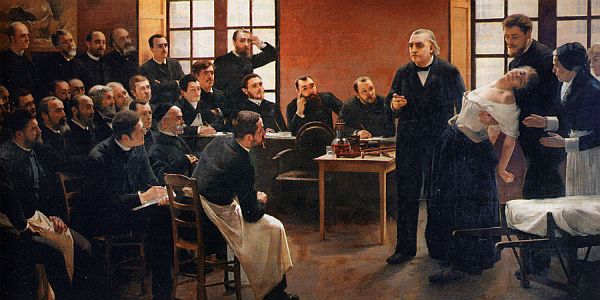
Jean-Martin Charcot, a man ruled by habit, passed through the gates of the Salpêtrière in a coach at exactly the same time every morning. At the end of the day, he departed, also as if by clockwork. The days and weeks and months unfolded according to an unwavering schedule—lectures on Tuesdays, demonstrations on Fridays, outpatient clinics, inpatient visits, meetings, conferences, private time for writing—everything hinged on the comings and goings of the Master. His schedule was rounded out by soirees on Tuesdays held at his impressive art-filled home on the Boulevard Saint-Germain. Writers, artists, politicians, and physicians attended the salon-style evenings. Eventually even young Sigmund Freud, a perpetually miserable and down-at-the-heels student, would be invited.

Despite his charismatic reputation, J.M. Charcot was taciturn, slow of movement and gesture, and almost silent during clinical exams. His students would wait patiently for his pronouncements, usually to be disappointed. Freud idolized Charcot, but found him to be difficult, somewhat remote and inscrutable, his methods opaque. He either could not or would not say how he reached his conclusions, merely that after observing something long enough the nature of it would become clear. According to Pierre Marie (sitting third to Charcot’s right in Andre Brouillet’s painting, above): “More than once his closest pupils heard him answer to their ‘Why?’ or to their ‘How?’ sometimes impatiently, because of his inability to better satisfy them: ‘Oh, why? I cannot tell you, but I know it is this disease, I can sense it.’”

He was not a natural orator. Each week Charcot gave carefully prepared lectures, memorized in full and delivered with faultless diction but almost no theatricality or bravado. He was deliberate, highly organized, and obsessed with classification and description. This obsession extended to his uncanny ability to mimic almost any disorder of speech, posture, tremor, or gait. His entire research enterprise came to revolve around the idea of re-creation. As another assistant, Pierre Janet, recalled, “Everything in his lectures was designed to attract attention and to capture the audience by means of visual and auditory impressions.”

Charcot hired the artist-physician Paul Richer (first on his right in the painting, with a pencil and paper) to reproduce the poses of afflicted patients. Charcot also built a photography studio on the premises and hired the medical photographer Albert Londe (seated on the far left of the painting, wearing an apron and cap) to document exemplary cases. The resulting publication, in three volumes, the Iconographie Photographique de la Salpêtrière, may have greater claims to art than to science, but it was a major breakthrough in the classification and understanding of mental illness.

It is not entirely clear whether the man who inspired the loyalty of students and gratitude of patients was in fact cold and aloof. But the man portrayed in Brouillet’s A Clinical Lesson appears to be more concerned with symptoms than with people, as his reputation would suggest. Charcot is the only man in the painting who is facing away from the patient, the only one who seems more interested in what he is saying than in what is happening behind him. His assistant Joseph Babinski, with his matinee-idol looks, stands center stage, ready to catch the swooning Blanche. Georges Gilles de la Tourette, an odd-looking duck by his own admission, is mercifully rendered in profile. Gilles’s look-alike, Charles Féré, who had just completed an exhaustive study of animal magnetism, sits in rapt attention by the window. Charcot’s son Jean-Baptiste, then a medical student, stands at the rear.

Then there is Charcot himself. He stands with his right hand extended in an odd gesture, probably drawn from life, of thumb and forefinger held out as if indicating a measurement of a few centimeters. According to a contemporary, Félix Platel, “There is something mystical in his gaze, astonishing in a materialist. His gaze is oblique—which is surprising in a mask of Bonaparte. The Roman nose is solid and well defined. It is like the tip of the prow of a Roman galley, destined to cleave the waves, despite wind and tide.” It could also be the gaze of a man beginning to doubt what he is saying.

In the decade of his astounding series of discoveries in neurology, Charcot had become well known in scientific circles, but not beyond. This would change. His decision to tackle hysteria, to lend his considerable reputation to it, brought his fame to another level. He was taking on not just one of the biggest unanswered questions in medicine, but perhaps one of the most intriguing and unsettling aspects of human existence: What makes us who we are, and what can cause us to forget who we are?

Today, epilepsy has a set of diagnostic criteria backed by the technology of electroencephalograms, yet hysteria has only a generic and vague profile. In 1870, hysteria drove diagnosticians to distraction. One physician called it a “mockingbird of nosology” because of its tendency to run the gamut from migraine to paralysis, numbness, fainting, sweats, difficulty in breathing, insomnia, and even nymphomania. No one could say whether it was real or imagined, structural or functional, all in the head or lurking in damaged tissue. Charcot decided to find out. At the end of a decade-long investigation involving scores of patients, he was ready to publish.

In a report of 1878, he rejected the idea of a purely psychological basis for all forms of hysteria. Even though he could not find any anatomical basis for his conclusions, he isolated an extreme form of hysteria as a “physiological disturbance,” or a névrose: a general affliction of the nervous system. Not only was it a true disease, he said, but hysterical attacks had a classic identifying profile consisting of four distinct phases.

In phase one, the so-called tonic phase, the subject exhibits all the signs of a grand mal epileptic seizure: muscle spasms and jerks, then muscle contractures, eyes rolled upward, rapid breathing, and possibly the loss of consciousness. Phase two, the clonic phase, brought on contortions and postures, culminating in a backward arcing of the entire body, with only the feet and head touching the ground. This is the arc-en-circle depicted by Paul Richer in the diagram mounted on the easel behind the last row of viewers in A Clinical Lesson.

The third phase consisted of a series of “attitudes passionnelles,” essentially a range of highly charged emotional states, including ecstasy and even religious rapture, bracketed by sexually suggestive poses. In the final phase, the subject drifted into a languid, sleepy delirium. The phases occurred spontaneously. They were not induced. They could be observed on the ward.

The contractures of the tonic-clonic phases were difficult to distinguish from real epileptic seizures, but Charcot accomplished this by measuring subtle differences in heart rate, body temperature, and other clinical features. Once he had isolated it, he called it la grande hystérie, or grand hysteria. Where others saw feigning, malingering, or attention getting, Charcot insisted he discovered a true disease, one with distinct and recognizable stages. He then set out to see whether he could produce them on command.

Charcot introduced hypnosis in 1878, a year after Blanche’s arrival at the Salpêtrière. His peers were mystified. Charcot seemed to be reviving mesmerism. Bad enough that he had elevated a low-priority condition to the status of a disease. Now he wanted to resurrect a discredited technique invented by a crackpot and adopt it as a clinical tool. Only Charcot could have gotten away with it, and he did, with the instrumental help of Blanche Wittman.

Up to that point, Blanche’s behavior had been intolerable and uncontrollable. Charcot’s assistants diagnosed her with epilepsy, then with hystero-epilepsy, then with grand hysteria. To relieve her convulsions, they tried ovarian compression in the belief that the ovaries were hysterogenic zones. That didn’t work. They tried occupational therapy. She improved. Then they tried hypnotism. Whether it was a survival skill, or due to some sly coaching behind Charcot’s back, Blanche emerged as the ideal hypnotic subject. She became cooperative and responsive, and while under hypnosis could reliably recapitulate the stages of what Charcot decided to call “artificial hysteria.”

At the Salpêtrière, artificial hysteria—hysteria induced by hypnosis, as opposed to natural hysteria—unfolded in three distinct acts. Brouillet’s painting depicts the opening of Act One, the onset of catalepsy, or the maintenance of unnatural  postures. Charcot’s assistant Joseph Babinski, the man supporting Blanche, has just put her into a hypnotic trance, possibly with a gong. Her left fist is clenched and bent into an awkward state of contracture, indicating that she is not merely swooning. In this stage, Babinski will arrange her limbs in various poses, and Blanche will hold those postures indefinitely. She will also become impervious to pain, to the extent that a needle can and will be passed through her arm or hand, eliciting no reaction. In the second stage, lethargy, her body will become limp and fall as though lifeless until Babinski induces muscle contractures, rendering her rigid, as though in a state of rigor mortis.


When posed, Blanche could maintain awkward positions well beyond the ability of a skilled acrobat. The demonstration will reach a climax in the final stage, called somnambulism. This is what the audiences came to see. In a state of extreme suggestibility, Blanche will be induced to act out scenes requiring a full gamut of emotions. She might be told she is being threatened by a dog or a snake, and she will cower, or that she is a general marshaling her troops on the front line of a battle, and she will bark commands. In one demonstration, she was asked to kiss the plaster bust of Franz Joseph Gall, the inventor of phrenology. Upon awakening, she will have no memory of these playacted scenarios and will deny having done them. Yet she will retain some unconscious memories. In one instance, under hypnosis, she was shown a picture of a donkey and told it was a nude photo of her. It shocked her so much that she later smashed the picture when she came across it, even though she professed to have no memory of the hypnotic suggestion.

The crowd appeal of these demonstrations is obvious—they played heavily upon sexual innuendo. Similar demonstrations took place all over Paris in music halls, advertised as hypnotism “à la Charcot.” Some former patients of the Salpêtrière starred in these shows, borrowing heavily from Blanche’s performances. Medical men decried the lay practitioners as irresponsible and dangerous, but it was a case of the pot and the kettle. Charcot wanted to show the extent of a subject’s malleability under hypnosis, but more than that, he claimed to be demonstrating genuine medical pathology.

Not only was hysteria a disease of the body, but so was the susceptibility to hypnotic suggestion. In other words, according to Charcot, only true hysterics could attain the postures and maintain the poses of artificial hysteria. These could not be faked, so they had to be a pathological sign connected to real hysteria, even diagnostic of it. He called it le grand hypnotisme.

In 1882, Charcot presented this theory to the French Academy of Sciences as part of his bid for membership. The academy had already accepted his claim for the status of hysteria as a true disease on the strength of his reputation, although without much enthusiasm. They also signed off on his description of grand hypnotism, despite widespread skepticism. The idea had almost no support outside of Paris. According to Charcot’s critics, his four stages of hysteria and three-act demonstrations of hypnosis could be observed only at the Salpêtrière, or in patients who had lived there and had learned the choreography. Moreover, as Hippolyte Bernheim of the Nancy School argued, there was nothing special about susceptibility to hypnosis. Almost anyone could be hypnotized. Yet Charcot pressed on, buoyed by the success of his public demonstrations.

Why did Charcot medicalize hysteria and hypnosis? There is good evidence that he wanted to demystify all phenomena touted by the church as miracles. He hoped to substitute neurological explanations for religious ones. Auras, visions, imperviousness to pain, miracle cures (especially curing the blind): he wrote all of these off as hysterical symptoms. Epiphanies, the ecstasies of the saints, if not the resurrection itself, could be explained neurologically. Accounts of such religious phenomena, catalogued extensively by Charcot and reenacted onstage by Blanche and other hysterics as attitudes passionnelles, peddled a not-so-subtle form of anticlerical materialism to a hungry audience.

None of this fell too far beyond the pale until Charcot began to lay on a theoretical framework. He had proposed two ideas for which he had no real evidence—grand hysteria and grand hypnotism. Absent an anatomical lesion in the brain to explain them, he fell back on something he called a “dynamic lesion” of the nervous system, a transient and undetectable disruption of brain function. The whole enterprise was poised to fall under the weight of its own improbability. Brouillet’s painting depicts the moment when the public demonstrations became untethered from the clinical practice of medicine.

The first sign of trouble appeared when Alfred Binet, an unpaid intern, quit his post in 1890 and publicly denounced Charcot’s theory. Binet and Charles Féré had recently published an exhaustive history of hypnotism, going back to Mesmer, in which they had summarized and defended both la grande hystérie and le grand hypnotisme. Binet then had a crisis of conscience. The public demonstrations were not genuine, he confessed. The theory of a pathological basis of hysteria could not stand up to facts in evidence. Since the birth of his daughters in 1887, Binet had become increasingly disenchanted with the hijinks perpetrated by the hypnotizers at the Salpêtrière.

In one instance, they tried to induce a somnambulizing Blanche to take off her clothes and imitate taking a bath. According to Georges Gilles de la Tourette, the chief of Charcot’s lab, “When it came time to take off her corset, her entire body stiffened, and we barely had time to intervene in order to avoid an attack of hysteria, which in her case always begins in this fashion.” Binet abandoned neurology in favor of developmental psychology. (He would go on to develop the first intelligence test, the direct progenitor of the Stanford-Binet Intelligence Scale still in use today.)

The end came three years later, in 1893, when Charcot died suddenly on a trip to Nièvre, France, at the age of 67. It was a shock to his colleagues, but not to Charcot himself. A lifelong smoker who did no exercise of any kind, he had already diagnosed his own heart problem, and when stricken he knew exactly what was happening. But he did not know what would happen next. At the announcement of his death, the Paris School he had founded ceased to exist. The theory of la grande hystérie was shelved, the Tuesday and Friday clinics came to an end, and most tellingly, Blanche Wittman never again had a hysterical attack.

This last point, noted by Babinski, settled the matter. At first diagnosed as epileptic, then as hysterical, then treated with hypnosis, electrotherapy, and massage by a team of physicians over a 15-year period, Blanche was finally cured by the departure of the only audience she cared about. She had lost her Svengali.

Jane Avril, the most famous dancer at the Moulin Rouge and a favorite model for Henri Toulouse-Lautrec, wrote a memoir of her 18-month stay in the hysteria ward at the Salpêtrière, among the “stars of hysteria,” as she called them.

             “There were those deranged girls whose ailments named Hysteria consisted, above all, in simulation of it . . . . How much trouble they used to go to in order to capture attention and gain stardom . . . . In my tiny brain, I was astonished  every time to see how such eminent savants could be duped in that way, when I, as insignificant as I was, saw through the farces. I have said to myself since that the great Charcot was aware of what was happening.”

He was, but he had his reasons to keep the show going. Gilles de la Tourette and Babinski did not. With Charcot gone and with the hospital now trying to disassociate itself from his theories, his two senior assistants had an extremely difficult time. Both lost all academic support and were denied chairs in medicine at the Salpêtrière. Gilles de la Tourette continued to defend Charcot’s legacy, but Babinski backed down and conceded the purely psychological basis for all hysterical phenomena. He renamed the condition pithiatisme, from the Greek, meaning curable through persuasion (the name never caught on). Babinski later discovered a curious hardwiring of the human nervous system: the stroking of the sole of the foot in someone with even subtle brain damage causes the big toe to extend upward while the other toes fan out. This is called the Babinski sign and it is performed thousands of times every day as an obligatory part of any neurological examination. No other neurological sign has had its durability or provided such a degree of certainty concerning damage to the nervous system. It made Babinski one of the most famous eponyms in medicine.

Toward the end, even Charcot had privately begun to acknowledge his mistake. Le grand hypnotisme, he conceded, was not a true disorder or even a syndrome. Hypnosis, it was becoming increasingly clear, was a universal susceptibility. Under pressure from almost every corner of the research community, he also backed down from his claims about hysteria as a disease of the body, at least in private. In 1891, he admitted that it was, “for the most part, a mental illness.” But Charcot never openly conceded defeat. The painting shows why. His skepticism did not extend to the handful of star hysterics who packed audiences into his amphitheater each week. The standout was Blanche.

Throughout the 1880s, dancers, magicians’ assistants, models, opera divas, and stage actresses traipsed over to the Salpêtrière to see the one person who embodied the fullest range of emotive performance on the Continent. When Sarah Bernhardt, the on-again, off-again darling of the European theater scene, wished to recapture her popularity upon her return to the Paris stage in 1881, she too headed to the Salpêtrière to see Blanche perform. Jules Claretie, the director of the Théâtre Français, writing for Le Temps in 1884, put it bluntly: “Never has an actor or painter, never a Rachel or a Sarah Bernhardt, Rubens or Raphael, arrived at such a powerful expression. This young girl enacted a series of tableaux that surpassed in its brilliance and power the most sublime efforts by art. One could not dream of a more astonishing model.”

Nonetheless, Blanche Wittman lived at the Salpêtrière as an institutionalized mental patient. She was given menial tasks to perform, including laundry and other cleaning, and she was of course called upon to participate in Charcot’s weekly demonstrations. By all accounts, she was one of the greatest improvisational actors of all time. In her final years, Blanche’s insistence on the legitimacy of her role-playing never waned. After Charcot’s death, she went to work in the Salpêtrière’s photo lab, and soon was transferred to the new radiation lab. Like Marie Curie, completely unaware of the dangers, she was exposed to repeated X-rays. Within a few years she began to undergo a series of necessary amputations, first of digits, then of limbs. As she succumbed to radiation poisoning, she refused to repudiate any aspect of grand hysteria. In her mind, it had been as real as epilepsy.

She died in 1913 at the age of 54, and to the end she defended Charcot. In her final year, Blanche agreed to speak to a reporter about her stint as the Queen of the Hysterics. She claimed to have feigned nothing, arguing that no one could have fooled the great Charcot. “If we were put to sleep, if we had fits, it was because it was impossible for us to do otherwise. Besides, it’s not as though it was pleasant!” When asked if there had been any simulation, she replied sharply, “Simulation! Do you think that it would have been easy to fool Monsieur Charcot? Oh yes, there were certainly some jokers who tried! He would look them straight in the eye and say, ‘Be still!’ ”

The Salon of 1887 ended after two months. The French government bought Un Leçon Clinique and shipped it off to Nice, where it went on display for a number of years before being consigned to storage. It was later cleaned and hung in a neurological hospital in Lyon, out of sight, but not out of mind. In 1887, Eugène Pirodon made an engraving of the painting, and this small reproduction sold very well. It brought the image to the attention of millions. Sigmund Freud purchased a copy and hung it in his examination room in Vienna, and later, after relocating to London, he did the same. Either the painting or the engraving has become the stock image of a quaint form of medical credulity, on par with phrenological heads and orgone boxes. Unfortunately for medical science and for the man himself, it is how Charcot is remembered. He didn’t live long enough to ward off that impression.

The meaning of any work of art changes over time. Standing in front of Brouillet’s painting today, one finds it difficult to appreciate what it meant to viewers when it debuted. Charcot saw psychiatry and neurology as cooperative specialties. They should, he wrote, “philosophically speaking remain associated with each other by insoluble ties.” The painting marks the moment when that hope was dashed, and the two fell apart in the most confounding way, partly because of Charcot himself—his role in creating the very scene Brouillet depicted—and in a small yet significant way, partly because Brouillet chose to depict it at all. He unwittingly immortalized a catastrophic failure.

Charcot believed he could separate mind and brain by treating the human subject as an automaton, as a sensorimotor machine. Instead of visiting his patients on the wards, he had them brought to his office. Instead of interviewing them, he examined their bodies in silence. Instead of interacting with them, he let his assistants do it. Onstage, he treated them like servants, speaking freely as if they were not present and could not hear. Charcot thought he was removing any potential bias this way, and in doing so, he seems to have overlooked the mind entirely. Blanche Wittman and his other subjects heard everything, unconsciously processed it, and fed it back in a finely tuned performance.

Hypnosis does work as a short-term intervention. Hardly anyone uses it anymore in a hospital setting because it is paternalistic and exposes a subject’s vulnerability, although it remains popular in alternative medicine. People undergo hypnosis today for the same reasons therapists used it a century ago. It can help people break habits they may or may not be aware of. It makes use of the subject’s suggestibility, which exists along a spectrum of personality types. Had Charcot used it strictly for the purpose of artificially producing symptoms of hysteria and epilepsy, had he not invested himself in what most of his contemporaries viewed as sideshow antics, he would command greater respect today.

But Brouillet’s painting, perhaps more than anything Charcot himself ever did, exposed him in flagrante, duping himself in front of a double audience—the one portrayed in the painting and the one viewing it. Had it been an isolated incident of a great scientist exceeding the bounds of the scientific method, the painting might not merit all that much attention. But there is more to be found in it, facts unknown to the viewers of 1887, and a crowning irony even Charcot overlooked. A real neurological disease did indeed lurk behind many of the hysterical symptoms he so painstakingly observed, and he missed it, even though all along it was right there under his Napoleonic nose.


From  : How the Brain Lost Its Mind by Allan H. Ropper, MD and Brian David Burrell, published by Avery, an imprint of Penguin Random House, 2019.


In Search of Hysteria: The Man Who Thought He Could Define Madness. By  By Allan H. Ropper and Brian Burrell. LitHub, September 20, 2019.


  Most of us have heard of Anton Mesmer and Jean Charcot. They were some of the first to dabble in the “mind cure” using hypnosis and the power of suggestion. But what role did syphilis play in the development of psychology?  Michael A. Britt talks with  Dr. Allan Ropper and Brian David Burrell about their new book called “How the Brain Lost Its Mind”.


Ep 332,  The Psych Files , September 3, 2019


Penguin Random House


Neurology and psychiatry both struggle to engage with disorders that elude neat classification. Neurologists deal with well-characterized biological conditions such as Huntington’s disease. But they also treat ‘in-between’ disorders such as Tourette’s syndrome (characterized by involuntary vocalizations or movements), and see people with physical symptoms that are ultimately revealed as strictly psychological. Most psychiatrists, for their part, work with the conviction that all mental illness has a biological basis. Yet they insist that the content of mental suffering matters, and that their task is to heal minds, not just fix brains.

These disciplines might seem to have a great deal to say to one another. Instead, they labour mostly in isolation. How did that happen, and what are the consequences? In their thoughtful and engaging book, How the Brain Lost its Mind, neurologist Allan Ropper and writer–mathematician Brian Burrell tackle that question in an original way: by exploring two medical histories that are generally told separately.

One concerns neurosyphilis, a late-stage form of the sexually transmitted disease syphilis. The other centres on hysteria, a disorder in which psychological stresses are expressed through a range of physical symptoms.

In the nineteenth century, neurosyphilis was one of the most ubiquitous and fatal forms of degenerative mental illness known to psychiatry. Termed general paralysis of the insane, it was widely supposed by early practitioners to be caused by bad heredity, ‘weak character’ or moral turpitude. That changed in 1913, when Japanese bacteriologist Hideyo Noguchi, working at Rockefeller University in New York City, found traces of Treponema pallidum — the spiral-shaped bacterium responsible for syphilis — in the brains of deceased people with general paralysis. At the time, as many as one-third of patients in mental hospitals had symptoms that could now be clearly traced back to syphilis.

Hysteria, originally thought to be a gynaecological condition affecting only women, was recast as neurological in part through the efforts of distinguished nineteenth-century French neurologist Jean-Martin Charcot. The symptoms he saw in his patients — partial paralysis, convulsions, vision problems and tics — certainly looked neurological. By the final years of the century, however, critics of Charcot and even some of his former loyal students (including Joseph Babinski, who discovered the ‘Babinski reflex’ in infants) had concluded that the condition was a kind of fraud — a psychological disorder masquerading as a neurological one. Babinski even proposed that neurology abandon the term hysteria altogether and replace it with the term ‘pithiatism’: a condition produced through persuasive suggestion and eliminated in the same way. As the authors note, hysteria turned out to be “a profound mind problem that makes the sufferer act as if he or she were diseased”. Neurosyphilis, meanwhile, was a “brain disease that can produce a simulacrum of mental illness”.


According to How the Brain Lost its Mind, the unmasking of hysteria as psychological gave us Sigmund Freud and his new field of psychoanalysis. It also led, eventually, to the post-war neo-Freudian conceit that problematic behaviours with no associated disease should nevertheless be treated as medical. But while psychological understanding of hysteria transformed psychiatry, neurologists still struggled to help patients with symptoms that a previous generation would have called hysterical. As many as 30% of the cases seen in neurology departments elude organic explanation even today, the authors tell us. And the field does not seem much better equipped to make sense of such cases than it was in Charcot’s time.

Meanwhile, the discovery that general paralysis was a symptom of a sexually transmitted disease galvanized subsequent generations of psychiatrists. They embarked on a quest, still largely unfulfilled, to find biological foundations for other mental disorders, especially grave conditions such as schizophrenia. Only later would it become clear, as the authors point out, that neurosyphilis is “an unsuitable model for anything clearly unrelated to infection or inflammation in the frontal and temporal lobe regions”.

Although the histories of these two conditions are normally seen as separate, Ropper and Burrell make clear that they interacted in a range of ways. Early on, both conditions were widely recognized as tricksters or “imitators” of other maladies, including each other. Some cases of syphilis were almost certainly misdiagnosed as hysteria, and vice versa. But even more significantly, sex — and profound anxieties about it — had a deep role in patients’ experience of both disorders.

Ropper and Burrell suggest that this was no coincidence. The age of Freud was also the age of syphilis. Freud, and psychoanalysis more generally, focused on suppressed sexual fantasies and traumas because, for patients then, the shameful and terrifying spectre of syphilis hung over every sexual encounter like “the sword of Damocles” .

Ultimately, the authors insist, these tangled tales left behind a two-fold legacy. The history of neurosyphilis bequeathed a tendency to indulge in excessive reductionism. That of hysteria encouraged a tendency to indulge in excessive psychologism. And both psychiatry and neurology were left the poorer. As the authors argue, the majority of patients seen by practitioners in both fields are afflicted with what they call “in-between states” — forms of distress informed by both biology and biography. The book is in this sense a plea for neurology and psychiatry to repair ruptures, join forces and do justice to the experiences of their patients.

How the Brain Lost its Mind offers a historical narrative that is mostly nuanced and often moving. Particularly notable is its focus on patient experience, and how people with syphilis talked about their suffering. There are occasional slips into historical clichés that are inaccurate. At one point, the authors claim that people with mental illnesses were “assumed to be possessed by evil spirits” right into the nineteenth century, “when medical science chased away the spirits”. In fact, medical understandings of mental disorders routinely coexisted with religious, moral and supernatural ones as early as the sixteenth century. (Medical theories in that era drew on humoral theory, which attributed both physical and mental illnesses to imbalances in the four bodily ‘humours’.)

Ropper and Burrell are powerfully focused on giving neurosyphilis its due as psychiatry’s original “calling card, the core of its legitimacy”, and rightfully so. I did feel, however, that they were sometimes tempted to overstate its importance in the birth of biological thinking in psychiatry. Neurosyphilis mattered, but there were other intellectual factors and forces — anatomical research, reflex physiology, evolutionary theory, toxicology and biochemistry — that drove psychiatry’s biological hopes over the years as well.

These small points aside, How the Brain Lost its Mind is a rich, compassionate and passionate book that deserves a wide audience. Sceptical of the excesses of both psychological and biological reductionism, it is a refreshing call for an intellectual reset and disciplinary rapprochement. I hope it inspires much-needed cross-disciplinary debates and conversations.

A tale of two disorders: syphilis, hysteria and the struggle to treat mental illness. By Anne Harrington. Nature, August  19, 2019.


Also of interest : 


From the mid-19th century until the 1950s, when the advent of antibiotics revolutionized tuberculosis treatment, the primary treatment for the disease was the Luft-Liegekur, or open-air rest cure. It was in the sanatorium, according to the German physician Hermann Brehmer, that a strict regimen of diet, light exercise, outdoor exposure, and rest could successfully cure TB infection.

Both furniture makers and physicians capitalized on this “cure,” seeking numerous patents for improvements and variations upon the adjustable chaise-longue, a reclining chair with a long seat, and the schlafsofa, a sleep sofa that was a fixture of sanatoria throughout Europe and the U.S. and eventually became a medical icon throughout the West. As a physician who trained during a period when TB was a leading medical scourge, Sigmund Freud would have been steeped in the culture of the sanatorium and the Luft-Liegekur.

It’s no surprise, then, that along with hypnosis, Freud’s early forays into psychological medicine included the practice of treatments that sought to import ideals of comfort and healthy relaxation derived from the long dominance of the open-air rest cure. Among other practices, he employed massage and cutaneous electrotherapy, including the use of the faradic brush, an electric brush used to stimulate the skin.

In “An Autobiographical Study,” Freud writes candidly that at the start of his clinical career, “My therapeutic arsenal contained only two weapons, electrotherapy and hypnotism, for prescribing a visit to a hydropathic establishment after a single consultation was an inadequate source of income.” He adds that his knowledge of electrotherapy was derived from neurologist Wilhelm Erb’s “Handbuch der Electrotherapie,” a work cited three times in the “Standard Edition of the Complete Psychological Works of Sigmund Freud.” In an 1888 encyclopedia article on “hysteria,” meanwhile, Freud enthusiastically endorses the rest cure, consisting, as he describes it, of “isolation in absolute quiet with a systematic application of massage and general faradizations.”

Hydrotherapy and phototherapy, too, were traditional, asylum-based treatments for hysteria and other mental maladies that Freud, like all practitioners of his generation, was well aware of. The latter, which made use of ultraviolet irradiation, was considered an effective treatment for hysteria, epilepsy, neurasthenia, migraine, melancholia, mania, insomnia, and a wide variety of other psychiatric, neurological, and general medical disorders.

19th-century asylum keepers, psychologists, and university-based psychiatrists employed a host of somatic and suggestive therapies to treat these conditions. These therapies included hypnosis, hydrotherapy, cutaneous electrotherapy, phototherapy, diet and rest cures, massage, and, with the introduction of chemically prepared (as opposed to plant-derived) sedatives such as chloral hydrate in 1869, some early efforts at modern psychopharmacology. Since these treatment modalities (with the exception of psychopharmacology) usually required recumbent posture, it seems reasonable to infer that their popularity promoted an association in the minds of patients and practitioners alike between recumbence and cure. It would be glib to speak simply of submission to medical authority when many of these treatments sought to import ideals of domestic ease and comfort into the psychiatric setting.

Trance states were initially construed to be a form of “neurohypnotism” or “nervous sleep,” so it made sense for practitioners to have furniture suitable for reclining, sleeping, swooning, or becoming entranced while recumbent. During his 1885–1886 sojourn in Paris at the Salpêtrière Hospital, Freud learned about hypnosis in the treatment of hysteria from the world-famous neurologist Jean-Martin Charcot. Upon his return to Vienna, as he embarked upon the private practice of clinical neurology specializing in the treatment of nervous and mental disorders, Freud settled into a 10-year dalliance with hypnosis. At the height of Charcot’s rivalry with Hippolyte Bernheim in the 1880s and 1890s over suggestibility and the nature of hypnosis, Freud translated both men’s work into German and wrote prefaces to the three volumes of their writings he translated. Bernheim and his followers in the Nancy school of hypnotists, including August Forel, Leopold Löwenfeld, Oskar Vogt, and Otto Wetterstrand, emphasized the need for a calm, quiet environment for their treatments and encouraged patients to fall asleep during hypnotic sessions.

The private practice of German hypnosis doctors, among them some of the leading contributors to the Zeitschrift für Hypnotismus (Journal of Hypnotism), was dominated by this approach. This development coincided with the rise of office-based private practice in Germany and Austria, and the emergence of the tradition of the reserved office hour. Freud’s early practice of hypnosis was, in fact, modeled upon the Nancy school’s emphasis on recumbence and sleep.

Thus, the use of recumbent posture in psychoanalysis evolved in part from these traditions of sanatorium- and asylum-based somatic therapies as well as from the broader cultural backdrop of changing notions of comfort and interiority, eventuating in what I call the medicalization of comfort. The illustration above nicely illustrates this point. In this image, published in Harper’s Magazine in 1878, the hospitalized patient is seen resting comfortably in a recliner that closely resembles the standard chaise-longue of the TB sanatorium. His concerned family members attend him in seated comfort, one of them in what appears to be a rocking chair. The scene is one of institutionalized domesticity. At least for the private patient, some trappings of the comforts of home accompany him during his hospital stay. His recumbent posture signifies how, by the time Freud began to develop his ideas about the optimal treatment setting for psychoanalysis, notions of healing and comfort had thoroughly melded.

This article is an adaptation from the book :  On the Couch: A Repressed History of the Analytic Couch from Plato to Freud. By Nathan Karvis, published by The MIT Press, September 1, 2017

 Of Freud, 19th-Century Therapeutics, and Recumbent Posture. By  Nathan Kravis.  The MIT Press Reader,  September 23, 2019. 


Although the term “hysteria” isn’t used in medical diagnoses today, it was once applied to an astonishingly wide range of mental and physical symptoms, primarily in women. Even the disorder’s name is strongly gendered: “hysteria” is derived from the ancient Greek word for “uterus”; medical texts of that period attributed the affliction to a displaced, or “wandering,” womb.

Hysteria has a long history in medicine, surfacing in different cultures at different times. Its study was widely popularized in the late 19th century, especially in France, where the neurologist Jean-Martin Charcot set up a clinic for hysterics at La Salpêtrière hospital in Paris. Although little known today, Charcot’s experiments with young “hysterical” women became a touchstone both for Sigmund Freud’s early work and, later, for the founding principles of the Surrealist movement.

Hysteria was considered to be a highly complex condition: It was generally thought of as a mental disorder accompanied by physical symptoms such as fits. Historian Lisa Appignanesi writes in her 2007 book Mad, Bad and Sad: A History of Women and the Mind Doctors that in Charcot’s France, the term “described a sexualized madness full of contradictions, one which could play all feminine parts and take on a dizzying variety of symptoms, though none of them had any real detectable base in the body.” (Charcot admitted that men also suffered from hysteria, but he argued that these cases were generally caused by traumatic accidents, rather than by a gendered predisposition.)

Charcot’s research was made famous through the ailing individuals who lived at La Salpêtrière and whose symptoms were displayed and analyzed in sessions open to members of the public. Charcot became a celebrity doctor, turning his semi-staged diagnostic sessions into spectacles for (masculine) public consumption. The methods of diagnosis and treatment at La Salpêtrière were all highly visual, creating a sort of theater of hysteria, in which the often young and pretty “hysterics” acted out their symptoms as if by rote.

One of Charcot’s innovations was to set up a photography studio at La Salpêtrière in order to document the physical symptoms of his patients, such as the dramatic and beautiful Augustine. These images were then widely disseminated in Paul Regnard and Désiré Bourneville’s Iconographie Photographique de La Salpêtrière (1876–80), an influential book of medical photography. Presented as a scientifically accurate visual document, the book had a twofold effect: For male readers, it provided a visual record of the attractive and often scantily clad hysterics, while for some female consumers, it became a manual of hysteria and its symptoms to be mimicked, reinforcing the stereotypes associated with the condition.

In the photographs, the camera takes the position of a detached voyeur, with the subjects only looking at the lens and engaging directly with the image-making when they are photographed in their “normal” or “sane” moments. When engaged in the throes of a hysterical attack, the women are apparently oblivious of the camera’s presence, revealing parts of their body that Victorian decency would otherwise hide from view.

In a photograph depicting the arc de cercle, or the “arch of hysteria,” which was believed to show the anguish of the condition—and which Louise Bourgeois would later famously subvert in bronze with a masculine form—the woman contorts her body so that she is resting on her feet and shoulders. Her head is hidden, but her shapely legs and feet are almost completely revealed. The relative distance of the camera and the profiling of the subject suggest that this photograph is taken to give the impression of scientific “truth,” but also simultaneously to place the viewer at a voyeuristic remove, for both scientific study and visual titillation.

Freud was a student of Charcot, and achieved renown for his Studies in Hysteria (1893–95). Charcot’s hysterics, Freud’s work, and the Salpêtrière photographs together provided a wealth of cultural materials to inform the work of Surrealist artists. In 1928, French writers André Breton and Louis Aragon published an article in the journal La Révolution Surréaliste that contained photographs of Salpêtrière hysteric Augustine and expressed the desire “to celebrate here the quinquagenary of hysteria, the greatest poetic discovery of the end of the nineteenth century.” Breton and Aragon continue, praising “youthful hysterics” and the “delightful” Augustine. “Hysteria is not a pathological phenomenon and can be considered in every respect a supreme means of expression,” they conclude. An excerpt from Breton’s novel Nadja, published that year, appears in the same issue of La Révolution Surréaliste. In this book, Breton famously wrote “Beauty will be CONVULSIVE or it will not be,” suggesting that the throes of a hysterical attack happen in a state of sexualized, uninhibited passion.


Breton’s advocation of the “convulsive” was taken as a guiding principle for Surrealist art. Espousing the madness and “paranoiac” sensibilities he believed were embodied by hysteria, Salvador Dalí took up the visual tropes of the Salpêtrière photographs in a number of his works.


The Phenomenon of Ecstasy (1933) is a photo collage depicting the faces of “hysterical” women in the grip of what looks more like erotic pleasure than pain. His paintings and drawings—such as Invisible Lion, Horse, Sleeping Woman (1930)—also repeatedly present women arching their bodies in a way that resembles the arc de cercle demonstrated by Charcot’s hysterics. In one drawing, Poems Secrets Nude with Snail (1967), a female subject with her face partially hidden arches her back to catch the milk from her lactating breasts in her mouth. With mutilated bodies, exaggerated sexual features, and closed eyes, Dalí’s women are vulnerable to the viewer’s gaze, disempowered by their apparent enslavement to their uncontrollable gendered characteristics.

The fascination with hysteria lasted throughout the key period of the Surrealists’ success. The invitation to the opening event of the 1938 Exposition Internationale du Surréalisme (overseen by Marcel Duchamp) promised visitors a night of l’hysterie. During the evening, the experimental collaborative exhibition was used as a stage for a performance by the actress Hélène Vanel, trained for the occasion by Dalí and Wolfgang Paalen. She jumped from a pile of pillows, naked and chained, before splashing in a puddle and eventually recreating a hysterical attack on a bed, linking the notion of the submissive female body with mental instability and dependency.

The Surrealists saw hysteria as a state in which poetic expression could run free, at the expense of women who were not given a voice, but instead objectified. Decades later, in 1980, hysteria was finally removed from the third edition of the Diagnostic and Statistical Manual of Mental Disorders. But for a significant period of time, this now-supposedly-defunct disease of the mind was explained away as a fundamental condition of being female, and exploited by scientists and artists alike.

The Dark Side of Surrealism That Exploited Women’s “Hysteria”.  By Anna Soutter. Artsy, January 18, 2019.