Showing posts with label American pop music. Show all posts

17/05/2023

Remembering Tom Verlaine, Guitarist


C’est l’histoire d’un loser éternel devenu un winner, et pour toujours. Un mec totalement paumé dans son époque qui aura travaillé son style dans l’ombre durant près de dix ans. A l’origine de la création du punk-rock avant tout le monde, il aura puisé au plus profond de son être et de son âme pour transformer le banal en or en donnant naissance à l’une des mutations les plus brillantes de la révolution atomique. En provenance d’une planète inconnue, il vient de repartir dans le cosmos, l’occasion de lui rendre un hommage aussi vibrant que le furent ses tripes.
 
Absolument rien ne prédestinait Thomas Joseph Miller a une grande carrière. Non, vraiment, rien de rien. Ou peut-être si, justement. Apparu sur Terre en 1949 à la toute fin de la première décennie des baby-boomers, il vit la British Invasion de 65/66 et la révolution psychédélique de 66/67 avec autant d’intérêt qu’un gosse face à une assiette d’épinards. Sauf qu’il n’est plus du tout un gosse.. A titre de comparaison, le fondateur de la critique rock’n’roll, Grégory Alan Shaw, né également en 1949, s’est d’abord pris les Beatles en pleine gueule avant de plonger la tête la première dans le rock gavé au LSD. A sa décharge, il se trouvait sur la côte Est, là où il ne se passait pas grand chose, alors que Greg était à l’ouest. Mais quand même… Alors qu’une bonne partie des jeunes New-Yorkais filent en 1967 au festival de Monterey, qui était au passage bien plus fun que celui de Woodstock, Thomas Joseph qui a donc 18 ans, l’âge idéal pour aller faire le con dans la boue avec le pénis à l’air, préfère rester terré chez lui, à lire des vieux poètes obscurs du dix-neuvième siècle. Des vieux poètes obscurs, qui plus est français : Paul Verlaine en tête, qui lui donnera, dans un avenir incertain, peut-être son nom..
 
Totalement à la masse, celui qui semble venir d’une planète inconnue n’a pas la chance de découvrir, comme Lester Bangs et une trentaine de personnes, l’OVNI du Velvet Underground au moment où il existe vraiment, et mis à part un rare titre des Rolling stones, en l’occurrence 19th Nervous Breakdown qui est un des seuls morceaux de sixties-rock à trouver grâce à ses yeux en 1965, il s’enfonce dans la nostalgie d’une époque révolue, avant de peut-être en inventer une autre mais ça, personne ne le sait encore. Obsessionnel de be-bop et de jazz-fou, il se prend une claque monstre avec stan Getz puis John Coltrane, de quoi décoller avec son vaisseau spatial pour une autre planète déjà ringarde, celle des exaltées fifties, et donc de ne plus poser le pied sur celle des sixties. Encore plus savoureux, le gamin n’a même pas de guitare entre les mains, et passe ses journées à glander, jonglant entre ses disques de Coltrane, ses carnets de poésie et son saxophone avec lequel on l’imagine essayer d’imiter, très mal, le king de l’improvisation cuivrée. Une activité ratée qui aura son importance par la suite. Pour l’heure, Tom qui a atterri au beau milieu d’un bled paumé du Delaware est envoyé dans un bled encore plus paumé du Delaware, Hockessin, une des cités-dortoirs les plus chiantes de l’Amérique où sommeille une dizaine de milliers de gens sans aucune histoire à raconter. Un village inutile qui aurait, selon Wikipédia, tout de même abrité Cab Calloway, ainsi que la première femme de l’actuel président Joe Biden. Tiens donc.
 
« Aucun talent n’est caché »
 
Tom Verlaine, pardon, Thomas Joseph Miller, n’est même pas cité dans la liste. Et pourtant, il s’en est passé des choses pour Tommy à Hockessin. Inscrit au lycée privé de sanford, qu’on imagine aussi chiant que le bled, il continue de zoner sec et rate le baccalauréat local, qui ne devait pas être bien compliqué, qui plus est pour une personne de son talent, et de sa classe. Enfin, à cet instant précis, le jeune adolescent – on ne devient adulte qu’à 21 ans aux États-Unis, vous le savez aussi bien que moi – n’a aucun talent réel. Tout juste crachote-t-il quelques solos mal dégourdis avec son instrument à cuivre jaune, et griffonne-t-il des bribes de poésie dans son carnet à l’odeur de moisi. Le slogan de l’école « No Talent Lies Latent» (ou « Aucun talent n’est caché » en VF) n’a désespérément rien de prophétique, ou peut-être justement que si, car cet enfant est perdu, complètement perdu, et ne réussira rien de mieux dans sa vie que d’avoir raté son BAC, comme tant d’autres losers avant lui. Mais heureusement pour lui, si, il a un talent. Le talent d’être au mauvais endroit, au mauvais moment, et c’est déjà énorme : dans cette école de gros ploucs, il rencontre un autre perdant, du nom de Richard Lester Meyers, qui vient de rater son examen de passage à l’université. Tiens donc, exactement comme lui. Et comme les choses sont bien finalement assez bien faites, Tom vient d’acheter sa première guitare. Vous avez bien compris : un extra-terrestre complètement paumé, pseudo poète, accro au be-bop et passé totalement à côté de la décennie qui a révolutionné une première fois la guitare électrique, vient de s’acheter une guitare électrique.
 
Suivant la trace poudrée de son héros John Coltrane, mais aussi de tant d’autres nazes avant lui, il s’envole pour New-York, vers la fin des sixties. La ville de tous les possibles, mais aussi de tous les ratages. Un peu comme Los Angeles, et Paris, où des milliers de pseudo-artistes viennent se casser les dents, avant de sombrer dans la restauration pour servir ceux qui ont réussi, à leur place. Toujours pas en accord, mais alors pas du tout, avec la musique de son temps, la comète T.J.M reste enfermée chez elle à tricoter avec son manche, comme une vieille, mais en foutant un peu plus de bordel. Après avoir provoqué un incendie criminel on ne sait où, alors qu’ils erraient sous la pleine lune, Thomas et Richard signent un pacte entre leurs deux âmes damnées; ils emménagent ensemble à l’intérieur de la Grosse Pomme, pourrie de l’intérieur par quelques hippies bloqués sur la même putain de note, depuis des années. Assommés par l’ennui du rock planant, ils créent leur propre monde pour éviter le suicide, tuant le temps entre fureur poétique à la Jack Kerouac sur une antique machine à écrire, gavage de Jean-Luc Godard dans des salles vraiment obscures et expérimentations infinies sur guitare électrique, dans une colocation de couilles qui pue la mort et la défaite.
 
Il y a tout de même un point positif à s’acheter un instrument à cordes électriques alors qu’on déteste la plupart des groupes de rock existants, et qu’on écoute du Miles Davis et du hard-bop à longueur de journée : on ne joue pas exactement la même chose que les autres, voire pas du tout. Thomas Miller, qui vient de se renommer Tom Verlaine en référence à vous savez qui, va passer près de dix ans à peaufiner son style, et ses punchlines, dans sa piaule à l’odeur immonde. Au même moment, celui qui déteste par-dessus tout les hippies gobe son premier buvard pour tuer l’ennui, un instant de détresse cosmique qu’il décrit en des termes prophétiques : « J’ai eu mon premier trip vendredi. C’était horrible, je me suis mis à penser à tout un tas de trucs négatifs sur pleins de choses ». Il ne le sait évidemment pas encore, mais il vient de signer un pacte définitif avec son destin : ce dernier se fera contre les chevelus à deux de tension.
 
Bienvenue en enfer


Bien plus intéressés par les poètes cramés du dix-neuvième siècle, qui inventèrent au passage la contre-culture, et par les surréalistes du début du vingtième siècle, dont André Breton, qui renouvelèrent celle-ci avec un mélange d’absurdité et de radicalité novatrices, ils s’apprêtent à eux-mêmes prendre le relais de ces derniers, après l’échec cuisant des hippies qui avaient emmené la contre-culture dans la poubelle créé par un certain Allen Ginsberg mais ça, ils ne le savent pas encore. Toujours pas mal dans le vague, Tom Verlaine – sa signature mystique – est suivi par Richard qui abandonne son blaze de minable pour un autre blaze de looser véner, Richard Hell, qui tient autant de la référence à Rimbaud et sa saison en Enfer que de la révérence au génie de l’enfer Charles Baudelaire dont on ne doit pas prononcer le nom.
Sirotant du café froid, et bouffant des clopes pour se nourrir, ils zonent dans la zone de l’East-Village new-yorkais, récitant leurs textes d’apprentis poètes sur des bancs remplis de merdes d’oiseau. Vivant dans un monde qui n’existe plus, comme beaucoup de jeunes perdus, avant d’inventer un monde qui n’existe pas encore, ils tentent de se faire un nom sur la scène littéraire, et publient un recueil drolatique, en 1971. Celui-ci se trouve dans la dernière édition du fanzine poétique de Hell, Genesis : Grasp, qui n’a donc rien à voir avec le groupe Genesis que les deux détestent, comme la plupart des groupes de la planète Terre, mais avec la «compréhension de la genèse», comme Google Traduction nous l’a soufflé, qui fascine un peu plus ces deux zozos. Drôlatique, et totalement perché, le recueil est signé par une mystérieuse Theresa stern, qui n’est autre que la signature commune de Verlaine et Hell, qui prennent un plaisir malin à brouiller les pistes, à faire les cons, et à s’inventer une vie de femme dominatrice. Malheureusement pour cette chère Theresa, elle n’aura absolument aucun succès, mais au moins, elle les aura fait bien marrer, et nous aussi.
 
Neon Boys
 
Finie la lose poétique : place à la loose punk car comme le dit l’adage, il faut tomber beaucoup avant de réussir, mais vraiment. S’il a plutôt suivi son pote de l’enfer dans la tombe de la poésie, cette-fois ci c’est Tommy qui va tirer les ficelles de l’échec, et reprendre le contrôle de cette putain d’histoire. Nanti de sa Fender Jazzmaster qu’il a payé 95 dollars, il force Richie à faire de même en lui demandant, gentiment, de s’acheter une putain de guitare. Ça sera une Danelectro, la guitare du pauvre qui fut utilisée par Jimi Hendrix et Jimmy Page, deux mecs cools mais pas vraiment au niveau en termes de punch, et de haine. Verlaine et Hell carburent à une autre dope, celle du garage sixties qu’ils écoutent au Max’s Kansas City en se pintant la tronche, et surtout celle du Velvet Underground, qu’ils viennent de découvrir; soit le premier groupe de rock à avoir exploré le côté obscur de la force, au Max’s Kansas City justement, et dont ils glisseront certains éléments dans leur futur shaker magique.
 
Hell voue un culte aux stooges, qui ont récemment poussé l’agressivité électrique à un niveau supérieur, avec le MC5. Inspiré par ce son de la cave, par leur instinct et par leur envie de détruire l’ennui intersidéral du rock à cheveux longs, le duo forme les Neon Boys, un trio de mâles pas dominants qui rejoint ce club alors très fermé de décérébrés du rock’n’roll. Le mot «punk» fait déjà partie de l’auto-glorification de quelques rares rock-critics – dont le légendaire Greg Shaw – mais pour qualifier le vieux garage à papi, et alors que la révolution à crêtes est encore aussi loin que Pluton, il s’agit déjà pour tous ces groupes, peu ou prou, de véritable punk-rock : une fougue juvénile éternelle, mais d’une violence nouvelle, nimbée d’un nihilisme puissant. Cette génération est marquée par la lose, mais dans ce ratage cuisant, ils ne sont pas non plus tous au même niveau. Comparé à l’iguane Iggy Pop qui montre son pénis en public mais sonne encore un peu trop sixties, et aux New York Dolls qui s’habillent en meuf et jouent en réalité une version totalement psychotique des Rolling stones, le son des Boys est peut-être un cran moins violent, mais il est beaucoup plus inventif, instinctif, plus sale, plus bancal, plus nerveux, plus punk en définitif. Les mecs ne savent pas jouer, et ils vous emmerdent. Mais  Verlaine qui peaufine son style dans l’ombre depuis des années voit déjà plus loin : il ne veut pas simplement être le premier, il veut aussi être le meilleur. Lui et sa bande clôturent ce disque mythique par une version jouissive de la révolution atomique : plus mélodique, plus moderne, et plus belle, tout simplement. Et oui, déjà, le futur du futur est annoncé, pendant que Marc Bolan assure la transition avec le rock androgyne, ou glam-rock. Le romantisme expérimental de Verlaine à la guitare solo commence à poindre, travaillé loin de l’agitation de son époque maudite, mais on est encore à des années lumière de l’Everest du rock et du punk qu’il sera le premier, et le dernier, à atteindre. Après avoir inventé la bombe avec d’autres paumés, Tom veut déjà l’enrichir avec un nouveau type d’uranium, et bazarde les Neon au milieu de l’année 1973.
 
Casting de bras pas cassés


Afin de commencer à travailler sa mayonnaise novatrice, Tommy n’oublie pas de recruter un dernier ingrédient, Mister Richard Lloyd, un autre raté du lycée qui déboule à la deuxième guitare pour tenir la baraque rythmique avec lui, et lui permettre de chier des leads quand il en ressent l’envie pressante. Déterminée à tuer la lose et à faire quelque chose de sa vie sur la Pomme Bleue, la comète T.J.M s’enferme avec sa bande d’illettrés durant tout l’automne et tout l’hiver 73-74. Une période embryonnaire mais décisive, où ils turbinent en cuisine comme ils ne l’ont peut-être jamais fait, 6 heures par jour durant six mois, à part bien sûr Tom qui bûche en solitaire depuis cinq ans à la préparation de sa recette mutante. Le travail est long, ardu, mais il va payer, et vite.
 
L’écoute des démos issues de ces répétitions infinies est sans appel. Comme l’avaient fait Elvis, et les Beatles, la recette est si simple que personne n’y avait pensé avant eux : la nervosité extrême, comme un fil électrique tendu au milieu du vide ou un accélérateur de crise cardiaque, avec une puissance mélodique et romantique fusionnant l’art de la pop-song parfaite et l’existence totale de Paul Verlaine et Charles Baudelaire. On vous garde les meilleures punchlines pour la suite, comme Tom a gardé secrètes ses chansons, qu’il écrivait à 90%, durant encore trois ans. Une éternité, passée à peaufiner dans les moindres détails ses pépites extra-galactiques telles que Prove It, Friction, et Marquee Moon, toutes inventées en 1973, pour que l’explosion à venir soit la plus violente, et la plus belle possible.
 
Un envoyé spécial de Rock News, le magazine punk lancé avant même l’apparition réelle du mot «punk», et donc le premier, s’est rendu sur place pour nous. Il s’appelle Michel Esteban. Il était à New-York au passage entre l’année 74 et 75. Il a tout vu. Absolument tout. Un concert biblique, avec la bande de Verlaine en première partie des New-York-Dolls. Oui, vous avez bien lu. D’un côté, le premier groupe managé par Malcolm McLaren, qui tenta un coup de poker en déguisant les «premiers punks» en troupe de glam-rock, le genre qui était alors à la mode. Raté, comme il ratera l’explosion de la bombe atomique basique, qu’il répliquera comme un naze en Angleterre. Et de l’autre, Tom et sa bande de cramés romantiques, qui avaient déjà mis un taquet aux Dolls avec les Neon Boys, et qui les ridiculisent ce soir-là. Esteban qui nous a téléphoné depuis la Thaïlande est encore tout émoustillé par cet instant, qui a changé la pop-culture à jamais:
 
“L’intensité saturait, course furieuse vers une extase musicale. Ne restait dans la salle qu’une cinquantaine de personnes pour assister à cette version novatrice de Sister Ray. Une apothéose”.
 
Totalement accro à cette dope venue d’une autre contrée stellaire, il écrit même le live-report le moins chiant de la création, dans son canard lu par à peu près dix salopards:
 
« Tom Verlaine, ce zombie magnifique, des yeux qui foudroient pour peu qu’ils vous regardent. Une voix dure comme s’il avait un cran d’arrêt en travers de la gorge. ».
 
On va en parler très bientôt mais oui, la voix du roi est un fondement essentiel de ce package futuriste. A défaut d’être parfaits, les morceaux joués à cette période respirent une liberté et une vitalité incroyables, et si les bandes sont tout aussi dégueulasses que le son du quatuor, la tension électrique est palpable, presque irrespirable, de quoi couper le souffle à un coureur de fond. Plus que jamais, Verlaine paraît en mission pour les Dieux du rock, et on le comprend : il est sur le point de leur amener un dessert au goût inimitable. Sur une photographie en noir et blanc de ces performances fondatrices, on voit d’ailleurs Lloyd qui regarde Tom se faire du bien avec son manche, les yeux ahuris, comme s’il venait de rencontrer le messie. « La révolution ne sera pas télévisée », chantait Gil scott-Heron en 1971, et il avait raison : elle sera TELEVISION.
 
 
Tell a vision


Jeu de mot foireux, ou très intelligent, entre le média qui domine cette planète étrange et dystopique et le mot-valise poétique «Tell a Vision», le nom du groupe est lui aussi prophétique puisqu’à part Michel et son journal underground, aucun média terrestre ne s’est déplacé pour voir les essais de cette toute nouvelle bombe atomique, aux propriétés mystiques. Avant même que Patti Smith ne sorte «Hoorses» qui lancera (enfin) le mouvement punk en décembre 1975, du moins aux États-Unis, après des années d’échec, Television dégaine le single Little Johnny Jewel : un western noir et improvisé, où le jeu de soliste de Tom fait déjà des étincelles. Il pourrait plier le game tout de suite, mais il décide d’attendre, retenant la leçon de la loose punk du début de la décennie, déterminé à sortir la tête de l’eau ni trop tôt, ni trop tard.
En possession d’un diamant brut, il renvoie chier durant des mois de gros labels dont Island Records, pour travailler cet uranium enrichi à l’âme pure, encore, et encore, et encore. Le mariage est finalement conclu en août 1976, et c’est Elektra Records qui osera dire «oui, je le veux» en premier, le label qui avait signé les Doors et, douce ironie de l’histoire, les «premiers punks » du MC5 et des Stooges. Entre temps, Richard Hell s’est barré du groupe pour mettre en boîte le son des enfers qui sera repris par toute l’Angleterre, de quoi laisser le champ totalement libre à Tommy, qui va enfin pouvoir lâcher sur les humains et accessoirement graver sur de l’acétate la bombe post-atomique qu’il prépare depuis si longtemps.
 
Là-encore, Tom est aux manettes de son festin. Il ne veut laisser personne s’introduire entre lui, et son œuvre chérie d’amour, qu’il entend bien pénétrer, de tout son corps, et tout son être. Il négocie avec Elektra le fait de produire lui-même le disque, et autorise un certain Andy Johns à l’assister, l’ancien producteur des Stones qu’il relègue au rang d’esclave. Un contrat unique dans l’industrie du disque, tel Kylian Mbappé qui contrôle le PSG à lui tout seul, à la place de dirigeants bedonnants. Cet esclave de Johns a déjà bien de la chance d’être là, pour voir l’orgasme final, l’apothéose extatique d’une demi-décennie de préliminaires chauds comme Nabilla en vacances sur Mars. La scène la plus importante de l’histoire du rock après l’éclosion d’Elvis et celle des Beatles se passe au studioA & , un nom de banque sans âme pour faire péter non pas leur PEL, mais les murs, le sol, et le plafond avec du bordel, et de la beauté. Les quatre gus n’ont toujours pas le BAC, ils ne connaissent aucun accord, mais ils jouent comme si la mort les attendait, et livrent une prestation digne d’un combat de la Rome Antique. La meilleure de leur vie. Sans aucun putain de piste à piste. Sans aucun effet pour se cacher. Avec les bollocks. Avec le cœur grand ouvert. Ils enfilent les titres comme on sniffe un gramme de coke, et plient l’affaire en quelques heures. Face aux micros. Face à leur destin. En lévitation totale, ils se payent même le luxe de torcher la plupart de leurs pépites en une seule putain de prise, dont celle de Marquee Moon qui s’avère grandiose, alors qu’il ne devait s’agir d’une simple répétition. Ils n’en pouvaient plus d’attendre pour enculer le rock américain, mais par devant. Une jouissance éternelle. Aucune post-production ne sera faite par-dessus. Inutile. Ils viennent d’atteindre l’Everest, sans assistance, et sans oxygène.
 
 
John Coltrane de la guitare électrique
 
Ils sont les premiers. Ils resteront les derniers. A tout jamais. En mixant dans un shaker magique le radicalisme de la Nouvelle Vague, l’urgence du rock poubelle – ou punk -, un groove létal de boule à facette carbonisée, une verve poétique existentialiste, l’expérience du côté obscur du Velvet Underground, la symbiose mélodique de la pop, l’élégance dandy et l’art improvisé des fous du bebop, ils ont créé une mutation ultra puissante de la musique crêtée, dont le gêne principal venait à peine d’être dévoilé au public par son copain Richard Hell et sa copine Patti, près d’un an avant que ce gros naze de Johnny Rotten ne copie Richie de fond en comble.
Inutile de rouer de coups votre adversaire, il suffit de lui asséner quelques fins uppercuts, efficaces et décisifs. S’inspirant de la rage sourde de leur génération, ils en ont tiré le musc, un élixir de vie d’une brillance inégalée tiraillé entre le feu et la glace, sur une ligne de crête vertigineuse où beaucoup auraient perdu la vie. Cette révolution dans la révolution, Tom Verlaine en a une grande part de responsabilité, si ce n’est énorme, au delà du fait qu’il en a vécu, à 100 à l’heure, toutes les étapes. Cette tension extrême, noire et totale des uppercuts électriques, affûtés comme des lames, c’est lui. Cette dissonance et ces motifs impressionnistes à la beauté sidérante et exotique, c’est encore lui. Cette tristesse lancinante dans le regard quand il éclate en sanglots mélodiques insondables, c’est toujours lui. Cette voix de crooner psychopathe, sorte de Lou Reed en version décérébrée, qui martèle des visions mystiques avec les yeux les plus noirs de la création, c’est lui aussi. Ces étoiles filantes, ces métaphores divines et ces punchlines d’un autre monde, c’est lui. Et que dire de ses solos ? Véritable John Coltrane de la guitare amplifiée, son héros de jeunesse qui aura sans le savoir enfanté un putain de génie, il exulte des lignes érotiques dans la transe furieuse de l’instant fatal, récitant ses alexandrins électrifiés tel un poète cyborg perdu sur la main stage d’un club miteux, avec des néons qui dégueulent leur lumière cramoisie en guise de guide mystique.

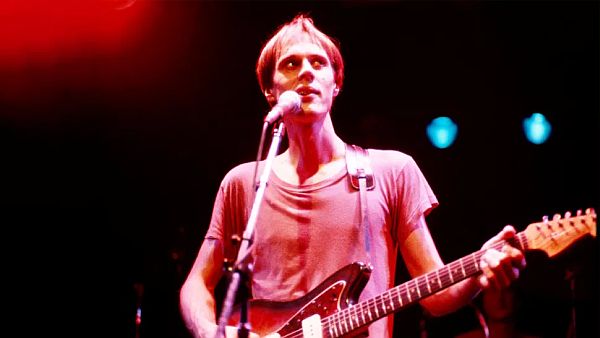


Portant l’improvisation de studio à son climax, Verlaine ringardise une décennie en un seul éclat foudroyant. De la lave bouillante coulait dans les veines de ce Nouveau Romantique qui hissa la musique rock – et pop – sur des hauteurs rarement atteintes. Autre ironie de l’histoire : les dieux de la génération hippie crevèrent à 27 piges, tout le contraire du mastermind de la punkitude esthétique et intellectuelle qui a découvert le Graal à cet âge désormais canonique. Né pour perdre, looser dans l’âme, être supérieur perdu dans un monde qu’il n’a jamais réussi à comprendre, il fut l’un de ceux qui transformèrent l’échec en victoire. Une victoire cinglante que les Anglais ne sont pas près d’oublier, malgré la réplique pas si mauvaise voire excellente des humains de Magazine à la fin de l’année 1977 sur un créneau similaire. Mais comme pour Rotten avec Richie, ils n’étaient pas à l’heure au rendez-vous. Et si les Britishs se vengeront brillamment avec la création de la new-wave par The Human League et de la cold-wave par Joy Division, absolument personne n’arrivera jamais à égaler Verlaine, en terme de grandeur de l’âme, à part peut-être Ian Curtis. Après avoir brûlée vive sur la Terre maudite, l’étoile vient de repartir de là où elle est venue, dans l’infini du cosmos qu’elle cherchait par tous les moyens à retrouver avec sa guitare. Welcome home, Tommy.
 
Tom Verlaine : une carrière plus grande que la télévision. Par Mitt Hohmann. Gonzaï , Avril 29, 2023.


Tom Verlaine, who died on January 28, 2023, had an approach to playing guitar that was never easy to describe. Post-punk, art rock, art punk, whatever; it was one of Verlaine’s great creative achievements that over three studio albums with Television, and a prolific solo career, he was able to unshackle his style from labels. Hard to define, sure, but you know it when you hear it. 
 
The sound he pioneered in Television, along with second guitarist Richard Lloyd, had a propulsive yet cerebral power, grandiose yet melancholy, intense yet epic. Based in New York City, where they regularly performed at legendary club CBGBs, Television had an energy and attitude which suggested punk. What came out the speakers, however, would challenge that conclusion. There was nothing quite like it.
 
Maybe this is what happens when you approach the guitar from a different perspective. The instrument was not Verlaine’s first love. When he was a kid growing up in Delaware, he started out on piano before picking up the saxophone as a young teenager. He liked symphonies. He liked jazz. Speaking to Guitar Player  in 1993, Verlaine confessed that he hated guitar music for years. 
 
“I played piano because when I was a kid I’d be really transported by symphonies,” he said. “My mother would get these supermarket records of overtures. That was music for me. The only thing I liked on radio were flying saucer songs. In the early 60s I hated pop. An older friend of mine had some Coltrane and Ornette Coleman records, and that’s the music I liked. I had a brother who bought Motown, and I thought it was totally twee. The first rock record I liked was Yardbirds stuff, because it was really wild.”
 
The Kinks and The Rolling Stones can also claim credit for changing Verlaine’s mind about guitar, and doing as they would do many times before and since, changing music history over the course of two frenetic rock songs. All Day (And All Of The Night) and 19th Nervous Breakdown did the damage.
 
“Those are the records that made me think the guitar could be as good as jazz,” Verlaine told Guitar World in 1981. “Up until then the electric guitar was a stupid instrument to me. When I heard the solos on those records, the sound, the general sound, that’s when it occurred to me that the guitar was a cool instrument.”
 
Having no intrinsic affection for the guitar, Verlaine could easily resist the impulse to covet other players’ styles. It is often thus: the best guitar heroes are the ones who never wanted such status. Fortune favours those bold enough to experiment with an instrument. It also favours those who work at it.
 
Television were famously dedicated to rehearsals. Their marathon practice sessions would be masochistic if just in service to a sound wrought on three powerchords and a 4/4 backbeat. Verlaine and Lloyd had designs on Television being something more. Besides, the Ramones would soon claim brevity for their own. Expansiveness was the smart play.
 
Set loose and turned wild in the febrile thrum of 1970s New York – the milieu of Blondie, Talking Heads et al – Verlaine’s electric imagination reconfigured guitar music and set the table for a generation of alternative rock acts, many of whom would stake their own claim to greatness.
 
Television’s debut album Marquee Moon, with its iconic cover photo by the great Robert Mapplethorpe, remains essential, remains exhilarating, and remains somehow special and alien even though the independent rock cognoscenti has kept it on regular rotation since its hit record stores in ’77. It is one of the most influential rock albums of all time. The likes of Sonic Youth, Pavement and Johnny Marr were listening.
 
“It was more expansive,” said Thurston Moore of Sonic Youth, speaking to ShortList in 2020. “The guitar interplay between Richard Lloyd and Tom Verlaine was just really informative for me. It was really dry and super-poetic whilst still being really unpretentious.”
 
What Television were doing was something new. Just as it worked with Sonic Youth, who came out of a similar cultural environment, weaned on experimental music and art, it did in England. In a 2021 Guitar World interview, Johnny Marr said Verlaine and Lloyd were the fresh blood guitar music needed.


“This was at a time when there were a lot of things being done on guitar that I felt were outdated and corny,” Marr said. “But there was also a generation of young men in the UK and America who were onto something new – Robert Smith, John McKay, Will Sergeant. A lot of us took note from Richard Lloyd and Tom Verlaine. Those guys were game-changers. I loved all that... and still do.”
 
The long approach towards the release of Marquee Moon is the history of a band taking the time to evolve before announcing themselves on wax. Formed in 1973 with Verlaine’s old school pal and countercultural Zelig Richard Hell on bass, Billy Ficca on drums and Lloyd on guitar, Television would soon mix things up, swapping out Hell for Fred Smith, then of Blondie.
 
There was a certain amount of ruthlessness in that. When Hell and Verlaine moved to New York, Hell got Verlaine a job at the Strand bookstore. But perfectionism was in Verlaine’s blood. It was part of the internal logic of the band.
 
No-one was safe. Brian Eno was brought in to produce the Marquee Moon demos and Verlaine was unsparing in his judgement, saying it all sounded like the Ventures, lacking juice. The sounds Television were chasing were a reaction to the rock guitar consensus at the time that favoured Marshall stacks and humbucking pickups. All of that was out. Theirs would be a Fender sound.
 
The angular cut of a single-coil pickup was their thing. The price of the Fender Jazzmaster at the time was also appealing. Verlaine found a ’59 Jazzmaster with a bronze pickguard and that made it on their debut. Sonic Youth would explicitly follow Verlaine’s lead a few years later to seek out Fender offsets as the affordable option.
 
Rare and oddball guitars were always welcome. Verlaine also used a Gretsch G6123 Monkees signature model that he picked up for $80, a guitar that was only on the market for a couple of years at the height of The Monkees’ popularity. There were Danelectro and Vox guitars, and a see-through Ampeg Dan Armstrong Plexi, presumably for the same reason that everyone else played one; because it looked damn cool. There were Strats and Jaguars, too, and an Epiphone Al Caiola.
 
In later years, Verlaine would use a modded Strat that was fitted with three lipstick-style pickups and a neck taken from a Jazzmaster. Guitar amps were mostly from Fender, too, with the high-powered Super Deluxe tube combos a cornerstone of their sound. Vox AC30s, Music Man HD-130 4X10 combos and a Dumble Overdrive Special found themselves on Verlaine’s backline over the years. Television’s tech, Robert Darby, built them a Valvotronics amp. Like many players of the era, Echoplex tape echoes were used, even if just for the preamp’s secret sauce.
 
Like most serious Jazzmaster players, Verlaine’s models were upgraded with Mastery bridges. He also favoured heavy strings, 0.014s or 0.015s for the high E, a 0.054 for the low E, and always a wound G. Technique-wise, he would use a pick but play close to the neck pickup.
 
Marquee Moon was quite the debut, but there was more where that came from. Adventure followed in 1978, deepening Lloyd and Verlaine’s understanding of one another’s styles. The energy was different, the songs every bit as strong. Besides, what would it have served Television to have tried to chase the same thrills? If Marquee Moon was some after-hours adventure in the city, a transcendent fever of neon, Adventure is the morning after.
 
Whether it is on the loose, sun-fried groove of Glory, the mid-tempo strut of Foxhole, or Verlaine favourite The Dream’s Dream – mostly instrumental bar one verse, it sails off into the ether, closing the album out, the cool precision of Lloyd and Verlaine’s phrasing present and correct.
 
The treble gives it a wiry clarity that again speaks to the perfectionism; a Super Deluxe is the sort of amplifier that punishes sloppiness. For better or worse, if you play a note on it, you hear it loud. There is no hiding place. Speaking to Hit Parader in 1978, Verlaine admitted that theirs was a difficult sound to capture in the studio.
 
“It’s a bright kind of sound,” he said. “It’s not fuzzed up, it’s not like say, a Bad Company sound where you plug a Les Paul into a Marshall – which is the formula for about 80 per cent of rock ’n’ roll. We’ve got a number of weird little guitars which we use with weird Fender amps, and it produces a very different kind of sound. A lot of engineers don’t know how to translate it so it will work on a record.”
 
Television would break up just months after the release of Adventure. Verlaine endured a year of contract wrangles with Elektra as he gathered material for his self-titled solo debut. Stylistically, the apple did not fall far from the tree. Sure, Lloyd no longer offered Verlaine a foil, but the licks, voice and songwriting mounted a convincing case that the best was yet to come.
 
David Bowie thought so, and recorded a cover of the song Kingdom Come on his 1980 album Scary Monsters (And Super Creeps). Although Verlaine was scheduled to play on Bowie’s version, it was Robert Fripp who played lead instead. Apparently Verlaine’s search for the perfect tone, auditioning amps ad nauseam, was not everyone’s idea of fun.
 
But it worked for him. The tones he found on Dreamtime (1981) scratched and shimmered around his vocal. Postcard From Waterloo, from 1982’s Words From the Front, is reference quality surf-rock tone, a splash of vintage Americana that would be reprised in 1992 for the instrumental album Warm and Cool – a record found him experimenting with fingerstyle.
 
Television would reform in 1992, releasing a self-titled album, touring, and then staying officially active until Verlaine’s death. Later, Verlaine would guest on records by the Violent Femmes, James Iha and Patti Smith. He would score silent movies for the Douris Corporation with Jimmy Ripp, half composed, half improvised.


Few understood Verlaine better as a guitar player than Richard Lloyd...
 
“It’s like we become one guitar,” said Lloyd, speaking to Guitar Player. “I can tell the difference between our parts and our styles when we’re playing leads, but even when I listen to stuff that Tom and I do, sometimes I have to pull myself out of it to determine who’s where, who’s what.
 
“I don’t think there’s another band that has that with two guitars, where one doesn’t strum and one doesn’t play lead all the time, and they don’t switch or play leads at the same time in 3rds – we’re not the Allman Brothers, and we’re not Status Quo, we’re not heavy metal, and we’re not a strum band. The parts are very well defined in their interconnectedness. They really make one piece, and I don’t know exactly how that happens.”
 
If such magic could be explained, it wouldn’t be magic anymore. We should still try. Verlaine’s guitar parts are vines to be scaled to see how it looks and sounds from on high, another perspective on the instrument. Verlaine’s guitar was pitched at the avant garde but was nonetheless relatable. Like Robby Krieger of the Doors, he mixed alien styles, different modes, a jazz sensibility painting with Mixolydian and blues. If there is a lesson to be taken, it is to never be satisfied.
 
“When I do hear a guitar in contemporary music, it always has the same sound,” Verlaine once complained. “I guess it’s a distortion plugin – ‘Preset 80’ or something. Who cares?”
 
Remembering Tom Verlaine, the cult hero who reconfigured guitar and inspired generations of alt-rock players. By Jonathan Horsley.  Guitar World , April 06, 2023. 


As alternative rock and post-punk innovators, Television is one of the most lauded rock bands ever. Their opus, Marquee Moon, retains a withdrawn cool that sets them apart from their peers like The Velvet Underground and The Stooges. Yet no matter how canonized and widely influential they have become, Television will always feel like a band for the heads. If I’m getting to know someone early on and they express admiration for the act, I’ll be damned if it doesn’t garner them some immediate cool points in my book.

 
Television formed in the ‘70s, as a partnership between guitarist Tom Verlaine (born Thomas Miller) and bassist Richard Hell (born Richard Meyers). The musicians bonded as teenage troublemakers at boarding school in Delaware, then later moved to New York City as young adults to try and make it as poets. (Fittingly, Verlaine’s adopted last name is an homage to the French poet Paul Verlaine.) They played in a short-lived group called the Neon Boys together, which broke up in the wake of recording a lone 7-inch.
 
Not long after that band hung up its hat, the duo reconvened with a new guitarist named Richard Lloyd. The trio called this fresh band Television because of their distaste for the medium—they hoped their music could provide listeners with an alternative. They cut their teeth for almost a year before finally playing their first show, but hit the ground running pretty quickly after initially taking the stage. Within just a few months of unveiling their work, Television was gigging heavily in the booming CBGBs circuit and had played at additional hot spots, including the vaunted venue Max’s Kansas City.
 
While Television easily found their footing as a live act, a long road led up to the release of their work in the studio. Verlaine and Hell initially split the difference as songwriters, but tensions rose when other band members wanted to contribute more behind the scenes. Hell—a boisterous punk personality—refused to hone his craft, and consistently brought an inappropriate level of energy to Television concerts. Eventually, he parted ways with the band and would go on to have a prolific career as a founding member of the Heartbreakers and, later, as the front person of The Voidoids.
 
Hell was replaced by downtown scenester Fred Smith, who had previously played with Blondie for a spell. Television’s new lineup tried recording some ill-fated demos with Brian Eno in ‘74, before finally putting out their first 7-inch, “Little Johnny Jewel,” in ‘75. At this point, they were one of the buzziest bands in the New York City underground, and signed with Elektra before hitting the studio with Rolling Stones engineer Andy Johns to bring a proper album to life.
 
The end result of those sessions was Marquee Moon, which came out in early ‘77. It was met with solid praise, and seemed to carve a lane of its own. The album is defined by cryptic lyricism that is often tethered to seedy allusions. If Television peer Lou Reed’s penchant for writing about drugs and crime was his life and his wife, in Verlaine’s hands grit was more like an elusive lover. “I knew it musta been some big set-up/All the action just would not let up/It's just a little bit back from the main road/Where the silence spreads and the men dig holes,” he sings in the first verse of the rollicking track “Friction.”
 
Marquee Moon was also driven by wiry, masterful guitar work. Intricate riffs interlock and divert over spirited, rudimentary grooves. “The band never breaks for a squall of energy, yet the whole record crackles with it, and they never rely on atmosphere to make their case,” Chris Dahlen wrote in a 2003 review of one of the album’s reissues for Pitchfork. That publication would later rank the record as the third best album of the '70s.
 
It’s easy to trace the impact of Marquee Moon on 20th century indie rock, and also on a recent generation of scuzzy experimentalists like black midi and Squid. Marquee Moon was followed by the comparably refined ‘78 album Adventure, which was a commercial flop, eclipsed by its predecessor. However, it has held up as an underrated classic—a snapshot of a virtuosic band sharpening a singular sound. A few months after their second album hit shelves, torn apart by disparate egos and Lloyd’s substance abuse, Television called it quits.
 
Like Hell, most members of Television went on to successful solo careers before they reunited in ‘92. After that extended hiatus, the band put out a self-titled album and would occasionally tour. But they never fully recaptured the magic of their ‘70s heyday. Nonetheless, Television cemented themself as a relic of a graffitied, bohemian moment in the New York City art world. Without the band as a forebear, acts like Pavement and My Bloody Valentine would have probably sounded a whole lot different.
 
Verlaine was consistently the soul of Television, his songwriting eclectic and his musical chops truly intimidating. On top of his work with the band, he put out a number of solo albums that sometimes flaunt the over-the-top trappings of ‘80s production techniques, but still contain some solid songwriting. He was also a member of the supergroup Million Dollar Bashers, alongside members of Sonic Youth, Wilco, and Bob Dylan’s backing band. He would additionally collaborate with artists like David Bowie and Violent Femmes, and score films from Man Ray and Fernand Léger. Tragically, this January, he passed away at the age of 73 after battling a brief, unspecified illness. While he is sorely missed, he remains one of the most influential independent rock musicians of all time.
 
“I went to see Television whenever they played, mostly to see Tom, with his pale-blue eyes and swanlike neck," his love interest-turned-occasional bandmate Patti Smith wrote in an obituary published in The New Yorker. "He bowed his head, gripping his Jazzmaster, releasing billowing clouds, strange alleyways populated with tiny men, a murder of crows, and the cries of bluebirds rushing through a replica of space.” With this in mind, and in celebration of Verlaine’s legacy as a six-string legend, here are some of Television's quintessential guitar gear moments.
 
Fender Jazzmaster
Verlaine’s primary instrument was a 1958 Fender Jazzmaster, which makes its presence powerfully felt on the title track of Television’s debut album. “If you have a pedal board that looks like the console of the Millennium Falcon or insist on implementing copious after-effects to your recordings, Marquee Moon is a great example of how you can get bold sound with just a guitar and amp,” writer Mike Duffy once wrote in a blog post for the iconic guitar maker’s website. He’s right: The 10-minute track thrives because of how pure its tones are. Verlaine’s angular soloing darts in and out of his collaborators’ taut jamming. It’s a testament to how punchy the Jazzmaster can sound when cranked through the natural distortion of a tube amp. (Verlaine was also notably fond of the Fender Jaguar, which feels like a sibling instrument to the Jazzmaster.)
 
Danelectro 59 DC
 
These days, Danelectro is best known for its affordable pedals and nostalgic reissues that call to mind the golden age of surf rock and psychedelia. The New Jersey company’s current branding feels tailored towards would-be flower children. But Verlaine actually used a 59 DC on stage back in the ‘70s. The lightweight guitar has a spruce body, and lipstick single-coil pickups that contribute to its blocky midrange tone. It offers a drab, defiant alternate glimpse at the brand’s otherwise colorful history.
 
Ampeg Dan Armstrong Plexi
 
Verlaine was certainly a Fender man, but one of the most iconic live photos of him actually features an Ampeg Dan Armstrong Plexi electric guitar. The clear instrument was introduced in ‘69, and is a weird-yet-wonderfully relic of Space Age design. It came to life as a collaboration between Ampeg and (if you can possibly believe it) New York City guitar wiz Dan Armstrong. Its body was constructed from polymethyl methacrylate, a substance that allowed the instrument to be both flashy (albeit somewhat heavy) and sonically interesting. Expensive and bizarre, the guitar is largely remembered as an oddity more than a treasure. But other famous musicians who have embraced it include Keith Richards and Tom Petty and the Heartbreakers guitarist Mike Cambell.
 
Ampeg SSB Bass
 
Verlaine wasn’t the only Ampeg player in Television. Smith’s go-to bass was the brand’s SSB model, which remained his preferred instrument over the course of the act’s career. (He did occasionally use other basses, like Fender’s more conventional Mustang and Jazz Bass models.) The SSB is an elusive instrument that rarely seems to pop up on Reverb, but that doesn’t mean it isn’t a gem. The bass playing in Television’s music straddles the lines between both rhythm and melody. Fittingly, the SSB’s tones land right in the sweet spot between treble and low end, complementing Smith’s distinctive musicianship.
 
Fender Stratocaster
 
Lloyd’s contributions to Television are just as important as Verlaine’s. The band’s dual-guitar sound is a large part of what makes their music so gripping. Across their records and on-stage bootlegs, his playing weaves sepia-tinted streaks through his bandmates’ chunky chops. (For a prime example of this interplay, look no further than the above live video, circa 1980.) “Sometimes songs would pass back and forth, and it was, like, ‘you play the solo one night and I’ll play it the next night and we’ll figure out who does the better job,’” he said in a 2014 interview conducted by Gibson’s New York City showroom. His main musical tool was a ‘61 model of Fender’s widely-played Stratocaster, whose versatile, innocuous tone contrasts the coarser sounds that Verlaine often dialed up. (Verlaine would also adopt the Strat after the band’s reunion, although his was fitted with a custom Jaguar neck and lipstick pickups a la Danelectro.) It stands as the perfect metaphorical brush for conveying Lloyd’s challenging aural strokes.
 
Music Man 410-HD One Thirty 4x10 Combo
 
Verlaine used a lot of amps throughout his career, but the Music Man 410-HD One Thirty 4x10 Combo was at the heart of rig during much of the band’s heyday. Music Man was launched by Leo Fender—who is obviously best remembered for founding Fender—in ‘75. Music Man was his second company, which he started as soon as was legally allowed to after selling Fender to CBS in ‘65. The 410-HD amp features a solid state rectifier and four power tubes, which contribute to its strikingly clean signal. It has two channels—one without effects, and one with reverb and tremolo—and Verlaine’s sound seems distinctly tethered to the former setting. Verlaine also used a Vox AC30 later on in his career—a similarly timeless, sparkling favorite.
 
Fender Super Reverb Combo
 
Lloyd once told Vintage Guitar Magazine that he made the conscious decision to play Fender black panel amps because he was, “Anti-Marshall and anti-hippy longhair.” While he employed a host of amps over the course of his career, one of his early standbys was the Fender Super Reverb Combo. The 45 watt amp was produced between ‘64 and ‘67, and became popular because of its scooped mids. It’s almost identical to the Fender Super, but this more complex version features built-in reverb and tremolo effects. Tonally and aesthetically, it’s pretty comparable to Verlaine’s aforementioned Music Man 410-HD, which helps their sounds bleed together to intriguing ends.
 
The Angular Guitar Sounds of Television. By Ted Davis. Reverb, March 16, 2023.


Unlike many of those who have written movingly about Tom Verlaine since his death at 73 on January 28, I never met him—not even one of those starstruck sightings at the Strand. But if you were coming up in the ’90s and into guitar and songwriting, you were bound to bump into that first Television record: in a cut out bin at the local record store, on a jukebox in a bar, in someone’s dorm room. The four guys looking out from the Robert Mapplethorpe photo on the cover (run through a Xerox machine to burn off some of the color) appeared malnourished, faintly collegiate, with great taste in shirts and jackets. The band name above them in stark white letters brought out the pulp sci-fi aura that hovered around the box in your parents’ living room: Tele-Vision. And then you cued up the LP and something magical happened: it was punk rock for musicians! DIY in attitude and conception, sure, but as angular as Monk, as expansive as Yes, funky in that square way that makes things funkier, and all held together with a biting guitar sound close to Mike Bloomfield’s on Highway 61 Revisited. The Ramones were great, but Television made their CBs confreres sound like Johnny one notes. Television had chops, tunes, and weren’t afraid to stretch out and solo—they even had arrangements for god’s sake. The punk-est part was Verlaine’s unsteady colt of a voice, a hint of Buddy Holly, maybe some Bryan Ferry, but with an adenoidal candor all his own that really was a fuck you to FM radio.
 
Born Tom Miller, Verlaine grew up in New Jersey and Delaware. In 1968, he moved to New York, where he teamed up with his friend Richard Hell to form the Neon Boys, which in turn mutated into Television, one of the founding bands of the Bowery scene that birthed American punk. (Hell left soon after to form the Heartbreakers with Johnny Thunders, who’d just left the New York Dolls.). In 1975, they released a two-sided single, “Little Johnny Jewel”—a noir-tinged vignette with a bone-dry guitar sound achieved by plugging directly into the mixing board. Soon after, material for an LP was demoed with Brian Eno. Judging from what can be heard on YouTube, this promising-on-paper collaboration came out entirely flat. They eventually hooked up with Andy Johns (brother of Glyns) who showed up with ideas for a Zeppelin-y drum sound that horrified Verlaine (“No. No. No. No. No,” he is alleged to have said). The approach they ended up with was  the audio equivalent of putting that Mapplethorpe image through a photocopier: tight and composed but with all studio sheen bleached out. Marquee Moon (1977) sounds both dinky and grand, an epic executed in a cube of concrete.
 
Small miracles of performance and conception can be found all over that first Television record. It helps that everyone plays their asses off. The rhythm section of Billy Ficca and Fred Smith gives the guitars a fluid grid over which to launch a bunch of great ideas: the pinwheeling kaleidoscope that forms the nucleus of “Venus”; those 16th rest gear shifts that slice the chorus of “Elevation” in half; the solo of “See No Evil” which dissolves Framptonish puffery into a minimalist reboot of Chuck Berry; “Guiding Light”’s trad gospel F# triad over a pedal C# (hark—a piano!), over which Lloyd plays a throwback solo that wouldn’t be out of place on a Bob Welsh record. My favorite moment comes eight and a half minutes into the title track, after the two guitars have been squirming and spiraling their way out of the D major counterpoint with which the tune starts, finally defaulting to bare ascending octaves. And then the lost D major returns, only it has changed into a rainbow shimmer of arpeggios, at the center of which there seems to be a bird chirping! How Verlaine manages to get that bird to appear from out of his Fender Jazzmaster remains a source of wonder to me. It’s one of the most gorgeous and mysterious things ever to happen on an electric guitar.
 
The second Television record, Adventure, has always struck me as a little fatigued, but it has some beauties on it too. The McGuinn-ish “Days,” with its chiming, sun-dappled intro and a divine legato guitar line after the first chorus, is one of the best things in the TV catalogue. The closer “The Dream’s Dream” is full on psych, and the LP’s one nod to expanded structure a la “Marquee Moon.”
 
The CBGBs coterie was more or less initiated by Television. It was Verlaine, Richard Lloyd, and their quasi-manager Terry Ork who (so the story goes) suggested to Hilly Kristal that his honky-tonk dive could be a suitable hangout for people making new music on the Lower East Side. That the founders of New York’s punk headquarters were unapologetic musos is something of an irony. It undoes the cliché that the performances at CBs were a three-chord missile aimed at the lumbering dirigible of ’70s Rock, or a mere theatre of studied ineptitude. Television’s relative musical sophistication in part stemmed from Verlaine’s starting points in jazz (his first choice to produce Marquee Moon was Rudy Van Gelder). Though a fan of John Coltrane and Albert Ayler, he was not usually a note-y, splatter-gun shredder. His solos are closer to Miles: spacey, feline, searching, severe, and happy to hit a clam if it’s the right clam.
 
As if this weren’t enough, he was also literary! That the author of “Marquee Moon” called himself Verlaine (after the 19th-century symboliste) was one reason you might find half-read (probably not even) New Directions paperbacks of Baudelaire’s Fleurs du Mal and Rimbaud’s Illuminations lying beside copies of The Replacements’ Let It Be and Dinosaur Jr.’s Bug in your bandmate’s filthy apartment. The lit-rock thing was in part a response to the decisive shock of versification that popular music received at approximately the moment Dylan sang “she wears an Egyptian ring it sparkles before she speaks” in 1965. But for us ’90s kids, that kind of songwriting was just as likely to have been associated with Verlaine, whose lyrics could sound tossed off, even as they had been clearly filed to the bone: I remember how the darkness doubled; Broadway looked so medieval, it seemed to flap like little pages; My eyes are like telescopes; Well the Cadillac, it pulled out of the graveyard.
 
These were the sort of future-noir tableaux the bumpkin magus Rimbaud had prophesied in his wild visions of cities and which run through The Big Sleep, Alphaville, Nova Express and, well, Television. It was enough to make you move from rural Wisconsin to New York City, which I did in 1997, with a Telecaster and a bunch of songs and the hope of finding a red jacket like the one Richard Lloyd is wearing on the cover of Adventure. I did eventually find such a jacket, acquired from a girlfriend in a trade for my hardcover copy of Martin Amis’s The Information. I later learned that the coat had been shoplifted from the J.Crew off the Bowery.
 
There’s a lot more Verlaine than Television. Starting with his 1979 self-titled debut, he made six solo records marked throughout by shades of rockabilly and early rock ’n’ roll, affectionate hat tips to the Velvets in their lucid third LP mode, and later, period art-pop with requisite doses of synth. Bowie recorded Verlaine’s “Kingdom Come” for his excellent 1980 record Scary Monsters and Super Creeps, in which he tests out one of his most outlandish Ethel-Merman-on-PCP vocal vibratos (which I always took to be his weird tribute to Tom’s singing style). To be targeted by the Ziggy/Aladdin/Duke was of course a badge of distinction, as well as a testament to Verlaine’s auteur-like vision.
 
Many of the tracks on Verlaine’s solo records fit no recognizable template or genre. My favorite of them, Dreamtime (1981), a set of asymmetric songs bathed in a kind of glowing frost, features bit parts by fictional characters like “Mr. Blur.” The sui generis “Days on the Mountain” from the next record Words from the Front (1982) wholly defies comparison: I will refrain other than to say that Verlaine, or at least the character singing, sounds delighted to be “walking around the inside of a bell.” On “Lindi-Lu” from Cover (1984), he’s singing in a faux-SUN hiccup over pulses of synth and guitar that for some reason make one think of moves in a game of Connect Four. These records show that the electric guitar had become for Verlaine an expanded palette for making mixing desk mini-compositions. A single riff might be three separate takes of three different guitars going through three different amps, panned across the image to create a single impossible part. You can feel the work getting further into the ’80s as the gate reverbs on the drums become more extreme and conspicuous—really, everything sounded like Peter Gabriel’s SO in 1987—but the guitar playing never strays far from Verlaine’s fingerprint.
 
In 1992, the original members of Television reunited, making an album that picked up where “Little Johnny Jewel” left off. Recorded with the kind of care that had come to mark Verlaine’s solo work—hyper-fastidious guitar and amplifier choices, microphone placement, et cetera—it’s a wonderfully lithe and spooky set of tunes. And they are not just delicacies from the Guitar Lab. Ficca forces everyone to push against the clock, the quartet more than once finding that slight vertigo when backbeat becomes unmoored from the metronome (see the outro of “Shane, She Wrote This”). Verlaine the lyricist is more that usually oblique throughout: I could just sort of not be there. Know what I mean? Not be anywhere.
 
I saw them at the Barrymore Theatre in Madison, Wisconsin when the third Television record dropped. They did the whole thing in order then walked offstage, came back ten minutes later and played “Marquee Moon” and were done. I was awed by that encore. They nailed absolutely all of it, taking things, if memory serves, much further out than on the recording. That year Verlaine also released Warm and Cool, an instrumental album that sounds like the theme music to the Twilight Zone on a blind date with a Morricone spaghetti western score. He went on to make one more instrumental guitar record, and another set of songs, more than ten years later. The great gaps between releases from 1992 until his death only added to allure of the man and his work.
 
It moves me to think how much Tom Verlaine meant to my friends and I growing up. “This is the longest we’ve sat shiva,” said a close pal when the Verlaine thread was still going a week after the news. We’re all a little hurt and stunned. When someone who wrote music you care about dies, it dawns on you that they played a role in the scary, inductive, unplannable catastrophe of the person you have become. Verlaine shaped the identity of at least one whole generation of artists, writers, and musicians (that is, mine). He was an idealist who, amid the sleaze and cacophony of that cavernous room off the Bowery, could sing of falling into the arms of Venus. His vision casts back through Dylan, Ornette Coleman, and Chuck Berry, to Verlaine, Rimbaud, and Poe, and maybe all the way to the trobar clus of the wandering troubadours. I’d like to think he’s hanging out somewhere with that bird he made appear from out of a guitar.
 
On Tom Verlaine : It was punk rock for musicians! By Paul Grimstad. n + 1 magazine, February 9, 2023. 


12/02/2023

Karen Carpenter : Starving For Perfection


Santa Barbara International  Film Festival  2023 Review.  The unforgettable voice of Karen Carpenter is one history associated with a woman who died embattled by her fears in the form of anorexia nervosa. Like so many gifted musicians, singers, and songwriters who die too young from addiction, Karen’s drug was a self-induced condition, which too few knew too little about in her time. However, even in the unknown depths of her struggle with her eating disorder, Karen Carpenter produced long-lasting songs with her unique velvet, creamy voice like no other.
 
Karen Carpenter: Starving For Perfection captures the tone of Karen Carpenter that defines a decade of music and culture in which The Carpenters, Karen and her brother Richard, uniquely made their own. The duo’s distinct style of arrangement and harmonizing spanned 14 years and ten albums with a bevy of single hits and loads of television appearances and specials. Although the documentary’s underlying purpose may be a PSA on stardom and eating disorders, some lingering unanswered questions suggest Karen’s anorexia was not just about image and the need to be thin, even though that is the price of fame and exposure when talent is so great.
 
The film is an archival buffet of The Carpenters, their family, performances, appearances, and work sprinkled with interviews from several friends who are all celebrated writers, musicians, and celebrities. The late Olivia Newton-John was a very close friend to Karen and regrets never recording with her, and Carnie Wilson of Wilson Phillips, an executive producer of the film, tells it like it was for Karen and gives an on-level voice for why we lost such a talent at 32 years old. And there’s more insight from appearances by Cynthia Gibb, Suzanne Somers, Kristin Chenoweth, Bob James, Carol Burnett, and Belinda Carlisle, to name a few.
 
However, Richard never weighs in, except the film reveals that he was the golden boy, and as close as Karen and her brother were, she harbored a never-ending battle, never succeeding or achieving perfection like him. In addition, Cynthia Gibb, who plays Karen in the made-for-television movie about Karen’s life, adds some haunting detail about how the television film was made by using the actual Carpenter house, Richard’s relentless attention to detail, and Karen’s original wardrobe, which kept getting smaller and smaller to the point Cynthia had to have the camera shoot only one side of her because she couldn’t zip the clothes.
 
Karen Carpenter: Starving For Perfection reveals a woman in struggle and perhaps stunted or arrested development with her stuffed animals and Mickey Mouse t-shirts. It’s as if she had to skip many of life’s passages or was just not loved enough by her battleax mother. Yet, the songs never stopped, and Karen was always on cue to perform no matter how tired she claimed to be, which is an interview stretched throughout the film from a cassette recording. She played her drums and sang, a talent very few can do. The amount of accomplishments she achieved in only 32 years is astonishing while rolling with change and acceptance.
 
The film moves through a journey, yet it leaves the door open for many questions on understanding Karen’s career and The Carpenters. Song after song produced so many hits. And the most surprising of all, a Christmas album, which is as popular as ever, even today. Songs like “Close to You,” “We Only Just Begun,” “Rainy Days and Mondays,” or “Top of the World” are a window into a time that no longer exists but are captured so well by Karen’s voice and presence.
 
Karen Carpenter: Starving For Perfection dives into the performer and artist whose voice and feeling are the mood of the time. It flows from one interview to interview, whether it’s a celebrity, writer, or friend. Each segment with all involved does not overpower the other but adds one more layer of understanding of a woman who left way too soon.
 
Karen Carpenter: Starving For Perfection screened at the 2023 Santa Barbara International Film Festival.

Karen Carpenter : Starving for Perfection.  By Sabina Dana Plasse,  Filmthreat ,  February 11, 2023\\\


Karen Carpenter - Starving For Perfection, Official  Trailer


Karen Carpenter died on February 4, 1983, after steadily poisoning herself with ipecac syrup, which she was using to try to maintain her weight while struggling with an eating disorder.

From the outside, Karen Carpenter looked like a rock star. She played the drums as one half of the band The Carpenters and had what Paul McCartney called “the best female voice in the world.” But away from prying eyes, she struggled with body image issues. Karen Carpenter’s death in 1983 marked a tragic conclusion to her struggle with anorexia nervosa.

By that point, Karen’s anorexia had dovetailed with her rise to fame. She and her brother, Richard, had charmed the nation as the sibling duo behind The Carpenters, but their stardom came at a steep price. Karen, unhappy with how she looked, turned to extreme measures to lose weight.

She hired a personal trainer, meticulously counted calories, and stopped eating altogether. Her weight plummeted to 90 pounds, concerning her fans and family alike. But though Karen sought medical and therapeutic help over the years, she continued to struggle with her eating disorder.

By the 1980s, Karen seemed happier and healthier but had secretly turned to even more extreme measures to avoid gaining weight. Unbeknownst to her doctors or loved ones, she’d started taking daily doses of ipecac syrup, which induces vomiting. It slowly ate away at her heart.

 And on Feb. 4, 1983, Karen Carpenter died at the age of 32. Her official cause of death was “emetine cardiotoxicity due to or as a consequence of anorexia nervosa.” In other words, Karen, in her desperate battle with her eating disorder, had poised herself to death with ipecac syrup.

 Inside The Rise Of The Carpenters


 Born on March 2, 1950, in New Haven, Connecticut, Karen Carpenter was surrounded by music from the beginning. NPR writes that Karen’s older brother Richard was a music prodigy, and People notes that Karen was able to teach herself percussion by playing chopsticks on barstools.

When their family moved from New Haven to Downey, California, in 1963, Richard and Karen sought to make it as musicians. They formed a trio with a friend — with Richard on keyboards and Karen on drums — and even won a “battle of the bands” at the Hollywood Bowl. When their music was deemed “too soft,” The New York Times reports that the trio became a sibling duo.

In 1970, Richard and Karen were signed to A&M Records as “The Carpenters.” This marked their rise to fame — but also the beginning of Karen’s anorexia.


As The Guardian reports, Karen had turned to dieting before. After high school, she had used the Stillman water diet to drop 25 pounds. But in 1973, Karen allegedly saw a photo of herself taken at a concert that she found unflattering. She became determined that she needed to lose more weight.

Perhaps it seemed harmless to her at the time, but her subsequent eating disorder would lead to Karen Carpenter’s death a decade later.

Karen Carpenter’s Struggle With Annorexia

As The Carpenters became bigger and bigger following hits like “(They Long to Be) Close to You” (1970), “Rainy Days and Mondays” (1971), and “Top of the World” (1972), Karen Carpenter started to shrink.


 After hiring and firing a personal trainer — she didn’t like how building muscles made her heavier — Karen started trying to lose weight on her own. She exercised with a hip cycle, counted calories, and mapped out her intake of food, according to The Guardian. Before long, she lost 20 pounds.

 Though her friends and family praised how she looked, Karen wanted to lose even more weight. She started avoiding food altogether, concealing her eating disorder by moving the food around her plate as she talked, or offering tastes of her meals to others until there was nothing left for her.

 Before long, Karen’s anorexia started to impact her music. The Guardian writes that audiences gasped when they saw her emaciated frame, and The New York Times recounts that The Carpenters had to cancel their European tour in 1975 because of Karen’s “nervous and physical exhaustion.”


 Despite the clear warning signs, Karen’s eating disorder only intensified. She turned to laxatives to lose weight — taking dozens at a time — and prompted concern from the public. In 1981, an interviewer even asked Karen about her eating disorder directly, though the singer demurred.

 “No, I was just pooped,” Karen said, per The Guardian. “I was tired out.”

 By then, however, Karen seemed to know she needed to change. She left her husband, who some saw as abusive and after her money, and attended therapy in New York City. In September 1982, she was hospitalized after feeling dizzy, and seemed to improve under the close watch of doctors.

 Returning to Los Angeles in December of that year, Karen seemed to finally be in a good place. People reports that she seemed energetic and happy, and was planning on writing her own songs for the first time.

 “I have a lot of living left to do,” she told a friend, according to People.

 Tragically, Karen Carpenter died just two weeks later.

 How Karen Carpenter Died At The Age Of 32

 On Feb. 4, 1983, Karen Carpenter woke up at her parent’s house in Downey, California. She went downstairs, turned on the coffeepot, and returned to her room. At around 9 a.m., according to People, Karen collapsed.


 Her mother, Agnes, found Karen nude on the floor, her nightgown over her body as if she’d been about to get dressed. Though EMTs were able to detect a faint pulse, leading them to believe that The Carpenters singer had “a good chance to survive,” she suffered from cardiac arrest on the way to the hospital. Karen Carpenter died at 9:51 a.m. at the age of 32.

 According to an autopsy report, the 5-foot-4 singer weighed just 108 pounds.

 In March 1983, UPI reported that Karen Carpenter’s death was caused by “chemical imbalances associated with anorexia nervosa.” Specifically, she’d suffered from a condition called “emetine cardiotoxicity,” or a slow poisoning of the heart.

 According to The Guardian, that revealed that Karen had been slowly poisoning herself with ipecac syrup, which induces vomiting (and is usually for poison or drug overdoses). It would have helped her maintain her weight, but at a price. The syrup also eats away at the heart muscles.

 “I’m sure she thought this was a harmless thing she was doing, but in 60 days she had accidentally killed herself,” Steven Levenkron, a psychotherapist who’d treated Karen explained in a radio interview, according to The Guardian. “It was a shocker for all of us who treated her.”

 The Aftermath Of Karen Carpenter’s Death


 Karen Carpenter’s death at the age of 32 brought new attention to anorexia, which most people at the time didn’t know much about.

 “Anorexia nervosa was so new that I didn’t even know how to pronounce it until 1980,” The Carpenters band member John Bettis recalled, according to Time. “From the outside, the solution looks so simple. All a person has to do is eat. So we were constantly trying to shove food at Karen.”

 Time notes that, in the era of Twiggy, Karen Carpenter’s death revealed that it was possible to be too thin. It also inspired doctors and therapists specializing in eating disorders to push the Food and Drug Administration to ban over-the-counter sales of ipecac syrup.

 “We think 30,000 or more young girls are abusing a drug that was not known until very recently as an abusive drug,” Carpenter’s therapist, Levenkron, told The New York Times. He noted that some people consumed four bottles a day and estimated that “Between 50 and 250 bottles could be fatal.”

 Karen Carpenter’s death also prompted many to ask why she had developed anorexia in the first place. Many have noted that anorexia is, at its roots, a method of control. Rumors suggested Karen had grown up with a controlling mother who doted on her brother, and that her brother controlled the trajectory of their band. Some have speculated that Karen started restricting her eating habits because it was the one thing she could manage herself.

 Ultimately, Karen’s motivations remain known only to her. But what others have acknowledged repeatedly since her death is that Karen Carpenter was a singer taken too soon. She had, Paul McCartney declared according to NPR, “the best female voice in the world: melodic, tuneful and distinctive.”

 Sadly, when Karen looked in the mirror, that wasn’t enough.

 Karen Carpenter, The ‘Carpenters’ Singer Killed By Anorexia At The Age Of 32.  By Kaleena Fraga; Edited By Maggie Donahue. All That’s Interesting,  January 30, 2023


At first glance, it doesn’t appear as though innocent 1970s pop singer Karen Carpenter and aggressive ’80s noise rockers Sonic Youth have anything in common. Carpenter died the same month that Sonic Youth released their debut full-length LP Confusion is Sex, so it’s not like the singer had any idea who the New York band even was. But bassist and vocalist Kim Gordon saw a sympathetic figure in Carpenter.

“Karen Carpenter had interested me for a long time,” Gordon writer in her memoir Girl in a Band. “The Carpenters were such a sun-drenched American dream, such a feel-good family success story like the Beach Boys, but with the same roiling darkness going on underneath,” she said, adding: “Obviously Karen Carpenter had a strange relationship with her brother, Richard, a great producer but also a tyrannical control freak. The only autonomy Karen felt she had in her life she excepted over her own body. She was an extreme version of what a lot of women suffer from – a lack of control over things other than their bodies, which turns the female body into a tool for power – good, bad, or ugly.”
Gordon explains that, while she might not have always gravitated towards the sound of The Carpenters, she felt a powerful magnetism in Karen. “I always found Karen’s voice incredibly sexy and soulful. She made every word and syllable her own, and if you listen to those lyrics, you go, Wow. But at the same time, was there any band ever more white-bread than The Carpenters.”

It was also the power of Todd Haynes’ underground film Superstar, a no-budget biopic of Karen’s life made completely using Barbie and Ken dolls, that affected Gordon and her views on Carpenter. While Sonic Youth were making their major label debut with the 1990 album Goo, Gordon decided to pay tribute to Carpenter in the song ‘Tunic (Song for Karen)’. The song depicts Carpenter playing the drums and making famous friends in heaven while reflecting on feeling like “I’m disappearing, getting smaller every day / But I look in the mirror and I’m bigger in every way.”
 
“I could make up a lot of reasons why the song was called ‘Tunic’,” Gordon explains. “The most obvious is that Karen was so thin from starving herself that her clothes hung on her bones like flowing biblical robes. She couldn’t make peace with her own body’s curves. She would never get the love she craved from her mother, who favoured her brother, or from her brother himself.”

“Their approval meant everything,” she continues. “How was she not the quintessential woman in our culture, compulsively pleasing others in order to achieve some degree of perfection and power that’s forever just around the corner, out of reach? It was easier for her to disappear, to free herself finally from that body, to find a perfection in dying.”

Sonic Youth would also contribute a cover of ‘Superstar’ to The Carpenters’ tribute LP If I Were A Carpenter in 1994. Gordon finishes her analysis in Girl in a Band by sharing an open letter she wrote for a magazine back around the time of ‘Tunic’ and Goo‘s release.

“Dear Karen,

Thru the years of The Carpenters TV specials, I saw you change from the Innocent Oreo-cookie-and-milk girl next door to hollowed eyes and a lanky body adrift on a candy-coloured stage set. You and Richard, by the end, looked drugged – there’s so little energy. The words come out of yr mouth but yr eyes say other things, ‘Help me, please, I’m lost in my own passive resistance, something went wrong. I wanted to make myself disappear from their control. My parents, Richard, the writers who call me ‘hip-py, fat.’ Since I was, like most girls, brought up to be polite and considerate, I figured no one would notice anything wrong – as long as, outwardly, I continued to do what was expected of me. Maybe they could control all the outward aspects of my life, but my body is all in my control. I can make myself smaller. I can disappear. I can starve myself to death and they won’t know it. My voice will never give me away. They’re not my words. No one will guess my pain. But I will make the words my own because I have to express myself somehow. Pain is not perfect so there is no place in Richard’s life for it. I have to be perfect too. I must be thin so I’m perfect. Was I a teenager once? I forget. Now I look middle-aged, with a bad perm and country-and-western clothes.’

I must ask you, Karen, who were your role models? Was it yr mother? What kind of books did you like to read? Did anyone ever ask you that question – what’s it like being a girl in music? What were yr dreams? Did you have any female friends or was it just you and Richard, mom and dad, A&M? Did you ever go running along the sand, feeling the ocean rush between yr legs? Who is Karen Carpenter, really, besides the sad girl with the extremely beautiful, soulful voice?

Your fan – love, Kim.”

The tragic song Sonic Youth wrote about Karen Carpenter. By Tyler Golsen. Far Out Magazine, January 19, 2022. 


Dreaming, dreaming of a girl like me
Hey what are you waiting for, feeding, feeding me
I feel like I'm disappearing, getting smaller every day
But I look in the mirror, I'm bigger in every way

She said,
You aren't never going anywhere
I ain't never going anywhere

I'm in heaven now, I can see you Richard
Goodbye Hollywood, goodbye Downey, hello Janis
Hello Dennis, Elvis and all my brand new friends
I'm so glad you're all here with me, until the very end

Dreaming, dreaming of how it's supposed to be
But now this tunic's spinning, around my arms and knees
I feel like I'm disappearing, getting smaller every day
But when I open my mouth to sing, I'm bigger in every way

She said,
You aren't never going anywhere
I ain't never going anywhere

Hey mom! Look I'm up here, I finally made it
I'm playing the drums again too
Don't be sad, the band doesn't sound half bad
And I remember mom, what you said
You said honey, you look so under-fed

Another green salad, another ice tea
There's a tunic in the closet waiting just for me
I feel like I'm disappearing, getting smaller every day
But I look in your eyes, and I'm bigger in every way

She said,
You aren't never going anywhere
I ain't never going anywhere

Goodbye Richard, gotta go now
I'm finally on my own, but Dan's got a gig
Keep the love lights glowing, little girl's got the blues
I can still hear momma say: "honey don't let it go to your head"
 
Sonic Youth - Tunic (Song For Karen)


Karen Carpenter was an icon. It’s hard to dispute that the silky-smooth-voiced adult contemporary singer lives on, in collective memory, as someone taken from earth far too soon. As the Carpenters, she and her brother Richard released ten albums together, which included classics like “(They Long to Be) Close to You,” “Rainy Days and Mondays,” and “Superstar.” They epitomized the gentle sound of ’70s adult contemporary. Her death of anorexia nervosa at only 30 in 1983 increased the public’s awareness of the disease, and the Carpenter family founded an organization to help raise money for research into it and other eating disorders. The Carpenter family, including Richard, remain very active in sharing and maintaining Karen’s legacy.

 
Karen’s primary symbolic function is as an icon of innocence and warmth, purity, and angelic talent; there is almost a religious quality to the saintliness her fans ascribe to her. Based on the outsized outrage the family has heaped upon Todd Haynes’ controversial cult film Superstar: The Karen Carpenter Story, you would think that the film subverts or destroys this image of Karen, or that it makes a mockery of her legacy.
 
It’s easy to see where someone would get that idea. The entire film is famously re-enacted with Barbie dolls, is structured more like a news magazine program than a documentary or biopic (complete with interludes explaining anorexia nervosa in 1988’s medical parlance), and uses loads of unlicensed music, clearly with no attempt at approval from the Carpenter estate. It’s a singularly strange vision, and one that skirts the boundaries of bad taste in its staging alone. However, watching the film, Karen’s character remains a bastion of purity, very in line with her public perception, and Haynes never questions her innate star power and brilliance. What the film does challenge is the Carpenters’ altruism towards Karen.
 
Superstar: The Karen Carpenter Story opens with Karen Carpenter found dead, with a narrator asking how this could have happened at such a young age. The dread from this first scene, shot from the perspective of Karen’s mom as she finds a pair of disembodied legs in the bathroom and begins screaming, carries through much of the film and most directly informs the next scene, where Richard and his parents discuss finding a singer for his band 17 years earlier. Hearing Karen sing upstairs, they know they’ve found their lead singer — and thus begins a series of life events that are made possible, but not initiated, by Karen and her soaring voice. Haynes shows the recording of the first Carpenters single “Close to You”, and Richard is annoyed when Karen has a coughing fit; later, as the song is played in full, the imagery of Karen and Richard rising up the charts is juxtaposed with Richard Nixon and the Vietnam War. People want to escape the controlling and distressing realities of daily life through Karen’s voice, but there’s no escape for her.
 
The movie emphasizes how little control Karen had over her life, and lays much of its dysfunction at the feet of Karen’s domineering, manipulative family. They push her into her career, her living situation, and her charitable work. It’s notable that a portion in the middle of the film interviews multiple music professionals about Karen Carpenter, and one woman explicitly notes the manipulation inherent in her image and the falseness it projected. Superstar posits this was a feature, not a bug.
 
Karen’s relationship with food and her weight is just about the only thing she has any sort of ownership of, and her family’s insensitive and callous reactions only exacerbate her illness. Haynes shows Karen’s deteriorating state by shaving plastic off of the Karen Barbie doll and altering her clothes to show more skin. Even in the low-quality versions of Superstar circulating on the internet, it’s easy to see the negative turn the Karen doll takes as she tours with Richard, hardly eating while her brother berates her for it, far more worried about people’s reaction to her sickly body than her actual health. Sagely, the film shows a title card shortly after Richard and Karen get into a fight at a restaurant over her food intake, reading “The self-imposed regime of the anorexic reveals a complex internal apparatus of resistance and control.[…]Anorexia can thus be seen as an addiction and abuse of self-control.”
 
Karen’s trauma continues unabated. She collapses onstage from her illness, binge-eats, and gets into frequent arguments with Richard, even after she moves out. Her traumatic memories, represented by rapidly intercut and flickering showcases of spanking, California driving, and stick-thin Brady Bunch stars, take up more and more space in her life. She even pointedly asks at one point, “Do the Carpenters have something to hide?” Even brief hopeful moments end in despair — her new relationship and eventual marriage to Thomas Burris ends with a title card saying that they divorced after 14 months. Thankfully, a conversation with fellow anorexic Cherry Boone gives Karen the motivation to seek treatment, and she follows through. But it is too late at this point — Karen’s attempts to get better and get back to work on a tight timeframe have driven her to purge food with syrup of ipecac. This, Superstar implies, is what killed her.
 
The film drops this last reveal before transitioning to serene footage of a car driving through California, recontextualizing a backdrop of seagulls that earlier in the film announced the Carpenters’ arrival onto the pop culture scene with  titles describing Karen’s death. Superstar offers no further answers or closure — the film ends on a shot of the Carpenters’ house with “Close To You” jittering out of time and dropping notes. The tension inherent in hoping someone will be kind to Karen for once and help her seek and maintain recovery is never resolved. The film also doesn’t reveal the feelings of the Carpenter family post-Karen’s death, leaving the 45-minute film as a reflection on how their insensitivity and pressures caused her death.
 
Obviously, the Carpenter family, portrayed as casually cruel and ignorant of Karen’s needs, was less than thrilled with this film, and the use of licensed music led to it being removed from circulation in 1990 after Haynes lost a copyright lawsuit. However, the film has endured, preserved and shared around, first through VHS copies, then continual uploads and re-uploads to YouTube, the film quality deteriorating and in some cases actively unwatchable (most of the title cards have blurry black text laid over already dark backgrounds). It feels like a lost relic.
 
It’s a shame that it isn’t more frequently seen, as it manages, despite the exploitative and sensational elements, to maintain its focus on Karen’s humanity and worth. The film is never unsympathetic to her, even as it voyeuristically shows her struggles. There is something wrong with the Carpenters, but Haynes assures us in Superstar that our view of Karen as an icon is correct overall. What the retellings of her life miss is Karen’s power, and Superstar demands that we pay attention and speaks to how the people in her life diminished it.

Year of the Month: Haley Ioppini on Superstar : The Karen Carpenter Story. The Solute, October 10, 2022. 


Superstar: The Karen Carpenter Story is a 1987 American experimental short biographical film that portrays the last 17 years of singer Karen Carpenter's life, as she struggled with anorexia. Directed by Todd Haynes, the film uses Barbie dolls as actors, as well as documentaries and artistic footage. Superstar was co-written and co-produced by Haynes and Cynthia Schneider, with an unauthorized soundtrack consisting mostly of the hit songs of The Carpenters. It was filmed over a ten-day period at Bard College in the summer of 1985. Barry Ellsworth collaborated on the film and was the cinematographer for the Barbie themed interior segments of the film.

YouTube


With over 100 million record sales to their name, The Carpenters were Superstars who defied an era that seemed contrary to their harmonious tones. Their success was a symbol of the all-American dream. Tragically that dream proved a short-lived fantasy as the harrowing truth came to the surface when Karen Carpenter died at the age of 32. The star became the first celebrity to succumb to anorexia nervosa. In part, pop culture contributed to this sad end and the discussion remains as pertinent as ever as NEDA and other organisations continue to raise awareness of the problems that perpetuate eating disorder conditions.

When Karen Carpenter and her brother Richard first achieved major success in 1970 with ‘(They Long to Be) Close to You’, Karen was only 20 years old. In the intervening years, the hair racing act of their rapid rise to fame began to have a huge effect on her. In 1975, when the anorexia became unmistakably apparent, Karen told biographer Ray Coleman: “[I was sleeping 14-16 hours a day]. My mother thought I was dead. I normally manage on four to six hours. It was obvious that for the past two years I’d been running on nervous energy.”

It was in 1975 that Karen was finally admitted to hospital. At the time she reportedly weighed under 7st (<44Kg). Her obsession with her weight reportedly began around 2 years earlier when unflattering pictures from a Lake Tahoe concert hit the papers and left her distraught and seeking a diet plan. The issue was it was already hard enough maintaining a healthy diet amid the hectic touring plan.

A 1973 interview offered up a worrying portent of this. “When you’re on the road it’s hard to eat. Period,” she once said. “On top of that, it’s rough to eat well. We don’t like to eat before a show because I can’t stand singing with a full stomach… You never get to dinner until, like, midnight, and if you eat heavy you’re not going to sleep, and you’re going to be a balloon.” Karen’s subsequent diet got her down to a healthy 110lbs, however, when friends commented on how great she looked, warning signs rang out once more as she told them, “Well, I’m just going to get down to around 105.”

While hectic touring might have made a healthy eating habit difficult to maintain, her bandmate John Bettis claimed it had a range of other impacts, and the era complicated the prognosis. “Anorexia nervosa was so new that I didn’t even know how to pronounce it until 1980,” Bettis recalled. “From the outside, the solution looks so simple. All a person has to do is eat. So, we were constantly trying to shove food at Karen… My opinion about anorexia is it’s an attempt to have control – something in your life you can do something about, that you can regiment. That just got out of control with her.”

It is also claimed by those around her at the time and ratified on some rudimentary levels, that Karen was trying to compete for her mother’s affections. Agnes Carpenter doted on Richard but many commentators around the family at the time claim that she did not give Karen the same level of affection.

All of these factors created a whirlpool and in 1975, when Karen was admitted to hospital, the subsequent cancellation of their planned European tour apparently cost around $250,000. While Karen was afforded time to initially recover. There was money to be made and despite being hospitalised in the Autumn, in December 1975, the band were back in the studio to record A Kind of Hush.

Recent studies into eating disorders among musicians by Marianna Kapsetaki and Charlie Easmon in 2019 found that “eating disorders are prevalent in musicians and possible risk factors are their increased perfectionism, depression, anxiety and stress due to the demands of their job.” With long hours on the road and the perceived presence of constant competition, problems are perpetuated within the industry.

However, even outside of the industry itself, external factors prove huge. For Karen, these manifested when it came to her failed marriage to Tom Burris. Karen had wanted to start a family but Burris only revealed after their wedding had already been planned and fast-tracked that he had had a vasectomy. However, although Karen didn’t want to go ahead with it, her mother sent her a stern message that the show must go on. “The invitations have gone out,” she reportedly said. “There are reporters and photographers coming. People magazine is going to be there. The wedding is on, and you will walk down that aisle. You made your bed, Karen. Now you’ll have to lay in it.”

This notion of keeping up appearances for the sake of a PR standing sadly continues to this day and is a sorry exemplar of how much we still have to learn about mental health. If you compare the story of Karen’s tragic struggles and the tour itinerary and discography of the band, the two are inconceivable.

This whirlwind of ideals, mismanagement and a range of other problems are probed in detail in the experimental film The Karen Carpenter Story. The film remains the most innovative and striking music documentary ever made, as it parodies the harsh realities of show business by using Barbie doll reenactments of scenes in an allegory of the disposable consumerist ways that conspired against a musician who deserved so much more.

 The sad end for Karen came when she was happy and outwardly healthy in Los Angeles after a stay in a New York hospital had saved her life. However, her appearances in restaurants and return to everyday life masked the fact that she had now become reliant on a drug called ipecac that induced vomiting. Thus, although her weight was stable, she was determined not to gain any further pounds and the heart muscle thinning side-effect of ipecac abuse eventually killed her at the tragic age of 32. She was a star and a symbol of the progressive world of pop culture—sadly she also embodied the dark flipside of all that entails too.

The Karen Carpenter Story and the sorry side of pop culture’s body ideals/ By Tom Taylor . Far Out Magazine, March 2, 2022. 


“Close to You,” “We’ve Only Just Begun,” “For All We Know,” “Rainy Days and Mondays, “Goodbye to Love,“ “Yesterday Once More,” “Top of the World”... These are all part of the Carpenters legacy of exquisitely crafted and consummately produced and performed soft rock classics that grow immeasurably year in and year out, garnering new legions of followers to their musical magic.

An extraordinary book called Carpenters: The Musical Legacy, by Mike Cidoni Lennox and Chris May with Richard Carpenter, eschews the tragedy surrounding the band with the untimely passing of Karen Carpenter in 1983, and instead focuses on what really matters, their sublime catalog of timeless songs, songs graced by her blue, heartbreak-infused voice and the picture perfect arrangements and production by Richard Carpenter.

Richly illustrated with over 200 images culled from Richard’s personal archives and a dazzling array of rare ephemera, the book’s text is based on over 100 hours of interviews the authors conducted with Richard. Join us for a conversation with Richard Carpenter for a portrait of the Carpenters in song.

GOLDMINE: Richard, in “Yesterday Once More” you regale the power of radio and memory and nostalgia. What are your memories of hearing The Carpenters’ first giant hit “Close to You” on the radio? Were you and Karen together when that happened?

RICHARD CARPENTER: I remember we were together when we first heard songs from The Carpenters, our first album on the radio, because the disc jockey Johnny Magnus let us know he just loved the album and at a certain time in the early evening he was going to debut it. As far as “Close to You,” I can’t honestly remember whether we were together, but we probably were because we would go back and forth from the studio in one car and we were in the car quite a bit in between runs to the studio. So I would say so. The impact of hearing our music on the radio is impossible for me to put it into words. There’s a feeling that you’ve gone against what a lot of people on the way up said was going to happen, which was not much was going to happen with our demo for one reason or another with the sound. But we believed in it. And of course, Herbie Alpert did. And it was like a vindication, if you will. It sounded really damn good for AM radio. Of course, it was compressed when you go into the second verse and the rhythm, the bass and the drums kick in, you could hear the kick drum being sucked in. But that didn’t make all that much difference at least on AM radio.

GM: During that period when Carpenters first hit it big, what vinyl albums were in the heaviest rotation on both of your stereos?

RC: Well, around that time, this would have been a little later, The Beach Boys Surf’s Up, the newest Chicago albums and Paul McCartney’s Ram, without a doubt. There was also Carole King’s Music album and before that, Tapestry, too. It came out right around the time of “Rainy Days and Mondays.”

GM: There’s an interesting photo of you and Karen from the early ’70s and you’re photographed with your record collection and Karen’s holding and looking at the inside of the Ballad of Todd Rundgren album. Do you remember if you and Karen were fans of that Todd Rundgren album?

RC: Oh, yes, very much. Todd is a talented guy. Some people said about my songs as well that you think they’re going to make a certain turn, they’re going to go to a particular chord change and it doesn’t go there and yet it makes perfect sense when it does make the change, and (Burt) Bacharach’s music takes that far and away. I mean, he’s the king of that and Todd Rundgren was the same way. It was a different progression of chords, a different structure of the chords. It was a unique sound.

GM: I’d imagine his biggest album, Some-thing/Anything?, that followed the release of Ballad of Todd Rundgren, an album with songs like “I Saw the Light” and “Hello It’s Me,” would have been in your wheelhouse.

RC: Oh yes. Karen and I were both fans of Something/Anything?.

GM: I’m very impressed with your work not only as a songwriter, but especially as a producer and arranger. How in the world did you have the knowledge and expertise so early on to create a picture-perfect record like Close to You both as a production and in terms of its arrangement? Who were those producers and arrangers that inspired you at that time?

RC: Karen and I were both old souls. I just happened to hear “Close to You” yesterday on the radio and I thought, what a remarkable record. It really is. It’s almost the perfect record. There’s not much I would do to change it, and Karen had barely turned 20 when she sang it and yet she was way beyond her years as far as interpretation. I think some of it was in my DNA and that Karen and I were old souls. But we had listened to a number of older recordings that my father had in his record collection or that he’d buy as they came onto the radio in the early ’50s and mid-’50s and all of that. So I think a lot of that inspiration came from those records, and I need to thank him. The overdub harmonies of Mary Ford, the Les Paul and Mary Ford records, it’s tight voicing, and they’re overdubbed and of course, when “Tiger Rag” came out, it had the biggest influence on me. I’d say that was 1950, maybe 1951, so I would have been four and a half, and it had such an impact on me.

GM: Your choices as producer and arranger on Close to You are stunning; every decision you made was the perfect choice and to be able to do that so early on in your recording career is remarkable.

RC: Well, it is. When I got down to thinking about this because I was not only in charge of selecting or writing the material but then arranging it. And the arranger is the unsung hero of the business because you could have a proven singer and a proven song, let’s say, or a song that will prove to be a big hit and if it doesn’t have the correct arrangement, it’s not going to go anywhere. Yes, we listened to so many different things and Close to You is definitely influenced, even though I never heard Burt’s (Bacharach) arrangement until after ours was done. That’s why it has Bacharach-ish influence.

GM: In terms of creating those lush harmonies that you and Karen would do on a song like “Close to You,” can you run us through the process you employed to build those trademark Carpenters harmonies?


RC: Well, on the first album, we used eight tracks, so we were severely limited because I wanted to do all these over-dubbed vocals. But starting with the Close to You album, we had 16 tracks, but we still have to do a lot of bouncing. What we did on a typical Carpenter chord is like the end of “Close to You.” It’s four-part harmony, and we triple it. So there are 12 of us singing the four parts. The opening chord of that is an inversion of D flat major seven. Because we didn’t have that many tracks with Karen and I singing together on the outer harmonies, so she’d take the top, I take the bottom and get it until we were satisfied and then double it, and then triple it, and then go into the inner two harmonies, which we call BGs, background. So BG one was the outside harmonies and BG two was the inside harmonies. That’s how we worked it. But think about that record. I also wanted some strings on it. I wanted the overdub trumpets, Chuck Findley. Of course, we had the track and there’s a little bit of Wurli (Wurlitzer) electric piano near the end and of course, we quickly were running out of tracks.

GM: Were you, Hal Blaine (drums) and Joe Osborn (bass) cutting live?

RC: Yes, but only the rhythm track.

GM: Were you able to nail a track fairly quickly?

RC: Fairly quickly. Except when one came along that took a little more con-centration or attention.

GM: Do you recall a Carpenters recording that was more challenging to get a really great basic track?

RC: Yes, “Close to You.”

GM: Why was that challenging?

RC: It’s a very deceptive song and a very deceptive arrangement. The whole thing makes it sound like it’s an easy song, and the trouble with that one is it was so strict with timing and rhythm. It was very easy to start rushing and ultimately, you never want to admit that you need the click track, but on several of them you do and that was one of them. We finally said,

 “OK, we need a click track,” so “Close to You” took around 40 takes to get that basic track with bass, piano and drums, but that was an exception.

GM: Your collaboration with lyricist John Bettis on “Goodbye to Love,” “Yesterday Once More,” “Top of the World,” among others, worked very well. What was the inherent magic of your collaborative work, the spark that fueled the creativity?

RC: We were introduced to each other in 1966 by our university choir director. The director knew that I was writing pop songs and I had met John briefly and knew that he was writing songs, too. But to me, his lyrics were the special thing, and I thought we could work well together, which we did in the formative years, and then he took off for parts unknown before the Carpenters hit. And then we did and I wanted to be writing some songs. So of course, publishing at A&M Records were saying, “Well, how about working with Paul Williams or some of our other writers?” And I said, “I know this guy. I feel we work well together, and I need you to find him for me. We didn’t know where he was. I think he was up in Northern California or Central California, but the people from A&M tracked him down and brought him to L.A. and he signed with them. And it’s a good thing I have an actual talent to see certain talent in other people.

GM: An example of that is “Goodbye to Love.” Can you share its back story?

RC: I was watching The Late Late Show or The Late Show and there was a Bing Crosby movie from the early ’40s called Rhythm on the River. And in it, he plays a ghost songwriter and he’s ghosting for a famous songwriter — this is all fic-tion. He’s played by Basil Rathbone, and Basil Rathbone’s character was going through a dry spell and Bing, the ghost songwriter, was taking care of that. But they kept referring to Basil Rathbone’s biggest hit in this movie and it was called “Goodbye to Love,” and you never heard the song “Goodbye to Love” in the film. It was just referred to. And when I heard that I imagined, (sings words) ... “I’ll say goodbye to love, no one ever cared if I should live or die...” I kept the melody going and that’s where I ran out of lyrics and got ahold of John, and we sat down together and finished the lyric. And right around the same time, we met Tony Peluso, and he was the leader of a group that opened the show for us on one tour. I heard him go into a guitar solo on one particular song every night, usually a college gymnasium, and I’d hear him lay into his solo on this particular song. He’s not just playing a lot of notes. It was improvisation, but it was musical. And that’s when I got the idea about the guitar solo for “Goodbye to Love.” Karen and I had a number of people around us saying, “Why are you doing (this) with an un-known? Why don’t you just get someone like Louie Shelton?” And I said, “Because nothing against Louie or anyone else, but I like the way Tony plays, and I just think he’s the guy, and he was the guy. We asked him to come to Studio B, and he sat out in the middle of the floor. He had this little fuzz unit called a Big Muff that got just the right sound that I wanted. He said, “I have to tell you, I don’t read music” and I said, “I don’t need you to read.” And I said, “Here’s what I want.” I gave him a chord sheet and I sang him the melody. This is not at the end. This is the break in the middle of the song. And I said, “I want this much of the melody” and I sang that much of the melody and then I said, “Take it with the chords.” Tony got the whole thing with the exception of one spot near the end of his solo in one take.

GM: With that, you pretty much created the template for power ballads to have these gonzo hard rock, fuzzed-out guitar solos.

 RC: Yeah, I guess so. (laughs)

GM: You and Karen were big Beatle fans. Carpenters famously covered “Help” and “Ticket to Ride.” Tell me about when you and Karen met Paul McCartney at 10cc’s Strawberry Studios?

RC: Well, we were touring the U.K. in ’74, and we got a message from him that he was recording with his brother, actually. They were recording the Mike McGear album. And he asked if we would like to stop by? So, of course, we’d like to stop by. So we stopped by (laughs) and just watched him with his brother Mike. And then after a while, excused ourselves because of course, they were busy, but it was really nice of him to ask. Paul complimented us and said some really nice things about Karen’s singing, too.

GM: Knowing Karen was not as confident as she should have been about what a wonderful singer she was, didn’t she have a run-in with Paul’s songwriting partner in The Beatles, John Lennon?

RC: Yes. She told me about it on a phone call. She and her beau were heading into a particular restaurant, Beverly Hills. John was coming out and in passing, John said something to Karen, “a lovely voice, luv” or “a beautiful or a great voice luv,” and Karen was flabbergasted. I spoke with her and said, “Karen, of course all these people are going to tell you that you’re great because you are a great singer!” I don’t think she ever realized just how damn great she was. With Barbra Streisand, the same thing. They’re kind of bumping (into) each other and she said, “I think you have a lovely instrument” or something to that effect.

GM: “Rainy Days and Mondays” is a classic Carpenters song merging beauty and melancholy. There was a deep melancholy that Karen was able to bring into her singing. Where do you think that wellspring of her ability to connect with the melancholy comes from?

RC: It’s a combination of you’re made of with your genes and of coming back to the cellar where dad kept his music; that’s where we listen to music. And whenever I went down there, if I wasn’t playing classical, she wasn’t all that crazy about it. But if I was playing any other sort of record, she would come down and listen to the records with me. Our dad had quite a diversification in the types of music he liked. So she heard the older singers, the Nat Coles and Perry Comos, and that all just sank in. She was a receptacle but a natural one. She was just born to sing all this stuff. And as Tom Nolan wrote in his cover piece for Rolling Stone magazine about her life, he said, out “comes that marvellous voice live as it is on record.” And he said it was “youth combined with wisdom.”

GM: You forged a particularly close relationship with Herb Alpert of A&M Records. It wasn’t just a co-head of the record label relationship. It really seemed that he cared and connected with the ethos of The Carpenters. What was it about that relationship that really flourished both in a professional and personal way?


RC: Well, I have to say, first off, Herb and Jerry Moss as heads of A&M were different than just about any other one in that. If they signed an artist, they believed the artist should do what he or she wants, with the exception of what he or she thought was best for them. So you had quite a free reign anyway, but with us, Herb heard the demo with all the vo-cals stacked and, of course, Karen’s lead, and he just went half carte blanche. And even after the first Carpenters album didn’t happen, and there were rumblings from other people at A&M, he said, “No, I’m going to give them one more chance.” And that was one of the great decisions of his life. (laughs) He believed in us big time, and it was marvelous as a pair of young people that we were to be given carte blanche. He didn’t say, “I don’t want you to waste money on strings, you’re a new act.” But no, whatever I heard, we were allowed to do.

GM: Let’s close with a hypothetical question. If you could be with Karen again, even or an hour, and you were told you can you talk about things and you can play piano and she can sing a few songs with you, what would you talk about and what songs would you choose to have her to sing?

RC: Well, I would once again let her know just how damn great a singer she was. One of the songs I would do with her would be “But Beautiful.” It’s from one of the Bing Crosby road pictures and went on to be a standard.

GM: And is there a Carpenters song you would love to hear her sing one more time with you?

RC: There are two that, had she lived, we were going to redo because she was only 19 when we did our first album, and I was 22, and in the next two to three years that followed, our voices changed in that they weren’t as husky as they were originally. That’s why she wanted to redo the lead on “Merry Christmas, Darling” and “Ticket to Ride,” the remix from ’73 because she wasn’t all that wild how husky her voice was. So there were two that happened to be Bettis/Carpenter songs, and one that she wanted to redo. One of them was “Eve” and that’s an album cut on the first album. Actually, the other one was on the first album, which is called “Someday.” She mentioned it several times. She wanted to redo them, and I wanted to redo them as well.

 The Carpenters: Richard Carpenter on Beatles meetings, Karen's "old soul," more. Singer reflects on late sister’s stunning voice and legacy, plus early influences, hardest songs to record and more.

By Ken Sharp. Goldmine Magazine, July 22, 2022. 


In the summer of 1974, the Carpenters sat down with Rolling Stone writer Tom Nolan at Hollywood’s Au Petit Café for a cover story. Richard and Karen Carpenter, who had spent the past four years scoring massive soft-rock hits like “(They Long to Be) Close to You,” “We’ve Only Just Begun,” “Superstar,” and “Top of the World,” took the opportunity to vent to Nolan about the uncool, wholesome image that they felt the press had created for the sibling duo.

 
“This …thing they’ve built up, where it’s implicitly understood the Carpenters don’t smoke, the Carpenters don’t drink,” Richard said. “Never would swear. Never would listen to rock music. It’s like we’re Pat Boone, only a little cleaner. As if all we do all day is drink milk, eat apple pie, and take showers. I don’t even like milk.”
 
Richard can only laugh when the quote is read back to him nearly 50 years later. “Well, that’s what were described as,” he says. “It was the way we looked and our audiences looked. The rock critics, they didn’t like our audiences. It made the whole thing seem irrelevant, like we were nothing, and in no time at all, no one would ever remember us.”
 
The new book Carpenters: The Musical Legacy tries to show how wrong that was. Written by Mike Cidoni Lennox and Chris May, the massive, definitive biography chronicles the duo’s career in elaborate detail, based on more than 100 hours of interviews with Richard and full access to his archive. It aims to correct the legacy of the group, which is often overshadowed by Karen Carpenter’s death from anorexia in 1983.
 
 “Between the TV movie [1989’s The Karen Carpenter Story] and a number of unauthorized documentaries and articles, that’s what a lot of the attention is focused on,” Richard says. “Not how successful we were and continue to be, nor Karen’s voice and how timeless it is. It gets pushed to the back. The two of us are underrated, to this day. And we sell a lot every year, all over the world — still.”
 
The book marks Richard’s second time authorizing a Carpenters biography, after 1994’s The Carpenters: The Untold Story by Ray Coleman. “Karen’s anorexia was much fresher,” says Lennox, “and he delivered what Richard calls ‘the anorexia book.’” Adds May: “He’s been down this road before, and he was very hesitant to do it again. We weren’t sure if we were going to get his blessing.”
 
That changed when Lennox and May approached Richard to write the introduction to their book. Lennox, a senior entertainment reporter at the Associated Press, and May, a music director and arranger, are both longtime Carpenters experts — they met online on a forum dedicated to the group. “He realized our hearts and background,” May says.
 
Soon, Richard was overseeing the entire project, and Lennox and May had gained his trust. “This was a book that intentionally didn’t want to dive into their personal demons, and we make that point really clear,” says Lennox. “After reading the first draft, Richard said, ‘You’ve really got to deal with Karen’s anorexia by the time you get to late 1973, and you have to deal with my use of Quaaludes.’ These were things that he knew. The word ‘authorized’ can be a very dirty word, and here we were trying to just focus on the music. He pushed us into things and kept us in the nonfiction section.”
 
Having full access to the Carpenters’ archives meant Lennox and May were able to provide an extensive history of the group. One chapter includes a Year in the Life, which maps out 364 days the duo spent in 1970 — from the release of their breakout single “(They Long to Be) Close to You” to their self-titled third album. Tour dates, television appearances, chart positions, and other major events are laid out in immense detail. This is somewhat rare, since many groups from that time don’t have detailed records of their tour schedules, let alone the dates of photo shoots.
 
“We were getting close to deadline,” Lennox recalls, noting they spent four years writing the book. “There was a substantial amount of their gigs [that] could not be found. We finally said, ‘Richard, we need a complete itinerary for the Carpenters.’ He went downstairs, and lo and behold, he brought up Karen’s itinerary, and in they were in [her] handwriting.”
 
The writers used more than 200 images in the book, some of which showcase Karen’s drumming. “She was a rare bird in that department,” Richard says. “She was way beyond a novelty. There are more women playing the drums now.”
 
More than anything, Richard says he really misses his sister’s company. “We definitely liked and disliked the same things — a real friend where you could talk about anything you wish and you don’t feel uncomfortable,” he says. It also pains him to think about the records the Carpenters could have gone on to make. “That’s heartbreaking,” he says. “I mean, she was only 32.”
 
Nearly four decades after Karen’s death, Lennox and May hope the biography will reintroduce the duo to a younger generation and rectify their legacy. “My hope is people will realize that the story of Richard and Karen Carpenter is not the most tragic in pop music — it is one of the most triumphant,” Lennox says. “This gray cloud will no longer loom over this incredible work. I think the last thing in the world that she would have wanted was for her death to define her life.”
 
Richard Carpenter Still Thinks the Carpenters’ Seventies Hits Are Underrated. By Angie Martoccio. Rolling Stone, November 19, 2021. 


The Carpenters’ 20 greatest songs – ranked! By Alexis Petridis. The Guardian, May 13, 2021. 


The Carpenters: Up From Downey.  After 25 million records, 10 gold singles and 5 gold albums Richard & Karen Carpenter have decided to leave home. By Tom Nolan. Rolling Stone, July 4, 1974