Showing posts with label animals. Show all posts

25/06/2023

Can Humans Ever Understand How Animals Think?


A flood of new research is overturning old assumptions about what animal minds are and aren’t capable of – and changing how we think about our own species

----------------------------------------------------------------------------------------------------

Giraffes will eat courgettes if they have to, but they really prefer carrots. A team of researchers from Spain and Germany recently took advantage of this preference to investigate whether the animals are capable of statistical reasoning. In the experiment, a giraffe was shown two transparent containers holding a mixture of carrot and courgette slices. One container held mostly carrots, the other mostly courgettes. A researcher then took one slice from each container and offered them to the giraffe with closed hands, so it couldn’t see which vegetable had been selected.

In repeated trials, the four test giraffes reliably chose the hand that had reached into the container with more carrots, showing they understood that the more carrots were in the container, the more likely it was that a carrot had been picked. Monkeys have passed similar tests, and human babies can do it at 12 months old. But giraffes’ brains are much smaller than primates’ relative to body size, so it was notable to see how well they grasped the concept.

Such discoveries are becoming less surprising every year, however, as a flood of new research overturns longstanding assumptions about what animal minds are and aren’t capable of. A recent wave of popular books on animal cognition argue that skills long assumed to be humanity’s prerogative, from planning for the future to a sense of fairness, actually exist throughout the animal kingdom – and not just in primates or other mammals, but in birds, octopuses and beyond. In 2018, for instance, a team at the University of Buenos Aires found evidence that zebra finches, whose brains weigh half a gram, have dreams. Monitors attached to the birds’ throats found that when they were asleep, their muscles sometimes moved in exactly the same pattern as when they were singing out loud; in other words, they seemed to be dreaming about singing.

In the 21st century, findings such as these are helping to drive a major shift in the way human beings think about animals – and about ourselves. Humanity has traditionally justified its supremacy over all other animals – the fact that we breed them and keep them in cages, rather than vice versa – by our intellectual superiority. According to Aristotle, humans are distinguished from other living things because only we possess a rational soul. We know our species as Homo sapiens, “wise man”.

Yet at a time when humanity’s self-image is largely shaped by fears of environmental devastation and nuclear war, combined with memories of historical atrocity, it is no longer so easy to say, with Hamlet, that man is “the paragon of animals” – the ideal that other creatures would imitate, if only they could. Nature may be “red in tooth and claw”, but creatures whose weapons are teeth and claws can only kill each other one at a time. Only humans commit atrocities such as war, genocide and slavery – and what allows us to conceive and carry out such crimes is the very power of reason that we boast about.

In his 2022 book If Nietzsche Were a Narwhal, Justin Gregg, a specialist in dolphin communication, takes this mistrust of human reason to an extreme. The book’s title encapsulates Gregg’s argument: if Friedrich Nietzsche had been born a narwhal instead of a German philosopher, he would have been much better off, and given his intellectual influence on fascism, so would the world. By extension, the same is true of our whole species. “The planet does not love us as much as we love our intellect,” Gregg writes. “We have generated more death and destruction for life on this planet than any other animal, past and present. Our many intellectual accomplishments are currently on track to produce our own extinction.”

If human minds are incapable of solving the problems they create, then perhaps our salvation lies in encountering very different types of minds. The global popularity of the documentary My Octopus Teacher, released by Netflix in 2020, is just one example of the growing hunger for such encounters. In the film, the South African diver Craig Foster spends months filming a female octopus in an underwater kelp forest, observing most of her lifecycle. Foster presents himself as the anti-Jacques Cousteau; he doesn’t go underwater to study the non-human, but to learn from it.

Humility is a traditional religious discipline, and there is a spiritual dimension to Foster’s quest and to the film’s success. On YouTube, where the trailer has been viewed 3.7m times, thousands of people testify that My Octopus Teacher made them weep, changed their understanding of the world and made them resolve to lead better lives. It’s clear that, for modern people who seldom encounter animals except for pet cats and dogs, entering into a close relationship with a non-human mind can be a sacred experience.

The idea of the octopus as the nonhuman mind par excellence was popularised by the 2016 bestseller Other Minds: The Octopus, the Sea, and the Deep Origins of Consciousness, by Peter Godfrey-Smith. A philosopher rather than a marine biologist, Godfrey-Smith got an opportunity to see the creatures in action at a site off eastern Australia known to researchers as Octopolis. There he discovered that octopuses are “smart in the sense of being curious and flexible; they are adventurous, opportunistic”, prone to making off with items such as tape measures and measuring stakes.


The fascination of the octopus is that while its behaviour seems recognisable in human terms as mischief or curiosity, its neural architecture is immensely different from ours. Since Darwin, humans have grown used to recognising ourselves in our fellow primates, whose brains and body plans are similar to our own. After all, humans and chimpanzees share a common ape ancestor that lived in Africa as recently as 6m years ago. Our most recent common ancestor with the octopus, by contrast, is a worm-like creature thought to have lived 500-600m years ago.

Because the mind of the octopus evolved in a completely different fashion from ours, it makes sense of the world in ways we can barely imagine. An octopus has 500m neurons, about as many as a dog, but most of these neurons are located not in the brain but in its eight arms, each of which can move, smell and perhaps even remember on its own. In Godfrey-Smith’s words, an octopus is “probably the closest we will come to meeting an intelligent alien”. When such a being encounters a human at the bottom of the ocean, what could it possibly make of us?

For most of the 20th century, animal researchers wouldn’t even have asked such a question, much less attempted to answer it. Under the influence of the American psychologist BF Skinner, scientific orthodoxy held that it was neither legitimate nor necessary to talk about what was going on in an animal’s mind. Science, he argued, only deals with things that can be observed and measured, and we can’t directly observe mental faculties even in ourselves, much less in animals. What we can observe is action and behaviour, and Skinner was able to modify the behaviour of rats using positive reinforcement, such as rewards of food, and negative reinforcement, such as electric shocks.

 When Jane Goodall first went to study chimpanzees in Tanzania in the 1960s, the very notion of animal subjectivity was taboo. Her practice of giving names to the individual chimps she observed – such as David Greybeard, who her studies made famous – was frowned on as unscientific, since it suggested that they might be humanlike in other ways. The standard practice was to number them. “You cannot share your life with a dog or a cat,” Goodall later observed, “and not know perfectly well that animals have personalities and minds and feelings. You know it and I think every single one of those scientists knew it, too, but because they couldn’t prove it, they didn’t talk about it.”

Today, the pendulum has swung in the other direction. Scientists speak without embarrassment about animal minds and consciousness. In popular writing on the subject, Skinner appears only as a villain. In his 2016 book Are We Smart Enough to Know How Smart Animals Are?, primatologist Frans de Waal discusses a mid-20th-century experiment in which researchers at a primate centre in Florida, educated in Skinner’s methods, tried to train chimps the way he had trained rats, by withholding food. “Expressing no interest in cognition – the existence of which they didn’t even acknowledge,” De Waal writes, the researchers “investigated reinforcement schedules and the punitive effect of time-outs.” The staff of the primate centre rebelled and started feeding the chimps in secret, causing Skinner to lament that “tender-hearted colleagues frustrated efforts to reduce chimpanzees to a satisfactory state of deprivation”. You could hardly ask for a better example of how the arrogance of reason leads to cruelty.

Meanwhile, animals without “rational souls” are capable of demonstrating admirable qualities such as patience and self-restraint. Among humans, the ability to sacrifice immediate pleasure for future gain is called resisting temptation, and is taken as a sign of maturity. But De Waal shows that even birds are capable of it. In one experiment, an African grey parrot named Griffin was taught that if he resisted the urge to eat a serving of cereal, he would be rewarded after an unpredictable interval with food he liked better, such as cashew nuts. The bird was able to hold out 90% of the time, devising ways to distract himself by talking, preening his feathers, or simply throwing the cup of cereal across the room. Such behaviours, De Waal notes, are quite similar to what human children do in the face of temptation.

More intriguing than the convergences between human and animal behaviour, however, are the profound differences in the way we perceive and experience the world. The reason why an encounter with an octopus can be awe-inspiring is that two species endowed with different senses and brains inhabit the same planet but very different realities.


Take the sense of smell. As humans, we learn about our surroundings primarily by seeing and hearing, while our ability to detect odours is fairly undeveloped. For many animals, the reverse is true. In his 2022 book An Immense World, the science journalist Ed Yong writes about an experiment by researcher Lucy Bates involving African elephants. Bates found that if she took urine from an elephant in the rear of a herd and spread it on the ground in front of the herd, the elephants reacted with bewilderment and curiosity, knowing that the individual’s distinctive odour was coming from the wrong place. For them, a smell out of place was as fundamental a violation of reality as a ghostly apparition would be for us.

  Animals that perceive the world through scent, such as dogs, even have a different sense of time. We often talk about the importance of “living in the moment”, but in fact we have no other choice; since visual information reaches us at the speed of light, what we see around us are things as they existed an infinitesimal fraction of a second ago. When a dog smells, however, “he is not merely assessing the present but also reading the past and divining the future”, Yong writes. Odour molecules from a person or another dog can linger in a room long after the source is gone, or waft ahead before it appears. When a dog perks up long before its owner walks through the front door, smell can seem like a psychic power.

If giraffes can do statistical reasoning and parrots understand the concept of the future, then where does the distinctiveness of the human mind really lie? One favourite candidate is what psychologists call “theory of mind” – the ability to infer that each person is their own “I”, with independent experiences and private mental states. In The Book of Minds, the science writer Philip Ball describes the classic experiment that tests the development of this ability in children. A child and an adult watch as an object is hidden under one of three cups. Then the adult leaves the room and the child sees a second adult come in and move the object so it’s under a different cup.

When the first adult returns, where does the child expect she will look for the object? Very young children assume that she will know its new location, just as they do. Starting around age four, however, children start to understand that the adult only knows what she has seen herself, so they expect her to look under the original, now empty cup. “Indeed,” Ball writes, “they will often delight in the deception: in their knowing what others don’t.”

Developing a theory of mind is necessary because we can never know what is going on inside other people in the same immediate way we know ourselves. Most adults take for granted that other people have the same kind of inner life they do, but this remains a kind of assumption. René Descartes was one of the first philosophers to wrestle with this problem, in the 17th century. “What do I see from the window but hats and coats which may cover automatic machines?” he asked. “Yet I judge these to be men.” But Descartes didn’t extend the same benefit of the doubt to animals. Even more than Skinner, he saw them as automata without any inner experience, “bêtes-machines”. Ball notes that Descartes dissected live animals to study the circulation of the blood, “and dismissed any cries of pain that procedure elicited as a mere mechanical response, not unlike the screech of a poorly oiled axle”.


Four centuries later, De Waal complains that science still hasn’t overcome the tendency to draw a dividing line between the inner lives of humans and those of other creatures. The reason that scientists have focused on theory of mind, De Waal believes, is because no animal has been shown to possess it. Such “interspecific bragging contests”, he writes, are designed to flatter our sense of superiority. In fact, it seems that even here we’re not clear winners. According to Ball, recent attempts to replicate the theory-of-mind experiment with chimps and bonobos suggest that the majority of them pass the test, though the evidence is ambiguous: since the subjects can’t talk, researchers gauge their expectations by tracking their eye movements.

 Even if other species were conclusively found to possess a theory of mind, of course, it would not challenge our monopoly on the kind of “rational soul” that produced the pyramids and monotheism, the theory of evolution and the intercontinental ballistic missile. As long as these quintessentially human accomplishments remain our standard for intellectual capacity, our place at the top of the mental ladder is assured.

But are we right to think of intelligence as a ladder in the first place? Maybe we should think, instead, in terms of what Ball calls “the space of possible minds” – the countless potential ways of understanding the world, some of which we may not even be able to imagine. In mapping this space, which could theoretically include computer and extraterrestrial minds as well as animal ones, “we are currently no better placed than the pre-Copernican astronomers who installed the Earth at the centre of the cosmos and arranged everything else in relation to it”, Ball observes. Until we know more about what kinds of minds are possible, it is sheer hubris to set up our own as the standard of excellence.

Xenophanes, a pre-Socratic philosopher, observed that if horses and oxen could draw pictures, they would make the gods look like horses and oxen. Similarly, if non-human beings could devise a test of intelligence, they might rank species according to, say, their ability to find their way home from a distance unaided. Bees do this by detecting magnetic fields, and dogs by following odours, while most modern humans would be helpless without a map or a GPS. “Earth is bursting with animal species that have hit on solutions for how to live a good life in ways that put the human species to shame,” Gregg says.

But if human and animal minds are so essentially different that we can never truly understand one another, then a troubling thought arises: we would be less like neighbours than inmates who occupy separate cells in the same prison. The kind of understanding Foster achieved with his octopus, or Goodall with her chimpanzees, would have to be written off as an anthropomorphising illusion, just as Skinner warned.

The possibility of true interspecies understanding is the subject of Thomas Nagel’s landmark 1974 essay What Is It Like to Be a Bat?, to which every writer on animal cognition pays their respects, sometimes wearily. Nagel, an American philosopher, concluded that humans can never really understand a bat’s inner experience. Even if I try to picture what it’s like to fly on webbed wings and spend most of my time hanging upside down, all I can imagine is what it would be like for me to be a bat, not what it’s like for a bat to be a bat.

For Nagel, this conclusion has implications beyond animal psychology. It proves that mental life can never be reduced to things we can observe from the outside, whether that means the way we behave or the pattern of electrical impulses in our neurons. Subjectivity, what it feels like to exist, is so profoundly different from what we can observe scientifically that the two realms can’t even be described in the same language.


Few people have ever taken the challenge of Nagel’s essay as literally as Charles Foster in his 2016 book Being a Beast. A barrister and academic by profession, Foster set himself the challenge of entering the mental worlds of five animal species by living as much like them as possible. To be a fox, he writes: “I lay in a back yard in Bow, foodless and drinkless, urinating and defecating where I was, waiting for the night and treating as hostile the humans in the row houses all around.” To be a badger, he dug a trench in the side of a hill and lived inside it with his young son Tom, eating earthworms and inhaling dust. “Tom was filling tissues with silica and blood for a week,” Foster notes.

Foster welcomes all this damage and discomfort, but not in the spirit of a scientist doing fieldwork. Rather, he evokes the medieval flagellants who covered their backs with welts to purge themselves of sin. That Foster defines sin as a transgression against nature rather than God doesn’t make the concept any less religious. “Evolutionary biology is a numinous statement of the interconnectedness of things,” he writes, and his preaching translates easily into Christian terms: “Say, with Saint Francis, ‘Hello, Brother Ox,’ and mean it,” he demands.

Foster’s way of seeking communion with the animals may be extreme, at times comically so, but his basic impulse is shared by many of today’s students of animal cognition, and an increasing number of laypeople as well. Encountering an animal mind can perform the same function as a great work of art or a religious experience: it makes the familiar strange, reminding us that reality encompasses far more than we ordinarily think.

The great difference is that while a traditional religious experience can awaken human beings to God, an animal epiphany can awakens us to the fullness of this world. “What she taught me was to feel that you’re part of this place, not a visitor,” Foster says in the closing lines of My Octopus Teacher, and by “this place” he doesn’t just mean a particular kelp forest, but the Earth itself. At first this might sound like an odd realisation: where else would human beings belong if not on our one and only planet?

But in the 21st century, it is clearly becoming harder for us to think of ourselves as genuinely belonging to the Earth. Whether we look back on our long history of driving other species to extinction, or forward to a future in which we extinguish ourselves through climate breakdown, many humans now see humanity as the greatest danger facing the Earth – a cancer that grows without limit, killing its host.

It is no coincidence that, at the same moment, tech visionaries have begun to think about our future in extraterrestrial terms. Earth may be where humanity happened to evolve, they say, but our destiny calls us to other worlds. Elon Musk founded SpaceX in 2002 with the explicit goal of hastening humanity’s colonisation of Mars. Other “transhumanist” thinkers look forward to a fully virtual future, in which our minds leave our bodies behind and achieve immortality in the form of electromagnetic pulses.

These projects sound futuristic, but they are best understood as new expressions of a very old human anxiety. We have always suffered from metaphysical claustrophobia – the sense that a cosmos containing no minds but our own was intolerably narrow. That is why, since prehistoric times, humans have populated Earth with other kinds of intelligences – from gods and angels to fairies, forest-spirits and demons. All premodern cultures took the existence of such non-human minds for granted. In medieval Europe, Christian and Greek philosophical ideas gave rise to the doctrine of the “great chain of being”, which held that the universe is populated by an unbroken series of creatures, all the way from plants at the bottom to God at the apex. Humanity stood in the middle, more intelligent than the animals but less than the angels, who came in many species, with different powers and purviews.

 Filling the universe with hypothetical minds, superior to our own in wisdom and goodness, helps relieve our species’ loneliness, giving us beings we could talk to, think about, and strive to emulate. Our need for that kind of company in the universe hasn’t gone away, though today we prefer to fill the region “above” us in the space of possible minds with advanced extraterrestrials and superpowered AIs – beings that are just as hypothetical as seraphim and cherubim, at least so far.

Our rising interest in animal minds can be seen as a way of filling in the regions “below” us as well. If an octopus is like an intelligent alien, as Godfrey-Smith writes, then we don’t need to scan the skies so anxiously for an actual extraterrestrial. Yong quotes Elizabeth Jakob, an American spider expert, to the same effect: “We don’t have to look to aliens from other planets … We have animals that have a completely different interpretation of what the world is right next to us.” Perhaps simply knowing that these other minds exist can help us make peace with the limitations of our own.


Can humans ever understand how animals think? By Adam Kirsch. The Guardian, May 30, 2023.


Naturalist Charles Foster wanted to reconnect with his inner beast – so he tried living as a badger, a deer and a fox


-----------------------------------------------------------------

Charles Foster lifts a wriggling worm to his lips. “Cheers,” he says.
 
We clink worms.
 
He warns that it might try to escape, and that there will be a strange, stereo-squirmy sensation when the worm splits in two.
 
He grimaces and chews pedantically to make sure every last bit has gone. Foster’s right: there is a grittiness to them. Earthworms wouldn’t be my first choice on the à la carte.
 
Foster has been on all fours for much of the morning, reminiscing about the periods he spent living as a badger, an otter, an urban fox. He also spent time, less successfully, as a red deer and a swift. In one way or another, he says, he has spent most of his 53 years being an animal, or at least trying to.
 
As a toddler in Manchester, he would look out of his bedroom window, fascinated by the tawny owl perched on a lamp outside. The family moved to Sheffield, where it was the blackbird in the garden he couldn’t stop thinking about. The bird stared at him with its yellow eye-rings and black pupils, taunting him. It knew something, and Foster wanted to know what.
 
“I was tantalised and infuriated,” he says. “I went down to the local library and read everything I could about blackbirds. I got a blackbird brain and pickled it in formalin, and would sleep holding it, wondering whether its wisdom would diffuse into me. I stuffed a blackbird and it circled on a piece of thread above my head when I went to sleep at night. I mapped every blackbird nest in our area and put them down in charts. I made maps of their flight path, and took ladders and looked into their nests. And I failed utterly to work out what made a blackbird tick.”
 
Foster was an unusual boy who grew into an unusual man. He was born to high-achieving, working-class parents who both became head teachers of primary schools. He had even greater ambitions for himself. His parents sent him to the local comprehensive, but he went to the library and read up about public school scholarships. Without telling his parents, he applied for one and won it. He left the comp to go to public schools far away in Bristol and Shrewsbury, where he entered a new world of privilege and expectation. Part of him hated it, but he thrived.


He promised himself he would re-engage with the natural world after his O-levels. “As soon as the last paper was finished, I went home and spent a day and a night lying in the Mayfield Valley just above our home in Sheffield, at a hare’s eye level. This was a sort of redemptive process that would undo all the life-denying process of the exams. That was my first conscious attempt to live like an animal.”
 
Did he enjoy it? “Enjoy isn’t the word. But I could feel a lot of toxins were being washed out. That seeded in me something – that in living the life we normally live, we are living a life that isn’t natural. And in order to be properly human, we’ve got to be properly animal.” Foster pauses and looks at me. “Do you think I’m insane?”
 
Convention got the better of him again. Foster sacrificed his inner hare and went to Cambridge University, where he studied veterinary science and law. After he left, he worked as a vet and a barrister, as an academic teaching medical law and ethics, as a philosopher and as a magazine columnist. (He still dabbles in all of these, and currently teaches at Oxford University.) He couldn’t have moved further away from the little boy who worshipped the spontaneity of nature. Instead of empathising with wild animals, Foster started shooting them for pleasure. He ran ultramarathons, 150 miles in a week, over the deserts of Africa. He made good money as a barrister, hunted in tweeds and lived the good life.
 
He soon felt a fraud. “The secret of a good barrister is that they are an empty vessel into which the soul of the latest murderer or rapist can be poured. It’s a very spiritually debilitating job to do. The damage that did called me to consider: what on earth is this creature called Charles Foster who occasionally voices opinions, who says he is a moral agent, who says he has ethical positions?”
 
Who did he think the real Charles Foster was? “The real Charles Foster grew up in a little semi in Sheffield and had his mates up and down the road, whereas I had remade myself as something else.” He saw himself as the kind of swashbuckling hero that Rider Haggard might have created. “I was a very arrogant, presumptuous, fantastically self-confident barrister. Even by barristers’ standards.”
 
One day he had an epiphany – well, an anti-epiphany. He was on an expedition across the Sinai, sitting in the midday sun, and he started to weigh up his achievements. “I thought: I will spend my time looking at the enormously fascinating, kaleidoscopically colourful soul of the fantastic Charles Foster. And I couldn’t see anything at all. It was like looking into a well. There was a rising sense of panic, from which it took years to recover.”
 
How did the fallout express itself? “A lot of the pinstriped swaggering vanished overnight,” he says. “The pride haemorrhaged away. I was a pretty broken person. I mean, I continued at the bar, I carried on working. But I became increasingly introspective.”


In his mid-30s, Foster’s first marriage fell apart and he started spending more time trying to understand what made animals tick: what is it like to be an otter guided by the smell of shit? Was he as competent a city dweller as an urban fox?
 
We stop at a spot in the woods. See, this could make a nice little sett, he says. He points to a small hollow covered with branches. Foster is a big man – 6ft 3in and a good 15 stone – but he eases himself into the hollow with surprising dexterity. When he lived as a badger in Wales with his son, Tom, they would sleep by day and prowl by night. In Being A Beast, the book he has written about his experiences, Foster wonderfully conveys the sensuality of life where smell is everything, and sight virtually irrelevant. But the book is very funny about his many bestial failings. Yes, he and Tom can cope in the summer, when badger life is a form of extreme camping, but returning in midwinter is a different matter. As an otter, he had less success. Part of the problem was he didn’t like otters: nasty killers with little to recommend them. He enjoyed the sprainting (shit-sniffing, which he did with his children; before long, they could distinguish each other’s poo) and spent hours swimming the lakes on Exmoor. But no, otter life didn’t do much to enrich the soul.
 
As for being a red deer, he really struggled. Yes, he grew his toenails and hair long, but these felt like superficial gestures. He asked a friend to set his bloodhound on him, so he could know what it was like to be hunted. There was an initial surge of adrenaline as he ran, but ultimately the experience was humiliating: when the dog tracked him down, it just gave him a contemptuous glance and walked off. Foster admits he was a rubbish deer. “I found it impossible to come down the pyramid and become a victim.”
 
By contrast, there is something ecstatic in his hopeless attempts to be a swift. He adores these most ethereal of birds, and is in awe of their ability to find their way from the eaves of his study in Oxford to their ancestral home in Congo and back again, to fly 30,000 miles a year without perching (swifts sleep and mate in the air). Foster goes paragliding, follows their path to Africa, eats similar foods; but it serves only to remind him how lumpen he is.
 
It is freezing but gloriously sunny in the woods. Foster slips out of his sett, takes off the mask the Guardian has lent him for the photoshoot, lights his tiny Hexamine cooker and knocks up a few barbecued worms, which he serves with nettles and garlic. They taste better cooked: less slippery.
 
You know, I say, I think you were most at home as a badger. “Why do you say that?” he asks. He looks disappointed. “I think I got closer to foxes than anyone else.”
 
I feel bad. Of course he made a much better fox: he got to scavenge through rubbish bins, mooch around London, share their emotional intelligence. “I wasn’t able to be olfactory enough as a badger,” Foster explains. “Another reason I didn’t get so close to badgers is that they are much more naturally relational animals than I am. I’m actually quite a lonely, wretched animal – and badgers aren’t.”
 
Tom made a great badger, I say. He puffs up with pride. “Yes, Tom’s a fantastic badger.”
 
We head off home where Mary, Foster’s second wife, has made pumpkin soup for lunch. She is a lovely, grounded woman who runs the house and looks after their four young children (Foster has two more from his first marriage); Mary also works as a GP one day a week. You can’t move in the house without bumping into stuffed birds, badgers, foxes and otters. A zebra skin dominates one wall in the lounge. I thought Foster despised his shooting days? “But it’s so beautiful.” Isn’t there something masochistic in having it there? “Yes,” he says, “it’s a bit like Christian ascetics constantly reminding themselves of the sins of the past.”
 
We sit down to lunch. I ask Mary if it took him long to adapt whenever he came back to domestic life. “He re-engaged with the family quite quickly,” she says. “The hardest thing for him was probably using knives and forks. Sitting at a table. Basic social mores. He likes standing up to eat anyway, walking around and doing things.”
 
Could she tell the difference when he returned after being a badger from, say, when he returned from being an otter? “I don’t think I could, no,” Mary answers gently. “I’m usually preoccupied with children’s bottoms and putting food on the table.” She looks at Foster affectionately. “You don’t get the attention you deserve!”
 
Was Mary surprised when he announced he’d be living as a beast? “Oh, no,” she says. “None of it was alien to what he’s ever been. I mean, you were living as an urban fox in London before I met you. Skulking around in the park at night.”
 
“I wasn’t sleeping in parks back then,” Foster clarifies. “I was trying to get into the head of an urban fox, eating out of dustbins and sometimes sleeping under bushes. I was doing that on and off most of the time I lived in London.”


Mary smiles. “I domesticated you, didn’t I?”
 
She says he has always been an extremist. “You suck the marrow out of it and agonise over it, to feel you’ve got to grips with it.” What form does his agonising take? “Verbal and physical. Always obsessing over the meaning of life, and what it means to be fully human. Whereas I just think, well, we’ve got to feed the kids.”
 
In the end, Foster’s book is a beautiful and bonkers metaphysical quest, with a number of questions at the heart of it – some universal (what does it meant to be human?), but most tied up with his own identity (what does it mean to be Charles Foster?). “All of us, I guess, wonder how real our relationships are,” he explains. “We wonder whether we are talking at cross-purposes, whether we can know anything about our nearest and dearest – this was just another lens through which to view that question. I thought, if I can have a relationship with something that is as different from me as a fox or a badger, then there’s a possibility that I might be able to know my wife or my children or my best friend.”
 
The revelation occurred when he was living as a fox, and came face to face with another fox that had stolen his chicken leg. “I felt not just that I was looking and observing, but that I was being looked at and being observed. That was the reciprocity I had longed for. I don’t feel I got that anywhere else.” And he came off second best to the real fox? “Oh yes! It was a better Londoner, a better liver. It could run faster, it needed less sleep, its teeth were sharper, it nose and ears were better. It was just superior.”
 
It made the whole exercise worthwhile, he says. “I’m reassured that relationships aren’t impossible. I’m reassured that I know something about Mary. I’m reassured that there is some core identity called Charles Foster, who’s capable of making real choices.” The angst-ridden uberman relaxes into a smile. “It’s made me slightly less insecure.”
 
Going Underground : meet the man who lived like an animal.  By Simon Hattenstone. The Guardian, January  23, 2016


08/12/2021

Matthew Gutmann on Biology and Male Behaviour


Someday, people with penises will gestate foetuses. I am speculating, of course, but not wildly. If babies can be conceived in a test tube, that is, if we can amend the erstwhile rules of reproductive biology this way, why can’t people with penises gestate foetuses, lactate, and do other things associated exclusively with the uterine body? We’re used to the idea that physiological differences dictate rigidly different ways of participating in sexual reproduction. Or at least, that’s the way it’s been so far.
 
As more and more people are recognising today, biology and sex turn out to be a lot less fixed than we might have once thought. And, importantly, politics is involved in how much our understanding of biology, sex and gender can and should change – and the direction of change.
 
Commonplace notions of biology and sex continue to influence what we take as natural and given, including the belief that men don’t get pregnant. (And as important as it is to point out that trans men can get pregnant, I am addressing a rather different set of challenges in this essay.) A question I often ask my students in a class on gender and science is this: how many effective and widely available new forms of birth control have been developed in the past 100 years for men? It’s a safe assumption that my captive audience is in the first years of learning about and utilising contraception. Why had so few considered this situation unfair and overly burdensome on women? Why was there still no easily accessible kind of artificial birth control for men other than the condom, which after all has been around in one form or another for at least hundreds of years?
 
They knew why, because we all know why: no matter how much we talk about gender equality, the implicit assumption often ends up being that men and women are, deep down, different. Only people with female reproductive organs get pregnant, and somehow this has come to mean that women should be more responsible for contraception. Or at least that’s the unspoken belief of many, despite the fact that no one with female reproductive organs ever got pregnant without help from someone with male reproductive organs.
 
We still live in an age of the gender binary, but it’s also a time of mass gender confusion, debate and renegotiation disputing the gender binary. And that’s a great thing. Assumptions and shibboleths about gender (and sex and sexuality) are being defended and challenged, and language is being recast – think about the sudden transformations of pronouns people are using to refer to themselves. Language matters, and with respect to gender and sexuality I have come to the conclusion that we need to be very careful indeed when we make unwarranted comparisons about common ‘male’ and ‘female’ traits among humans and nonhuman animals. Among other things, there is a whole lot of exaggerated anthropomorphism that tickles our curiosities and satisfies our quixotic yearnings but reinforces erroneous stereotypes about male and female.
 
Among my favourite examples are prostitute hummingbirds, baboon harems, and mallard duck gang rape.
 
Some wit thought that when male and female hummingbirds have sex, and the male ‘gives’ something, like a twig for a nest, to the female, the male is in effect paying the female for sex. And that’s what prostitution is all about, isn’t it? The idea that sex work involves a complex network of relationships, and that humans who have sex can also give each other presents without this in itself constituting sex work, is apparently not relevant here. The point is that males pay females for sex (and that this payment is the only reason females allow males to have sex with them), and that there are strong enough cross-species similarities to justify such language flourishes.
 
When I was young and just learning about sex, I learned about something called a harem. It was an arrangement in some other parts of the world, we thought, where a man could have many wives, and have sex with any one of them he chose. We believed that, if one wife didn’t want to have sex, there would always be another available. So, it’s not strange perhaps that virtually every primatologist who has ever spent the night on a savannah with a troop of baboons has resorted to the shorthand description of ‘harem’ to describe a situation in which one male mates with many females. Not to get too anthropologically nit-picky, but I must object: in dozens of papers and books I have read by these primatologists, I have yet to come across one sentence about, much less a fuller description of, an actual human harem, the cultural and social contexts in which they are found, the agency of females as well as males in these relationships, or any aspect of volition and choice in such arrangements. An adolescent fantasy seems to be the most likely explanation for this salacious anthropomorphism about harems among baboons.
 
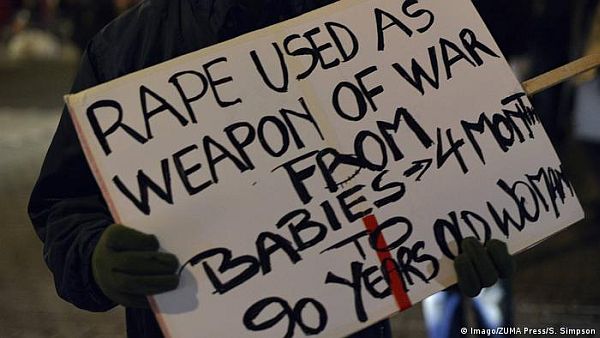
Finally, the matter of mallard ducks and the fact that perhaps 40 per cent of copulations are coerced, an activity that has been called ‘gang rape’ of a solitary female. Even calling this conduct ‘forced copulation’, which might be considered a step in the right direction, still lands us in semantic quicksand, erroneously confusing what is routine behaviour that leads to impregnating the female duck with the actions of human males who consciously decide to sexually attack a female. It also implies that female humans and female ducks are comparatively the same, passive victims and receptacles of male aggression and sexual predation. (For a brazen invocation of the mallard duck gang-rape thesis, see David Barash’s book Sociobiology: The Whisperings Within (1980); for a detailed and thorough takedown of the thesis, see Richard O Prum’s prizewinning book The Evolution of Beauty: How Darwin’s Forgotten Theory of Mate Choice Shapes the Animal World – And Us (2017).)
 
It matters what language we use to describe and explain human behaviour such as prostitution, harems and gang rape, among other things, because it gets to the gist of how ‘animal’ we are: how much we share in common with other animals; how much we have control over our actions; what are fundamental, hardwired (or genetically programmed, evolutionarily driven, chromosomally relevant) differences between male and female humans that relate, for example, to sexuality and aggression; the extent to which the males of all species and the females of all species share some fundamental features in common and, if so, what they are; and which allegedly cross-species male attributes represent a relic of outmoded social values more than anything anatomical.
 
Let’s consider the 220 million cats and 200 million dogs (and counting) worldwide that we call our pets: how often do we bestow them with human names? How often do we compare their personalities with those of friends or family? We humanise nonhuman animals. And, pretty easily, we extend this line of thinking to humanise nonhuman animal behaviour. We animalise humans, which really means we dehumanise humans, making their actions and desires products of inherited traits more than conscious decision-making and volition. Some have even argued that the role of society is exactly to tame and restrict these supposedly innate, mammalian instincts in humans. As the anthropologist and primatologist Agustín Fuentes wrote in Race, Monogamy, and Other Lies They Told You (2012): ‘It’s a commonly held belief that if you strip away culture, that which keeps us well behaved, then a beastly savage will emerge (especially in men).’
 
In one of my classes I teach about gender and science, I have used the examples of hummingbird prostitutes, baboon harems and mallard duck gang rape. A week after we discussed how such anthropomorphism could lead to woefully incorrect understandings about human sexuality, a student returned with the following anecdote: she had just heard a lecture in her biology class in which the professor used the phrase ‘gangbanging bacteria’. Not even animal gangbanging in this instance! Amusing or alarming?
 
Although the term ‘toxic masculinity’ has captured the imaginations of many people who want to call attention to men thinking and acting in ways that are harmful to others, male and female, it is also problematic. Because, if you believe that someone who identifies as male can act only within a range of masculinities, and by definition everything they do is on a masculinity continuum of some kind, you are still stuck in a very binary world. Would it make sense to talk about the toxic masculinity of certain male hummingbirds and ducks? Yet ideas about males-of-all-species often lie just beneath the surface of contemporary discussions about the gender binary and, indeed, widespread discussions and debates regarding gender and sexuality.
 
Efforts in recent years to dismantle neat male-female models have been met with stiff resistance in both religious and scientific quarters. Evolutionary biologists, for instance, have argued vociferously that male-female differences with respect to sexuality and aggression are core components of what it means to be human and animal in general. Among the theological responses to challenges to the gender binary we find one from 2019, when the Vatican published ‘“Male and Female He Created Them”: Towards a Path of Dialogue on the Question of Gender Theory in Education’, written by Cardinal Giuseppe Versaldi and Archbishop Angelo Vincenzo Zani. Apparently, the Vatican had decided that gender confusion among its 1.2 billion parishioners worldwide had reached epidemic proportions. Their ‘Male and Female’ paper faithfully endorses the gender binary as God-given, and cautions that any and all notions of gender bending go against not only God but also modern medicine and science.
 
 
By censuring anthropology’s examination of gender and sexual indeterminacy as too relativist, and asserting that male and female bodies and temperaments are fundamentally unalike, the gender binary gets sanctified as reality, and it becomes easier to attribute every form of male behaviour – including those related to sexuality and aggression – to the natural, unchangeable world.
 
This is a time of gender confusion and instability as to what the connection is between physiology and temperament, especially when it comes to male and female. Efforts to delink aggression from something that is considered characteristically and particularly male – in effect, to de-gender our concept of aggression – must inevitably contend with the gender binary. And this is threatening to those with a vested interest in maintaining a view of the world in which perceptions about our biology, and our evolutionary heritage, are reduced to ageless Mars/Venus frameworks.
 
Yet objections to the gender binary view of the world have implications far beyond spiritual disputes, beyond how many credible parallels we can draw regarding engendered behaviour in humans and, for example, monkeys. Monkey see, human do? Biological extremism gets us into trouble repeatedly, many times without us even realising that our assumptions about differences are based on little more than common sense.
 
Although most discussions about rape don’t involve mallard ducks, references to ‘rape’ in the nonhuman animal kingdom surely resonate with the idea that there is something natural about rape across species, and therefore that it is, at most, possible to control among humans, but never eradicate, because it is biologically baked in. Thus do we pathologise maleness and reduce public policy to restraining males’ ‘natural’ impulses.
 
The leading anthropologist of gender and violence Sally Engle Merry has underscored the ease with which the criminalisation of gender-based violence – in her study, spouse abuse in Hilo, Hawai‘i – is naturalised. Husbands beating wives is treated by the courts in Hilo as ‘natural to men’, while men attending state-mandated programmes ‘discover that the authority of the court is exercised against their customary control over women and that their “natural” behaviours are penalised.’
 
Half a world away, Maria Eriksson Baaz and Maria Stern conducted research on why vast numbers of male soldiers raped women during the war in the Democratic Republic of the Congo (DRC) in the 1990s and 2000s that killed more than 5 million people. Interviewing officers and soldiers, men and women, these scholars were repeatedly told that there had been two kinds of rape in the DRC: ‘lust rape’ and ‘evil rape’. Male sexual needs caused lust rapes; evil rapes were triggered by men’s need to destroy. Lust rapes were directly linked to the sexual deprivations of wartime.


In the words of one male lieutenant colonel in the Congolese army: ‘Physically, men have needs. He cannot go a long time without being with a woman. It is very difficult to stop him.’ A female major told Eriksson Baaz and Stern: ‘So, the way our [male] soldiers are raping, it is because of lack of money. Maybe he has not been with a woman for 3-4 months and has no money on his pockets. What is he supposed to do?’ As the authors of this study conclude, men’s sexual needs ‘emerged as a given, known, natural driving force which required “satisfaction” from women whose role it is to satisfy these needs.’
 
In 2007, I was in Haiti interviewing United Nations officials, and UN peacekeeping soldiers, officers and police, about ‘sexual exploitation and abuse’ by UN personnel against girls, women and some boys in the local population. News reports about the rapes of innocent civilians and troops paying for sex with Haitian girls for a cookie or a dollar had become an international disgrace. One of the people I interviewed was Daniel Morales, who was part of the Peruvian contingent among the UN Peacekeepers. We talked in his barracks during a break from his routine patrols. He maintained a line of reasoning that I heard in one form or another from other military officers and UN personnel: ‘If you put men in a situation where they are not going to have sex for three months, that is a challenge, but not insurmountable. If you extend this to six months, well, that is far more difficult. Beyond this point they become unmanageable.’
 
Male hydraulics seemed to explain why you could expect men to tamp down their sexual needs for only so long before they needed relief. The UN therefore always tried to facilitate nearby ‘rest and recreation’ sites for peacekeepers to seek sexual release in a nearby country. In the case of Haiti, this most often meant trips to the Dominican Republic. The long and often shameful history of armies providing sex workers for soldiers is notorious; for example, Paul Fussell, in his study of the First World War, characterises prevailing sentiments at the time: ‘Prolonged sexual deprivation will necessitate official brothels – in the Great War, “Blue Lights” for officers, “Red Lights” for Other Ranks.’
 
Yet as much as wars, including the First World War, provide ample illustrations of commonplace notions of males’ violent animality, as the historian George Mosse has also shown, in the manly language of war – think: pain, suffering, duty, sacrifice, fortitude, honour, chivalry – we can find both war fever and antiwar resistance.
 
 
In The Image of Man (1996), Mosse wrote that: ‘The warrior provides a climax to a concept of manliness inherent in much of the construction of modern [Western] masculinity … The Great War was a masculine event, in spite of the role it may have played in encouraging the greater independence of women.’ The First World War was not caused by masculinity or maleness any more than societies exist because of men. But manliness was central to inspiring, facilitating and resolving every aspect of that war, from the doughboys in the furrows and foxholes, to the flying aces and their aerial acrobatics. According to Mosse, as great and obvious as the divisions between opposing nations were, ‘the crucial role played by modern masculinity in upholding the clear division between men and women, so basic to modern society over the past centuries’ also proved fundamental to the wartime ethos. Men and not women were violent, or potentially violent. A man’s physique was naturally inscribed with manly aggression. More, ‘The manner in which the war was waged on the western front encouraged the view of war as dependent on a functioning male camaraderie as soldiers fought, lived together, and died together in the trenches.’
 
That naturalised camaraderie was to morph years later into the infamous phrase ‘male bonding’, first formulated in 1969 by the biological anthropologist Lionel Tiger to defend his very modern opinion that ‘men “need” some haunts and/or occasions which exclude females’.
 
One memoirist of the time described the First World War as being what Mosse later called ‘a struggle for existence in which man’s animal instincts were released’. With a populace all too eager to lionise carnage in the name of nation, women, children and other ideological causes, nonetheless, Mosse writes: ‘Most of those who were disillusioned with war tended to join Left-wing movements, and if they became socialists they were apt not only to reject war but to question the manliness that had supported the conflict.’
 
All the same, pro- and antiwar men could share more than a few similar notions about masculinity and manliness. As Mosse wrote: ‘for all the difference in the conception of masculinity, the identical ideal of moral purity united these socialists and those who believed in the normative ideal of manhood; both shared the view that the generally accepted standards of personal comportment and sexual behaviour were crucial aspects of masculinity. The significant difference lay in the attitude toward political morality, in the acceptance or rejection of aggression and violence.’ And with that, the acceptance or rejection of attributing natural aggression and violence to human males.
 
By questioning the link between aggression and maleness, the doctrine of male animality could also be tested, and shared animality could become more referential than explanatory.
 
Pseudoscience beliefs that we find throughout the world today regarding animal maleness are embedded in the language of daily life. Animality is central to the vernacular of male sexuality and aggression, as if human behaviour is solely and best understood as a branch on the tree of bestial evolution. Enormous attention has been paid in recent decades to changing language that naturalises female bodies, to showing that female biology is not female destiny. We have spent less time disturbing language carelessly applied to males, especially that which exculpates male behaviour by blaming monkey-like genes and hormones.
 
Are men animals? By Matthew Gutmann. Aeon, November 29, 2021.


We place unreasonable trust in biological explanations of male behaviour. Nowhere is this truer than with testosterone. Contemporary pundits invoke the hormone nicknamed ‘T’ to prove points about maleness and masculinity, to show how different men and women are, and to explain why some men (presumably those with more T) have greater libidos. Yet, despite the mythic properties popularly associated with T, in every rigorous scientific study to date there is no significant correlation in healthy men between levels of T and sexual desire.
 
Beginning in the 1990s and really picking up steam in the 2000s, sales of testosterone replacement therapies (TRTs) went from practically zero to over $5 billion annually in 2018. This was either because there was a sudden outbreak of ‘Low T’ when a major medical epidemic was finally recognised, or because T became marketed as a wonder drug for men thrown into a panic when they learned that their T levels declined 1 per cent annually after they hit 30.
 
The answer is not that men’s bodies changed or that Low T was horribly underdiagnosed before but that, in the minds of many, T became nothing short of a magic male molecule that could cure men of declining energy and sexual desire as they aged.
 
What’s more, many have been taught that, if you want to know what causes some men to be aggressive, you just test their T levels, right? Actually, wrong: the science doesn’t support this conclusion either. Some of the famous early studies linking T and aggression were conducted on prison populations and were used effectively to ‘prove’ that higher levels of T were found in some men (read: darker-skinned men), which explained why they were more violent, which explained why they had to be imprisoned in disproportionate numbers. The methodological flaws in these studies took decades to unravel, and new rigorous research showing little relation between T and aggression (except at very high or very low levels) is just now reaching the general public.
 
What’s more, it turns out that T is not just one thing (a sex hormone) with one purpose (male reproduction). T is also essential in the development of embryos, muscles, female as well as male brains, and red blood cells. Depending on a range of biological, environmental and social factors, its influence is varied – or negligible.
 
Robert Sapolsky, a neuroscientist at Stanford University in California, compiled a table showing that there were only 24 scientific articles on T and aggression 1970-80, but there were more than 1,000 in the decade of the 2010s. New discoveries about aggression and T? No, actually, although there were new findings in this period showing the importance of T in promoting ovulation. There is also a difference between correlation and cause (T levels and aggression, for example, provide a classic chicken-egg challenge). As leading experts on hormones have shown us for years, for the vast majority of men, it’s impossible to predict who will be aggressive based on their T level, just as if you find an aggressive man (or woman, for that matter), you can’t predict their T level.
 
 
Testosterone is a molecule that was mislabelled almost 100 years ago as a ‘sex hormone’, because (some things never change) scientists were looking for definitive biological differences between men and women, and T was supposed to unlock the mysteries of innate masculinity. T is important for men’s brains, biceps and … that other word for testicles, and it is essential to female bodies. And, for the record, (T level) size doesn’t necessarily mean anything: sometimes, the mere presence of T is more important than the quantity of the hormone. Sort of like starting a car, you just need fuel, whether it’s two gallons or 200. T doesn’t always create differences between men and women, or between men. To top it all off, there is even evidence that men who report changes after taking T supplements are just as likely reporting placebo effects as anything else.
 
Still, we continue to imbue T with supernatural powers. In 2018, a US Supreme Court seat hung in the balance. The issues at the confirmation hearings came to focus on male sexual violence against women. Thorough description and analysis were needed. Writers pro and con casually dropped in the T-word to describe, denounce or defend the past behaviour of Justice Brett Kavanaugh: one commentator in Forbes wrote about ‘testosterone-induced gang rapes’; another, interviewed on CNN, asked: ‘But we’re talking about a 17-year-old boy in high school with testosterone running high. Tell me, what boy hasn’t done this in high school?’; and a third, in a column in The New York Times, wrote: ‘That’s him riding a wave of testosterone and booze…’
 
And it is unlikely that many readers questioned the hormonal logic of Christine Lagarde, then chair of the International Monetary Fund, when she asserted that the economic collapse in 2008 was due in part to too many males in charge of the financial sector: ‘I honestly think that there should never be too much testosterone in one room.’
 
You can find T employed as a biomarker to explain (and sometimes excuse) male behaviour in articles and speeches every day. Poetic licence, one might say. Just a punchy way to talk about leaving males in charge. Yet when we raise T as significant in any way to explain male behaviour, we can inadvertently excuse male behaviour as somehow beyond the ability of actual men to control. Casual appeals to biological masculinity imply that patriarchal relationships are rooted in nature.
 
When we normalise the idea that T runs through all high-school boys, and that this explains why rape occurs, we have crossed from euphemism to offering men impunity to sexually assault women by offering them the defence ‘not guilty, by reason of hormones’.
 
Invoking men’s biology to explain their behaviour too often ends up absolving their actions. When we bandy about terms such as T or Y chromosomes, it helps to spread the idea that men are controlled by their bodies. Thinking that hormones and genes can explain why boys will be boys lets men off the hook for all manner of sins. If you believe that T says something meaningful about how men act and think, you’re fooling yourself. Men behave the way they do because culture allows it, not because biology requires it.
 
No one could seriously argue that biology is solely responsible for determining what it means to be a man. But words such as testosterone and Y chromosomes slip into our descriptions of men’s activities, as if they explain more than they actually do. T doesn’t govern men’s aggression and sexuality. And it’s a shame we don’t hear as much about the research showing that higher levels of T in men just as easily correlate with generosity as with aggression. But generosity is less a stereotypically male virtue, and this would spoil the story about men’s inherent aggressiveness, especially manly men’s aggressiveness. And this has a profound impact on what men and women think about men’s natural inclinations.
 
We need to keep talking about toxic masculinity and the patriarchy. They’re real and they’re pernicious. And we also need new ways of talking about men, maleness and masculinity that get us out of the trap of thinking that men’s biology is their destiny. As it turns out, when we sift through the placebo effects and biobabble, T is not a magic male molecule at all but rather – as the researchers Rebecca Jordan-Young and Katrina Karkazis argue in their excellent new book Testosterone (2019) – a social molecule.
 
Regardless of what you call it, testosterone is too often used as an excuse for letting men off the hook and justifying male privilege.
 
Testosterone is widely, and sometimes wildly, misunderstood. By Matthew Gutmann. Aeon,  March 10, 2020.


Matthew Gutmann‘s Are Men Animals?: How Modern Masculinity Sells Men Short starts promisingly. His premise is simple enough, but in that simplicity there are some major problems. He writes: “I believe that the ways in which people think about men and expect men to behave can be dramatically renegotiated.” It’s certainly a compelling statement that’s hard to deny.
 
Unfortunately, there isn’t much provided in the way of how we can renegotiate these expectations. “Acting as if men can’t control themselves is hazardous,” he writes. He argues (not a hard position to take) that women are central to the lives of most men, and he looks at the origins of masculinity. There are myths and half-myths. Do men really spend less time in parental activities than women? Are there really no social structures on earth run by women?
 
Gutmann travels through Mexico and Shanghai to look at cultures of masculinity beyond US borders. He’s looking for clues, for counter-histories to write something different. His approach to the subject is effective to a point, but there’s no sense (even in these early pages) that the result of his work is unique.
 
Are men genetically pre-conditioned to commit sexual assault? Is rape and murder pre-destined and eventual because of destiny? Gutmann considers the notion that more such acts would occur if men thought they could get away with it, but this mixture of anthropological and gender studies clashing with a cursory look at the legal system is tough to swallow when it’s not done in equal parts. In his opening Chapter “Gender Confusion”, Gutman argues that The Human Genome Project of the ’90s was “…after eugenics, the second major push of the century for…’hereditarian scientific ideology.’ He asserts that the concept of “Gender Confusion” (aligning with traditional male roles of hunter and provider) is historical and cultural.
 
The problem here is simple. To propose we are “confused” about gender identity and social roles suggests that there is in fact a definite way to see men on their own and as reflected through their relationships with women. Gutmann continues to ask that we renegotiate what it means to be a man, but he leaves the reader at a loss by never proposing what that new masculine identity should be. By opening with a discussion on gender confusion, he implies that trans identity (which is given a very minor consideration in this book) is complicating rather than enhancing a progressive sense of gender fluidity.
 
Indeed, “The Science of Maleness” chapter has some problematic conclusions. In particular, Gutmann proposes that aggression elevates testosterone secretion, not the other way around. He proposes that murderers are predominantly men (“…about nine men commit murder for every one woman…”), and he indicates that some researchers have simply surrendered to the idea that men are, by and large, destined to murder. It’s an interesting notion, but once again he seems to contradict himself by noting “…most men never kill or even commit assault.”
 
The problem here is that Gutmann introduces these ideas but he doesn’t fully explore them, as the informed reader would hope to happen. Does he believe men are doomed? Gutmann’s argument is strongest when he makes his connections between human and animal males. Are we all that similar? He writes: “The words we use and the meanings behind them influence how we understand human relationships and events.”
 
Later, he makes a strong argument about the way we are as a species and how we can be better: “Humans don’t have to act like other animals…To lose sight of human mutability and the range of behavior among humans is to give men a morphological free pass to tyrannize others under the guise of ‘acting like a guy.'”
 
Gutmann carefully brings us through men’s libidos and natural aggressions. Why do men make war? He draws connections between the fact that sex workers of The Dominican Republic were used to satiate the sexual compulsion of UN Peacekeeping forces and the inherent male trait for aggression. Is rape really “…rooted in a feature of human nature,” as proposed by psychologist Steven Pinker? Gutmann introduces these ideas and then shuts them down: “Men’s bodies are biologically no more or less choosy, coy, or capricious than women’s.”
 
This is a long chapter that could very well have been expanded to better purposes, especially when he includes Donald Trump (not by name, but we all know the story) in his example of “Bad” violence and “Good” violence. He re-prints the transcript of Trump’s famous “Grab ’em by the pussy” interview with Access Hollywood and asserts that the greatest sin here was not that Trump said these words. Instead, there was “…complicity in the acquiescence, and that collusion was rooted in bedrock beliefs about men and women and violence.” In other words, the nation got what it wanted when it voted for him, and there is nobody to blame but ourselves for the consequences.
 
The more interesting and effective chapters are set in Mexico and China. Regarding the latter, “Reverting to Natural Genders in China” looks at Shanghai’s Blind Date Corner, where aged parents meet with matchmakers to offer their children as prospective mates. This is a place where “…the intellectual and career accomplishments of daughters are generally included on their flyers, along with their physical attractiveness. Men’s flyers list their height, professional trajectory, and whether they can already provide housing…” The argument is that there are three genders in China, and their third gender is women with PhDs. Gutman adds: “It didn’t take long before a fourth gender was added: men married to women with PhDs.
 
“Biology can’t be changed, and it won’t matter (as Gutmann notes about Mexico) if the transit system offers gender-segregated train cars to eliminate (or cut down on) crimes against women. Gutmann seems to rush through other issues in the later chapters: pronoun choices, Bret Kavanaugh’s Supreme Court nomination case, and the all-pervasive truth of “toxic masculinity”. It’s a whirlwind of issues that Gutmann presents, but the volume of material should not be perceived as a comprehensive answer to whether or not men are animals.
 
“If we accept that violence is a core feature rather than a flaw of male behavior, and that assault is men’s essential nature reasserting itself, we cripple our ability to identify and combat misogyny, gender bias, and discrimination.” It’s hard to dispute this, but the rushed sense of this book’s final third gives the impression that Gutmann preferred to stuff his text with ideas and perspectives that would please all sides. Had he been more brave and emphasized the political consequences of toxic masculinity, this could have been a stronger book, even incendiary, as we all wait a possible second Trump presidency, where the worst aspects of manhood (primitive, predatory, animalistic) are elevated and rewarded.
 
The ground Gutmann walks throughout these pages is flat and wide, well-worn by those who came before him. He’s not forging any new paths here that can’t be accessed through deeper texts, different texts. Testosterone: An Unauthorized Biography by Rebecca M. Jordan-Young and Katrina Karkazis, and Stephen Pinker’s The Better Angels of our Nature: Why Violence Has Declined that have done a better job looking at the nature of violence and masculinity as expressed by men.
 
There is sound and solid research to be found about the way men are perceived in Mexico and China, but Gutmann’s questions on gender identity are problematic. His presumption that there is a definitive notion of masculinity hurts this book’s potential to make a major difference. Most of us can already answer the title’s question: Yes, men are indeed animals, “modern masculinity” is fluid and therefore not as lethal as he might assume, and we can raise ourselves up higher if we accept these truths.

Do We already know the Answer to the Question, Are Men Animals? By Christopher John Stephens. Pop Matters,  20 February 2020


How Much Are Men Ruled By Biology?
 
The phrase "boys will be boys" is often used to minimize bad behavior. An anthropologist dissects how we excuse and dismiss men's actions based on biology, and how that does them, and others, a grave disservice.
 
Judith Siers-Poisson talks with Matthew Gutmann
 
 
WPR. December 26, 2019.