mosaic-tailed rat
On about
3.6 per cent of the planet's surface, geographic barriers prevent wild species
from migrating as effectively as the desert borderlands barred the polo-shirted
young man. Take, for example, the mosaic-tailed rat, which lived on tiny
Bramble Cay, an uninhabited island on the northern edge of the Great Barrier
Reef off the coast of Australia. Increasingly violent storm surges steadily
wiped out the island's plant life. But like other terrestrial creatures living
on remote islands, or at the top of mountains, the mosaic-tailed rat had
nowhere to go. The rodents' numbers diminished. By 2002 there were only 10
mosaic-tailed rats left on the island. A fisherman spotted one in 2009, but
when scientists returned in 2016 to survey the island, they couldn't find even
one. In 2019, with 97 per cent of the vegetation on the island destroyed,
officials in Australia declared Melomys rubicola, the Bramble Cay mosaic-tailed
rat, officially extinct. It was the first mammal we know of to be wiped out by
climate change. Experts agreed it would not be the last.
The more
potent barrier to wild species' movement is us. So far, our cities, towns,
farms, and sprawling industrial infrastructure have swallowed up over half the
planet's land surface. We transformed another 22 per cent of the earth's habitable
land in just the last decades, mostly by cutting down forests and turning them
into farms, as a recent analysis of satellite images from 1992 to 2015 showed.
Our massive footprint makes life impossible for so many wild species that an
estimated 150 go extinct every day, speeding up the background rate of
extinction by a factor of one thousand. Species that have not lost their
habitats entirely must move through a landscape disfigured by human
developments. Black bears in the hardwood swamps of Louisiana must cross a
highway to reach others in their population. Instead of striking out across the
highway to find new mates, they've started to mate with those in their own
cut-off group, becoming increasingly inbred. Cougars living in the mountains
around Los Angeles must cross two freeways, including one with eight lanes of
speeding traffic, to meet others of their kind. None of the cougars that
scientists fitted with GPS collars could do it. Four died attempting the
crossing, five turned back, and one was shot by police. Birds on the wing smash
into industrial structures, each building regularly racking up corpses, like
the half-dozen or so birds felled every week by the Thurgood Marshall Federal
Judiciary building in Washington, D.C.
Migrating
butterflies, lured off course by electric lighting, perish and flutter to the
ground. A 2018 paper in Science analyzed the movements of fifty-seven different
mammal species outfitted with GPS devices over landscapes rated according to a
"human footprint index," which incorporated data on human population
density, the extent of built land, roads, nighttime lighting, and the like. New
York City garners a score of 50, while the vast and wild tropical wetlands of
the Brazilian Pantanal scores 0. The bigger the human footprint, the
researchers found, the more constrained animal movements became. In places with
the largest footprints, animals managed to cover as little as a third of the
distance of those in places with little or no human impact.
Besides
the inadvertent obstacles of geography and industrial development, the next
great migration must overcome purposeful barriers. Before 2001 fewer than 20 of
the invisible boundaries that define nearly two hundred nation-states were
physically marked by fences or walls. Animals, winds, currents, and waves could
freely travel across their imaginary lines. In 2015 an unprecedented surge in
construction of new border walls began. By 2019 newly built walls, fences, and
gates had risen over 60 international boundaries, blockading the movements of
over 4 billion people around the world. More borders are fortified by walls and
fences today than at any time in history. Tunisia has built a wall of sandbanks
and water-filled trenches along its border with Libya. India and Myanmar have fenced
their borders with Bangladesh. Israel has enclosed itself with razor wire,
touch sensors, infrared cameras, and motion detectors. Hungary's fence along
its border with Croatia, built by prisoners, delivers electric shocks to any
migrant foolhardy enough to touch it. Security officials patrol the barrier,
tear gas canisters in hand. Austria has built a fence along its border with
Slovenia. Britain plans another one along the channel separating it from
France. Norway has fortified its border with Russia. In the United States, the
hundreds of miles of sixteen-foot-high concrete and steel walls marking the
southern border would be extended with even taller, longer, more impregnable
walls, U.S. president Trump insisted, perhaps even the entire length of the
two-thousand-mile border. Walls don't necessarily function as the impregnable
barricades they're meant to.
In one
study, for example, researchers set up camera traps along the U.S.-Mexico
border, tracking the movement of people and wild species across open stretches
and comparing their movement across stretches blocked by border walls. The
walls effectively deterred the pumas and coatis. According to conservation
biologists, the extended walls proposed for the U.S.-Mexico border, for which
the government has waived scores of environmental regulations, will endanger
the life-saving movements of most of the 93 species that live on either side of
it. But in the study comparing open and walled stretches of the border, the
walls had no effect on people's movements. Whether crossing the border means
scaling a wall or not, people keep moving, regardless. If border obstructions
fail to stifle movements, they do effectively deflect them. People on the move
take more circuitous routes than they otherwise would in order to circumvent
barriers, moving like water around a boulder in a stream. Attempting to bar
migration, a European border official said, "is very much like squeezing a
balloon. When one route closes, the flows increase on another."
This
World Hates Migrants, Human And Otherwise. By Sonia Shah. Mid-day, August 2 , 2020.
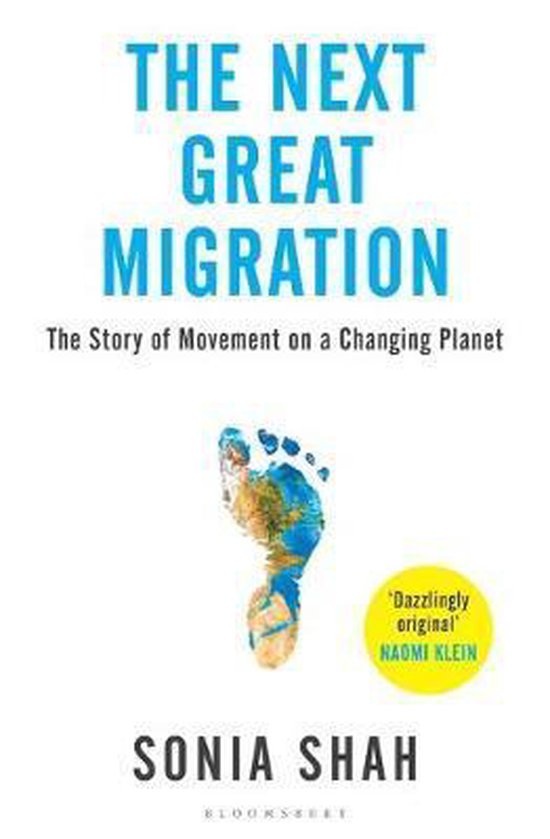
Excerpt from The Next Great Migration: The Story of
Movement on a Changing Planet by Sonia Shah.
Charles Elton
Biologists
such as Elton and others who’d dismissed migrants as suicidal zombies and
mindless invaders never really examined migrants’ behaviour itself nor
considered in any depth how it might have evolved. What drives creatures to
move into new territories, away from where they were born? Leaving behind the
known comforts of a home habitat, migrants strike out into the unknown. They
forsake the help of kin who stay behind. In return, they may not find anywhere
suitable to live at all.
And yet
they do it anyway.
Baleen
whales migrate thousands of miles from their rich feeding grounds in the far
north to the warm waters of the tropics. Zooplankton migrate vertically between
the depths and the surface the migrant formula in sync with the fluctuating
light. Forests move over thousands of years with the advance and retreat of
glaciers. In jungle-dripped Hawaii, tiny goby fish migrate from the open
Pacific Ocean back to their birthplaces at the tops of waterfalls. The journey
requires swimming against ocean currents into fresh waters and climbing up
cliffs. They use suckers on the undersides of their bodies to do it.
In
humans, the origin and ecological role of migration continue to be shrouded in
controversy and contention. But biologists have forwarded a clear idea about
its provenance in animals.
Migration
experts such as Hugh Dingle say that migration most likely evolved as an
adaptive response to environmental change. Migratory behaviour is more common
among species that depend on resources exposed to environmental variations than
in those whose livelihoods are more buffered from environmental change.
Arthropods that live in temporary habitats such as shallow pools and seasonal
ponds, for example, are more likely to migrate than those that live in
relatively stable environments such as forests and salt marshes. Species that
live in places with erratic rainfall or that feed on patchily distributed
resources such as fruit and flowers are more likely to migrate than those that
live in relatively stable places such as alpine tundra or deep lakes, where a
disproportionate number of insect species don’t even have wings. Species that
live on the edges of forests or in their canopies are more likely to migrate
than those that live in their interiors. Bird species that feed on fruit, which
is available only seasonally, tend to migrate more than bird species that feed
on insects in the interior of forests, which are not. Bats that roost in trees,
where they’re more exposed to the cold and the rain, migrate more than bats
that roost in caves, which protect them from the elements.
Even
within species, individuals that live in habitats exposed to change migrate
more than those less exposed. The migratory behaviour of white-tailed deer, for
example, correlates with the size the next great migration of their forest
patches: deer that live in small patches more exposed to changing conditions
migrate more frequently than deer that live in large patches.
For
creatures that live in habitats subject to environmental change, survival rests
on one of two strategies: either go dormant and wait for the altered conditions
to recede or migrate. Again and again, those creatures capable of movement have
opted for migration, despite the costs. Dingle distilled a formula that
predicts the emergence of migratory behaviour. It lies in the ratio between the
time it takes to reproduce a new generation and the stability of the
environment. If that ratio is less than one—if, say, it takes a couple of years
to reproduce the next generation but the habitat, say a vernal pond, lasts only
for a season—migration is likely to emerge. And so as the northern hemisphere
tilts away from the sun, lengthening shadows and shortening days, creatures of
all kinds prepare to move. Physiological changes transpire inside their bodies,
hormones spiking and nervous systems mobilizing. Sap-sucking rosy apple aphids
birth special forms with wings. Salmon on the verge of migration experience
spikes of hormones such as prolactin and cortisol. Baby eels metamorphose into
transparent forms that prefer fresh water to salt water. In preparation for
their travels, migratory birds and insects build up fat stores that can
comprise more than 50 per cent of their body mass, and plants produce tough
coats on their seeds. The proportion of fat they deposit in their seeds
correlates to the distance the seeds are likely to travel.
As the
time to leave approaches, a restlessness sets in. Migratory birds trapped in
cages will flutter repeatedly to one side of a cage, jumping off their perches
and crashing to the side. Which side depends on the direction it faces:
whichever matches that of their migratory path. Scientists named their
agitation Zugunruhe, German for “migratory restlessness.”
It’s
hormonal. Remove the gonads of sparrows in the spring, and they’ll be less
restless; castrate the migrant formula a migratory bird, and it will still
migrate, but in a different direction.
Migratory
journeys are not simple extensions of everyday movements, like flying from one
tree to another or moving from one cave to the next. In birds, you can tell as
soon as they leave, from their rate of climb and the altitude they achieve,
that their migratory flights are something different. While en route, their
behaviour and bodily functions are fundamentally altered. Unlike during
ordinary movements, during migrations their bodies halt their own growth and
development. They ignore stimuli they’d ordinarily respond to, passing by
appealing foods and breeding spots.
But
while migration is driven by physiological changes, it is not necessarily the
result of some fixed itinerary instilled into the bones or some blueprint
encoded in genes, propelling creatures in fixed directions at standardized
times. The physiological states required for migration can be flexible and
dynamic, too. The muscles that power the wings of migratory aphids, for
example, start to break down after migration, the proteins diverted to
reproduction instead. Animals’ sensitivity to the quivers and trembles of our
pulsating planet—not predetermined internal programs— drives their behaviour
and movement.
Wild
animals’ sensitivity to environmental perturbances is the stuff of legend.
Anecdotal stories of animals apparently sensing impending environmental
disruptions hours or days before they’re detectable to humans stretch back to
ancient times. Pliny the Elder described birds’ restlessness before
earthquakes. Geese detected the arrival of an invading army of Celts in 387
BCE. Rome before the sleeping residents did, their quacking alerting them to
the impending onslaught. In 1975 snakes outside the city of Haicheng in China
emerged from their hidden shelters and froze to death in the winter’s cold, in
advance of a 7.3 magnitude quake.
How the
urge to migrate is coded in our genes. By Soniah Shah. Daily O, July 24, 2020.
Excerpt from The Next Great Migration: The Story of
Movement on a Changing Planet by Sonia Shah.

Kon Tiki raft
When
people start moving, we call it a “migrant crisis”. It’s reflexive. And it
happens regardless of whether host societies have the capacity to absorb
migrants or whether migrants themselves and the societies they enter and leave
would be better or worse off because of their movements.
In part,
that’s because we’ve long misunderstood the scale and meaning of movement on
our shared planet.
In the
18th century, the founder of modern taxonomy, Carl Linnaeus, characterised the
natural world as essentially still. Each animal belonged where it was found and
hadn’t moved from one place to another; each human population was similarly
fixed in place on the planet. Thanks to Linnaean taxonomy, we name things based
on their fixed places and where they “belong”: the Canadian goose, the Japanese
maple. We use animals to stand in for places, as if they are one and the same:
the camel stands in for the Middle East; the kangaroo for Australia – as if
they have been there from time immemorial and could never shift.
Linnaeus
decided that people who lived in different continents had been so biologically
isolated from each other that they were separate subspecies, creating a human
taxonomy which separated people by colour, continent, and his sense of their
morals. He relied heavily on folklore and myth about tailed men and African
women with bizarre genital growths (his taxonomy was famously based on sexual
characteristics, which is why it was controversial and called “loathsome
harlotry”). Elevating the degree of differentiation between us obscured our
common origin and our shared migratory history. Nevertheless, his ideas formed
the foundation for modern ideas about racial difference, which are used to
justify anti-migrant policies to this day.
We’ve
minimised the role and scope of migration ever since. For example, Europeans
refused to believe Polynesian people’s story of prehistoric migrations to the
Pacific Islands by canoe from Asia. They thought that purposeful long-distance
movements were only possible with modern Western technology. In the 1940s, the
Norwegian explorer Thor Heyerdahl theorised that the only way people could have
gotten to the remote Pacific islands was by floating there on a raft from Peru.
He was so convinced of his theory that he tried it himself on the Kon Tiki
raft, which became a popular movie and book. Up until the 1960s, top
geographers said that migration has played such a minor role in human history
that the people who lived on different continents had actually evolved there.
Today’s
policymakers similarly underestimated the pace of human movements when they
claimed they could arrest the spread of novel coronavirus by closing the
borders, seemingly unaware that seven million people had already left the city
of Wuhan before it was locked down. It was only after the borders slammed shut
that it became clear that our movement patterns made even our most stringent
efforts to stop the microbe’s dispersal futile.
Our
underestimation of the scope of migration has been coupled with an outsized
focus on migration’s disruptive effects. We call the movement of wild species
into novel habitats “invasions” of unwanted “aliens,” even though according to
a general rule in invasion biology, only 10 per cent of alien species establish
themselves in new habitats and only 10 per cent of those are likely to cause
unwanted harm to economies, ecosystems or human health.
Human
migrants are blamed for all manner of social ills, from the spread of crime and
terror to disease. One result is that today, more borders are fortified with
walls and fences than at any time in history.
But new
findings made possible by advancements in genetics and navigation are upending
conventional notions of migration as rare and disruptive, revealing migratory
capacities more extensive and more deeply embedded in history and nature than
ever before imagined.
Ancient
DNA shows that we’ve continuously migrated. We didn’t just disperse out of
Africa into an empty planet and then stop moving until modern times. We
migrated out of Africa into Eurasia and then back again; we moved from Eurasia
into South Asia; we migrated into the Americas and then back to Europe. Some of
the most forbidding migrations, such as into the Tibetan plateau and the remote
Pacific had been accomplished not just once but multiple times.
A
revolution in animal tracking thanks to GPS and solar technology has revealed
that animal movements are much more expansive in scale and more complex and
responsive than ever before imagined, too. The movements of mountain goats is
shaped by the timing of volcanic eruptions, which they detect six hours before
seismologists can. The flight paths of swans curve according to cold snaps, and
could forecast outbreaks of avian influenza days before traditional methods of
influenza surveillance. The creep of thousands of species toward the poles and
into the heights tracks the shifting climate.
We live
in a world on the move. And nature depends on our journeys. Ecosystems depend
on the biological connections provided by wild species on the move. Over 90 per
cent of the trees in rainforests, for example, rely on the movements of birds
and other animals to disperse their seeds. Human mobility is fundamental to our
biological resilience. Our capacity to co-operate across geographic barriers
relies on the cultural connections forged by people on the move, injecting
genetic and cultural diversity into otherwise insular societies.
Migration
is the planet’s connective tissue. It’s not the crisis we reflexively imagine
it to be. In a rapidly changing world, migration may be just the opposite: the
solution.
“Migration
is the planet’s connective tissue” By Sonia Shah. The Big Issue , June 26, 2020.
How
should countries protect citizens from deadly diseases? The most promising
solution is often not the most popular, explains author Sonia Shah.
In her
forthcoming book, The Next Great Migration: The Beauty and Terror of Life on
the Move, Shah explores whether, in a world of disruptive and deadly biota on
the move, there is any lasting solace in closed borders and isolated
societies—or whether our survival depends on just the opposite.
On April
23, 2020, Shah joined the Pulitzer Center for a discussion of her past and
present reporting as part of the Talks @ Pulitzer Science and Health Series.
Her latest book grew out of a Pulitzer Center-supported investigation into
contagions facing Syrian and Afghan refugees trapped in Greece.
The
following is an edited transcript of the Question & Answer segment of
Shah's Talks @ Pulitzer, moderated by Ann Peters, the Center's university and
community outreach director. Also included are several audience questions that
were not presented during the 45-minute webinar due to time constraints, but
were answered by Shah after the session via email communication.
The
post-session answers are indicated by an asterisk*. Portions of this text have
been revised for clarity and/or length.
Question:
You said that flight paths affect the spread of pathogens. If nations across
the world would have shut down traveling faster, do you think the coronavirus
would not have become such a large pandemic?
Answer:
I don’t think that there’s been any respiratory pathogen that we’ve been able
to contain as such in the history of pandemics. Look at the seasonal flu virus,
for example: We have that every year, and even though we have some degree of
herd immunity that we’ve acquired at a great cost to our health, even though we
have a scientific establishment that creates a cool new flu vaccine every year,
we still lose billions and billions of dollars to sickness and we lose half a
million people every year to flu. Given that example, I think the idea of
containing a respiratory pathogen that spreads just from people moving around
and talking to each other, the social contacts that happen, is really
difficult. We’ve never been able to do it even though we’ve had lots of
opportunity to try and lots of incentive to try.
Q: What
has your research shown in terms of migration harming a country’s health care
system?
A: It’s
exactly the opposite. A lot of political leaders think migrants are coming into
their societies because they’re attracted by some special benefits that they’ll
get from getting there. ‘They’re coming to steal our jobs, they’re coming to
get our healthcare,’ there’s all these attractives that pull them in, and so
when they don’t want them to come policies of deprivation get put into place.
And we see that across countries—the ordinary health care that’s available to
citizens is not available to newly arrived people and migrants, whether they’re
documented or not documented. Even things that would protect all of us better
like vaccination programs [are not available]. Undocumented children across
Europe don’t get the routine vaccinations in a lot of countries that residents
do. I think it comes out of this idea about migration as being this negative phenomenon
that we have to deter. Also, that if we don’t give them any ‘goodies’ and
deprive them then they’re going to stop coming, which is not what I’ve found at
all. It’s exactly the opposite.
Q: Is
there a solution to create equity across the world so that migration can be
reduced and made less risky? Does not access to natural resources often drive
migration?*
A:
Migration is shaped by many factors, not just the availability of resources or
even jobs, which is why poor countries situated next to wealthier ones with
porous borders are not depopulated. In fact most international migration in the
world occurs between poor countries. Still, migration can be made a lot more
orderly, safe, and humane. The UN's Global Compact on Safe, Orderly and Regular
Migration provides a roadmap.
Q: Did
you come across any interesting research about vaccines for animals? If so, do
they make a difference (positive or negative) in preventing disease outbreaks?
A: One
point to clarify is that these microbes that become pathogens in humans are not
pathogenic in animal reservoirs—they’re harmless to the animals. So there
wouldn’t be any role of vaccination because the animal already has the
immunity. The bats are not falling sick with Ebola, they’re the reservoir of
Ebola. In terms of antibiotic consumption in agriculture, it’s a huge driver of
antibiotic-resistant pathogens. Here in the United States, about 80 percent of
the antibiotics that we consume as a country are used in commercial
applications in agriculture. And we know that in countries where that practice
is not allowed, that they don’t have problems with antibiotic-resistant
bacteria the way we do here in the United States. It’s really something that scientists
realized in the very beginning—if you use them in ways that are not medically
necessary, you will provoke the evolution of antibiotic-resistant bacteria.
That’s basically what we have been doing here in the United States over the
past decades. I think it’s a ticking bomb, really.
Q: Are
CAFOs (concentrated animal feeding operations) in the U.S. part of this current
contagion?*
A:
Industrial livestock farming is a known driver of pathogens with pandemic
potential. The use of antibiotics for growth promotion in livestock contributes
to the spread of antibiotic-resistant bacterial pathogens, for example; poultry
farms where thousands of captive chickens are crammed together allow avian
influenza viruses to replicate, amplify, and become more virulent. Here in the
U.S., about half of all cattle on feedlots are infected with Shiga-toxin
producing E. Coli (STEC). Because cattle waste so often contaminates our food
and water, hundreds of thousands of American fall ill with STEC every year.
Q: Can
you explain the positive migration benefits in the context of invasive species?
Especially in vulnerable areas?*
A:
There's no doubt that migration is disruptive and in some cases, such as for
invasive species, the costs might outweigh the benefits. But these are a tiny
fraction of introduced species. There's no reason to make the problem of
invasives the centerpiece of our policies toward species on the move. They
should be managed as outliers, and dealt with on a case-by-case basis.
Q: Could
you describe your research and reporting processes?
A: In a
nutshell, my process is to do a ton of background research before I go into any
of these places. I do all of the background reading and to talk to all the
experts I can on the phone in the places that I’m going to before so I have
established my background level of understanding of the communities and what
their own priorities are. I’ve also established social contact with the leaders
in those communities so that when I go there I can concentrate once I’m on the ground.
The other part is just making enough time to really listen. It’s not the most
efficient thing to do, but if you go to, say, a hurricane shelter where you
have traumatized people who have lost everything and you just need information
about one part of their experience, you can’t just extract that. You have to
sit down and establish trust and really listen to what people want to say
because people want to be listened to but they dont wanna just give you the one
piece of information you want. So, you have to have the patience to sit there
and really listen to all of it and absorb it and respond in a humane way.
That’s how you get a more complete picture of what’s going on, even if you’re
just looking at one angle of the experience.
Q: Can
you share some policies or advocacy that offer some hope for tackling these
issues?
A: I do
see hopeful signs everywhere and the one thing I keep in mind is that history
doesn’t progress in a linear fashion. There’s always unexpected outcomes and
little things that can have outside effects in ways you can’t imagine. We’ve
seen backlash against science around the world with right-wing populist leaders
coming into power saying ‘we don’t need to do vaccines, we don’t need to listen
to the science, we don’t need experts, we don’t need all these environmental
regulations,’ or whatever it is, and I think it grows in part out of the
elitism that is inherent in the scientific establishment. The establishment
itself is complicit, to some extent, in trying to elevate its authority and
saying ‘we’re going to speak in lingo that none of you people can understand
and you have to study for years and years to even know what we’re talking
about,’ and I think that dynamic is not helpful for us as a society. I’m very
hopeful about the fact that that’s starting to change. I think scientists
themselves are starting to get involved in the political process—we’ve seen
scientists running for office and they’re speaking out more. On the other side,
we’re seeing the democratization of science. This is coming out of the climate
movement, I think, where people are learning about atmospheric chemistry, and
how energy works, and thermodynamics—now that’s all stuff we have to know
about. We’re seeing that now with public health: We’re all getting a crash
course in epidemiology right now which I think just a few years ago would have
been considered a very obscure part of the scientific establishment that we
didn’t have to think about. And I think what my work has always been about is
that civil society has to be part of the scientific process—it shouldn’t be two
separate things. So the fact that these things are colliding and starting to
meld a little more, I think that’s a hopeful movement that’s happening right
now.
Anne Peters talks with Sonia Shah.
Talks @
Pulitzer: Author Sonia Shah on Migration Patterns and Fighting Diseases. By Holly Piepenburg. Pulitzer Centre , April
24, 2020.
Carl Linnaeus
Climate
change has put organisms on the move. In her new book, The Next Great
Migration, Science writer Sonia Shah writes about migration — and the ways in
which outmoded notions of "belonging" have been used throughout
history to curb what she sees as a biological imperative.
There is
a tendency to view plants, animals and people who cross into a new territory as
a threat to the current habitat. But Shah says there's another way to think
about these "invaders."
Humans
"thrive in such widely variable places — from the Tibetan plateau to the
middle of rainforests," she says. "You have to think about the whole
picture of, why did we evolve this way? It's because its benefits outweighed
its risks over the long term."
Shah's
2016 book, Pandemic, explored the increasing threat of viral outbreaks.
Interview
Highlights
On the
origins of the idea that human migration was problematic
I traced
most of these ideas back to Carl Linnaeus, who's considered the father of
modern taxonomy. He's this 18th-century Swedish naturalist, and he kind of
decided for all of us: Where does everything belong? He named everything. He
came from a very Christian household, and like most naturalists of the time, he
was very religious. He thought of nature as an expression of God's perfection.
So everything was in its rightful place for him. ...
Wherever
he found things, that's where they "belonged," and that extended to
his human taxonomy. So he decided that the people in Africa belong in Africa,
that people in America, they belong in America, etc., to such an extent that he
decided that all of these different peoples on different continents didn't have
a shared ancestry, a shared migration history, but were actually separate subspecies
of humans. And, in fact, he called Africans even less than human, that they
were sort of a hybrid between real humans and this other archaic, mythical
human that he called "troglodytes."
But
those ideas were incredibly influential because we see them today in our ideas
about race and about where people belong and where wild species belong. When a
wild creature crosses from a different place into a new territory, we think of
it as an invasive; we call it an alien. We see hints of all of that in the way
we make policy around immigration and newcomers in places around the world.
On how
Linnaeus' ideas opened the door for junk "race science" within the
scientific community
[The
"race" scientists] really felt like immigration would cause a
biological catastrophe, because they thought that people from Africa or
Polynesia or elsewhere in the world were biologically distinct. And so if they
came into our country and started to partner with "native" people,
with local people, that they would have these hybrid children that would be
like deformed, essentially degenerated and deformed. They did all this science
to try to prove that, which, by modern standards is not scientific, as we
understand it at all. But they were scientists. So they had that kind of authority
of being people who are looking into this really deeply.
But even
leading people in the American Public Health Association and President Calvin
Coolidge actually wrote about what he called "biological laws,"
according to which divergent people could not mix or blend. And the Public
Health Association said that if we allowed immigrants in, and these are people
who are of different subspecies to mix with native people, that would lead to
hybrid generations that would lead to, I think the quote, was "absolute
ruin" for American society.
On what
we've learned from tracking the migrations of animals
With
solar technology and GPS, we can track animals 24/7 over the course of their
lifetimes, sort of continuously. So you can see the full picture of the way they
move. And what they're finding is that these creatures are moving farther and
faster and in more complex and responsive ways, dynamic ways than anyone ever
thought before. What's funny is we've created all these parks and reservations
to kind of protect animals, and when we've actually now studied well, where do
they actually go? It turns out the giraffes, they're supposed to stay in the
park in Ethiopia that we set aside for them, in fact, they're crossing borders
and going much farther than that. The turtles are swimming well beyond the
boundaries of the marine protected-zones we've made up for them. We see animals
are moving sort of en masse now because of the climate crisis.
On
rethinking invasive species like "murder hornets" and lanternflies
I don't
deny that those disruptions are occurring, but I dispute what the reason is
behind it. There's so many species that are moving around, and to think that
every newcomer who comes into your territory is sort of alien to it as opposed
to the natives who belong there, I think that's where we go wrong. I mean, it's
interesting with the hornets. This is very typical of how we respond to new
novel creatures that we think are out of place. I mean, we were calling these
hornets, "murder hornets," which is a very pejorative way to talk
about anything, really. Lions also are predators, we don't call them
"murder cats." ...
What
they're really threatening is honeybees and stuff, which are also not native
either. They're from Europe. So, I'm not saying the disruption doesn't exist —
but it's the way we think about it. What we know is that only 10 percent of
species that move into new places are able to establish themselves. And then
only 10 percent of those become sort of pests, cause disruptions, unwanted
effects on either human health or our economies or on already resident species.
So we're talking about one percent of all the species that are moving around
actually causing these problems of what we call invasiveness. And yet we have
this approach that's embedded in our conservation policies, like the Convention
on Biological Diversity, which recommends that we detect species that are new
in our environments early, that we repel them and that we eradicate them before
they are able to establish themselves. And the idea there is that you get rid
of them because you're presuming that they're going to cause problems. And so
that presumption, I think, is what is problematic, because especially right
now, because the climate is changing, and we need species to move into new
places and we don't want to repel them as invaders or aliens just because
they're moving into new places, which is what's going to allow them to survive.
On going
to borders to report on human migration
Right
now, we have more borders around the world ... fortified with walls and other
barriers than ever before. And ... it hasn't repelled movement. It hasn't made
people stay home. It's just made migration a lot more deadly. So people are
risking their lives now to find refuge from bombs and beheadings and poverty
and the rest of it. So that was what was most striking to me. And the thing
about reporting on migration is you basically can go anywhere because there's
migration happening sort of behind-the-scenes everywhere you go. So what I
wanted to do is look at, well, where are people getting stuck? Whether it's
refugee camps or border checks or dying in the desert on the U.S.-Mexico
border.
On the
underlying biodiversity crisis behind the coronavirus and other pathogens
New
Coronavirus 'Won't Be The Last' Outbreak To Move From Animal To Human
I think
we need to look more deeply at the way we're interacting with nature. We need
to look more deeply at the crisis of biodiversity, which is really the
fundamental driver of all of these spillover pathogens coming into human
populations. I mean, it's not just the novel coronavirus. It's also Ebola and
Zika and HIV in the 1980s and West Nile Virus and new kinds of Lyme disease, a
tick-borne disease. We have a whole host of these pathogens that are coming out
of animal populations into humans because we are destroying wildlife habitat at
such a huge rate. We're losing 150 species every day. So this biodiversity
crisis is the fundamental driver. So we need to, I think, look at that more
deeply and consider human health to be connected to the health of our
livestock, our wildlife and our ecosystems more generally.
New Book
Argues Migration Isn't A Crisis — It's The Solution. Dave Davies talks with Sonia Shah.
NPR ,
June 2, 2020.

lifejackets
abandoned by migrants on the Greek island of Lesbos
This
fascinating study debunks false narratives about immigration and finds that, in
common with other species, the urge to move is written in our genes
Sonia
Shah’s last two books Pandemic, published in 2016, and The Fever, published in
2010, introduced her as a storyteller in a novel genre: travel books that went
in search of the spread of disease - cholera in the former, malaria in the
latter. That literature of track and trace, part detective story, part
reportage, took Shah to remote corners of the world and to distant grid
references of history. Her books were also prescient case studies of the way
that human progress has been shaped by its love-hate relationship with microbes
– how disease has caused empires to rise and fall and economies to stutter and
implode.
This
book – a wandering narrative about why people wander – is likely to prove
equally prophetic in the coming months and years, since it asks two questions
that are already shaping our geopolitics: what causes human beings to migrate?
And is such mass movement beneficial to more settled communities and nations?
The
“next great migration” has been predicted by many – and feared by some – ever
since the end of the cold war. The national security expert Robert D Kaplan
described it in a 1994 Atlantic magazine article as “the coming anarchy” – the
binary superpowers had held borders mostly in check, now people would start to
move. “There would likely be 50 million on the move by 2020, experts at the
United Nations University projected. Two hundred million by 2050, the
environmental security analyst Norman Myers announced. One billion! the NGO
Christian Aid projected.” One result of those alarmist predictions had been the
populist politics that has emerged with a single purpose in mind: how to make
those people stay still. “End freedom of movement!”; “build the wall!”
Shah
begins her history with a series of observations that become parables from the
natural world. The first concerns the habits and behaviour of the checkerspot
butterfly. The checkerspot, most abundant on the west coast of America, is not
a powerful creature. It flies very low to the ground and only lives for 10
days. Because of its sensitivity to changes in habitat and environment, it also
proved one of the first bellwethers of climate change. A celebrated paper in
Nature in 1996 showed that in response to warming temperatures the edges of the
population of checkerspots were moving northwards at a rate of 20km per decade.
Shah joined the butterfly hunters marking that progress and along the way found
evidence that myriad other species are also checking out of familiar
territories: Atlantic cod, for example, are moving at a rate of 200km a decade
toward the cooler poles.
Shah
confesses to a certain kinship with those migrations. Her parents – alone among
their siblings – moved from India 50 years ago to fulfil a need for doctors in
New York City, in the first wave of legal migration from the subcontinent. That
migration instilled in Shah “an acute feeling of being somehow out of place”;
despite having been born American, “I didn’t consider myself as being ‘from’
that place, even though I’d borne both of my children there”. For a few years,
she and her husband left to live in Australia and became doubly “alien”. These
feelings prompted questions in Shah: where did that concept of home originate?
And was that a learned or an innate understanding?
Her
compulsive investigation into these questions becomes a political history of the
human urge to move from one place to another. It begins with the “mitochondrial
Eve” identified as the African ancestor of all human societies – the prime
mover of a species hardwired to migrate – and ends in the determined and futile
efforts of contemporary politicians to deny that instinct in individual
refugees with nowhere to go except somewhere else.
Shah
identifies the emergence of biological taxonomy, the naming of things, as the
historical moment when we decided that nature, which had never stopped moving
and evolving, was actually fixed. Carl Linnaeus, “the sex-crazed Swedish
taxonomist”, becomes the founding father of a political principle of nativism
that can be summed up simply: “We belong here. They belong there.” She shows
how this enlightenment control freakery gave rise not only to eugenics and
“race science” but also to the underpinnings of fascism. Heinrich Himmler, in
addition to masterminding the genocide of millions, issued rules for landscape
design: “The head of the Reich central office for ‘Vegetation Mapping’ called
the delicate flowering herb Impatiens parviflora a ‘Mongolian invader’ and
recommended its extermination.”
Having
established this history, Shah unpicks its pernicious effects on contemporary
false narratives about immigration and the re-emergence of supremacist racial
rhetoric in the political mainstream. It is only two decades since Bill Clinton
stood on the White House steps and announced the sequencing of the human
genome, which offered incontrovertible proof that we not only have infinitely
more in common than that which divides us – “The sequencers had found [that] a
paltry 0.1% of the 3bn nucleotides strung together on our strands of DNA
differed from any one person to the next” – but that encoded in our DNA was the
age-old urge to mix and move about.
Towards
the end of this fascinating study, Shah travels to some of the frontlines of
the denial of that instinct. She meets the gravediggers of the Greek island of
Lesbos, who bury the migrants who wash up on their shores, many of them
children, in unmarked graves. She has no easy answers, except to argue that our
biology and our history tell us a very different story to our politicians.
Nigel Farage’s efforts to police the English Channel are about as likely to
succeed as those of King Canute. “Life is on the move, today as in the past,”
Shah insists. “For too long, we’ve suppressed the fact of the migration
instinct, demonising it as a harbinger of terror. We’ve constructed a story
about ourselves, our history, our bodies, and the natural world around us in
which migration is the anomaly. It’s an illusion. And once it falls, the entire
world shifts.”
The Next
Great Migration by Sonia Shah review – why people wander. By Tim
Adams. The Guardian, June 7, 2020.
checkerspot
butterfly
“A wild
exodus has begun,” writes Sonia Shah early on in The Next Great Migration. “It
is happening on every continent and in every ocean.” In response to the climate
crisis, plants and animals that until recently scientists thought were fixed to
a particular habitat have been seeking out different surroundings. Butterflies
and birds have been edging their way towards the Earth’s poles; frogs and fungi
are slowly climbing mountain ranges – while in the oceans, even some coral
reefs are moving at the rate of a few kilometres per year. And where wild
species go, humans may follow, Shah suggests, noting that more people already
live outside their countries of birth than ever before, some of them pushed by
war, floods, rising seas and creeping deserts.
It
sounds apocalyptic. But are we wrong to think so? Shah, a US science
journalist, argues in a deeply researched and counterintuitive history that
much received wisdom about migration – human or otherwise – rests on a series
of misconceptions. We tend to see migration as unwelcome and rare, a flight
from hardship or a burden for the place of arrival. But techniques including
genetic history, navigational mapping and climatology have revealed that migration
and mixing are far more central to life on Earth than previously thought. They
may, in fact, “be our best shot at preserving biodiversity and resilient human
societies”.
In
making this argument, Shah takes on the dominant view of displacement as an
overwhelming tide of human misery that will threaten global stability. Over the
past few decades, this perspective has shaped national security policy in
powerful countries such as the US, as well as the approach of international
institutions such as the UN. Migration, crudely put, equals disorder.
If we
are to escape this way of thinking, we will have to dispense with the
deep-seated assumption that peoples and species are fixed to specific parts of
the planet; a “stillness”, as Shah puts it, that sits “at the centre of our
ideas about the past”. To make her point, she takes the reader through a
history of modern biology, beginning with the 18th-century European naturalists
whose effort to categorise the world went hand in hand with the exploration and
colonisation of large parts of the globe. From the start, the idea that humans
could be divided into a distinct set of biologically different types, each
linked to one of the world’s continents, came with value judgments. White
Europeans were generally seen as superior, and mixing as undesirable. Shah traces
the development of 19th century race science, and how that in turn came to
inform political arguments in favour of immigration control. (Arguments in
America, at least: while Shah tells a global story in terms of biology, the
political narrative is constructed mainly with a US readership in mind.)
Ideas
about wild species also informed attitudes to humans. Chief among them, in
Shah’s account, is the relationship between population and habitat. A mistaken
belief among some 20th-century zoologists that nature was essentially “filled
up” – each species occupying its own ecological niche, vulnerable to disruption
from invasive outsiders, or to self-destruction through overbreeding – led some
to imagine migration as “a vector of death”. In the 1960s, a number of
ecologists and other scientists began to voice concerns about the supposed
destructive effects of human overpopulation, an argument that gained mass
appeal through the 1968 bestseller The Population Bomb, by Paul and Anne
Ehrlich, which predicted widespread famine and social unrest unless drastic
action was taken to limit the world’s population. Although the authors didn’t
link this to an explicit call for immigration control, others who followed them
did, giving weight to criticism that this was a form of Malthusianism, where
“population control really meant controlling certain populations and not
others”. Inferior foreigners and the poor, in other words.
Yet
although Shah is firm in pointing out where scientists have got it wrong, she
has faith in science. Animal populations fluctuate, move and adapt their bodies
according to the availability of resources. When human population numbers rise,
people often work together to find innovative solutions: Shah gives the example
of Mexico, where a rising population prompted farmers to improve the efficiency
of wheat production, and of cross-border cooperation over water shortages.
Perhaps
the most groundbreaking discoveries of recent years have been in genetic
history. It has already been several decades since the study of DNA revealed
how little substance there was to claims of racial difference. Study of genetic
material found in ancient bones also suggests that, rather than a single
migration out of Africa, humans populated the globe in waves that intermingled,
coming back as well as going forwards. “We weren’t migrants once in the distant
past and then again in the most recent era,” Shah writes. “We’ve been migrants
all along.”
That
general truth might not be enough to defuse conflicts over migration by itself.
But Shah’s tone is neither smug nor triumphalist. She is clear about the power
and the danger of xenophobic politics, tracing the anti-refugee backlash that
has been mobilised by the right, as well as the threat to our lives posed by
the climate emergency. Hers is an optimistic book nonetheless, because it tells
us that this is just the latest chapter in a long story of survival and
adaptation. Climate change will cause people to move, she argues, but it won’t
necessarily be in the way we think: extreme weather, for instance, generally
prompts people to move short distances; longer migrations are the result of
more gradual change. Migration is disruptive, “but the next great migration
will not unfold as an unstoppable physical phenomenon, like a cold front
sweeping in from the north”.
This is
a vivid and engaging story that weaves in the accounts of refugees Shah has met
to illustrate the harm done by today’s border controls. As a writer, she has an
eye for the visual metaphor, likening anti-immigration arguments to puffball
mushrooms, which grow huge, then burst to release their spores, leaving “an
empty, crinkled shell”. Those arguments may indeed be hollow but they spread
their spores nonetheless: we need books such as this to expose them.
The Next
Great Migration by Sonia Shah review – movement is central to human history. By Daniel
Trilling. The Guardian, June 26, 2020.
The U.S - Mexico border
The
Edith’s checkerspot butterfly is a delicate insect, with a wingspan less than a
thumb’s length and a tendency to hide from the rain. For many years, these
butterflies were thought to be “the entomological equivalent of homebodies,”
science journalist Sonia Shah writes in her new book, The Next Great Migration.
Researchers hardly ever saw them stray far from the places where they were
born. As cities encroached on the species’ habitats and climate change made it
harder to survive, many believed they were destined for extinction.
But in
the mid-1990s, a Texas biologist named Camille Parmesan made a startling
discovery. After gathering data on their habitats, she found that these fragile
little animals weren’t homebodies at all: they had been shifting their range in
response to climate change, moving north and to higher altitudes in order to
survive. Parmesan’s discovery brought about a revolution in climate science,
and soon researchers found legions more species that were migrating in response
to climate change, including corals, red foxes, and even fungi.
This is
the anecdote that opens The Next Great Migration, an ambitious work of
journalism that argues migration has played a vital role in our planet’s
history. For centuries, Shah writes, scientists and political leaders have
portrayed migration as something “unnatural” and “disruptive,” clinging to the
idea that people, plants, and animals aren’t meant to move. But in reality, she
argues, movement is completely natural, and we’ve been doing it for millennia.
And while it’s sobering to know that our changing climate has disrupted so many
species’ way of life, Shah sees reason for hope. “A wild exodus has begun,” she
writes. “It is happening on every continent and every ocean.” In the coming
years, as climate change threatens human and animal habitats, migration “may be
our best shot at preserving biodiversity and resilient human societies.” In other
words, it has the power to save all our lives.
Shah
makes her case by moving nimbly between scientific history, scenes from her
travels with ecologists, and occasional stories from refugees around the world.
She takes a reportorial approach, mostly staying out of the picture, but she
does briefly wrestle with her own experience as a daughter of Indian immigrants
who spent many years feeling “somehow out of place” in the United States. “As a
child, I was ashamed of even small things, like my preference for suspiciously
fruity strawberry ice cream over the unimpeachably American chocolate for which
the other children clamored,” she writes. It’s only after starting to research
migration as an adult that she begins to feel like she truly belongs.
Scientists
have been depicting migration as a destructive force since at least the 18th
century, Shah writes, when the Swedish botanist Carl Linnaeus invented modern
taxonomy. Linnaeus believed that all the world’s species had left the Garden of
Eden long ago—and then stayed put for centuries. The notion of mass migration
was unthinkable: like many of his contemporaries, Linnaeus assumed birds
hibernated for the winter, diving to the bottom of lakes or hiding out in
caves. Accordingly, Linnaeus developed a system for classifying plants,
animals, and people based on their geographic location. Humans who lived on
different continents, he believed, were separate subspecies. It was a false
idea, but a politically expedient one: “From a colonial perspective, it was
more convenient to cast foreigners as so strange as to be unrelated or perhaps
not even human at all,” Shah notes. Using Linnaeus as a jumping-off point, Shah
surveys the vast legacy of scientific xenophobia, showing how the idea that
migration is unnatural went on to influence eugenicists and the Nazis, along
with prominent biologists and even U.S. presidents.
Along
the way, Shah offers an important reminder that the history of American
conservation movements can’t be separated from that of anti-immigrant politics.
Madison Grant, who played a key role in developing the national park system,
was also a white supremacist who shaped U.S. immigration policy. John Tanton, a
conservationist who started a chapter of the Audubon Society, was a racist
thinker who launched a network of anti-immigration groups that continue to
influence the Trump administration today. Even David Brower, the famous Sierra
Club leader, tried to push his organization to adopt an anti-immigration
platform as recently as the late 1990s. (Tanton also participated in that
effort.) Brower was one of a group of environmentalists at the time who were
obsessed with the false idea that migration would lead to overpopulation and
destroy the planet.
In the
latter half of the book, Shah presents a skillful rebuke to the long line of
scientists, environmentalists, and elected officials who’ve advanced such
xenophobic thinking. In recent years, scientists have begun to discover the
full extent of ancient human migration: we now know that early humans traveled
out of Africa in several waves and back again, moving continuously between
continents throughout the course of history. “Migration is not an exception to
the rule,” she writes. “We’ve been moving all along.”
She also
wades into the debate about invasive species, arguing that migratory plants and
animals have been unfairly maligned. It turns out many scientists think that
only about one percent of nonnative species pose a threat to resident plants
and animals—the rest tend to increase biodiversity, if they have any impact at
all. Moreover, leading biologists say that migration “most likely evolved as an
adaptive response to environmental change.” That’s why creatures like the
checkerspots move as the earth gets warmer, and why migration will play a
critical role in the planet’s future.
In this
last part of the book, you get the sense that Shah is rushing a little—I wish
she’d spent more time exploring the complicated contemporary science of wildlife
migration. She also gives a brief overview of the ways we’re seeing climate
change influence human movement today, but she doesn’t go into much depth on
the topic. Despite the book’s title, The Next Great Migration focuses more on
the past than on the future.
But
maybe it’s inevitable that you can’t cover everything when you’re trying to
wrangle hundreds of years of human and environmental history into a book that’s
just over 300 pages. Shah has done a remarkable job, distilling complex ideas
from a variety of disciplines into concise and elegant prose. She has a knack
for summing up a big idea in a punchy sentence, but she also knows how to
linger on a lovely scene, transporting the reader from the jungles of Hawaii to
the Himalayan foothills.
Prior to
The Next Great Migration, Shah wrote a book about pandemics, and she admits
that her work in that field once contributed to her “sense of movement as
aberrant, something anomalous that needed to be examined and explained.” In the
past few months, politicians have been especially eager to exploit Americans’
heightened fear of movement. We’ve seen Trump use COVID-19 as an excuse to push
through draconian measures—like indefinitely closing the border to asylum
seekers—that have nothing to do with stopping the virus.
In this
time of rampant xenophobia, Shah’s book offers a call to “reclaim our history
of migration and our place in nature as migrants like the butterflies and the
birds.” It’s a powerful invitation, and one that’s never been more urgent.
A
Science Writer Makes the Case for Embracing Migration. By Sophie Murguia.
Outside , July 30, 2020.