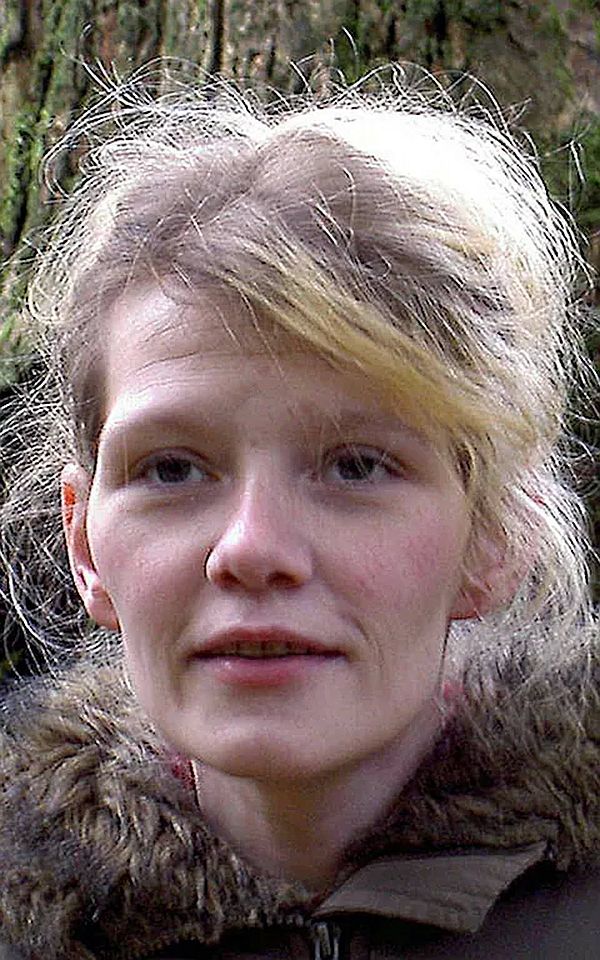
In the
darkness, high above the glare of the streetlights, Emma Caldwell gazed out
over Cumberland Street. It was a Monday evening in May 2005 and the young
woman’s photograph had been projected onto a block of flats near where she was
last seen in Glasgow, on the edge of the Gorbals, not far from the Clyde. She
had been murdered just seven weeks before. Appealing for witnesses in this way
was an innovation, the detective leading the inquiry told reporters. If it was,
it would not be repeated. The decision of Strathclyde Police to beam a 70-foot
image of a recently murdered woman across five floors of a condemned building
seemed crass even then.
In recent
weeks, the same photograph has appeared in every British newspaper after a man
finally stood trial, almost nineteen years later, for Caldwell’s death. Yet the
bringing of this long-delayed prosecution was not the result of advances in DNA
technology, or testament to dogged detective work. Instead, the trial exposed a
shameful failure of Scotland’s justice system, as the country’s most senior
police officers and prosecutors became complicit in concealing a killer.
The
photograph was the family’s last picture of Caldwell, snapped in the
countryside and found on an undeveloped film after her death. It looks like it
was taken on a cold, bright spring day: there are leaves on the trees and she
is wearing a winter jacket with a fur-trimmed hood. She is half-smiling,
looking off to the left. Emma’s mother, Margaret Caldwell, thinks her husband,
Willie, took the picture. Her daughter was, she says, determined to get off
heroin, an addiction which began after her older sister died of cancer and which
forced her onto ‘the drag’, the red-light streets just west of the city centre.
She would get clean and then return to her parents’ house in Erskine, just
twenty minutes down the M8.
Margaret
and Willie Caldwell were there that night on Cumberland Street. ‘No one asked
us to go, the police didn’t know,’ she remembers. ‘We had driven up to Glasgow
so many nights after Emma disappeared, just driving around, looking for her,
asking if anyone had seen her. We parked in a side street near the flats and waited
in the car until Emma’s picture appeared. It was a damp night and we just sat
and looked at Emma through the windscreen. Then she disappeared and it all went
dark.’
A young
woman, thin, blonde, dressed in black, can be seen on grainy CCTV footage leaving
a hostel on the Southside of Glasgow at 10.56 p.m. on 4 April 2005. Caldwell
was also caught on camera walking into the city centre and her phone was last
traced to a street that crosses the Clyde. The discovery of her naked body,
five weeks later, by a man walking his dog in forestry land forty miles south
of the city prompted one of Scotland’s biggest and most expensive murder
investigations. Strathclyde Police – which was merged with the other regional
forces into a single national service in 2013 – had come under sustained
criticism after a series of unsolved murders of sex workers, and the inquiry
into Caldwell’s death was promised every possible resource.
The police
took statements from many of the women working on the streets around Glasgow Green,
just east of the city centre, and among the deserted night-time office blocks
of Anderston, on its western edge. One man in particular recurred often in
these statements, slowly driving around the streets looking at the women,
talking to them, paying for sex, demanding more than he paid for. He was short
but powerfully built, and his lack of personal hygiene was so extreme that some
of the women believed it must be a power thing. A few knew him as Peter, others
as Craig or John. One woman had him in her phone as Blue Van Man. Shown ranks
of photographs by detectives, however, the women all pointed to the same man.
His name was Iain Packer.
He knew
Emma, they told the police. He’d had sex with her regularly, at least once by
force, according to a woman who had comforted her afterwards. In one statement
made in June 2005, weeks after Caldwell’s body was found, one of her friends
told detectives Packer had been obsessed: ‘Once he started going with Emma, I
can’t remember him going with anyone else. Even when Emma was not out, he would
drive around looking for her. I thought he was stalking her. He would not leave
her alone, constantly following her, pestering her.’ In March 2006, the same
woman was interviewed again: ‘I really had bad vibes from him. It was Emma,
Emma, Emma, no one else interested him.’
By the
summer, detectives were looking at Packer, a 32-year-old neon-sign maintenance
man, with increasing suspicion. His former colleagues, friends and partners had
been interviewed, his vehicles traced. On 21 June, he was picked up
kerb-crawling and interviewed by detectives for the first time. He said he
might have seen Caldwell at one of her usual spots in Cadogan Street but had
never spoken to her. An officer noted that he became ‘increasingly agitated and
uncomfortable’ when asked about her. He was interviewed several times in the
following months, changing his story every time. Meanwhile, other witnesses
described his compulsive use of sex workers, which had cost him, as he later
admitted to the police, £30,000 and two marriages; his enthusiasm for rough,
outdoor sex; his habit of picking women up in the city centre and driving them
far into the countryside to have sex; his tendency to lose control and fly into
violent rages; and the way he enjoyed throttling women, and had threatened at
least one with a knife.
He
eventually admitted that he had known Caldwell, and during his sixth police
interview, almost two years after the murder, in March 2007, he offered to take
detectives to the woods where he used to go with her and the other women he
picked up. He directed the officers out of the city and south down the M74, off
at Junction 11 and along a succession of small country roads, before telling
them to take a hard right onto a farm road potholed with broken red asphalt.
After a quarter of a mile, they stopped at a turning point, with a battered
cattle grid on one side and a silver gate on the other. ‘This is it,’ Packer
told the detectives. They were at Limefield Woods, not far from Biggar, where
Caldwell’s body had been found. He told them he had taken her there six times,
although he would later change that story too. On their return to Cathcart
police station, the detectives, certain that Packer was on the verge of
confessing, asked for guidance from senior officers, but were told to let him
go and not to speak to him again. He left soon after. It was Tuesday, 13 March
2007.
Five months
later, in August, officers involved in the case were called to a meeting at
Baird Street police station. ‘It’s all in here,’ Detective Superintendent John
Cuddihy said, smacking the fat file on the desk in front of him. ‘The evidence
is all in here.’ Months of covert inquiries had targeted a Turkish café on
Bridge Street and identified four men as Caldwell’s killers. These were
supposed to be Scotland’s first murder convictions based on surveillance
evidence. A long and elaborate investigation, costing £4 million, had involved
undercover officers from foreign forces, electronic surveillance of the café,
and the translation and transcription of countless hours of allegedly
incriminating conversations. Cuddihy, one of the detectives who had led the
surveillance operation (codenamed Operation Guard, which ran in tandem with
Grail, the public-facing murder inquiry), summarised the investigation for the
assembled officers and detailed the evidence against the suspects. He seems to
have realised the room was not with him, however, and, his voice rising,
insisted that the Turkish men were guilty.
Caldwell’s
phone records showed that the final call to her mobile, made at 11.20 p.m. on
the night she disappeared, was a 76-second call from a Turkish man. Police
interest in the man grew when they found out he had returned to Turkey soon
afterwards. The call had been made near the Turkish café on Bridge Street, not
far from the last spot where Caldwell’s phone had pinged. The café was,
according to some of the women the police had interviewed, a drinking and
gambling den. Some claimed they had been raped there, and after Caldwell’s DNA
was found there too, in a drop of blood on a quilt, the detectives’ focus on
the café became relentless.
At the end
of May 2006, transcripts of conversations covertly recorded in the café
suddenly began to deliver new evidence. ‘They brought her here.’ ‘They killed
the girl.’ They killed her like an animal.’ ‘Halil did it.’ The men were
recorded apparently confessing to killing Caldwell and removing her body
wrapped in a carpet: ‘They lifted her with the rug cover.’ ‘Who doesn’t have
cable? Did you take it?’ The transcripts seemed conclusive, but after the men
were arrested translators commissioned by their lawyers found no talk of murder
and bodies, rugs and cables. Kerem Öktem, an academic who was asked to listen
to four hundred hours of tapes during a police review of the inquiry, said ‘It
was not possible to make any conclusive statement about their involvement in
the murder. It was simply not possible.’ Experts would later suggest the men
had talked about being questioned at the police station, which had resulted in
some of the seemingly damning quotes; others were phrases used in a game called
okey. Aksoy Ozer, a Grampian Police officer who had been drafted in to help
translate the tapes, despite having no training with the equipment or
qualification in translation, later said he had been put under ‘immense
pressure’ and told to suppress some things he had heard. He also admitted that
his Turkish was limited. Ozer left the force in 2010 claiming he had been made
a scapegoat. The tapes had been the only real evidence. There were no witnesses
and, despite a painstaking search of the café after the men were arrested,
there was no forensic evidence. After spending eighty days in custody, they
were freed. The café owner, Huseyin Cobanoglu, was sentenced to ten years for
rape and sexual assault in 2009.
It remains
difficult to understand why the detectives set Packer aside to focus entirely
on the Turkish men. They weren’t rookies. Ruaraidh Nicolson, later deputy chief
constable of Police Scotland, was in charge of Strathclyde CID when Willie
Johnston, a detective superintendent, was put in charge of the murder inquiry.
Johnston was trusted by Caldwell’s family and kept in touch when he retired
from the force and took a consultancy job in the Middle East. His texts and
calls from Abu Dhabi ended abruptly, however, after the suspicions about Packer
became public. John Mitchell, a detective chief superintendent, took over the
investigation when Johnston left. He also became head of CID at Strathclyde
Police and, after retiring, the director of investigations for the Police
Investigations and Review Commissioner. Two more senior detectives, Cuddihy and
Colin Field, took charge of the surveillance operation against the Turkish men.
The exciting trappings of that investigation, the covert taping and
Turkish-speaking undercover officers, seem to have blinded these men to the
more mundane truth. ‘They thought they were in an episode of The Wire. Their
heads were turned,’ one former colleague said. The endless suspicion around
Packer must have given them pause: they spent months vainly attempting to link
him to the Turkish men. Yet after the case against those men collapsed, they
did not go back to reinvestigate Packer. They did nothing at all.
Back in
the days when papers had newsrooms and desks had telephones, my first editor
told me never to let one ring. ‘You just never know,’ she would say. When my
phone at the Sunday Mail rang at half-past six on Wednesday, 25 March 2015, I
was tempted to ignore it. Off-stone was three days away, and if it was
important my mobile would be ringing. Well-trained, I picked up anyway. ‘Jim,
it’s Gerry Gallacher,’ the caller said. ‘I might have the biggest crime story
for ten years.’ My heart sank: if a reporter knows anything, it is that big
stories never arrive so easily. Gallacher was a retired police detective, an
experienced investigator and a trusted contact. We had kept in touch after the
Mail serialised his memoirs a few years before. He had been reinvestigating the
inquiry into Caldwell’s murder for a potential book and had some documents to
show me. He had scoured the paperwork from the original investigation,
methodically marking it up with pink and yellow Post-it notes and handwritten
annotations, but the signposting was hardly necessary – Packer’s name was all
over the lever arch files. Every mention trailed suspicion: the accounts from
women who didn’t like him, the recollections of colleagues who didn’t trust
him, his own interviews with detectives as his story twisted and turned.
Finally, there was his journey with the detectives to the woods where Caldwell
was killed, only for him to be let go within hours and remain free for years.
It seemed preposterous to me then, almost unbelievable. It still does.
I rang to
arrange to meet Gallacher at Limefield Woods, but was told I would never find
it on my own. Instead, we met in a service station car park before twisting our
way through the South Lanarkshire countryside. Finally, we turned onto a farm
track that led into a pine forest. We stopped where the track was blocked by a
silver gate and sat in silence for a moment. Almost nine years later, the jury
at Packer’s trial made the same journey in a minibus escorted by ten police
motorbikes. The trial judge, Lord Beckett, lawyers, court staff and Packer, now
51, wearing a mask and walking with a stick, were there too. They went off the
track and into the woods to the stream where Caldwell was found. I had been
almost persuaded of Packer’s guilt by the police files, but the length and intricacy
of the journey to this remote spot was, for me at least, conclusive.
In 2015, I
had been editing the Sunday Mail for six years and, after returning from South
Lanarkshire, I asked deputy editor Brendan McGinty for his help. Normally,
editors pass tip-offs to reporters, but accusing a man of murder – a man who
hadn’t been arrested, never mind charged – and the police of concealing his
crime was the kind of story that, if it goes badly, gets journalists the sack.
If anyone was to be in the firing line, we agreed, it should be us. The next
few days were frenetic. We wrote thousands of words based on the police files,
interviewed Gallacher at length, and traced Packer to his parents’ home in
Baillieston. We spoke to women who had known him. Some were terrified of him.
Some were furious. One was sick when shown his photograph. Finally, I invited
Caldwell’s mother to our office, to tell her what we were about to report. She
had never heard of Packer and seemed at first bewildered and then dismayed as I
summarised the evidence against him.
We gave
Police Scotland the chance to comment or offer guidance off the record. There
was no substantive response. Late on Saturday afternoon, with the pages being
checked and the deadline looming, the paper’s duty lawyer was unimpressed with
our intention to identify Packer. We were, she said, not just suggesting he was
a suspect but calling him the killer. If he sued for defamation, how could we
prove it? If the police didn’t have the evidence to charge him, never mind convict
him, how did we? Why not run the story but remove his name and picture? These
were hard, inconvenient questions, but I was, by then, certain of the story.
Anonymising Packer would reduce the clarity and impact of the reporting and it
seemed important that this first account was as clear and impactful as it could
be. We ran it on Sunday, 5 April 2015, which was, coincidentally, the tenth
anniversary of Caldwell’s disappearance, clearing the front page of the Mail
and eight pages inside. The headline was ‘The Forgotten Suspect’ and there was
a six-column photograph snatched in the street of a scowling Packer, wearing a
black hoodie and with an unlit cigarette clamped in his mouth.
Then we
waited. Perhaps the police had good reason for not pursuing Packer? Perhaps he
was abroad when Caldwell died? Or in prison? Perhaps we had missed the obvious
proof of his innocence in the files? Surely he wouldn’t have been allowed to
remain free for so long if the evidence against him was so damning? Early on
the Tuesday, Police Scotland launched an urgent investigation, but not into
Caldwell’s murder. They wanted to find our sources.
Not only
was the inquiry mounted by the force’s Counter Corruption Unit (CCU) an
appalling misjudgment, it would later be ruled unlawful. The detectives
involved ignored warnings from their own colleagues that the law had changed
and they now needed judicial approval before seizing data in an attempt to
identify journalists’ sources. Four officers, two serving, two retired,
including Gallacher, had their phone and email records secretly examined. This
was discovered during a routine inspection by a watchdog, the Interception of
Communications Commissioner, and in 2016 an Investigatory Powers Tribunal (IPT)
ruled that the collection of the officers’ data breached the Human Rights Act
and the European Convention on Human Rights. Six years later, another IPT
hearing in Edinburgh heard that the CCU had also obtained my number and,
despite dropping plans to seize my call data after being told it would be
unlawful, had breached the ECHR in my case too. The three-judge panel ruled
that ‘the information about individuals was recovered with a view, it is now
admitted, to discovering Mr Wilson’s sources, therefore it represents an
interference with his Article 10 rights as a journalist ... There is a real
risk that conduct of that sort will have a chilling effect on his ability to
obtain and disseminate information in the public interest.’
By the time
of that hearing, the second investigation into the murder of Emma Caldwell was
in its seventh year. While the hunt for our sources was launched within days,
the murder inquiry was not reopened until seven weeks after the story was
published, and then only after the direct intervention of Frank Mulholland, the
lord advocate, Scotland’s most senior prosecutor. Caldwell’s mother was
disappointed when told the new inquiry might take two years. It was very
complicated, they told her. It was going to take time to have all the conversations
from the Turkish café retranslated and retranscribed. Well, it would, but why
was that necessary? It is difficult not to believe that the delays in bringing
Packer to trial were caused by the deep reluctance of senior officers in Police
Scotland and the Crown Office and Procurator Fiscal Service to explain in court
why they had not put him in the dock ten years earlier.
Journalists
were reluctant to say anything further, fearful of jeopardising a future trial
by influencing the jury. They might have been less concerned if they had known
Packer would not stand trial for another nine years. Eventually, the patience
of BBC Scotland journalists snapped and, resisting pressure from police and
prosecutors, they broadcast an interview with Packer in February 2019. He had
approached them in an attempt to clear his name, but at his trial, a former
partner said he was as ‘white as a sheet’ after filming and looked like he had
been ‘found out’. Mulholland’s successor as lord advocate, James Wolffe, seemed
to have done little to advance the case. He agreed to meet Emma’s mother – ‘A
condescending man,’ she remembers. ‘He never looked at me once’ – but not much
more. His successor, Dorothy Bain, arriving in 2021, quickly met Margaret
Caldwell and Aamer Anwar, her lawyer, and Packer was finally arrested in
February 2022.
Many of the
women who gave statements about Packer nearly twenty years ago are themselves
now dead, lost to addiction, violence or illness. There are still some who
remember Caldwell fondly, while insisting she was too polite, too well-spoken,
for the life she was living. Her mother did not understand the depth of her
daughter’s addiction or the reality of her life. ‘After she died, a police
officer asked if we had known Emma had frequented the city centre and I said,
well, I know she goes to this shop and that one, but that wasn’t what he meant
at all, not at all.’ She and her husband would visit Emma twice a week in the
hostel, bringing her food and seeking reassurance that this was only temporary,
that she would, one day, come home. ‘Willie and I were so naive,’ she says now.
‘We didn’t realise Emma was taking drugs for such a long time and when she
finally told us, we didn’t have a clue what to do. I remember we took her to
the hospital the night she told us to ask for help but the doctor just looked
at us as if we were daft. We went home and talked and talked, cried and cried.
I remember thinking we had got through to her and went to bed that night happy,
thinking we had got her back. Looking back, I think that was the night we lost
her.’
On 28
February, at the High Court in Glasgow, a jury found Iain Packer guilty of
murdering Emma Caldwell. He was also found guilty of 32 other charges against
22 women, including 11 rapes and multiple sexual assaults, most of them
committed after the murder. He was sentenced to a minimum of 36 years, the
second longest sentence ever handed down in Scotland. The verdict answered some
questions of guilt, but many more remain, for Police Scotland and for the Crown
Office. The trial heard no compelling evidence that had not been available
within months of Caldwell’s death. For example, one key witness was Dr Stefan
Uitdehaag, from the Netherlands Forensic Institute, who told the jury that soil
found in Packer’s van was very likely to have come from the woods where Emma’s
body was found. The soil sample was collected in 2005; Dr Uitdehaag was asked
to analyse it in 2022. On 7 March, eight days after the verdicts, the Scottish
government announced a judge-led public inquiry; the lord advocate confirmed
that a criminal investigation into the first police investigation is also
planned.
Margaret
Caldwell sat in court for much of the evidence and was there to hear the
verdict. She is scathing about those responsible for delaying justice so long,
for allowing Packer to attack and abuse so many more women. She believes only
an outside police force and independent prosecutors can properly scrutinise the
decisions made in the first inquiry into her daughter’s murder and throughout
the years since. ‘At so many points, the police and the lawyers could have done
the right thing but instead did the opposite. They will all have something to
say now, blaming each other, but the time for them to say something was all
those years ago. Let them say it to a judge.’
Shameful. Jim Wilson on the Investigation into the Death of Emma Caldwell. By Jim Wilson.
London Review of Books, March 21, 2024.
The mum of
Emma Caldwell has slammed her daughter's killer Iain Packer after he was jailed
for life.
Margaret,
76, fought for justice for 19 years while Packer, who was interviewed several
times by cops, remained a free man.
Recently,
the 51-year-old serial rapist was caged for a minimum of 36 years last month
after being found guilty of murdering the 27-year-old in 2005 and rapes and
multiple sexual assaults against a total of 22 women.
Speaking on
Good Morning Britain, the Daily Record reported Margaret said: "My family
and I have been in so many dark places while this man walked the streets. It
took far too long for justice to be served.
"The
day after the trial I woke up and felt strange. I can't explain it and I
thought throughout the day that maybe it was a relief but it wasn't. It was
more that I felt at peace that this man has been put behind bars.
"Now
he is absolutely irrelevant to any of us. He matters nothing to us anymore. He
got his justice and he is where he is."
Margaret
was joined on the show by her lawyer, Aamer Anwar.
Emma, who
was a former stable worker turned to drugs and sex work after her older sister,
Karen, died of cancer.
She
continued to say: "Emma was lucky, she had a voice.
"She had
her family and we kept in contact with Emma throughout this whole time.
"We
knew that heroin was a killer and we knew that Emma was a heroin addict but we
didn't have any knowledge that Emma worked on the streets, we were completely
naive, we had no idea how she got her money.
"We
rang each other every day and had a very close relationship. I saw her twice a
week and she was near to going into rehabilitation."
Yesterday
the Scottish Government confirmed an independent public inquiry into the police
handling of the case would take place.
Margaret
added: "There were many good police officers. David McLaren and Graham
Mackie were excellent and they came forward for the second investigation when
others thought the case was left in a dusty corner and they brought it back
into the light of day.
"They
were fighting on our side."
Speaking on
the show, Mr Anwar said: "I think there are a whole series of allegations
and reasons for a public enquiry but I think it is also important that the Lord
Advocate has to order a criminal investigation finally after 19 years.
"Some
of the most senior police officers in this country have fingerprints in this
case and they have never answered questions.
"Police
officers betrayed justice, they betrayed 22 women and many others who didn't
come forward, and there has to be a criminal investigation into their conduct.
"They
knew [Iain Packer] was a killer and a serial rapist and we were told by
Scotland's most senior prosecutor that, as a senior law officer in 2008, she
said that this is the man to go after and she told the police to do it and then
the case just disappeared.
"Those
officers brought shame on their uniform. They should be held to account, there
should be change and if those officers are found to have engaged in criminality
then they should face prison."
He added:
"It has been described as probably the worst scandal in Scottish legal
history. He has been described as one of the worst sex offenders in the UK.
"No
women should ever feel because of her status, her vulnerability, her actions,
her job - that they need to accept sexual violence."
Emma
Caldwell's mum has slammed her killer Iain Packer. By Ben Waddell. Glasgow Times,
March 12, 2024.
An
independent judge-led public inquiry will be held into how police handled the
investigation into Emma Caldwell’s murder, the Scottish government has
announced. The announcement came as Scotland’s most senior law officer said she
believed there was sufficient evidence in 2008 to prosecute Caldwell’s killer,
who was convicted only last week.
Caldwell’s
mother, Margaret, has campaigned tirelessly for nearly two decades to bring her
daughter’s murderer to justice. She listened from the public gallery as
Scotland’s justice secretary, Angela Constance, told MSPs on Thursday
afternoon: “There can be no doubt of the serious failings that brought a
grieving family to fight for justice.”
The inquiry
is expected to examine the sustained police failings that emerged during the
trial of killer and serial rapist Iain Packer.
Packer was
jailed last week for 36 years for the 2005 murder of Caldwell, as well as
multiple other cases of sexual violence against 22 other women.
Caldwell
was living in a hostel in Glasgow when she disappeared in April 2005, aged 27.
Her mother told the trial that her daughter had started taking heroin to numb
her grief after the death of her sister and was funding her drug habit through
sex work. Caldwell’s naked body was found five weeks after she went missing, in
Limefield Woods near Biggar, South Lanarkshire.
An
emotional Constance told the Holyrood chamber: “Given … the gravity of this
case, the length of time that it took for justice to be served for so many
women and the horrific extent of the sexual violence suffered by the victims
and survivors, the case for holding a public inquiry is overwhelming”.
An hour
before the statement, Caldwell’s family concluded a meeting with the lord
advocate, Dorothy Bain, who worked on the case as crown counsel in 2008.
Bain told
the family that after taking the view that there was no murder case against the
four Turkish men who the original police investigation had focused on, she and
the solicitor general directed investigators to look at Packer, whose name
appeared in police papers.
Speaking
after the meeting, the Caldwell family’s solicitor, Aamer Anwar, said: “The
lord advocate confirmed that multiple women came forward who would have added
to the evidence of rapes and attacks. There is no doubt on the basis of
evidence available in 2008, had the police listened to the Crown Office, Packer
may well have been serving a life sentence”.
Packer, who
lodged an appeal against his conviction yesterday, is known to have carried out
at least 19 other rapes and sexual assaults after he killed Caldwell.
Police
Scotland has apologised for how the original inquiry was handled by Strathclyde
police, which was amalgamated into the national force in 2013.
Police
Scotland’s chief constable, Jo Farrell, reiterated the apology when she met
Caldwell’s family on Wednesday, adding that she supported their calls for a
public inquiry and pledged the force would “fully participate”.
“It is
important that Emma’s family and the public get answers to the many questions
they have,” Farrell said.
Independent
inquiry into 2005 murder of Emma Caldwell announced. By Libby Brooks. The Guardian, March 7, 2024.
The killer
of Emma Caldwell is to appeal against his conviction and the length of his
sentence.
Iain Packer
was given a life sentence and ordered to serve a minimum of 36 years in prison.
He was
found guilty last week of 33 charges against a total of 22 women, including
Emma's murder and 11 rapes.
The
Scottish Courts and Tribunals Service have confirmed to BBC Scotland that
Packer has now indicated a "intimation of intention to appeal".
The death
of Ms Caldwell in April 2005 was one of Scotland's longest running unsolved
murders.
The news of
Packer's appeal came as Emma's mother Margaret Caldwell met Scotland's chief
constable as the family continued their campaign for a public inquiry into the
police investigation into her death.
Officers
initially arrested four Turkish men in connection with the murder but they were
released a year later when the case against them collapsed.
Emma's
family believe that a "toxic culture of misogyny and corruption"
within what was then Strathclyde Police meant that women and girls who came
forward to speak up against Packer at the time were ignored and he was
dismissed as a suspect.
They say
this allowed Packer to continue raping other women after murdering Emma.
Chief
Constable Jo Farrell apologised to Mrs Caldwell and her family for the policing
failures, and backed their call for a full inquiry.
She said:
"It is important that Emma's family and the public get answers to the many
questions they have.
"I
therefore support the family's calls for a public inquiry. I absolutely commit
that Police Scotland will fully participate in any further proceedings.
"We
have reflected and learned from the initial investigation and subsequent
re-investigation.
"Significant
changes have been made to improve organisational culture and response,
particularly in respect of investigative structures, victim care and processes
to these types of crimes."
Margaret
Caldwell met First Minister Humza Yousaf to discuss the case on Tuesday and
will meet Scotland's top law officer, Lord Advocate Dorothy Bain, on Thursday.
Mr Yousaf
has previously indicated that he would be open to a public inquiry being held,
with the Scottish government due to make a statement in the Holyrood chamber on
Thursday afternoon.
Packer will
not be released pending his appeal, which will take place at a later date.
Emma
Caldwell killer Iain Packer to appeal against conviction. BBC News, March 6, 2024.
A man has
been found guilty of the 2005 murder of Emma Caldwell after a trial that raised
significant questions about the police investigation of the killing and the key
suspect over almost 20 years, as well as attitudes to reports of violence
against sex workers.
Iain
Packer, 51, was sentenced to at least 36 years in prison for Caldwell’s murder
and was found guilty of 32 other charges against a total of 22 women that amounted
to a horrifying course of unchecked physical and sexual violence over two
decades. The offences included 11 rapes and multiple sexual assaults.
Sentencing
Packer to the second-longest term in Scottish legal history, the judge, Lord
Beckett, said the killer was responsible for an “extreme campaign of sexual
violence”, preying on the vulnerable and causing “extreme and enduring
suffering for so many women and their families”.
Immediately
after the verdicts, the Police Scotland assistant chief constable Bex Smith,
who is the executive lead for major crime and public protection, apologised
directly to Caldwell, her family and “many other victims”, saying they were all
“let down by policing in 2005”.
Caldwell
was living in a hostel in Glasgow when she disappeared in April 2005, aged 27.
Her naked body was found five weeks later in Limefield Woods near Biggar, South
Lanarkshire.
Her mother
told the trial that Caldwell had started taking heroin to numb her grief over
the death of her older sister. She had been making money through sex work at
the time of her death. The court heard from a friend of Caldwell’s that Packer
had become “obsessed” with her, following her and attempting to scare away her
other clients.
Although a
rape allegation was first made against Packer in 1990, the prosecutor advocate
depute, Richard Goddard KC, told the jury that at that time police were
“dismissive” of reports made by sex workers. He said it was a “tragedy” that
sex workers felt forced to accept sexual assault as “part and parcel of their
job”.
Another
witness said Packer chose girls who were “young, vulnerable and on drugs”. Many
of the women who gave witness statements were sex workers at the time and some
have since died.
Packer –
who denied all charges apart from one of a prior indecent assault against
Caldwell, for which he admitted he was “ashamed” – gave evidence at the trial
over three days, insisting he had not killed Caldwell and that the other women
accusing him were either mistaken or liars.
He admitted
taking sex workers to the woods where Caldwell’s body was found – but not to
the same spot where she was found. Asked where he was on the night Caldwell
disappeared, Packer told the court he could have been at work or walking his
dogs.
The court
had heard earlier from an expert that soil found in his van was a 97% match for
earth at the spot where Caldwell was dumped.
Information
about the police investigation that came to light during the trial raised
significant questions about why it took so long to bring Packer to justice. He
gave six statements to police between 2005 and 2007, but was not interviewed
under caution as a suspect.
A decade
later, concerns about the unsolved case were such that in 2015 the lord advocate
ordered Police Scotland to re-investigate not only who killed Caldwell, but
flaws in the original inquiry.
The
original police investigation was focused on four Turkish men, who were charged
with Caldwell’s murder in August 2007, but that case collapsed and the men were
released.
Smith made
it plain that Strathclyde police, the force that first investigated Caldwell’s
murder before Scottish forces were merged into one force in 2013, had failed
Packer’s victims.
“A
significant number of women and girls who showed remarkable courage to speak up
at that time also did not get the justice and support they needed and deserved
from Strathclyde police,” she said.
“It is
clear that further investigations should have been carried out into Emma’s
murder following the initial inquiry in 2005. The lack of investigation until
2015 caused unnecessary distress to her family and all those women who had come
forward to report sexual violence.”
Caldwell’s
mother, Margaret, who has campaigned tenaciously for justice for her daughter,
said she felt “betrayed” by the original police investigation and angry that it
had taken so long for Packer to be brought to justice.
Her
solicitor, Aamer Anwar, called for an inquiry into police failings, saying: “A
toxic culture of misogyny and corruption meant the police failed so many women
and girls who came forward to speak up against Packer.
“Instead of
receiving justice and compassion, they were humiliated, dismissed and in some
instances arrested, whilst the police gifted freedom to an evil predator to
rape and rape again.”
Police face
scrutiny after man found guilty of 2005 Emma Caldwell murder. By Libby Brooks.The Guardian, February 28, 2024.